Aligner Discomfort Management Tips That Actually Work
July 5, 2026
Aligner Discomfort Management Tips That Actually Work
TL;DR:
- Managing aligner discomfort involves timing tray changes at night, maintaining consistent wear, and using relief strategies proactively.
- Most soreness peaks within 24-48 hours after tray changes and diminishes by day five, with full comfort returning early.
Aligner discomfort management is the practice of using targeted strategies to reduce soreness, prevent soft tissue irritation, and support the biological process of tooth movement during clear aligner treatment. Discomfort is not a sign that something is wrong. It is a sign that your aligners are doing their job. Discomfort peaks within 24–48 hours after each tray change and fades significantly by day 5 of the cycle. Most patients return to full comfort well before they switch to their next tray. The tips below are grounded in clinical consensus and practical experience, giving you a clear path to a more comfortable treatment.
1. Aligner discomfort management tips: start with tray timing
The single most effective passive strategy for reducing soreness is switching to a new tray immediately before bed. Sleeping through the first 7–8 hours of adjustment means you miss the peak pressure window entirely. You wake up with the hardest part already behind you.
This approach requires no medication and no special tools. It simply uses your sleep schedule as a buffer against the sharpest phase of discomfort. Patients who switch trays in the morning or afternoon report noticeably more soreness than those who switch at night.
Pro Tip: Set a phone reminder for 30 minutes before your usual bedtime so you never forget to switch trays at the right time.
2. Wear your aligners consistently for 20–22 hours daily
Consistent wear is not just about treatment speed. It directly controls how much soreness you feel. Removing aligners too frequently causes teeth to shift back slightly, and re-inserting the tray after that micro-reversal creates a new round of pressure and pain.
The 20–22 hour daily wear target is the clinical standard for clear aligner treatment. Patients who drop below that threshold often report that each tray feels tight for longer than it should. Staying consistent keeps the pressure steady and manageable rather than cycling between relief and pain.
Removing aligners only for eating, drinking anything other than water, and brushing is the simplest way to hit the daily wear target. Fewer removals also means fewer re-insertion moments, which are often the most uncomfortable part of the day.
3. Use chewies after every tray insertion
Chewies are small cylindrical foam or silicone cylinders designed for one purpose: seating your aligner fully against your teeth. Biting on chewies for a few minutes after inserting a new tray removes air gaps and distributes pressure evenly across all contact points.
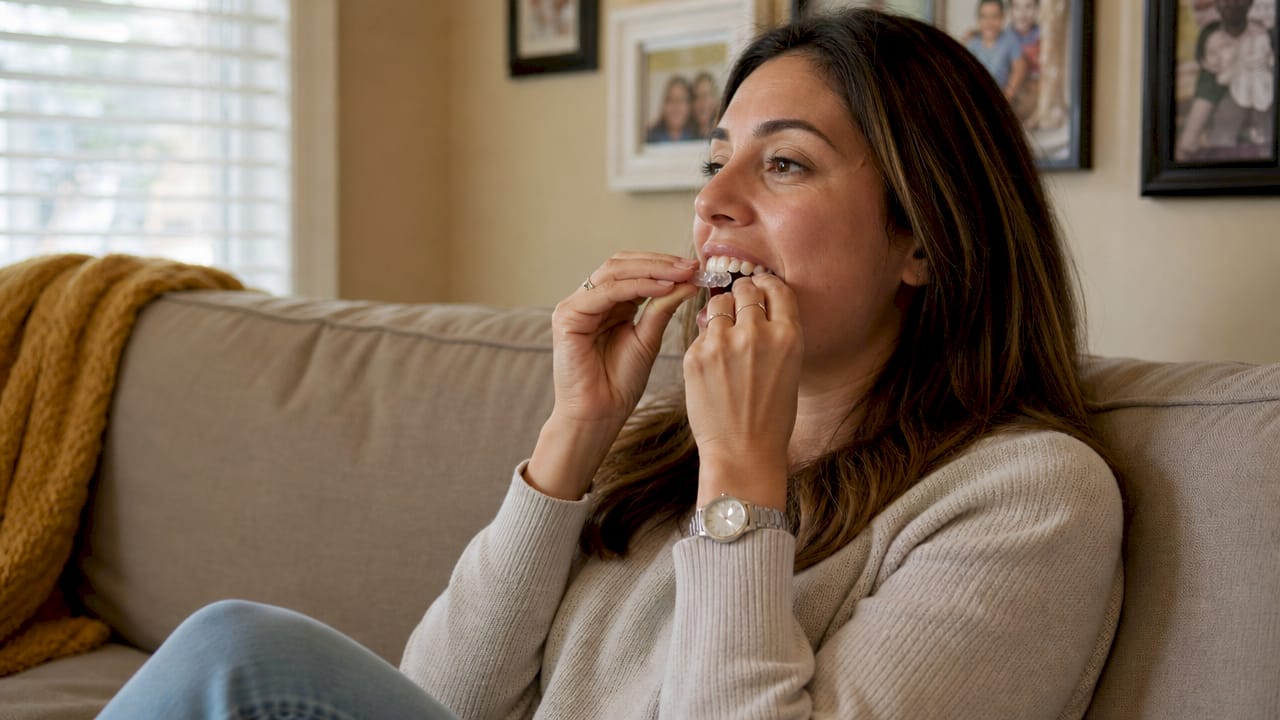
An aligner that is not fully seated creates uneven pressure. That uneven pressure causes unnecessary soreness in specific spots rather than the general, manageable tightness that signals normal tooth movement. Chewies solve this before it becomes a problem.
Use them immediately after inserting a new tray, not hours later. Spend about two to three minutes biting down and moving the chewie around to cover all areas of the tray. This small habit makes a measurable difference in how the first day of each new tray feels.
Pro Tip: Keep a chewie in your aligner case so it is always with you when you switch trays, whether you are at home or traveling.
4. Apply orthodontic wax to sharp or rough edges
Some trays have edges that catch on the inside of your cheeks, lips, or tongue. Orthodontic wax creates a smooth barrier between the rough spot and your soft tissue, providing instant relief while your mouth adjusts.
Pinch off a small piece of wax, roll it into a ball, and press it firmly over the offending edge. The wax stays in place for several hours and is safe to swallow in small amounts. Replace it after eating or brushing.
If the same edge keeps causing irritation tray after tray, mention it to your orthodontist. A small adjustment to the tray edge can eliminate the problem permanently. Wax is a short-term fix, not a substitute for a proper fit.
5. Rinse with warm salt water to soothe gum irritation
Warm salt water rinses are one of the most underused tools in managing aligner soreness. Swishing half a teaspoon of salt in warm water for 30 seconds several times daily reduces gum inflammation and speeds up soft tissue recovery.
Salt water works by drawing fluid out of inflamed tissue, which reduces swelling and dulls pain signals. It also creates a mildly antiseptic environment that discourages bacterial buildup around the gumline. This matters because inflamed gums are more sensitive to aligner pressure.
Do this rinse especially during the first two days after a tray change. It costs nothing, takes 30 seconds, and noticeably reduces the raw, tender feeling that new trays can cause along the gumline.
6. Keep your aligners and teeth clean to reduce inflammation
Poor oral hygiene worsens aligner pain by causing gum inflammation that makes already-sensitive tissue even more reactive to pressure. A dirty aligner traps bacteria against your gums for hours at a time, compounding the problem.
Clean your aligners every time you brush your teeth. Use a soft toothbrush and clear, unscented soap or a dedicated aligner cleaning solution. Avoid toothpaste, which is abrasive and can scratch the plastic, creating rough surfaces that irritate soft tissue.
Brush and floss before reinserting your aligners after meals. Trapping food particles under a tray accelerates bacterial growth and gum irritation. Good hygiene is one of the most direct ways to control discomfort that most patients overlook.
7. Use cold therapy to reduce inflammation and numb soreness
Cold reduces inflammation by constricting blood vessels and slowing the release of inflammatory compounds in soft tissue. Applying an ice pack wrapped in a towel for 10–15 minutes to the outside of your cheeks is a fast, drug-free way to reduce swelling and numb soreness.
Cold foods and drinks work from the inside. Yogurt, cold water, and smoothies all provide mild numbing relief to the gums and soft tissue. Remove your aligners before eating or drinking anything other than plain water, then reinsert them after you finish.
Avoid very hot foods and drinks during the first 48 hours of a new tray. Heat increases blood flow to inflamed tissue, which can amplify soreness rather than reduce it.
8. Choose the right pain reliever before tray changes
Taking a pain reliever proactively, before you switch trays, is more effective than waiting until soreness sets in. Acetaminophen is the preferred choice over NSAIDs like ibuprofen for aligner patients.
The reason matters. NSAIDs reduce inflammation by inhibiting prostaglandins, the same compounds that drive the bone remodeling process that moves your teeth. Consistent use of anti-inflammatory drugs may theoretically slow tooth movement. Acetaminophen relieves pain without interfering with that biological process.
Always follow the dosage instructions on the label and consult your orthodontist or physician before using any medication regularly during treatment. Proactive dosing on tray-change nights is a simple habit that makes the first morning of a new tray much more comfortable.
9. Eat soft foods during the first 48 hours of each new tray
Your teeth are most sensitive immediately after a tray change. Soft foods like yogurt, soups, and mashed potatoes reduce the chewing force on already-pressured teeth during that window. Hard, crunchy, or chewy foods amplify the discomfort significantly.
Plan your meals around your tray schedule. If you switch trays Sunday night, keep Monday and Tuesday meals soft. By Wednesday, most patients can eat normally without significant discomfort. For guidance on what works best, the Invisalign foods guide from Gloworthodontics covers this in detail.
Stay well hydrated throughout treatment. Water supports tissue recovery, keeps your mouth moist, and reduces the dry, tight feeling that some patients notice with new trays. Aim for consistent water intake throughout the day, not just during meals.
10. Recognize when discomfort signals a real problem
Normal aligner discomfort is dull and squeezing. It feels like pressure, not pain. Sharp, localized pain suggests a fit issue or a rough edge that needs professional attention, not more patience.
The timeline is the clearest guide. Discomfort that fades by day 5 is normal. Pain lasting longer than 5–7 days or sharp pain that does not respond to the strategies above warrants a call to your orthodontist.
Watch for these specific signals:
- Sharp, stabbing pain in one tooth or one area of the gum
- Soreness that intensifies after day 3 instead of fading
- Visible sores or cuts on your cheeks, tongue, or gums
- A tray that will not seat fully even after using chewies
Any of these signals means the tray may not be tracking correctly. Catching a tracking problem early prevents it from compounding across multiple trays. Regular check-ins with your orthodontist are the most reliable way to stay ahead of fit issues.
Key takeaways
The most effective approach to managing aligner discomfort combines tray timing, consistent wear, and targeted relief methods applied proactively rather than reactively.
| Point | Details |
|---|---|
| Switch trays at bedtime | Sleeping through peak pressure reduces soreness without any medication or tools. |
| Wear aligners 20–22 hours daily | Consistent wear prevents painful re-adjustment cycles caused by teeth shifting back. |
| Use chewies after every insertion | Proper tray seating distributes pressure evenly and prevents localized soreness. |
| Prefer acetaminophen over NSAIDs | Acetaminophen relieves pain without potentially interfering with bone remodeling. |
| Contact your orthodontist for sharp pain | Pain lasting beyond 5–7 days or sharp localized pain signals a fit issue, not normal soreness. |
What I have learned about aligner discomfort after years of watching patients go through treatment
Most patients come in expecting aligner treatment to be painless because they have heard it is “more comfortable than braces.” That framing sets them up for a rough first week. The truth is more useful: tightness after changing trays is proof that treatment is progressing. A tray that feels loose from day one is actually a warning sign, not a comfort.
The patients who manage discomfort best are the ones who treat it as a system, not a crisis. They switch trays at night. They keep chewies in their case. They rinse with salt water on day one and day two. They do not remove their aligners because they are sore. They understand that removing aligners prolongs the soreness by resetting the adjustment clock.
The patients who struggle are almost always the ones who react instead of prepare. They wait until the pain is bad before reaching for acetaminophen. They skip the chewie step. They take their aligners out for hours because they are uncomfortable, then wonder why each new tray feels worse than the last.
My honest advice: build the habits before you need them. Have orthodontic wax in your bathroom. Know which foods you will eat on tray-change nights. Set the bedtime reminder. Discomfort is temporary and predictable. The strategies to manage it are simple. The only variable is whether you apply them consistently.
— Juiced
Personalized aligner care at Gloworthodontics
Clear aligner treatment works best when you have a team monitoring your progress at every stage, not just at the start.

Gloworthodontics provides personalized care plans for patients in the Langley area, with regular check-ins to confirm your trays are tracking correctly and your comfort is on target. The team catches fit issues early, adjusts treatment as needed, and gives you specific guidance for your tray cycle rather than generic advice. If you are ready to start or want to understand what the full process looks like, the Invisalign treatment process guide covers every step in detail. For patients who want practical day-to-day support, the everyday Invisalign tips resource from Gloworthodontics is worth bookmarking.
FAQ
How long does aligner soreness typically last?
Discomfort peaks within the first 24–48 hours after a tray change and fades significantly by day 5. Most patients return to full comfort before their next tray switch.
Is it safe to take ibuprofen for aligner pain?
Acetaminophen is the preferred option. Some clinicians advise caution with ibuprofen because consistent NSAID use may interfere with the bone remodeling that moves your teeth. Consult your orthodontist before using any pain reliever regularly.
What does normal aligner discomfort feel like?
Normal discomfort is dull and squeezing, like steady pressure across your teeth. Sharp or stabbing pain in one specific tooth or area is not normal and warrants a call to your orthodontist.
Can I speed up the adjustment period?
Switching trays at bedtime, using chewies after insertion, and rinsing with warm salt water all reduce how long the adjustment period feels. Consistent 20–22 hour daily wear also prevents the re-adjustment soreness that comes from removing aligners too often.
When should I contact my orthodontist about discomfort?
Contact your orthodontist if pain lasts longer than 5–7 days, if you notice sharp localized pain, or if your tray will not seat fully even after using chewies. These signs suggest a fit or tracking issue that needs professional evaluation.