Aligners Pain Explained: Causes, Relief, and When to Worry
June 9, 2026
Aligners Pain Explained: Causes, Relief, and When to Worry
TL;DR:
- Aligner pain is a normal pressure response caused by controlled tooth movement, typically peaking 24 to 48 hours after tray changes. Most discomfort subsides within 3 to 5 days, and proactive management like taking pain relief and switching trays at night can help. Persistent or severe pain, swelling, or a poor fit require prompt professional review to prevent complications.
Aligners pain is defined as the pressure and mild soreness caused by the controlled force that clear orthodontic trays apply to teeth to shift them into alignment. This sensation is not a sign that something is wrong. It signals that your treatment is working. Most patients using Invisalign or other clear aligner systems report mild pressure lasting 3 to 5 days with the first tray, then 1 to 2 days with each subsequent tray. Over-the-counter options like ibuprofen and acetaminophen are the most commonly used tools for managing this discomfort. Understanding what is normal and what is not puts you in control of your treatment experience from day one.
What causes pain and discomfort with clear aligners?
Clear aligner pain originates in the periodontal ligament, the soft tissue that connects each tooth root to the surrounding bone. When a new tray applies force to your teeth, that ligament stretches and compresses. The body responds with localized inflammation, which is the same biological process that drives bone remodeling and allows teeth to move. This is not damage. It is controlled, intentional tissue response.
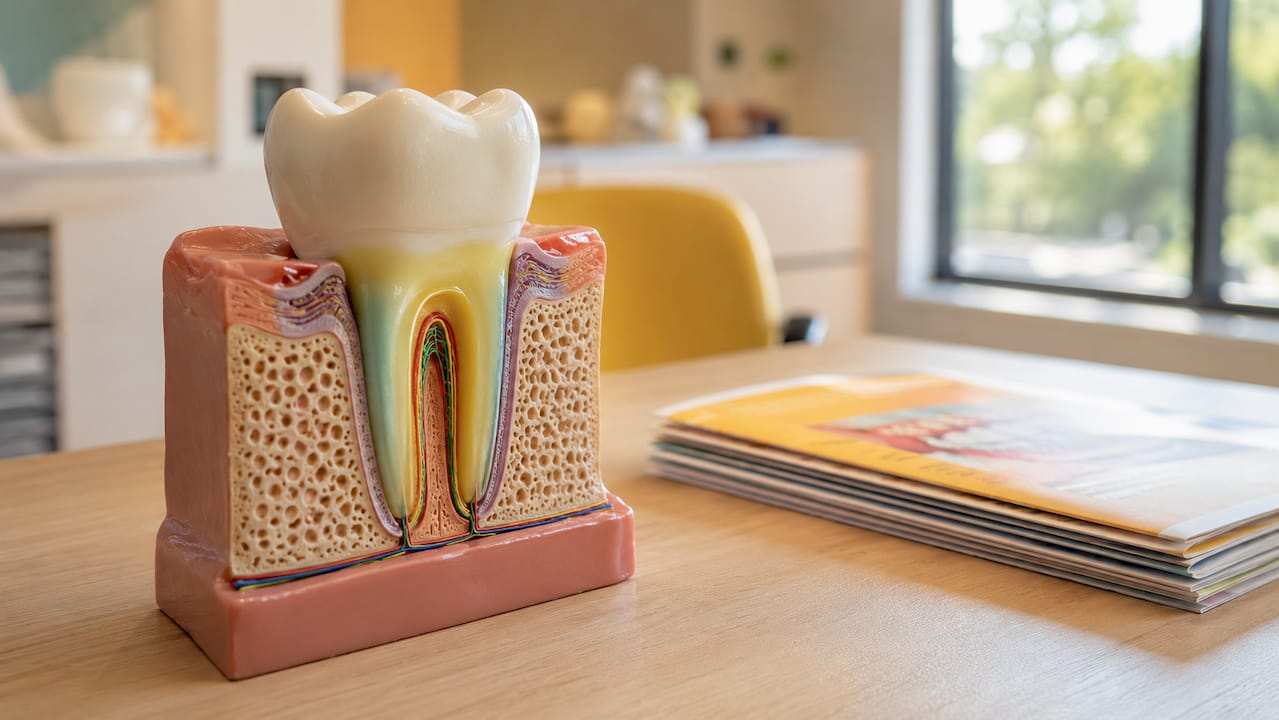
Biomechanical research using finite element analysis shows that PDL stress can reach up to 7.11 MPa in areas where aligner force concentrates, particularly near power ridges. Higher stress concentration in specific zones explains why you may feel tenderness in one or two teeth rather than your entire mouth. The location of soreness often reflects exactly where your tray is doing the most work.
The sensations you should expect include tightness when you first seat a new tray, mild soreness when biting down, and occasional tooth sensitivity from orthodontic pressure on the nerves running through the PDL. Sensitivity peaks early in treatment and briefly returns with each new tray. Cold or acidic foods can amplify this sensitivity, so avoiding them on change days is a practical move.
Not all discomfort comes from tooth movement. Rough or sharp aligner edges can cause mechanical irritation to your cheeks, tongue, or gum tissue. This type of irritation can produce ulcers if left unaddressed. Orthodontic wax and professional edge smoothing resolve this type of irritation more reliably than pain medication alone, because the cause is physical contact rather than tissue inflammation.
Pro Tip: If you notice soreness concentrated on a single tooth and it does not improve after 48 hours with the same tray, suspect a fit issue rather than normal movement pain. Revert to your previous tray and contact your provider before continuing.
How long does aligner discomfort last and when should you worry?
The timeline for clear aligner pain follows a predictable pattern for most patients. Peak discomfort occurs in the first 24 to 48 hours after inserting a new tray. From there, soreness fades within 2 to 3 days as your tissues adapt to the new position. Your first set of trays typically causes the longest adjustment period because your mouth has no reference point for what aligner pressure feels like.
The following signs indicate normal discomfort that you can manage at home:
- Mild tightness or pressure when seating a new tray
- Soreness when biting that fades after the first two days
- Brief tooth sensitivity to cold or pressure
- Minor gum tenderness near teeth being actively moved
- Slight lisp or speech adjustment in the first few days
These signs, however, require professional attention:
- Sharp or worsening pain that does not improve after 3 to 4 days
- Pain that is severe enough that standard OTC doses provide no relief
- Visible swelling, bleeding, or persistent sores in your mouth
- A tray that does not seat fully or feels dramatically different from previous ones
- Pain localized to a single tooth that recurs every time you wear the same tray
Severe pain, appliance damage, or persistent sores all qualify as situations where you should not wait for your next scheduled appointment. If a tray misfits, wear your previous tray until you receive guidance from your orthodontist. Attempting DIY repairs or forcing a poorly fitting tray creates more problems than it solves. You can also review orthodontic emergency guidance to understand which situations require same-day contact with your provider.
Practical methods to manage and reduce aligner pain
Managing aligner pain effectively comes down to timing, consistency, and a few targeted interventions. The strategies below are ordered by impact, starting with the ones that make the biggest difference.
-
Switch trays at night. Inserting a new tray right before bed shifts peak soreness into your sleep hours. Wearing trays 20 to 22 hours per day and changing them at night reduces the amount of waking discomfort you experience. This single habit change is the most underused pain management tool in aligner treatment.
-
Take OTC pain relief proactively. Acetaminophen 500 to 1000 mg taken about one hour before a tray change is more effective than waiting until pain starts. Ibuprofen works well too, given its anti-inflammatory properties. Aspirin is not recommended due to bleeding risk. The maximum daily dose for acetaminophen is 4000 mg. Do not exceed it.
-
Apply a cold compress. A cold compress applied for 10 to 15 minutes reduces local inflammation and numbs surface tissue. This works best in the first few hours after inserting a new tray, when the inflammatory response is at its peak.
-
Eat soft foods on change days. Biting into hard or crunchy foods when your teeth are already sore amplifies discomfort significantly. Stick to yogurt, smoothies, mashed potatoes, eggs, and soft pasta on the day you switch trays. This is not a long-term restriction. One or two days of soft foods per tray cycle is all it takes.
-
Rinse with warm salt water. A warm salt water rinse reduces gum inflammation and helps heal any minor soft tissue irritation. Mix about half a teaspoon of salt into a glass of warm water and rinse for 30 seconds. This is particularly useful if you have any gum tenderness or early-stage irritation from aligner edges.
-
Address rough edges immediately. If a tray edge is cutting into your cheek or gum, apply orthodontic wax to the sharp area and call your provider. Do not wait for the irritation to become a sore. Professional edge smoothing takes minutes and eliminates a recurring source of pain.
Pro Tip: Consistent wear is your best long-term pain management strategy. Patients who maintain prescribed wear schedules experience less prolonged soreness because their teeth never fully drift back between trays, reducing the force needed with each new set.
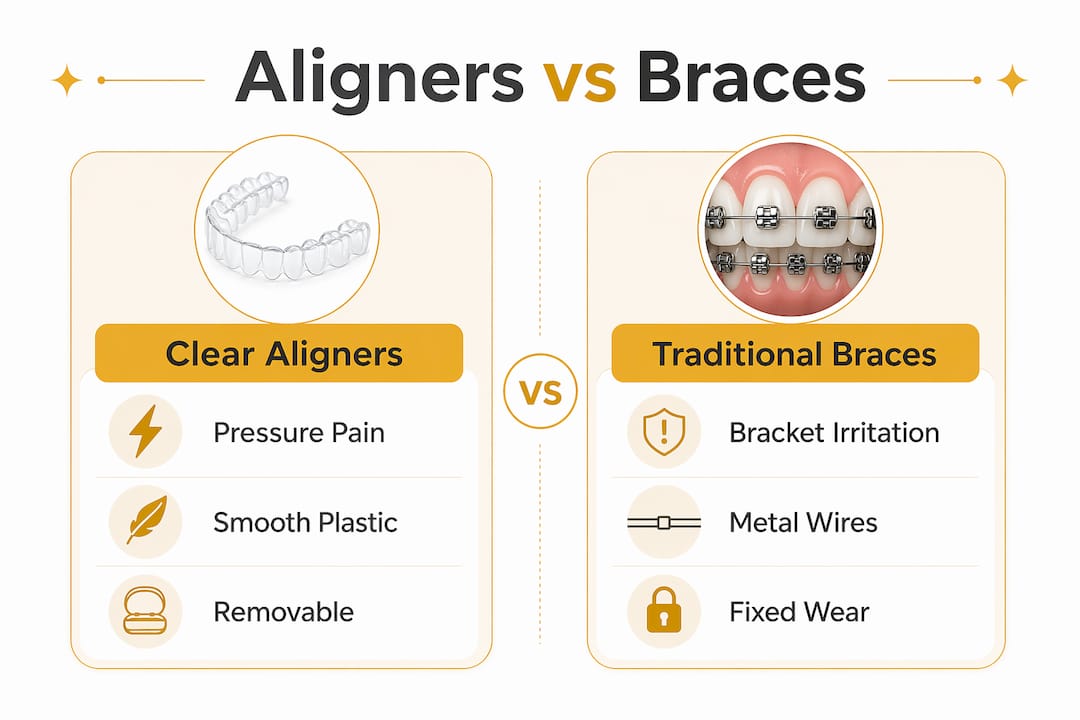
How do aligners compare to braces for pain and discomfort?
Clear aligners and traditional metal braces both move teeth through applied force, but the patient experience differs in meaningful ways. Understanding those differences helps you set realistic expectations and make informed treatment decisions.
| Factor | Clear aligners | Traditional braces |
|---|---|---|
| Source of discomfort | Pressure from plastic tray edges and tooth movement | Pressure from wires plus bracket and wire irritation to soft tissue |
| Soft tissue irritation | Minimal, mainly from rough tray edges | Common from brackets and protruding wires |
| Pain timing | Peaks 24 to 48 hours after each new tray | Peaks after each adjustment appointment, typically every 4 to 6 weeks |
| Emergency pain risk | Low, mainly from misfit trays | Higher, from broken brackets or poking wires |
| Removability | Fully removable for eating and hygiene | Fixed in place for entire treatment duration |
The smooth plastic surface of clear aligners eliminates the bracket and wire irritation that makes braces versus aligners a meaningful comfort comparison. Braces patients often deal with cheek sores from bracket edges and emergency wire issues that require same-day appointments. Aligner patients face a more predictable discomfort cycle tied to tray changes rather than unpredictable mechanical failures.
Removability is a genuine advantage for pain management. You can take aligners out to eat, which eliminates the biting pain that braces patients experience throughout treatment. You can also remove them briefly to rinse with salt water or apply wax without disrupting your treatment. The trade-off is that removing them too often extends your treatment timeline and increases soreness when you reinsert them after a long break.
Key takeaways
Aligner pain is a predictable, manageable pressure response that peaks in the first 24 to 48 hours after each tray change and resolves within 2 to 5 days with consistent wear and proactive pain management.
| Point | Details |
|---|---|
| Pain peaks early, then fades | Soreness is strongest in the first 24 to 48 hours and typically resolves within 3 to 5 days per tray. |
| Proactive OTC relief works best | Taking ibuprofen or acetaminophen one hour before a tray change is more effective than waiting for pain to start. |
| Night switching reduces waking discomfort | Changing trays at bedtime shifts peak soreness to sleep hours, improving daily comfort significantly. |
| Sharp or persistent pain needs evaluation | Pain that worsens or lasts beyond a few days, especially in one tooth, signals a fit issue requiring professional review. |
| Consistent wear shortens soreness cycles | Wearing aligners 20 to 22 hours daily prevents teeth from drifting back, reducing the force and pain needed with each new tray. |
What I’ve learned from watching patients manage aligner discomfort
Most patients come in expecting aligner treatment to be either painless or unbearable. Neither is accurate, and that gap between expectation and reality is where most of the anxiety lives.
The patients who handle discomfort best are the ones who reframe it early. Soreness after a tray change is not a problem to fix. It is confirmation that your teeth are moving. The moment you feel that familiar tightness, you know the tray is doing its job. That mental shift from “something is wrong” to “this is working” changes the entire experience.
What I have also seen repeatedly is that patients who skip doses or remove their trays when uncomfortable end up with more soreness over time, not less. Every time a tooth drifts back slightly, the next tray has to work harder to recover that movement. More force means more pain. Consistency is genuinely the most effective pain management tool available, and it costs nothing.
The one thing most articles get wrong is treating all aligner pain as the same. Pressure from tooth movement and irritation from a rough tray edge are completely different problems requiring completely different solutions. Pain medication does not fix a sharp edge. Wax does not fix a misfit tray. Knowing which type of discomfort you are dealing with determines whether you need a home remedy or a call to your orthodontist.
If your pain is manageable and improving, stay the course. If it is sharp, localized, or getting worse after three days, that is your signal to reach out. Your provider can usually resolve a fit issue in one short appointment, and catching it early prevents weeks of unnecessary discomfort.
— Juiced
Start your aligner treatment with the right support

Discomfort is a normal part of aligner treatment, but it should always stay manageable. At Gloworthodontics in Langley, BC, every patient receives personalized tray fitting and clear guidance on what to expect at each stage of treatment. If you are experiencing pain that concerns you, or if you are considering Invisalign and want to understand the full process before committing, the team at Gloworthodontics is ready to help. Explore the Invisalign treatment process to see exactly what each stage involves, or book a consultation to get a personalized assessment and a treatment plan built around your comfort and goals.
FAQ
Do aligners hurt when you first get them?
Most patients feel mild pressure and tightness when they first insert aligners, not sharp pain. This initial soreness peaks within 24 to 48 hours and typically fades within 3 to 5 days as your mouth adjusts.
Should my Invisalign hurt after every tray change?
Mild soreness after each new tray is normal and expected. The discomfort should improve steadily over 1 to 3 days. Pain that worsens or persists beyond a few days signals a fit issue that needs professional review.
Are Invisalign aligners uncomfortable to wear all day?
Most patients adapt to wearing aligners within the first week. The trays are smooth plastic with no brackets or wires, so ongoing irritation is minimal compared to traditional braces. Discomfort is most noticeable in the first 48 hours after each tray change.
What is the fastest way to relieve aligner pain?
Taking ibuprofen or acetaminophen one hour before a tray change, applying a cold compress for 10 to 15 minutes, and switching trays at night are the three most effective strategies for reducing aligner discomfort quickly.
When does aligner pain require a dentist visit?
Contact your orthodontist if pain is sharp, worsening, or localized to a single tooth after several days. Severe pain, swelling, bleeding, or a tray that does not seat properly all require professional evaluation rather than home management.