Braces Aftercare Guide for Parents: Key Steps
May 19, 2026
Braces Aftercare Guide for Parents: Key Steps
TL;DR:
- Proper braces aftercare is essential to prevent cavities, gum disease, and treatment setbacks, shaping long-term results.
- A well-stocked care kit, consistent hygiene routine, and avoiding damaging foods support effective treatment and minimize emergencies.
Your child just got braces, and now you’re the one carrying the instruction manual. This braces aftercare guide covers everything you actually need to know, from building a solid daily hygiene routine to handling a popped bracket on a Sunday night. Good aftercare isn’t optional. Proper care during treatment directly reduces the risk of cavities, gum disease, and treatment setbacks. The habits your child builds now will shape the outcome they get at the finish line.
Table of Contents
- Key takeaways
- Your braces aftercare guide: tools and preparation
- Daily oral hygiene routine for kids with braces
- Managing diet and lifestyle to protect braces
- Troubleshooting common braces problems
- Post-braces expectations: retainers and long-term care
- What I’ve learned from working with braces families
- Support your child’s orthodontic journey with Glow Orthodontics
- FAQ
Key takeaways
| Point | Details |
|---|---|
| Start with the right tools | Stock up on orthodontic toothbrushes, floss threaders, and wax before the first appointment. |
| Brush after every meal | Plaque under brackets hardens fast. Brushing three times daily protects against white spot lesions. |
| Know the food rules cold | Hard, sticky, and chewy foods are the most common cause of broken brackets during treatment. |
| Have a troubleshooting plan | Most braces problems have a simple temporary fix. Knowing what to do prevents panic and delays. |
| Retainers are non-negotiable | Skipping retainer wear after braces is the fastest way to lose all the progress your child made. |
Your braces aftercare guide: tools and preparation
Most parents don’t realize that caring for braces starts before the first bracket goes on. Getting the right supplies in the house early means your child doesn’t spend the first week fumbling with the wrong toothbrush or skipping flossing because it seems impossible.
Here’s what belongs in every braces care kit:
- Orthodontic or soft-bristled toothbrush. A regular brush can miss the spaces around brackets. Electric toothbrushes with round heads work well too.
- Floss threaders or orthodontic floss picks. Standard floss won’t thread under the wire without help.
- Interproximal brushes. These small Christmas-tree-shaped brushes clean between brackets and wires where regular floss and toothbrushes can’t reach.
- Orthodontic wax. Applies over sharp brackets or wires to stop irritation on the inside of the cheeks.
- Fluoride mouthwash. Adds an extra layer of protection against the cavities that braces make easier to get.
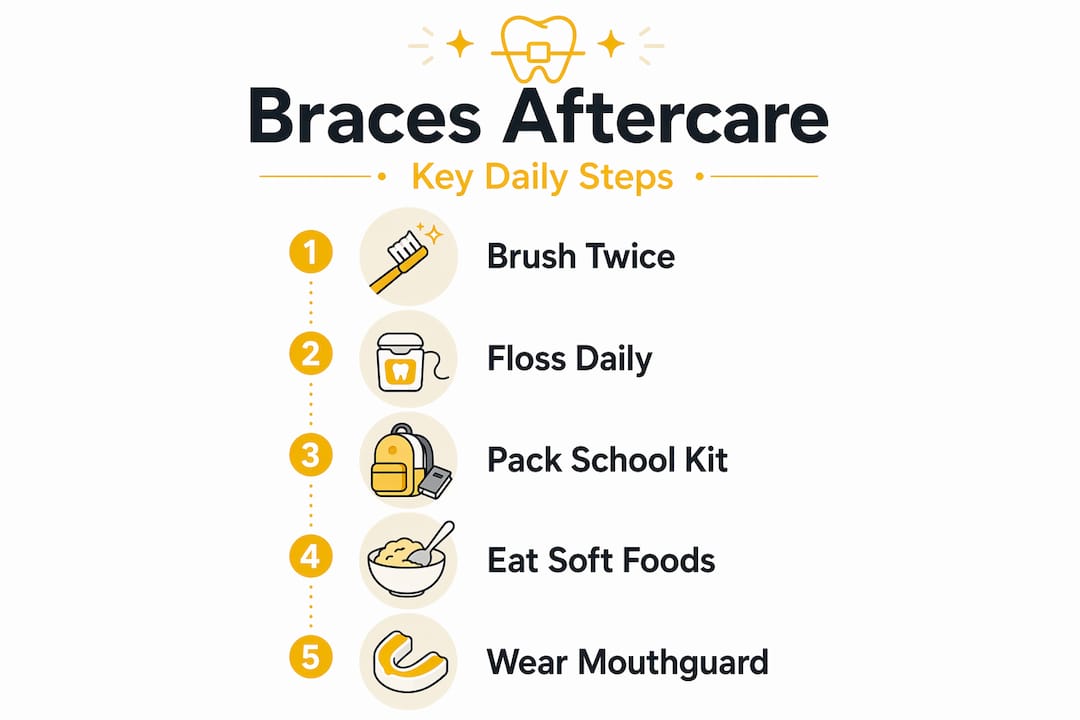
- A travel kit for school. A small bag with a travel toothbrush, wax, and a mirror so your child can brush after lunch.
| Tool | Why it matters |
|---|---|
| Soft-bristled toothbrush | Cleans around brackets without damaging gums |
| Floss threaders | Makes flossing under wires possible |
| Interproximal brush | Reaches tight spaces between brackets |
| Orthodontic wax | Prevents cheek and lip irritation from brackets |
| Fluoride mouthwash | Reduces cavity risk around braces hardware |
Keeping a second kit at school is something most families skip and almost all of them regret. A mid-day brush takes 90 seconds and makes a real difference in plaque control.
Pro Tip: Pack the school kit in your child’s lunch bag on day one so it becomes routine immediately, not an afterthought added three weeks in.
Staying on top of scheduled adjustment appointments matters just as much as the home routine. Prompt communication with your orthodontist keeps the treatment timeline moving. Missing appointments or waiting weeks to report a problem adds real time to the process.
Daily oral hygiene routine for kids with braces
A consistent routine is the backbone of good orthodontic care tips. Without one, plaque builds up in the tiny spaces around brackets and under wires, leading to white spots, cavities, and inflamed gums. Here’s how to build a routine that actually works for kids.
- Brush after every meal. Brushing for at least 2 minutes twice daily is the minimum. After meals is ideal. Use a soft-bristled or orthodontic brush held at a 45-degree angle to the gumline.
- Use a step-by-step brushing technique. Start at the gumline above the brackets, then angle the brush down to clean below the brackets. Brush the chewing surfaces last. Spend extra time on the back teeth, which get neglected most.
- Floss once daily with a threader. Thread the floss under the main wire between two teeth, then slide it up and down against each tooth. Repeat for every gap. Water flossers are a solid backup on nights when time is short.
- Rinse with fluoride mouthwash. One 60-second rinse at bedtime adds meaningful cavity protection. Interproximal brushes and rinsing after sugary foods reduce plaque significantly.
- Manage soreness on adjustment days. Braces are usually sore for 24 to 48 hours after tightening appointments. A warm salt water rinse (1 teaspoon of salt in 8 ounces of warm water) several times a day reduces inflammation. Over-the-counter pain relievers like ibuprofen or acetaminophen help with deeper aching.
- Apply wax to irritating brackets. Dry the bracket with a tissue, roll a small piece of wax between your fingers, and press it firmly over the bracket. It stays put for hours and provides immediate relief.
For a more detailed brushing walkthrough, the step-by-step brushing guide from Glow Orthodontics covers technique variations for different bracket types.
Pro Tip: Set a two-minute phone timer for brushing. Kids dramatically underestimate how long two minutes actually feels until they try it with a timer.
The first week with braces is the steepest part of the learning curve. Once the routine becomes automatic, most kids handle it without reminders.

Managing diet and lifestyle to protect braces
Food is the number one cause of broken brackets and bent wires. The right braces food recommendations aren’t about suffering through bland meals. They’re about knowing which textures actually damage hardware.
Foods to avoid completely:
- Hard foods: raw carrots, apples (unless sliced thin), hard rolls, popcorn, nuts, hard candy, ice
- Sticky foods: caramel, taffy, gummy bears, fruit snacks, bagels
- Chewy foods: beef jerky, thick pizza crust, gummy vitamins
- Sugary foods and drinks: soda, sports drinks, juice consumed frequently throughout the day
Hard, chewy, and sticky foods are the leading cause of bracket damage during treatment. One broken bracket can add weeks to the overall treatment time.
Safe braces food recommendations that work well day to day include soft fruits, yogurt, pasta, rice, eggs, fish, cooked vegetables, cheese, and smoothies. Apples and carrots are fine when cut into small thin pieces rather than bitten directly.
A few habits make a big difference at the table. Cutting food into small pieces before eating, chewing with the back teeth rather than biting with the front, and avoiding chewing on pens or fingernails all reduce the risk of bracket damage. For school lunches, soft sandwiches on regular bread, soup in a thermos, and cut fruit are easy default options that never cause problems.
Sports deserve special attention. Any contact sport or activity with a fall risk requires a mouthguard. Wearing a mouthguard during sports protects both the teeth and the soft tissue inside the mouth from bracket cuts during impact. A standard over-the-counter mouthguard fits over braces and costs very little compared to emergency repair visits.
Troubleshooting common braces problems
Even with perfect care, things break. Wires poke. Brackets come loose. Knowing what’s a real emergency versus a “call on Monday” situation saves a lot of unnecessary stress.
Common problems and how to handle them:
- Loose or broken bracket. The bracket may still be attached to the wire. Leave it in place, apply wax to cover any sharp edge, and call your orthodontist to schedule a repair. This is not an emergency unless there’s pain.
- Poking wire. Use a clean pencil eraser or the blunt end of a spoon to gently tuck the wire against the tooth. If that doesn’t work, orthodontic wax application over the tip creates a buffer. Never cut a wire with nail clippers.
- Wire completely out of tube. Use clean tweezers to slide it back into place. If you can’t manage it, cover with wax and call the office.
- Mouth sores or cheek irritation. Wax is your first response. Saltwater rinses help the area heal faster.
- Lost separator. Call the office. Separators are placed for a reason and usually need replacement before the next appointment.
“Parents who actively engage in braces care and promptly report broken brackets or loose wires achieve smoother treatment progress and fewer appointment delays.” Orthodontic care between visits
True orthodontic emergencies are less common than people expect. Severe pain, a wire puncturing the cheek, or significant trauma to the mouth warrant a same-day call. Most other issues can be safely managed at home for a day or two before a scheduled visit. The orthodontic emergencies guide from Glow Orthodontics breaks down exactly which situations require urgent attention.
Post-braces expectations: retainers and long-term care
Getting braces off feels like the finish line. It isn’t. Post-braces procedures, specifically retainer wear, determine whether those straight teeth stay straight. Teeth have a natural memory. Without retention, they drift back toward their original positions within months.
| Retainer phase | Wear schedule |
|---|---|
| First 3 to 12 months | Full-time wear (22 or more hours per day), removing only to eat and brush |
| Transition phase | Nighttime wear only, every night |
| Long-term maintenance | Nightly wear indefinitely, or as directed by orthodontist |
Retainers should be worn full-time initially for up to 12 months before transitioning to nighttime wear. For many patients, some level of nightly retainer use continues for life. That sounds like a long time, but slipping a retainer in before bed takes about five seconds once it’s a habit.
Cleaning a retainer is simple. Rinse it with cool water every morning. Brush it gently with a soft toothbrush and a small amount of dish soap once a week. Never use hot water, which can warp the plastic. Keep it in its case when not in use so it doesn’t end up in a napkin and thrown away at a restaurant.
Pro Tip: Get a spare retainer made shortly after braces come off. If the original is lost or damaged, a spare prevents any gap in wear and avoids the cost and delay of starting from scratch.
Understanding teeth shifting after braces is something every parent and child should know before the braces even come off. Knowing the “why” behind retainer wear dramatically improves compliance.
What I’ve learned from working with braces families
I’ve seen two kinds of families in orthodontic care. The first type treats braces as something happening to their child and waits for the next appointment. The second type understands that they are essential partners in the process and shows up that way every day. The outcomes between these two groups are not comparable.
The most common misconception I hear is that a broken bracket “probably isn’t a big deal.” It often isn’t, but the delay in reporting it is. A bracket that sits loose for three weeks contributes nothing to tooth movement during that time. Multiply that across several incidents and suddenly a 24-month treatment becomes a 28-month treatment.
The other thing families underestimate is how much the retainer phase matters. I’ve watched kids go through two full years of treatment and then abandon their retainer after six months because it felt optional. It isn’t optional. The investment made during treatment only holds if retention is taken seriously afterward.
My practical advice to parents: make the hygiene routine something you check casually but consistently for the first three months. Not in a hovering way. More like asking “did you brush after dinner” the same way you’d ask about homework. Once it’s automatic, you can step back. The habit just needs time to stick.
— Juiced
Support your child’s orthodontic journey with Glow Orthodontics

At Glow Orthodontics, we know that caring for braces between appointments is where treatment success is actually built. Our team in Langley supports families with practical orthodontic care for teens and younger patients at every stage of treatment, from the first adjustment to the final retainer check. If your child encounters a problem between visits, our orthodontic emergencies resource walks you through exactly what to do. And if you’re exploring whether traditional braces or Invisalign is the better fit for your family, our step-by-step Invisalign treatment overview makes the comparison easy. Book a consultation with us any time at gloworthodontics.ca.
FAQ
How often should a child brush their teeth with braces?
Brushing after every meal is the gold standard. At minimum, twice daily for two minutes each time using a soft-bristled toothbrush angled at 45 degrees to the gumline.
What foods should my child avoid with braces?
Hard, sticky, and chewy foods are the biggest risks. Popcorn, caramel, gummy candies, ice, and hard raw vegetables can break brackets or bend wires and should be avoided throughout treatment.
What should I do if my child’s wire is poking their cheek?
Use a clean eraser tip or spoon handle to gently press the wire back against the tooth. If that doesn’t work, cover the sharp end with orthodontic wax and call your orthodontist to schedule a repair visit.
How long does my child need to wear a retainer after braces?
Full-time retainer wear is recommended for the first several months after braces come off, followed by nightly wear that typically continues long term to prevent teeth from shifting back.
When is a braces problem an actual emergency?
Severe pain, a wire puncturing soft tissue, or mouth trauma require same-day contact with your orthodontist. Loose brackets, mildly poking wires, and minor irritation are manageable at home temporarily with wax and salt water rinses.