Braces for Teens Near Me: A Parent’s 2026 Guide
July 4, 2026
Braces for Teens Near Me: A Parent’s 2026 Guide
TL;DR:
- Braces for teens help straighten teeth and improve jaw development during adolescence. The main options include metal, ceramic, and clear aligners, each suited for different budgets and compliance levels. Starting treatment between ages 11 and 14 maximizes efficiency, and choosing a local, experienced orthodontist ensures better results and support.
Braces for teens are orthodontic treatments designed to straighten teeth and correct bite issues during the critical adolescent growth period. Searching for braces for teens near me is one of the most common first steps parents take, and for good reason: the American Association of Orthodontists recommends a first evaluation by age 7, with most teens starting active treatment between ages 11 and 14. The three main options are metal braces, ceramic braces, and clear aligners, each with distinct trade-offs in cost, visibility, and compliance demands. Getting this decision right affects not just your teen’s smile but also jaw development, airway health, and long-term dental function.
What are the main types of braces available for teens?
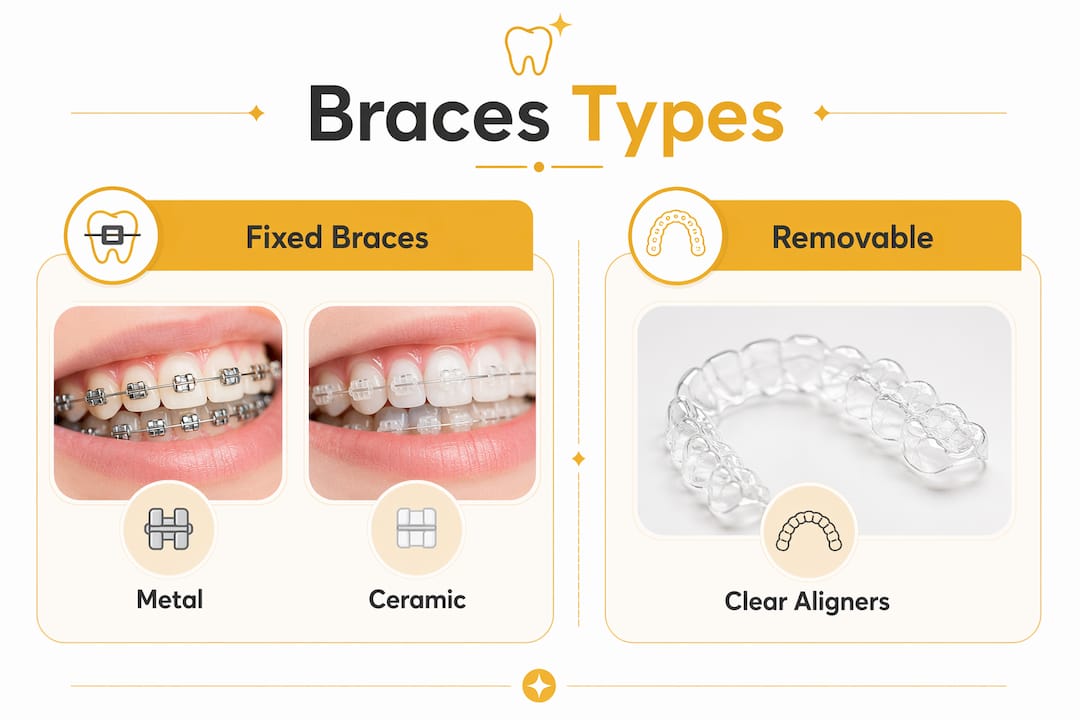
The best braces options for teens fall into three categories, and each one suits a different combination of budget, lifestyle, and treatment complexity.

Metal braces are the most cost-effective and reliable option. They are bonded directly to the teeth, so they work continuously without any action from your teen. That makes them ideal for complex cases and for teens who are not yet ready for the responsibility of removable appliances.
Ceramic braces use tooth-colored or clear brackets that blend with the enamel. They are less visible than metal but cost more and require more careful cleaning. Staining is a real concern, especially for teens who drink coffee, tea, or dark sodas regularly.
Clear aligners are nearly invisible and removable, which many teens prefer for aesthetic reasons. The trade-off is significant: clear aligners require about 22 hours of wear per day to be effective. That level of discipline is a genuine challenge for many teenagers.
| Feature | Metal braces | Ceramic braces | Clear aligners |
|---|---|---|---|
| Visibility | High | Low | Very low |
| Typical cost range | Lower end | Mid-range | Mid to higher end |
| Compliance required | Low | Low | High (22 hrs/day) |
| Best candidates | Most cases | Aesthetic-conscious teens | Responsible, motivated teens |
| Care intensity | Moderate | Higher | Moderate |
Pro Tip: Before choosing clear aligners, have an honest conversation with your teen about their daily routine. If they regularly forget homework or lose belongings, fixed braces will likely produce better results.
For a detailed side-by-side breakdown, the clear braces versus Invisalign comparison at Gloworthodontics covers the practical differences parents most often ask about.
When should teens start orthodontic treatment?
Timing orthodontic treatment correctly can shorten the overall process and reduce complexity. The AAO recommends a screening by age 7 so orthodontists can monitor jaw development before problems become entrenched. That early visit rarely leads to immediate treatment. It gives the orthodontist a baseline.
Most teens begin active treatment between ages 11 and 14. That window aligns with the eruption of permanent teeth and a period of active jaw growth, which makes tooth movement more efficient. Starting treatment during this phase often means shorter overall treatment time compared to starting in adulthood.
Key timing factors parents should know:
- Permanent teeth eruption: Treatment works best once most permanent teeth are in place, typically by age 12 or 13.
- Jaw growth: Adolescent jaw growth makes certain corrections easier and faster than in adults.
- Early screening benefits: Catching crowding or bite issues early can prevent the need for tooth extractions later.
- Treatment length: Most teen cases take 12 to 24 months to complete, depending on complexity.
- Personalized evaluation: No two teens have the same jaw structure. A proper clinical exam, including X-rays, determines the right start date.
Orthodontic care during the teen years also affects jaw alignment and airway health, not just tooth position. A patient-centered evaluation considers bite and jaw position together, which is why skipping the screening to “wait and see” can cost more time and money later.
How much do teen braces typically cost?
Orthodontic treatment for teens ranges from $3,000 to $7,500 in 2026, depending on the type of braces and the complexity of the case. That range is wide because a simple crowding case with metal braces sits at the lower end, while a complex bite correction with clear aligners sits at the higher end.
What that number covers matters as much as the number itself. All-inclusive pricing should cover initial records, all adjustment visits, any repairs, and retainers at the end of treatment. Practices that itemize each service separately can produce surprise bills that push the total well above the quoted figure.
Financial considerations worth confirming before you commit:
- Insurance network status: In-network orthodontists have negotiated rates with insurers, which directly reduces your out-of-pocket cost. Always confirm network status before the first appointment.
- Monthly payment plans: Many practices offer zero-interest financing spread over the treatment period.
- FSA and HSA accounts: Orthodontic treatment qualifies as a medical expense under both Flexible Spending Accounts and Health Savings Accounts, reducing your effective cost.
- Retainer coverage: Ask whether retainers are included. Some practices charge separately, adding $300 to $600 after treatment ends.
- Repair fees: Broken brackets happen. Confirm whether repairs are covered under the original fee or billed separately.
Pro Tip: Ask for a written fee breakdown before signing any treatment agreement. A reputable practice will provide one without hesitation. If they resist, that tells you something.
For more on what dental coverage typically includes, the dental insurance for Invisalign guide at Gloworthodontics walks through what most plans cover and what they do not.
What should parents look for in a local teen orthodontist?
Finding a teen orthodontist in your area is about more than proximity, though proximity matters more than most parents initially realize. Adjustment visits happen every 4 to 8 weeks throughout treatment. Over an 18-month course, that adds up to 9 to 18 trips to the office. A practice that is 45 minutes away becomes a real logistical burden.
Qualities that separate good orthodontic practices for teenagers:
- Specialization in teen care: Orthodontists who focus on adolescent patients understand the behavioral and developmental factors that affect treatment. That experience shapes how they set expectations and handle compliance issues.
- Consistent provider relationship: Your teen should see the same orthodontist at every visit, not a rotating staff. Continuity builds trust and allows the provider to catch subtle changes in tooth movement.
- Multiple locations: Practices with more than one office give families scheduling flexibility, especially when school and extracurricular schedules shift.
- Clear communication with parents: The best practices give parents regular progress updates, not just the teen. You are paying for the treatment and need to understand what is happening.
- Family-friendly environment: A welcoming office reduces teen anxiety and makes it easier to keep appointments. Bilingual staff is a genuine plus for families where English is a second language.
Gloworthodontics serves the Langley, British Columbia area with a team that specializes in teen orthodontic care and offers personalized treatment plans built around each patient’s lifestyle. Their complete family guide to teen orthodontics is a practical starting point for parents who want to understand the full scope of treatment before booking a consultation.
How do maintenance and compliance affect treatment success?
Compliance and daily maintenance are where many teen orthodontic cases succeed or fall short. Fixed braces require consistent brushing and flossing around brackets and wires, which takes more time and technique than brushing without braces. Clear aligners require the discipline to wear them nearly all day and to clean them properly after every meal.
Modern braces use smaller, more comfortable brackets than earlier generations. That reduces irritation and makes daily life easier. Customizable bracket colors give teens a way to personalize their treatment, which increases engagement and reduces the social stigma that once made braces a source of anxiety.
Practical ways to support your teen through treatment:
- Set a brushing routine: Teens with braces should brush after every meal, not just morning and night. A travel toothbrush in their school bag makes this realistic.
- Use a water flosser: Threading floss through wires is tedious. A water flosser like Waterpik removes food debris efficiently and increases the chance your teen will actually floss.
- Track aligner wear time: For teens using clear aligners, a simple phone reminder set for 22 hours helps build the habit. The practical tips for life with Invisalign resource at Gloworthodontics covers this in detail.
- Plan for sports: Teens who play contact sports need a mouthguard designed to fit over braces. Standard mouthguards do not work and can cause bracket damage.
- Manage instrument playing: Teens who play brass or woodwind instruments may need a short adjustment period. Most adapt within a few weeks.
The health benefits of orthodontic treatment extend beyond aesthetics. Properly aligned teeth are easier to clean, which reduces the risk of cavities and gum disease throughout your teen’s life.
Key Takeaways
Choosing the right orthodontic treatment for your teen requires matching the braces type to their compliance level, your budget, and the proximity of a qualified local provider.
| Point | Details |
|---|---|
| Start timing matters | Most teens begin treatment between ages 11 and 14, when jaw growth supports faster correction. |
| Match braces to compliance | Fixed braces suit teens with low compliance; clear aligners require 22 hours of daily wear. |
| Verify all-in pricing | Confirm that records, adjustments, repairs, and retainers are all included before signing. |
| Check insurance network status | In-network providers reduce out-of-pocket costs through negotiated insurance rates. |
| Prioritize office proximity | Adjustment visits every 4 to 8 weeks make a conveniently located practice a practical necessity. |
What I’ve learned after watching families navigate this decision
Parents consistently underestimate how much the orthodontist relationship matters compared to the braces type. I have seen families choose a practice based on a lower quoted price, only to struggle with poor communication, long waits, and a teen who dreads every appointment. The braces themselves are a commodity. The provider is not.
The compliance question is also more nuanced than most articles admit. Clear aligners are not automatically the better choice for teens just because they look better. A teen who wears metal braces consistently will finish treatment on time. A teen who removes their aligners during lunch and forgets to put them back in will extend their treatment by months, which costs more money and more frustration for everyone.
The good news is that modern braces are genuinely more comfortable than what parents experienced in their own adolescence. Smaller brackets, smoother wires, and color customization have removed much of the stigma. When parents frame braces as a normal, even fun, part of growing up rather than a burden, teens respond better. That attitude shift costs nothing and makes the whole process easier.
Book the consultation before you feel ready. Most parents wait longer than they should because the decision feels large. A good orthodontist will answer every question you have and help you build a realistic plan. That conversation is free. The delay is not.
— Juiced
Teen orthodontic care at Gloworthodontics
Gloworthodontics offers specialized orthodontic care for teens in the Langley area, including traditional braces and Invisalign, with treatment plans built around each teen’s lifestyle and maturity level.

The practice participates in major insurance networks, which helps families manage costs from the start. Transparent, all-in pricing means no surprise bills mid-treatment. The team communicates directly with both parents and teens throughout the process, so everyone stays informed. To learn what treatment makes sense for your teen, start with the complete teen orthodontic guide or book a free consultation directly through the Gloworthodontics website.
FAQ
What age should my teen get braces?
Most teens start orthodontic treatment between ages 11 and 14, after permanent teeth have erupted. The American Association of Orthodontists recommends a first screening by age 7 to monitor jaw development early.
How long does teen braces treatment take?
Treatment typically takes 12 to 24 months, depending on the complexity of the case and the type of braces used. Clear aligner cases may run longer if compliance is inconsistent.
Are clear aligners a good choice for teenagers?
Clear aligners work well for motivated teens who will wear them for about 22 hours daily. For teens who are less disciplined about removable appliances, fixed metal or ceramic braces produce more reliable results.
How do I find affordable braces for teens near me?
Confirm that the orthodontist is in-network with your insurance plan, ask for all-inclusive pricing that covers adjustments and retainers, and ask about monthly payment plans or FSA/HSA payment options.
Where to get braces for teens in Langley?
Gloworthodontics in Langley, British Columbia, offers teen orthodontic treatments including metal braces and Invisalign, with personalized plans and in-network insurance participation. Book a free consultation at gloworthodontics.ca.