Braces Near Me With Insurance: Langley Family Guide
July 10, 2026
Braces Near Me With Insurance: Langley Family Guide
TL;DR:
- Finding braces near me with insurance helps families in Langley reduce orthodontic costs without sacrificing quality. Most insurance plans cover up to a $3,000 lifetime maximum and pay about 50%, lowering out-of-pocket expenses for braces and aligners. Verifying benefits beforehand and combining insurance with financing ensures affordable treatment options for families.
Finding braces near me with insurance is the fastest way for Langley families to cut orthodontic costs without sacrificing quality care. Orthodontic treatment, the clinical term for correcting teeth and jaw alignment using braces or clear aligners, typically costs $3,000 to $7,000 and runs 12 to 36 months depending on complexity. That price range stops many families cold. Insurance changes the math significantly, and providers like Gloworthodontics in Langley help patients use every dollar of coverage before spending a cent out of pocket.
How does orthodontic insurance coverage work in Langley, BC?
Orthodontic insurance is structured differently from regular dental coverage. Most dental plans carry an annual maximum, but orthodontic benefits work as a lifetime maximum benefit ranging from $750 to over $3,000. That is a one-time payout, not a yearly reset. Once you use it, it is gone, so timing your treatment correctly matters.
Most group plans through BC employers cover orthodontics as a separate benefit category. The plan pays a set percentage, often 50%, up to the lifetime maximum. The patient covers the rest. For a $5,000 treatment with a $1,500 lifetime maximum, the family pays $3,500 out of pocket. That is still a meaningful reduction from the full price.
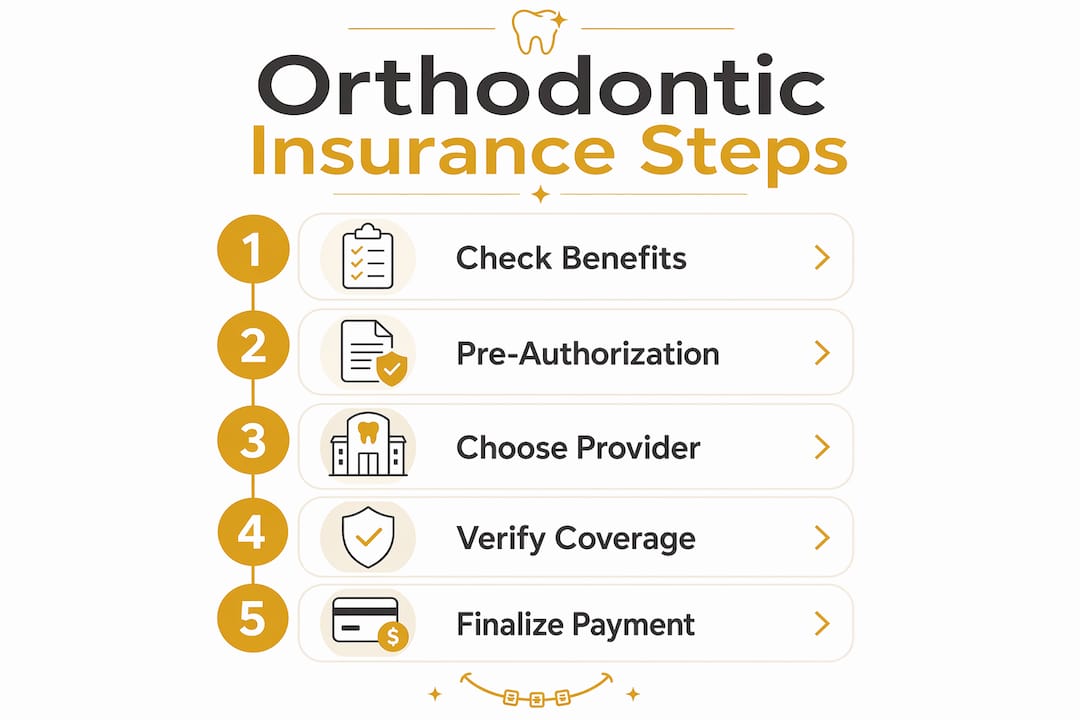
Coverage typically applies to metal braces, ceramic braces, and Invisalign, though some plans restrict clear aligner coverage or apply a lower reimbursement rate. Employer policies heavily influence what is covered and when benefits activate. Checking your plan during open enrollment, before your child needs treatment, gives you time to choose the right coverage tier.
Dependent coverage is another key factor. Most plans cover children under 18 automatically, and some extend to age 21 for full-time students. Adult orthodontic coverage exists but is less common and often carries a lower lifetime maximum. Confirm your dependent’s eligibility before booking a consultation.
- Lifetime maximum: $750 to $3,000+ as a one-time benefit, separate from annual dental coverage
- Coverage percentage: Typically 50% of the orthodontist’s fee, up to the lifetime cap
- Eligible appliances: Metal braces, ceramic braces, and often Invisalign (plan-dependent)
- Dependent age limits: Usually under 18; some plans extend to 21 for students
- Enrollment timing: Benefits activate based on your employer’s plan year, not the calendar year
Pro Tip: Call your insurance provider before your first orthodontic appointment and ask specifically for your “orthodontic lifetime maximum,” your “waiting period,” and whether clear aligners are covered. Write down the representative’s name and the date of the call.
What payment options exist if insurance does not cover everything?
Insurance rarely covers the full cost of braces. The gap between your lifetime maximum and the total treatment fee is your out-of-pocket responsibility. Three financial tools close that gap effectively.
-
In-house financing plans. Many orthodontic offices, including Gloworthodontics, offer 0% interest financing with monthly payments as low as $99 to $189. These plans spread the remaining balance over the treatment period with no credit check in many cases. That predictability makes budgeting straightforward for families.
-
Health Savings Accounts and Flexible Spending Accounts. HSA and FSA accounts let you pay for orthodontic treatment with pre-tax dollars. If you are in a 30% combined tax bracket, every dollar spent through an HSA or FSA effectively costs you 70 cents. That reduction applies on top of any insurance benefit you already receive.
-
Combining insurance and financing. The most effective approach stacks both tools. Your insurance pays its lifetime maximum directly to the provider. The remaining balance goes onto a 0% financing plan. You pay nothing extra in interest, and the monthly amount stays manageable.
In-house financing often beats insurance reimbursement for simplicity. Insurance claims involve paperwork, waiting periods, and occasional denials. A direct payment plan with your orthodontist has none of that friction. For families without coverage, a financing plan alone can make treatment fully accessible.
Pro Tip: If your employer offers an FSA, contribute the maximum allowed at the start of the plan year. You can use the full annual election immediately, even before the payroll deductions are complete. That gives you a short-term, interest-free advance on your orthodontic costs.
Gloworthodontics provides clear, written cost estimates before treatment starts. Knowing your exact monthly payment before you commit removes the financial guesswork that causes most families to delay care.
How do braces types affect insurance coverage and cost?
The appliance you choose affects both the total cost and how much insurance will pay. Not all braces are treated equally under a benefits plan.

Metal braces are the most widely covered option. They carry the lowest base cost and face the fewest insurance restrictions. Ceramic braces cost more than metal and are covered by most plans at the same rate, though some plans classify them as a cosmetic upgrade and apply a lower reimbursement. Clear aligners like Invisalign sit in the middle ground. Coverage depends entirely on your specific plan. Many modern employer plans now include Invisalign at the same benefit level as metal braces, but older or more basic plans may exclude them or cap reimbursement at the metal brace equivalent fee.
| Appliance type | Typical cost range | Insurance coverage likelihood | Notes |
|---|---|---|---|
| Metal braces | $3,000–$5,000 | High | Most plans cover fully up to lifetime max |
| Ceramic braces | $3,500–$6,000 | Moderate to high | Some plans reduce benefit for cosmetic upgrade |
| Invisalign | $4,000–$7,000 | Moderate | Coverage varies widely by employer plan |
| Clear aligners (other brands) | $3,000–$6,000 | Moderate | Same variability as Invisalign |
The cost and duration of treatment depend on case complexity, not just appliance type. A mild crowding case with metal braces may finish in 12 months. A complex bite correction with Invisalign may take 30 months. Longer treatment does not always mean higher cost, but it does affect the monthly payment calculation on a financing plan.
Families choosing between appliances should weigh three factors: their insurance plan’s specific language on aligner coverage, the total out-of-pocket difference after benefits, and the lifestyle fit for their child. Teens who play contact sports often do better with Invisalign. Kids who struggle with compliance do better with fixed metal braces. For a detailed side-by-side look, the clear braces vs. Invisalign comparison from Gloworthodontics covers the key differences families need to know.
- Metal braces offer the broadest insurance coverage and lowest cost entry point
- Ceramic braces look more natural but may trigger cosmetic-upgrade clauses in some plans
- Invisalign requires plan-specific verification before assuming coverage applies
- Treatment complexity matters more than appliance type for final cost
How do you find insurance-friendly orthodontists near Langley?
The phrase “insurance-friendly orthodontists” refers to providers who actively work with your plan, file claims on your behalf, and give you a clear picture of costs before treatment begins. Finding one near Langley is straightforward when you know what to look for.
In-network providers have a contracted fee schedule with your insurer. That means the orthodontist charges a pre-negotiated rate, which can reduce your out-of-pocket cost beyond just the lifetime maximum. Out-of-network providers charge their standard fee, and your plan reimburses a fixed amount toward it. The final out-of-pocket cost is what matters most, not the network label. Many patients save more with an out-of-network provider who offers strong financing than with an in-network provider who charges higher fees after the discount.
Many orthodontists accept all insurance plans and file claims for out-of-network benefits on your behalf. You do not need to do the paperwork yourself. The office submits the claim, the insurer pays the provider directly or sends you a check, and the balance goes onto your payment plan. That process is standard at most established orthodontic offices.
Benefits verification before your first visit gives you a written estimate of what your insurance will pay and what you owe. Request this before you commit to any treatment plan. A reputable office will complete this verification for free as part of the consultation process.
- Confirm network status by calling your insurer with the provider’s NPI number before booking
- Request benefits verification in writing before your first appointment
- Ask if the office files out-of-network claims on your behalf
- Compare total out-of-pocket cost, not just the in-network discount
- Check for $0 down options and ask for a full payment schedule in writing
The complete insurance guide for Langley families from Gloworthodontics walks through exactly how to read your benefits summary and what questions to ask your plan administrator.
Pro Tip: Ask the orthodontic office to run a “pre-authorization” or “pre-determination” with your insurer before treatment starts. This is a formal written estimate from your insurance company confirming exactly how much they will pay. It is not a guarantee, but it is the closest thing to one.
Key Takeaways
Families in Langley who verify benefits before treatment and combine insurance with 0% financing consistently pay the least out of pocket for braces.
| Point | Details |
|---|---|
| Lifetime maximum is separate | Orthodontic benefits range from $750 to $3,000+ and do not reset annually like dental coverage. |
| Appliance type affects coverage | Metal braces carry the broadest coverage; Invisalign requires plan-specific verification before assuming benefits apply. |
| HSA and FSA reduce real cost | Paying with pre-tax dollars cuts effective out-of-pocket cost regardless of insurance status. |
| Out-of-network can still work | Most orthodontic offices file out-of-network claims for you, and final cost matters more than network label. |
| Benefits verification prevents surprises | Request written pre-authorization before treatment to confirm exactly what your plan will pay. |
What I have learned about insurance and braces in Langley
Most families I talk to make the same mistake. They call their insurance company, hear a lifetime maximum number, and assume that is what the insurer will actually pay. It is not. The lifetime maximum is the ceiling. What the plan actually pays depends on the percentage, the contracted rate, the waiting period, and whether the appliance qualifies. Those four variables can cut the real benefit in half.
The families who come out ahead do one thing differently. They treat the benefits verification as a required step, not an optional one. They get the number in writing before they sign anything. That single habit eliminates the most common source of financial stress in orthodontic treatment.
The other thing I have seen consistently: do not let the absence of insurance stop you from getting a consultation. Offices like Gloworthodontics offer $0 down financing plans that make monthly payments predictable and manageable. For many families, the monthly payment on a financing plan is lower than what they expected to pay with insurance. The math surprises people every time.
One more thing worth saying plainly. The orthodontic consultation process at a good office costs you nothing and tells you everything. You learn the treatment options, the total cost, the insurance contribution, and the monthly payment. You leave with a complete financial picture. There is no reason to delay that conversation.
— Juiced
Gloworthodontics makes insurance-covered braces straightforward in Langley
Gloworthodontics works with families across Langley to verify insurance benefits, explain coverage in plain language, and build a payment plan that fits the real budget, not the ideal one.

The team at Gloworthodontics handles benefits verification before your first appointment, so you arrive knowing your numbers. For families with partial coverage or no coverage at all, flexible financing plans with low monthly payments keep treatment within reach. The complete guide for teens and families covers every step from consultation to final retainer. Whether your child needs metal braces, ceramic braces, or Invisalign, Gloworthodontics offers personalized care with transparent pricing from day one. Book a free consultation at Glow Orthodontics Langley and get your insurance verified before you leave.
FAQ
What does orthodontic insurance typically cover in BC?
Most BC employer plans cover 50% of orthodontic fees up to a lifetime maximum of $750 to $3,000+, applied once per patient. Coverage usually includes metal braces, ceramic braces, and often Invisalign, depending on the specific plan.
Can I use braces insurance at an out-of-network orthodontist?
Yes. Most orthodontic offices file out-of-network claims on your behalf, and your insurer reimburses a portion of the fee. The final out-of-pocket cost is what matters most, not whether the provider is in-network.
What if my insurance does not cover braces at all?
Families without orthodontic coverage can use HSA or FSA accounts for pre-tax savings and access in-house 0% financing plans with monthly payments as low as $99 to $189. Many patients find financing alone makes treatment fully affordable.
How do I find out exactly what my insurance will pay?
Request a benefits verification or pre-determination from your orthodontic office before treatment starts. This written estimate from your insurer confirms the expected payment and your remaining balance, preventing billing surprises later.
Does Invisalign qualify for insurance coverage in Langley?
Invisalign coverage depends entirely on your employer’s plan. Many modern plans cover clear aligners at the same rate as metal braces, but older plans may exclude them or cap reimbursement at the metal brace equivalent. Always verify Invisalign eligibility specifically when you call your insurer.