Braces on Medical Aid: A Family Coverage Guide
July 15, 2026
Braces on Medical Aid: A Family Coverage Guide
TL;DR:
- Medical aid provides limited orthodontic coverage based on medical necessity and specific plan rules. Families must understand eligibility, preauthorization, and out-of-pocket costs to avoid financial surprises. Proper planning and documentation improve the chances of successful insurance claims for braces.
Braces on medical aid is defined as partial orthodontic coverage provided by health insurance plans, contingent on medical necessity and plan-specific rules rather than cosmetic preference. Most families are surprised to learn that no medical aid plan covers the full cost of braces. Coverage is structured around clinical criteria, waiting periods, age limits, and co-payments that directly affect what you actually pay out of pocket. Understanding these rules before treatment starts is the difference between a manageable bill and a financial shock.
What does medical aid typically cover for braces?
Medical aid plans generally cover a defined set of orthodontic services, not the entire treatment package. Knowing exactly what falls inside and outside that boundary saves families from unexpected bills.
Most comprehensive plans include the following:
- Initial consultations and clinical assessments to determine whether treatment is medically necessary
- Diagnostic X-rays and records used to build the treatment plan
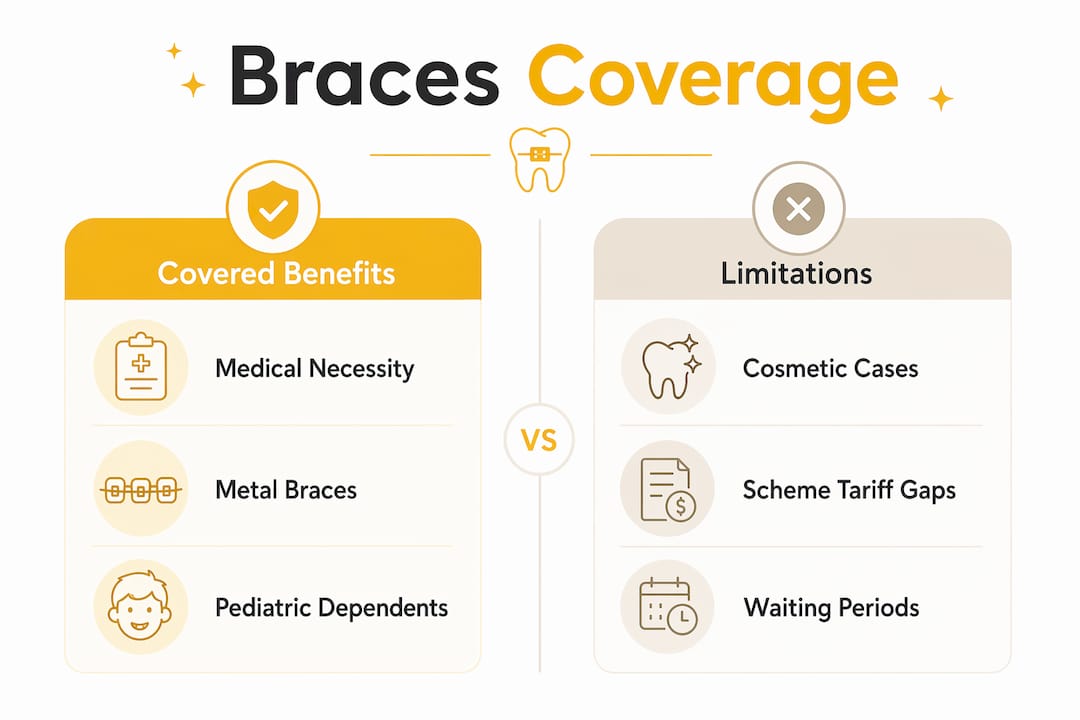
- Metal and ceramic braces for cases that meet medical necessity criteria
- Retainers fitted after active treatment ends
- Follow-up appointments tied to the approved treatment plan
Cosmetic-only cases are excluded across the board. If the primary reason for braces is appearance rather than a functional problem like difficulty chewing, jaw pain, or speech issues, the plan will not pay. This distinction catches many families off guard, particularly when an orthodontist recommends treatment for mild crowding that a scheme classifies as cosmetic.
The type of braces also affects what a plan will fund. Metal braces are the most commonly covered option. Clear aligner systems are sometimes covered under comprehensive plans, but coverage is not guaranteed and often requires additional documentation. Patients asking “does Dentical cover Invisalign” should contact their specific scheme directly, since Invisalign coverage varies widely by plan tier.
A critical gap exists between what the scheme pays and what the specialist charges. Fixed scheme tariffs cause out-of-pocket shortfalls even when treatments are technically covered. The scheme pays its set rate; the orthodontist bills their actual fee; you pay the difference. Using a network provider reduces but rarely eliminates this gap.
What are the eligibility requirements for braces on medical aid?
Eligibility for orthodontic benefits is not automatic. Plans apply several filters before approving coverage, and failing any one of them means the claim is denied.
- Medical necessity documentation. The treatment must address a functional problem. Conditions that qualify include difficulty chewing, jaw pain, speech impairment, or severe crowding that affects oral health. Cosmetic improvement alone does not qualify.
- Age restrictions. Most plans cover dependents under age 21 for functional issues, with limited or no adult coverage. Adult patients should confirm their specific plan’s age cap before booking a consultation.
- Waiting periods. Waiting periods of 6–12 months before orthodontic benefits activate are standard on many schemes. Joining a plan and expecting immediate braces coverage is a common and costly mistake.
- Preauthorization. Preauthorization involves formal documentation and a clinical motivation letter submitted before treatment begins. The scheme must approve the case before any covered work starts.
- Plan type. Hospital-only plans generally exclude braces unless treatment is linked to a medical accident or surgery. Comprehensive plans are the only tier that reliably includes orthodontic benefits.
Pro Tip: Request a written confirmation of your waiting period and benefit limit from your scheme before your child’s first orthodontic appointment. Verbal assurances from call center agents are not binding.
Eligibility for orthodontic benefits also depends on whether the patient has had prior orthodontic treatment. Most plans apply a once-in-a-lifetime benefit, meaning a second course of braces in adulthood is unlikely to receive any coverage.

How do out-of-pocket costs work with medical aid for braces?
Even with active coverage, families pay a meaningful share of the total bill. Understanding the cost structure prevents surprises at the payment desk.
| Cost component | What it means for you |
|---|---|
| Scheme tariff shortfall | The gap between the specialist’s fee and what the plan pays |
| Annual benefit limit | The maximum the plan pays per year for orthodontic treatment |
| Co-payment | A fixed amount you pay per visit or per treatment phase |
| Pre-treatment dental costs | Extractions or fillings billed against your general dental limit |
| Non-network provider premium | Higher shortfalls when using an orthodontist outside the network |
Full orthodontic treatment costs can exceed R60,000 as of 2026, with medical aids covering only a portion of that total. That figure illustrates why shortfall planning is not optional. Even a plan that covers 50% of the scheme tariff leaves a substantial balance when the specialist charges above tariff.
Pre-treatment dental work is a budget item many families overlook. Extractions, fillings, or gum treatment often come from general dental limits rather than the orthodontic benefit pool. Spending down your general dental benefits before braces start reduces the funds available for the treatment itself.
Hospital plans normally exclude braces unless linked to medical accidents or surgeries. Families on hospital-only plans who want orthodontic coverage need to upgrade to a comprehensive option, ideally before the waiting period clock starts.
Pro Tip: Ask your orthodontist for a full fee schedule before submitting for preauthorization. Compare each line item against your scheme’s tariff list so you can calculate the exact shortfall before committing to treatment.
For a detailed breakdown of coverage and costs, reviewing your plan documents alongside a specialist’s quote gives the clearest picture of your real financial obligation.
How to get braces covered by medical aid successfully
Getting braces covered is an administrative process as much as a clinical one. Missing a single step can result in a denied claim or a benefit that does not apply retroactively.
- Book with a network orthodontist first. Network providers have pre-negotiated rates with your scheme, which reduces the shortfall. Confirm network status directly with the scheme, not just the practice.
- Obtain a clinical motivation letter. Your orthodontist must document the functional problem in writing. A letter that describes only aesthetic concerns will not satisfy the medical necessity requirement.
- Submit for preauthorization before any treatment starts. Preauthorization must be approved before covered work begins. Treatment started without approval is treated as an uncovered expense, regardless of whether it would otherwise qualify.
- Track your annual benefit usage. Orthodontic treatment spans 18–24 months. Annual limits reset each calendar year, so phasing treatment across years can maximize total coverage.
- Appeal denials with additional documentation. A denial is not always final. Submit a formal appeal with additional clinical records, photographs, and a letter from the orthodontist explaining the functional impact of the condition.
- Confirm claim submission deadlines. Most schemes require claims within 90 days of treatment. Late submissions are rejected regardless of clinical merit.
Each orthodontic case is unique, so personalized assessment is required to understand treatment type, pricing, and plan coverage. Generic online estimates do not account for your specific bite, jaw structure, or plan rules. A consultation with a qualified orthodontist is the only reliable starting point.
For families preparing for the process, a step-by-step preparation guide covers the documentation and clinical steps needed to give a coverage application the best chance of approval.
Key Takeaways
Medical aid covers braces partially and conditionally, meaning families must meet medical necessity criteria, complete preauthorization, and budget for shortfalls to access orthodontic benefits effectively.
| Point | Details |
|---|---|
| Coverage is always partial | No medical aid plan pays the full cost of braces; shortfalls are a normal expectation. |
| Medical necessity is required | Plans cover functional problems like jaw pain or chewing difficulty, not cosmetic improvement. |
| Preauthorization is mandatory | Treatment started without scheme approval is treated as an uncovered expense. |
| Waiting periods apply | Most plans require 6–12 months of membership before orthodontic benefits activate. |
| Plan type determines access | Hospital-only plans rarely cover braces; comprehensive plans are the reliable option. |
What families often get wrong about orthodontic coverage
The most common mistake I see is families treating medical aid as a payment plan rather than a partial benefit. They assume the scheme will cover most of the cost and are blindsided when the shortfall arrives. The reality is that medical aid orthodontic benefits almost never represent full financial coverage, even on top-tier plans. That is not a flaw in the system. It is the system working as designed.
The second mistake is waiting too long to start the administrative process. Preauthorization takes time. Waiting periods take time. Gathering clinical documentation takes time. Families who start this process the week before they want braces fitted will not get coverage in place. The families who navigate it well start six months before they expect treatment to begin.
The third mistake is ignoring the scheme tariff shortfall until the bill arrives. Understanding the gap between what your scheme pays and what your orthodontist charges is not optional budgeting. It is the core financial reality of orthodontic treatment on medical aid. Ask for the numbers in writing before you commit.
My honest recommendation: treat your medical aid benefit as a discount, not a solution. Plan for the full cost, apply for every benefit you qualify for, and let the coverage reduce what you owe rather than define what you can afford.
— Juiced
Orthodontic guidance from Gloworthodontics
Navigating medical aid coverage for braces is genuinely complex, and the rules differ by plan, by age, and by clinical case. Gloworthodontics works with families in the Langley area to clarify what their specific plan covers, what documentation is needed for preauthorization, and what the realistic out-of-pocket costs look like before treatment begins.

Whether you are looking at traditional braces for a teenager or exploring options for an adult, Gloworthodontics offers personalized consultations that address both clinical fit and financial planning. The orthodontic care guide for teens is a practical starting point for families with adolescents approaching treatment age. For patients interested in clear aligner options, the Invisalign treatment process page explains coverage considerations alongside clinical steps. Book a consultation at Gloworthodontics to get a clear picture of your options.
FAQ
Does medical aid cover the full cost of braces?
Medical aid covers only a portion of braces costs. Shortfalls are standard because scheme tariffs are lower than specialist fees, leaving patients responsible for the difference.
What age limit applies to braces coverage on medical aid?
Most plans cover orthodontic treatment for dependents under age 21 when medical necessity is documented. Adult coverage is limited and varies significantly by plan tier.
Does Dentical cover Invisalign?
Dentical and similar schemes may cover clear aligners under comprehensive plans, but coverage is not guaranteed. Patients should confirm directly with their scheme whether Invisalign qualifies under their specific benefit option.
How long is the waiting period before braces are covered?
Waiting periods of 6–12 months are standard before orthodontic benefits activate. Joining a plan and expecting immediate coverage for braces is a common and costly assumption.
What happens if my preauthorization is denied?
A denial can be appealed with additional clinical documentation, including photographs and a detailed motivation letter from your orthodontist explaining the functional impact of the condition. Appeals succeed most often when the medical necessity case is clearly supported by clinical evidence.