Braces vs Invisalign cost: Langley family guide 2026
March 21, 2026
Braces vs Invisalign cost: Langley family guide 2026
Choosing between braces and Invisalign for your family can feel overwhelming, especially when costs vary widely and insurance coverage remains unclear. Many Langley families assume Invisalign always costs significantly more, but the reality depends on treatment complexity, duration, and available payment options. This guide breaks down the real costs of braces versus Invisalign in Langley, BC, helping you make an informed decision that fits your budget and aesthetic goals. You’ll learn what drives pricing differences, how insurance can help, and practical tips to choose the most cost-effective treatment for your unique needs.
Table of Contents
- Key takeaways
- Understanding orthodontic treatment costs in Langley
- Comparing braces and Invisalign costs: what families should know
- Payment options and insurance coverage for braces and Invisalign in Langley
- Tips for choosing the most cost-effective orthodontic treatment
- Explore orthodontic care options at Glow Orthodontics Langley
- Frequently asked questions
Key Takeaways
| Point | Details |
|---|---|
| Cost drivers | Pricing hinges on treatment type, complexity, duration, materials, and appliance choice. |
| Invisalign premium | Invisalign generally costs 15 to 20 percent more than traditional braces due to digital planning and custom fabrication. |
| Insurance variability | Coverage varies by plan with some policies covering up to eighty percent for children but others cap benefits or exclude adults. |
| Total cost includes extras | The total investment includes exams, X rays, retainers, and follow up visits. |
| Cheapest option | Metal braces are usually the lowest upfront cost, ceramic braces sit in the middle, and Invisalign is typically the highest. |
Understanding orthodontic treatment costs in Langley
When you start exploring orthodontic options in Langley, the first surprise is often how much prices can vary. Orthodontic treatment costs depend on factors like severity, duration, and materials used, which means no two treatment plans carry identical price tags. Complexity matters most: a simple alignment issue requiring 12 months of treatment costs far less than correcting severe bite problems over three years. The appliance type also plays a major role, with traditional metal braces typically offering the lowest upfront cost, clear ceramic braces sitting in the middle, and Invisalign aligners commanding premium pricing due to advanced digital planning and custom manufacturing.
Insurance coverage in Langley varies significantly by provider and plan. Some policies cover up to 80% of orthodontic treatment for children under 18, while others cap benefits at a fixed dollar amount regardless of the treatment chosen. Adults often face lower coverage percentages or exclusions altogether, making it essential to review your specific policy details before committing to treatment. Many families overlook additional fees that add up quickly: initial exams, X-rays, retainers after treatment, and follow-up visits all contribute to the total investment beyond the quoted appliance cost.
Understanding these foundational cost drivers helps you budget realistically and avoid surprises. Treatment duration directly impacts total cost because longer treatments require more appointments, adjustments, and monitoring. Materials matter too: high-quality brackets, wires, and aligners cost more upfront but often deliver faster results and fewer emergency visits. When evaluating braces insurance coverage costs or dental insurance covering Invisalign, ask your orthodontist for a detailed breakdown that includes all anticipated fees, not just the appliance itself.
Pro Tip: Request a written treatment estimate that itemizes every cost, including retainers and post-treatment care, so you can compare total investment across different orthodontic options without hidden surprises.
Key cost factors to consider:
- Severity of misalignment or bite issues requiring correction
- Estimated treatment duration and number of required appointments
- Type of appliance: metal braces, ceramic braces, or Invisalign aligners
- Insurance plan coverage limits and exclusions for orthodontics
- Additional fees for exams, imaging, retainers, and follow-up care
- Geographic location and orthodontist experience level in Langley
Comparing braces and Invisalign costs: what families should know
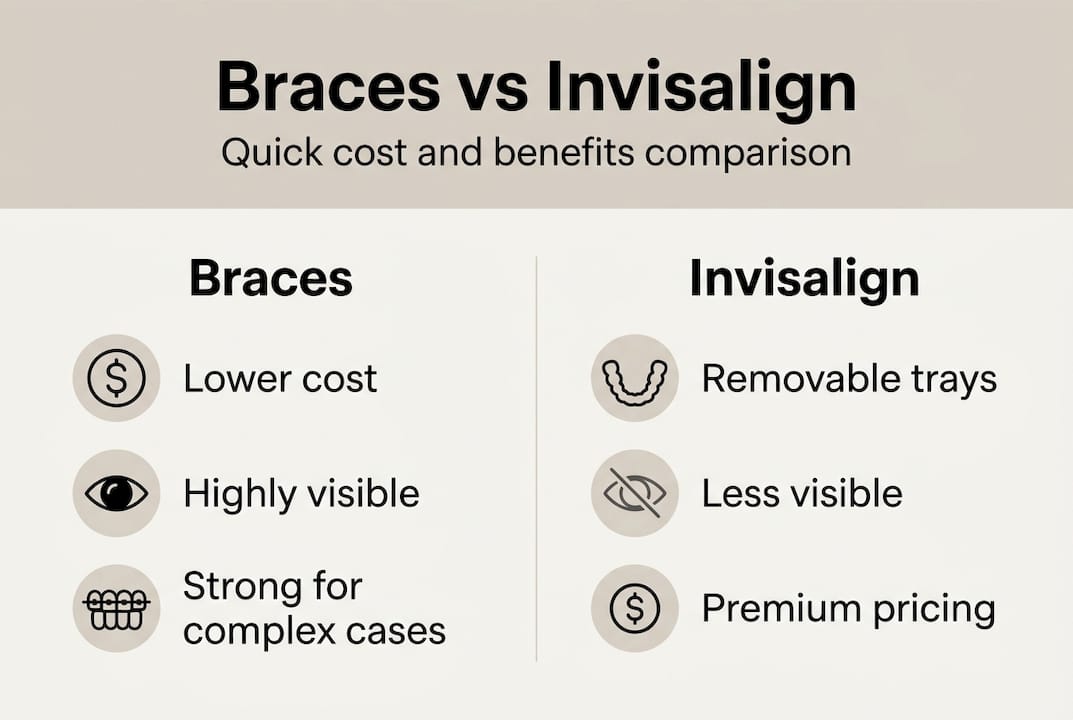
The price gap between braces and Invisalign often surprises Langley families who expect a massive difference. Invisalign often costs 15% to 20% more than traditional braces due to advanced digital scanning, custom aligner fabrication, and proprietary SmartTrack material technology. Metal braces typically range from $4,000 to $7,000 in Langley, while Invisalign treatments run $5,000 to $8,500 depending on case complexity and treatment length. Clear braces offer an aesthetic alternative priced moderately between metal braces and Invisalign, usually adding $500 to $1,500 to the base metal braces cost for ceramic brackets that blend with tooth color.
Technology and customization drive Invisalign’s premium pricing. Each aligner set is digitally designed using 3D imaging of your unique dental structure, then manufactured with precision to move teeth in calculated increments. This personalized approach requires sophisticated software, specialized materials, and skilled technicians, all of which add to production costs. Traditional braces use standardized brackets and wires adjusted manually by your orthodontist at each visit, a proven method that costs less to produce and install but offers fewer aesthetic advantages.
Metal braces remain the most budget-friendly option for families prioritizing function over appearance. They work exceptionally well for complex cases involving severe crowding, significant bite corrections, or tooth rotations that require precise control. Invisalign excels in mild to moderate cases where aesthetics and lifestyle flexibility matter, though recent advances have expanded its capabilities to handle more complex treatments. Understanding these key differences between braces and Invisalign helps you match treatment choice to both your budget and your specific orthodontic needs.
| Treatment Type | Cost Range | Duration | Visibility | Best For |
|---|---|---|---|---|
| Metal braces | $4,000 to $7,000 | 18 to 36 months | Highly visible | Complex cases, budget priority |
| Clear ceramic braces | $4,500 to $8,000 | 18 to 36 months | Less visible | Moderate aesthetics, similar function |
| Invisalign | $5,000 to $8,500 | 12 to 24 months | Nearly invisible | Mild to moderate cases, aesthetics priority |
Pro Tip: Ask about cheapest Invisalign options like Invisalign Express for minor corrections, which can cost 30% to 40% less than comprehensive treatment while still delivering discreet results.
Price factors unique to each treatment:
- Invisalign requires digital scans and custom aligner manufacturing
- Metal braces use standardized components with lower material costs
- Clear braces add aesthetic ceramic materials at moderate premium
- Treatment complexity affects total aligner sets or adjustment visits needed
- Orthodontist experience with specific systems may influence pricing
Many families also wonder about the Invisalign benefits overview beyond aesthetics, including easier oral hygiene since aligners are removable for brushing and flossing. This convenience can reduce the risk of cavities and gum issues during treatment, potentially saving on additional dental work. However, removability also requires discipline: wearing aligners 20 to 22 hours daily is essential for treatment success, making them less suitable for younger children who might forget or lose them.
Payment options and insurance coverage for braces and Invisalign in Langley
Navigating insurance and payment options can make orthodontic treatment far more affordable than the sticker price suggests. Many dental insurance plans in Langley offer partial coverage for both braces and Invisalign, typically covering 50% to 80% of treatment costs up to a lifetime maximum, often around $1,500 to $3,000 per person. Coverage usually applies equally to braces and Invisalign, though some older plans may exclude clear aligners or impose stricter limits. Confirming your specific benefits before starting treatment prevents costly surprises and helps you choose the option that maximizes your insurance value.
Flexible spending accounts and health savings accounts provide another powerful tool for managing orthodontic costs. FSAs and HSAs allow you to set aside pre-tax dollars for qualified medical expenses, including braces and Invisalign. This tax advantage effectively reduces your treatment cost by your marginal tax rate, potentially saving 20% to 30% depending on your income bracket. Many Langley orthodontists coordinate with FSA and HSA administrators to accept direct payments, simplifying the reimbursement process and spreading costs across multiple plan years if treatment spans calendar boundaries.
Orthodontists in Langley commonly offer flexible payment plans that divide total treatment cost into manageable monthly installments, often with zero or low interest. These plans typically require a down payment of 10% to 25%, then spread the remaining balance over 12 to 24 months. Some practices waive interest entirely for patients who complete payments within a set timeframe, making premium options like Invisalign more accessible to families who cannot pay upfront. Combining insurance coverage, FSA or HSA contributions, and a payment plan can transform a $6,000 treatment into affordable monthly payments of $150 to $250 after benefits.
Funding strategies to maximize affordability:
- Verify braces insurance options and lifetime maximums before choosing treatment
- Confirm Invisalign insurance coverage equals braces coverage under your plan
- Maximize FSA coverage for Invisalign by timing contributions with treatment start
- Compare interest-free payment plans across multiple orthodontists
- Ask about family discounts if multiple household members need treatment
- Explore employer-sponsored orthodontic benefits or supplemental insurance
Understanding these financial tools reduces stress and opens more treatment choices. Many families assume they must choose the cheapest option, but strategic use of insurance, tax-advantaged accounts, and payment plans often makes their preferred treatment surprisingly affordable. Taking time to explore all available funding sources before committing to treatment ensures you select the option that best balances cost, effectiveness, and lifestyle fit.
Tips for choosing the most cost-effective orthodontic treatment
Selecting the right orthodontic treatment requires looking beyond the initial price tag to evaluate total value. Cost-effectiveness depends on personal needs, not just upfront cost, because the cheapest option may require longer treatment, more appointments, or additional corrective work if it doesn’t suit your case. Start by clarifying your treatment goals: Are you correcting a functional bite problem, addressing aesthetic concerns, or both? Complex functional issues often demand the precise control of traditional braces, while mild cosmetic adjustments may be perfect for Invisalign, making the premium price worthwhile for faster, discreet results.
Lifestyle impact matters more than many families realize. Invisalign’s removability offers major advantages for adults and teens who play contact sports, perform on stage, or have professional image concerns. However, this same feature becomes a drawback for younger children or anyone who might struggle with the discipline to wear aligners 20 to 22 hours daily. Metal braces stay fixed in place, eliminating compliance worries but requiring dietary restrictions and more complex oral hygiene routines. Evaluating how each option fits your daily life prevents frustration and ensures treatment success.
Steps to evaluate treatment value:
- Assess your specific orthodontic needs with a comprehensive exam and treatment plan
- Calculate total cost including insurance, retainers, and follow-up care for each option
- Compare expected treatment duration and number of required office visits
- Evaluate lifestyle factors like aesthetics, sports, diet, and oral hygiene ease
- Review insurance coverage and payment plan terms to determine actual out-of-pocket cost
- Consider long-term benefits like improved oral health and confidence beyond immediate cost
Pro Tip: Schedule consultations with at least two orthodontists to compare treatment recommendations and pricing, as approaches and costs can vary significantly even for the same case.
Understanding the differences clear braces versus Invisalign helps you identify which features matter most for your situation. Clear braces offer a middle ground, providing better aesthetics than metal at a moderate price increase while maintaining the reliability and control of traditional brackets. This option appeals to families who want improved appearance without Invisalign’s premium cost or compliance requirements. Asking the right questions to ask your orthodontist during consultations ensures you understand all costs, treatment expectations, and potential complications before committing.
Avoid common pitfalls by considering total treatment cost, not just monthly payments. A lower monthly payment stretched over 36 months may cost more overall than a higher payment over 18 months. Similarly, choosing the cheapest provider without verifying experience and credentials can lead to prolonged treatment, poor results, or additional corrective work that erases any initial savings. Prioritize value over price by selecting an experienced orthodontist who offers transparent pricing, comprehensive treatment plans, and clear communication about what your investment includes.
Explore orthodontic care options at Glow Orthodontics Langley
Now that you understand the cost landscape for braces and Invisalign, finding the right orthodontic partner makes all the difference. Glow Orthodontics offers personalized treatment plans tailored to your family’s unique needs and budget in Langley. Whether you’re considering traditional braces, clear ceramic options, or Invisalign aligners, the team provides expert guidance to help you choose the most effective and affordable path to your best smile.

Explore flexible payment plans and insurance coordination designed to make quality orthodontic care accessible for every family. The practice works with most Langley insurance providers and offers zero-interest financing options that fit your budget. From your initial consultation through post-treatment retention, you’ll receive comprehensive support and transparent pricing with no hidden fees. Discover how orthodontic care for teens guide and adults can transform your smile while respecting your financial goals. Learn about the complete Invisalign treatment process or schedule your consultation at Glow Orthodontics Langley to start your journey toward a confident, healthy smile today.
Frequently asked questions
What affects the cost difference between braces and Invisalign?
The primary cost drivers are materials and technology: Invisalign uses proprietary SmartTrack plastic and custom digital manufacturing, while braces use standardized metal or ceramic brackets. Treatment complexity also matters, as more severe cases require longer treatment and more aligners or adjustments. Insurance coverage and your orthodontist’s experience with each system can further influence final out-of-pocket costs.
Does dental insurance usually cover Invisalign in Langley?
Many dental plans in Langley cover part of Invisalign costs similar to braces, typically 50% to 80% up to a lifetime maximum. However, coverage varies significantly by provider and plan type, with some older policies excluding clear aligners entirely. Always confirm your specific benefits and any age restrictions with your insurance company before starting treatment to avoid unexpected expenses.
Are there cheaper alternatives to Invisalign that still look good?
Clear ceramic braces provide an excellent aesthetic alternative at a lower cost than Invisalign, typically adding only $500 to $1,500 to traditional metal braces pricing. These clear braces versus Invisalign offer tooth-colored brackets that blend naturally while delivering the same reliable results as metal braces. For minor corrections, Invisalign Express or similar limited treatment options can reduce costs by 30% to 40% compared to comprehensive aligner therapy.
How long does each treatment typically take?
Traditional braces usually require 18 to 36 months depending on case complexity, while Invisalign often completes treatment in 12 to 24 months for mild to moderate cases. Treatment duration directly affects total cost through the number of appointments and adjustments needed. Your orthodontist can provide a specific timeline estimate based on your individual needs during your initial consultation.
Can I use my FSA or HSA for orthodontic treatment?
Yes, both flexible spending accounts and health savings accounts cover orthodontic treatment as qualified medical expenses. This allows you to pay with pre-tax dollars, effectively reducing your treatment cost by your marginal tax rate. Coordinate with your orthodontist’s billing department to maximize these benefits and potentially spread payments across multiple plan years for longer treatments.
Recommended
- Braces or Invisalign? Your Langley Orthodontic Options
- Invisalign Effectiveness in Langley | Glow Orthodontics
- Are Braces Safe? What Families in Langley Need to Know – RG API
- Braces vs. Invisalign: Langley Options | Glow Orthodontics
- Invisalign: Co To Jest I Jakie Ma Korzyści? Invisalign: Co To Jest I Jakie Ma Korzyści?. Sprawdź Szczegółowe Informacje W Naszym Artykule.