Can Adults Get Braces? Your Age-by-Age Guide
June 3, 2026
Can Adults Get Braces? Your Age-by-Age Guide
TL;DR:
- Adults can safely get braces if their oral health and supporting bone are in good condition, regardless of age. The main considerations include gum health, bone density, existing restorations, and realistic treatment expectations. Various modern options like metal, ceramic, lingual braces, and clear aligners cater to different preferences and budgets, with treatment typically lasting 18 to 36 months.
Adults can get braces at any age, provided their teeth, gums, and supporting bone are in good health. Age itself is not a disqualifying factor in orthodontic treatment. The American Association of Orthodontists reports that 1 in 3 orthodontic patients are adults, which means the idea that braces are only for teenagers is simply outdated. Whether you are 28 or 58, the biology of tooth movement remains active throughout your lifetime. This guide covers eligibility, treatment differences, adult braces options, costs, and what to realistically expect from the process.
Can adults get braces? What actually determines eligibility
The deciding factor for adult orthodontics is oral health, not your birth year. Healthy teeth, gums, and bone support are the three prerequisites every orthodontist evaluates before starting treatment. If any of those three are compromised, treatment is delayed until the underlying issue is resolved, not permanently ruled out.
Gum disease is the most common obstacle for adults seeking braces. Active periodontitis causes bone loss around the roots, and applying orthodontic forces to teeth with weakened support can accelerate that damage. The standard protocol is to complete periodontal therapy first, then reassess bone levels before proceeding. Adults with a history of gum disease can still qualify, but lighter forces and more frequent monitoring are typically part of the plan.
Dental restorations add another layer of complexity. Brackets bond to crowns without much difficulty, but dental implants are a different story. Implants are fused directly to the jawbone through a process called osseointegration, which means they cannot be moved by orthodontic forces the way natural teeth can. Treatment planning around implants requires coordination between your orthodontist, general dentist, and sometimes a prosthodontist to get the sequencing right.
Here is a quick checklist of what orthodontists typically assess before starting adult treatment:
- No active gum disease or untreated cavities
- Adequate bone density around tooth roots
- Stable dental restorations (crowns, bridges, or implants already in place)
- No uncontrolled systemic conditions that affect bone metabolism, such as unmanaged osteoporosis
- Realistic expectations about treatment duration and outcomes
Pro Tip: Schedule a full periodontal evaluation with your general dentist before your orthodontic consultation. Arriving with a clean bill of gum health speeds up the process significantly and prevents treatment delays.
How adult treatment differs from teenage orthodontics
The biology of tooth movement works the same way at 40 as it does at 14, but the rate and complexity of that movement differ meaningfully. Adult bone is denser and fully mature, which means teeth shift more slowly in response to orthodontic forces. Adults often require 3 to 6 months longer than teenagers with comparable conditions to achieve the same result.
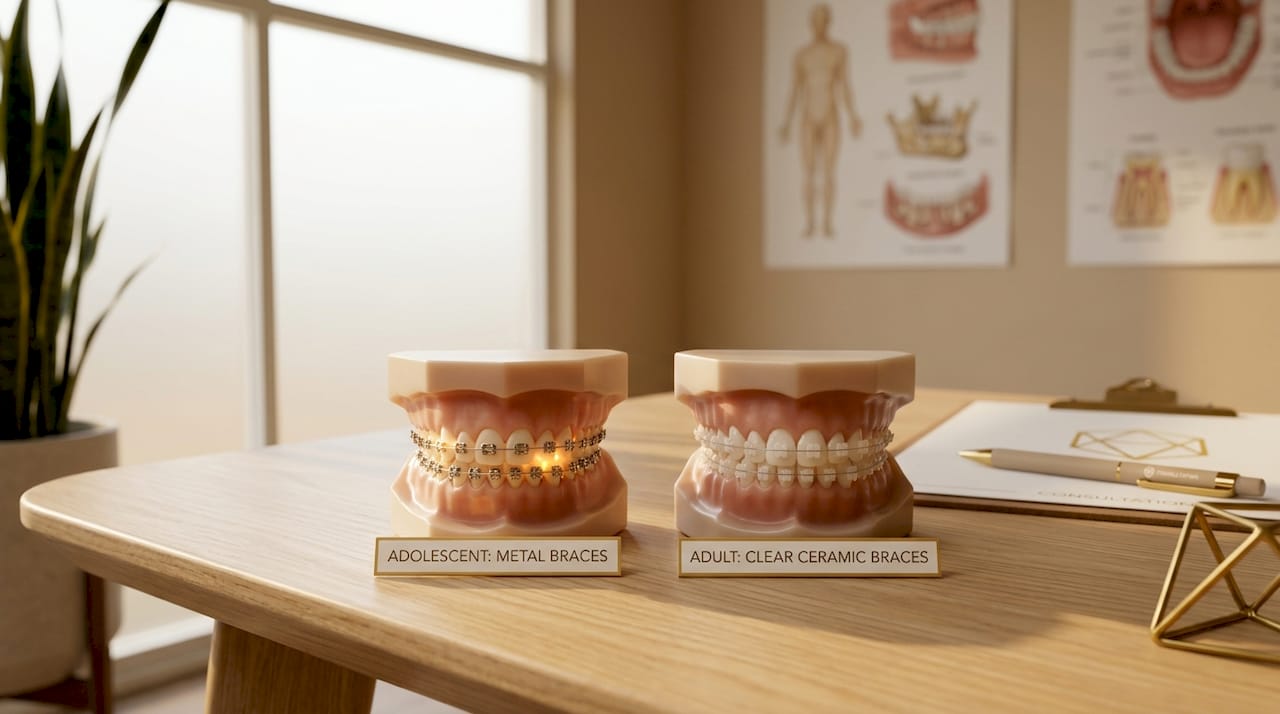
Bone remodeling is the core reason for this difference. In adolescents, the jawbone is still growing and responds quickly to pressure. In adults, the remodeling cycle is slower because bone turnover rates decrease with age. This is not a problem, just a reality that shapes treatment timelines and adjustment schedules.
Lifestyle factors also play a larger role in adult treatment than most people anticipate. Adults are more likely to have demanding work schedules, social obligations, and aesthetic concerns that influence which treatment option they choose. Compliance matters more with removable options like clear aligners. Unlike teenagers who wear braces continuously, adults using aligners must commit to 20 to 22 hours of wear per day or results will fall short of the projected timeline.
A few practical differences worth knowing before you start:
- Adults tend to have better oral hygiene compliance than teenagers, which reduces the risk of white spot lesions around brackets
- Relapse rates after treatment are similar across age groups, making retainer wear equally non-negotiable for adults
- Adults with lingual braces may experience a temporary speech adjustment period of one to two weeks as the tongue adapts
- Initial soreness after adjustments is normal and typically resolves within 48 to 72 hours
Pro Tip: If you are concerned about appearance at work, ask your orthodontist about ceramic or lingual options during your consultation. Many adults are surprised to learn how discreet modern fixed appliances can be.
What are the adult braces options available today?
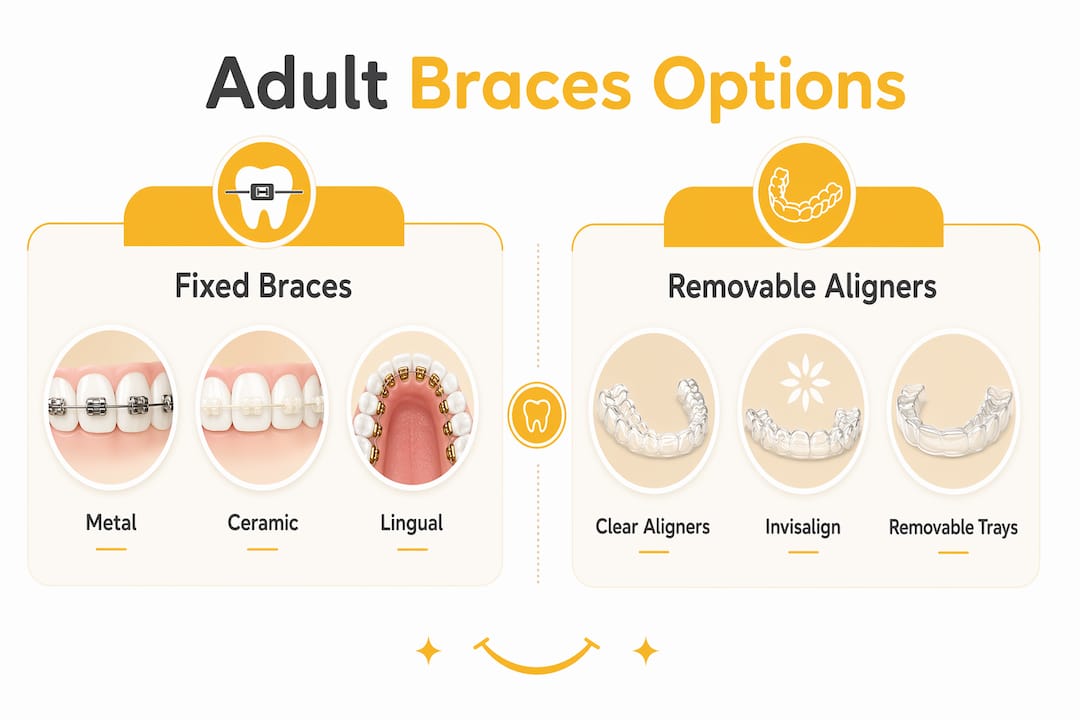
Modern adult orthodontics offers four primary treatment types, each with distinct trade-offs in visibility, cost, comfort, and case suitability. Understanding these differences is the most practical step you can take before your first consultation.
Traditional metal braces use stainless steel brackets bonded to the front of each tooth, connected by archwires and elastic ties. They provide the most precise control over complex tooth movements, including severe rotations and significant vertical corrections. Fixed metal or ceramic braces deliver more reliable outcomes for adults with complicated bite issues than aligners alone.
Ceramic braces work identically to metal braces but use tooth-colored or clear brackets that blend with the enamel. They are significantly less visible in professional or social settings. The trade-off is that ceramic brackets are more brittle than metal and can stain if you drink coffee, tea, or red wine regularly without rinsing afterward.
Lingual braces are bonded to the back surfaces of the teeth, making them completely invisible from the front. They are the most discreet fixed option available and are particularly popular among adults in client-facing roles. The downside is cost and a longer adjustment period for speech and tongue comfort.
Clear aligners such as Invisalign use a series of removable, transparent trays to shift teeth gradually. Many adults prefer clear aligners for their aesthetics and the freedom to remove them for meals and photos. They work well for mild to moderate cases, though severe rotations or significant bite corrections may require fixed appliances, or a combination approach where fixed braces handle the complex phase and aligners complete the finishing work.
| Option | Visibility | Cost Range | Best For |
|---|---|---|---|
| Metal braces | High | $3,000 to $7,000 | Complex cases, all severities |
| Ceramic braces | Low to moderate | $4,000 to $8,000 | Moderate to complex, aesthetics-conscious adults |
| Lingual braces | None | $8,000 to $13,000 | Adults requiring full invisibility |
| Clear aligners | Very low | $3,000 to $8,000 | Mild to moderate cases, high compliance adults |
Cost figures sourced from adult braces cost data. For a deeper breakdown of how ceramic braces and Invisalign compare on specific clinical factors, the clear braces vs. Invisalign guide at Gloworthodontics covers seven key differences worth reading before you decide.
What to expect: cost, duration, and daily life with braces
The total cost of getting braces as an adult depends on the treatment type, case complexity, and your geographic location. Across all options, the general range runs from $2,500 to $13,000. Most adults land somewhere between $4,000 and $7,000 for metal or ceramic fixed appliances.
Insurance coverage for adult orthodontics varies considerably. Many dental plans cap orthodontic benefits at $1,500 to $2,000 and apply lifetime maximums that may have already been used during childhood treatment. HSA and FSA accounts can offset a meaningful portion of out-of-pocket costs since orthodontic treatment qualifies as a medical expense under both programs. Many orthodontic offices also offer in-house financing at 0% interest, which spreads payments over the treatment period without adding to the total cost.
Treatment duration for adults typically runs 18 to 36 months, depending on the severity of the case and the type of appliance used. Clear aligner cases for mild crowding can finish in 6 to 12 months. Complex bite corrections with fixed appliances often take 24 months or longer. For a detailed look at how insurance factors into your total investment, the braces insurance coverage resource at Gloworthodontics breaks down what to expect in the Canadian context.
Daily life with braces requires a few consistent habits. Brushing after every meal prevents food from sitting against brackets and causing decay. Flossing with a threader or water flosser keeps gum tissue healthy throughout treatment. Hard or sticky foods, including ice, popcorn, caramel, and hard candy, can break brackets or bend wires and should be avoided. The functional and cosmetic improvements that come from properly aligned teeth, including easier cleaning, reduced uneven wear, and better bite function, make these adjustments worth the effort.
Pro Tip: Ask your orthodontist for a wax supply at your first appointment. Applying wax to any bracket that irritates your cheek or lip prevents sores during the first few weeks of adjustment.
Key takeaways
Adults can get braces at any age as long as their gum health, bone support, and overall oral condition meet the clinical prerequisites for safe tooth movement.
| Point | Details |
|---|---|
| Age is not a barrier | Orthodontic candidacy is based on oral health, not age; adults of any age can qualify. |
| Gum health comes first | Active gum disease must be treated before braces begin; bone loss affects force planning. |
| Treatment takes longer for adults | Mature bone density means adults typically need 3 to 6 months more than teenagers. |
| Four main options exist | Metal, ceramic, lingual, and clear aligners each suit different cases, budgets, and lifestyles. |
| Financing reduces the burden | HSA/FSA accounts and 0% payment plans make adult orthodontic costs more manageable. |
What I have learned from watching adults transform their smiles
The most persistent misconception I encounter is that adults somehow missed their window. They did not. What they actually have is something teenagers lack: the motivation, discipline, and self-awareness to follow through on treatment properly. Adult patients tend to keep appointments, wear their retainers, and take oral hygiene seriously in a way that produces excellent long-term results.
The fear I hear most often is about appearance during treatment. That concern is legitimate, but it is also solvable. Ceramic brackets are far less noticeable than people expect, and lingual braces are genuinely invisible in conversation. Clear aligners have normalized adults wearing orthodontic appliances to the point where colleagues rarely notice. The social barrier that felt real a decade ago has largely dissolved.
What I think gets underestimated is the functional payoff. Adults who correct crowding or bite issues report that cleaning their teeth becomes easier, that jaw tension reduces, and that they stop avoiding certain foods. Those are not cosmetic outcomes. They are quality-of-life changes that compound over decades. The health-based case for adult orthodontics is stronger than most people realize before they start.
My practical advice: do not self-select out of treatment based on age or assumptions about cost. Book a consultation with a board-certified orthodontist, get a real assessment, and then decide with actual information in hand. The adults I have seen go through treatment almost universally say they wish they had done it sooner.
— Juiced
Start your adult orthodontic journey with Gloworthodontics
Gloworthodontics serves adults across the Langley, British Columbia area with personalized orthodontic treatment plans that account for your oral health history, lifestyle, and goals. Whether you are weighing metal braces, ceramic options, or Invisalign, the team builds a plan around your specific case rather than a one-size-fits-all approach.

Flexible payment plans and insurance support are available to help manage the cost of treatment without financial stress. If you are comparing your options and want a clear breakdown before your consultation, the clear braces vs. Invisalign comparison covers seven key clinical and practical differences that matter for adult patients. Ready to take the next step? Book a consultation at gloworthodontics.ca and get a personalized assessment from a team that specializes in adult orthodontic care.
FAQ
Can adults get braces if they have gum disease?
Not until the gum disease is treated. Active periodontitis must be resolved before orthodontic forces are applied, but adults with a history of gum disease can still qualify once their gum and bone health is stable.
How long do braces take for adults?
Most adult cases run 18 to 36 months, with adults typically needing 3 to 6 months longer than teenagers due to denser, fully mature bone. Mild cases with clear aligners can finish in under 12 months.
Are braces effective for adults with dental implants?
Yes, but treatment requires customized planning. Implants cannot be moved by orthodontic forces since they are fused to the jawbone, so the surrounding natural teeth are repositioned around the fixed implant position.
What is the most discreet option for adults wearing braces?
Lingual braces are the most invisible fixed option since they attach to the back of the teeth. Clear aligners like Invisalign are nearly invisible and removable, making them the most popular discreet choice among adults in professional settings.
Does dental insurance cover braces for adults?
Coverage varies by plan. Many insurance policies include orthodontic benefits with lifetime maximums between $1,500 and $2,000, though some plans exclude adults entirely. HSA and FSA accounts and in-office 0% financing plans can significantly reduce the effective out-of-pocket cost.