Can I Eat and Drink With Invisalign? 2026 Guide
June 21, 2026
Can I Eat and Drink With Invisalign? 2026 Guide
TL;DR:
- Eating and drinking with Invisalign is safe only when aligners are removed, except for plain water. Wearing aligners 20 to 22 hours daily helps teeth move effectively and prevents damage from hot and sugary beverages. Proper oral hygiene after meals and avoiding grazing are essential to prevent cavities, staining, and treatment delays.
You can eat and drink during Invisalign treatment, but only after removing your aligners first. The rule is simple: take out your clear aligners before every meal, every snack, and every drink except plain water. Aligners must stay in for 20–22 hours daily to move teeth effectively. That leaves roughly 2–4 hours each day for eating, drinking, and oral hygiene. Follow that window, clean your teeth before reinserting, and your treatment stays on track. Skip these steps, and you risk cracked aligners, stained trays, and cavities forming right under the plastic.
Can I eat and drink with Invisalign in?
The short answer is no, not safely. Invisalign aligners are made from a thermoplastic material designed to apply gentle, consistent pressure to your teeth. Chewing with them in can crack or warp that material, which changes how the tray fits and disrupts tooth movement.
Drinks are just as risky. Hot drinks above 140°F warp aligners quickly. Sugary or acidic beverages like juice, soda, and sports drinks seep under the tray and sit against your enamel, creating a perfect environment for decay. Colored drinks like coffee, tea, and red wine stain the plastic within days.
The only safe exception is plain, cool or room-temperature water. Water does not stain, does not carry sugar, and does not warp the tray. Every other drink requires removal.
Here is what happens when patients skip removal:
- Cracking or warping: Chewing forces exceed what the thermoplastic can handle.
- Staining: Coffee, tea, and wine discolor trays within days, making them visible.
- Decay: Trapped sugar and acid against enamel under a sealed tray accelerates cavity formation.
- Bacterial buildup: Aligners trap bacteria close to enamel with no escape route, making hygiene after every meal non-negotiable.
- Treatment delays: Damaged trays require replacements, which adds time and cost to your treatment.
Orthodontic clinical guidelines are clear: remove aligners for all meals and snacks without exception.
What can you safely eat and drink during Invisalign treatment?
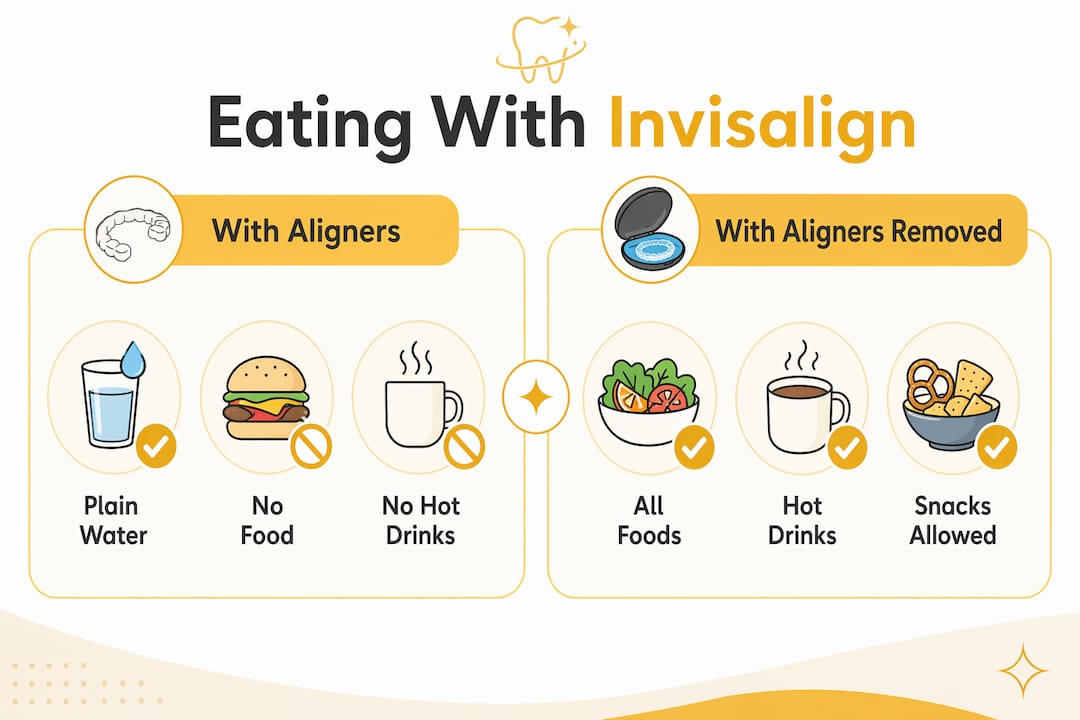
No food is permanently off-limits with Invisalign, as long as you remove your aligners before eating. This is one of the biggest advantages Invisalign has over traditional braces. Popcorn, sticky candy, hard nuts, and chewy bread are all fine once the trays are out. You eat normally, then clean up before reinserting.
The real discipline is not about what you eat. It is about when and how often.
| Item | With aligners in | Aligners removed |
|---|---|---|
| Plain water | Safe | Safe |
| Coffee or tea | Not safe (stains, heat) | Safe after rinsing |
| Soda or juice | Not safe (acid, sugar) | Safe |
| Sparkling water | Not safe (mildly acidic) | Safe, rinse after |
| All solid foods | Not safe | Safe |
| Alcohol | Not safe (sugar, acid) | Safe in moderation |

One habit that quietly derails treatment is grazing. Frequent snacking reduces daily aligner wear time and compromises results. Every time you remove your trays for a handful of crackers or a sip of coffee, that time adds up. Patients who snack six times a day can easily lose two or more hours of wear without realizing it.
The fix is meal consolidation. Aim for three structured meals and one or two planned snacks rather than constant grazing. This keeps your aligners in for the required daily hours and reduces the number of times you need to clean your teeth and trays.
Pro Tip: Set a phone reminder after each meal so you never forget to reinsert your aligners. Even a 30-minute delay after every meal across a week adds up to hours of lost wear time.
Carbonated water deserves a special mention. It is mildly acidic due to carbonation, which can etch enamel over time even without sugar. Remove your aligners before drinking it and rinse your mouth with plain water afterward before reinserting.
How to care for your teeth and aligners after eating
Oral hygiene after eating is the step most patients underestimate. The aligners trap bacteria close to enamel with no natural escape, so reinserting over a dirty mouth seals that bacteria in place for hours. This is how patients end up with cavities mid-treatment despite wearing their aligners correctly.
Follow these steps every time you eat or drink:
- Remove your aligners before eating or drinking anything other than plain water.
- Eat your meal without restriction. No food is off-limits with trays out.
- Brush your teeth thoroughly before reinserting. This is the single most protective step.
- Rinse your aligners with cool water. Never use hot water, which warps the plastic.
- Avoid toothpaste on aligners. Toothpaste is abrasive and scratches the tray surface, creating micro-grooves where bacteria accumulate and discoloration sets in.
- Use a soft-bristled brush with clear, unscented dish soap or a dedicated aligner cleaning solution to clean trays once daily.
- Store aligners in their case whenever they are out of your mouth. Napkins and pockets lead to lost or damaged trays.
If brushing is not possible, rinsing your mouth thoroughly with water is the minimum acceptable alternative. Rinsing after eating removes loose food particles and reduces acid exposure before you reinsert. It is not as effective as brushing, but it is far better than reinserting over an uncleaned mouth.
Pro Tip: Carry a small travel kit with a toothbrush, toothpaste, and your aligner case whenever you leave the house. A kit that fits in a jacket pocket removes every excuse for skipping the post-meal brush.
Common mistakes when eating and drinking with Invisalign
Most treatment setbacks trace back to a small set of repeated errors. Recognizing them early saves you from costly refinements and extended treatment time.
- Sipping coffee or tea with aligners in. Even one daily sip habit causes visible staining within weeks. Coffee and tea trapped under aligners also create localized acid exposure that shows up as enamel damage after treatment ends.
- Reinserting without brushing. This is the leading cause of mid-treatment cavities. Aligners seal whatever is on your teeth in place for hours.
- Using hot water to clean trays. Patients often reach for hot water out of habit. Hot water warps the thermoplastic, changing the fit and reducing the aligner’s ability to move teeth correctly.
- Snacking repeatedly throughout the day. Patients who remove aligners for frequent sips or snacks accumulate lost wear time that delays treatment. Wearing aligners less than 20 hours a day causes loss of tracking, which may require mid-treatment refinements or extra tray sets.
- Leaving aligners on a napkin or table. Trays get thrown away, sat on, or contaminated. Always use the case.
“The patients who finish Invisalign on schedule are almost always the ones who treat it as a timing problem, not a food restriction problem. They plan their meals, they carry their case, and they brush every single time.” — Orthodontic clinical insight via drfinetouch.com
The discipline required is real, but it is manageable. Most patients adapt within two to three weeks. The habits become automatic, and the inconvenience fades. What does not fade is the result of skipping them: stained trays, new cavities, and a longer treatment timeline.
Key takeaways
Eating and drinking with Invisalign is fully compatible with a normal lifestyle as long as aligners come out for everything except plain water and go back in over clean teeth every time.
| Point | Details |
|---|---|
| Remove for all food and drinks | Only plain, cool water is safe with aligners in. Remove trays for everything else. |
| Wear 20–22 hours daily | Less than 20 hours risks loss of tracking and may require extra tray sets. |
| Brush before reinserting | Reinserting over uncleaned teeth seals bacteria against enamel for hours. |
| Clean aligners with cool water only | Hot water warps trays; toothpaste scratches them and causes discoloration. |
| Avoid grazing | Consolidate meals to protect daily wear time and keep treatment on schedule. |
What I have learned watching patients succeed and struggle with Invisalign
The patients who struggle most with Invisalign are not the ones who eat the wrong foods. They are the ones who underestimate how quickly small habits compound. A morning coffee sipped slowly over 45 minutes, a mid-afternoon snack, a glass of wine with dinner without removing trays first. None of those feel significant in the moment. Together, they can cost two or more hours of wear daily and introduce enough acid and sugar exposure to create real dental problems.
What actually works is treating Invisalign as a scheduling exercise. You are not giving up foods. You are scheduling when you eat them. Patients who think this way finish on time, keep their trays clear, and arrive at their final appointment without cavities or refinements.
The hygiene piece is the one I see patients dismiss most often. They remove their aligners, eat, and reinsert without brushing because they are at a restaurant or in a hurry. That shortcut, repeated daily, is how you end up with white spot lesions on your enamel that are visible after treatment ends. Carry a travel toothbrush. Use it every time. The two minutes it takes is the best investment in your treatment outcome.
Invisalign is genuinely one of the more lifestyle-friendly orthodontic options available. The Invisalign treatment process is designed around your real life. The rules around eating and drinking are not arbitrary. They exist because the physics of tooth movement require consistent, uninterrupted pressure and because your enamel deserves protection throughout the process. Respect both, and the results speak for themselves.
— Juiced
Get personalized Invisalign guidance from Gloworthodontics
Knowing the rules is one thing. Applying them to your specific lifestyle, schedule, and treatment stage is another. Gloworthodontics provides detailed, patient-focused resources for every stage of Invisalign treatment, including eating, drinking, and daily aligner care.

The complete eating and drinking guide on the Gloworthodontics site covers safe beverage choices, hygiene routines, and practical tips for busy schedules. For patients who want to understand the full picture before starting, the step-by-step treatment guide walks through every phase from consultation to final tray. If you have questions specific to your case, booking a consultation with the Gloworthodontics team in Langley, BC is the fastest way to get answers tailored to you.
FAQ
Can I drink coffee with my Invisalign in?
No. Coffee stains aligners quickly and the heat can warp the plastic. Remove your aligners before drinking coffee and rinse your mouth before reinserting.
How long can I leave my aligners out to eat?
Aligners must be worn 20–22 hours daily, leaving only 2–4 hours for meals, snacks, and oral hygiene. Keep each removal as short as possible and avoid grazing throughout the day.
What happens if I eat with my Invisalign in?
Chewing can crack or warp the aligner material. Food and liquid trapped under the tray accelerate tooth decay and cause staining that makes trays visible.
Can I drink sparkling water with aligners in?
No. Sparkling water is mildly acidic due to carbonation and can etch enamel even without sugar. Remove aligners before drinking it and rinse with plain water before reinserting.
Do I really need to brush after every meal before reinserting?
Yes. Aligners seal whatever is on your teeth against your enamel for hours. Reinserting over uncleaned teeth is the primary cause of cavities during Invisalign treatment. If brushing is impossible, rinse thoroughly with water as a minimum.