Cheap Braces Without Insurance Near Me in Langley
June 2, 2026
Cheap Braces Without Insurance Near Me in Langley
TL;DR:
- Affordable braces without insurance in Langley, BC, are mainly accessible through public programs, dental school clinics, charitable initiatives, and flexible payment plans.
- Knowing how to navigate the Canadian Dental Care Plan and comparing clinic options ensures families reduce out-of-pocket costs effectively.
Affordable braces without insurance are defined as orthodontic treatment options that cost less out of pocket through public programs, dental school clinics, charitable initiatives, or flexible payment plans rather than through private coverage. In Langley, BC, uninsured families searching for cheap braces without insurance near me have more real options in 2026 than most people realize. Metal braces in Canada typically run CAD $3,000 to $7,000 without insurance, but programs like the Canadian Dental Care Plan (CDCP) and Align Technology’s Smiles4Canada initiative can cut that figure significantly. The key is knowing exactly which door to knock on first.
1. How the Canadian Dental Care Plan can lower your braces cost
The Canadian Dental Care Plan (CDCP) is the most direct government route to cheaper orthodontic treatment for uninsured Langley residents. It covers orthodontics only for medically necessary cases, meaning braces prescribed for functional reasons rather than cosmetic ones. To qualify, your household income must be below $100,000 with no existing private dental insurance, and prior authorization from your orthodontist is mandatory before treatment begins.
Coverage is income-tiered. Families earning under $70,000 can receive up to 80% coverage on eligible orthodontic costs, while those closer to the $100,000 threshold receive around 20%. That difference is enormous when you are looking at a $5,000 treatment plan. A family at the lower income band could reduce their out-of-pocket cost to roughly $1,000, while a family near the ceiling would still owe $4,000.
The administrative side of CDCP is where many people lose money. Annual renewal is required between April 15 and June 1, 2026. Missing that window creates a coverage gap with no retroactive reimbursements, meaning any treatment received during the gap comes entirely out of your pocket. Prior authorization must also be secured before your orthodontist places braces, not after.
Pro Tip: Submit your CDCP prior authorization request at least 6 to 8 weeks before your planned treatment start date. Orthodontic approvals can take time, and starting treatment before authorization is confirmed means you absorb the full cost.
| CDCP factor | What it means for you |
|---|---|
| Income under $70,000 | Up to 80% of eligible orthodontic costs covered |
| Income $70,000 to $100,000 | 20% to 79% coverage on a sliding scale |
| Prior authorization | Required before treatment starts; no retroactive approval |
| Renewal window | April 15 to June 1, 2026; missed deadline means coverage gap |
| Cosmetic braces | Excluded; medical necessity must be documented |
2. Dental schools and local clinics offering affordable braces
Dental school orthodontic programs are one of the most underused resources for uninsured patients in the Lower Mainland. Dental school clinics typically charge 30% to 50% less than private orthodontic offices because treatment is delivered by supervised graduate students working toward their credentials. The University of British Columbia’s Faculty of Dentistry in Vancouver is the closest major option for Langley residents, and wait lists, while real, are manageable with early applications.
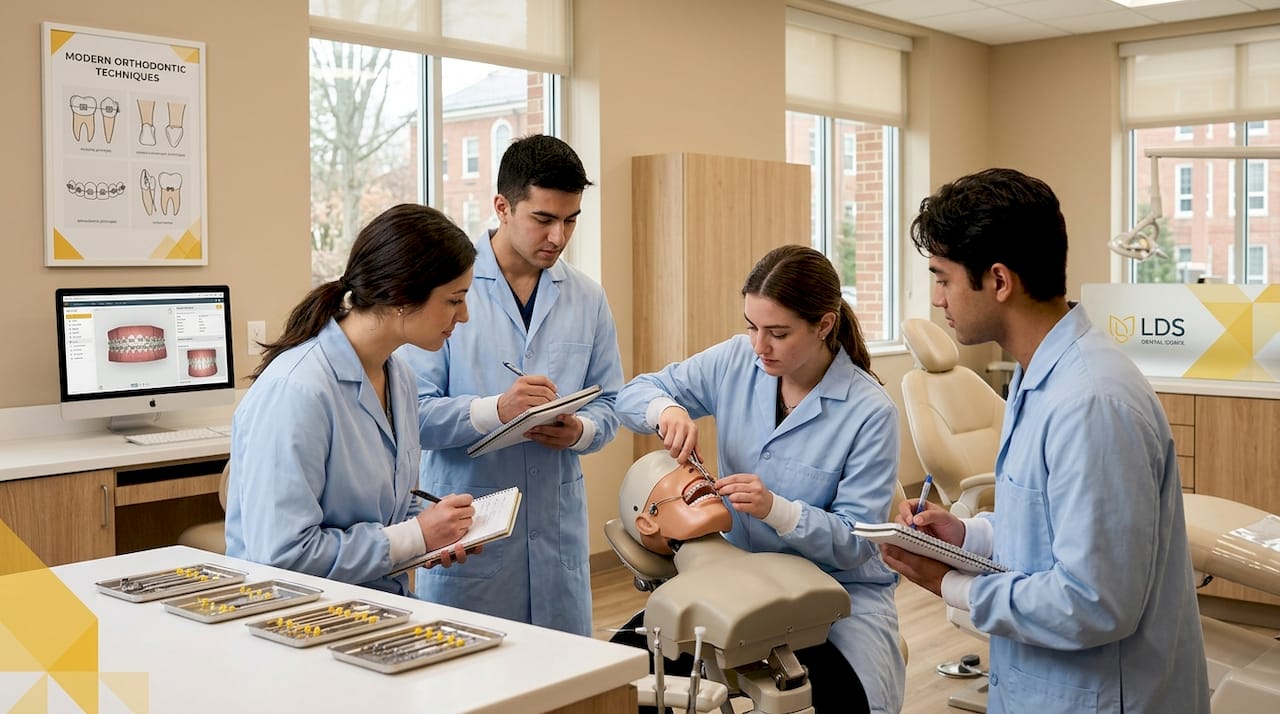
Local Langley orthodontic clinics also offer more flexibility than many patients expect. Many practices provide in-house braces financing options that divide the total treatment cost into monthly payments with little or no interest. Some clinics run seasonal promotions or offer reduced fees for patients who pay a larger portion upfront. Calling ahead and asking directly about uninsured pricing or payment structures is always worth the five-minute conversation.
Align Technology’s Smiles4Canada program is a charitable initiative worth knowing about if you have a child or teen who needs orthodontic care. Align sponsored 30 patients through the program in 2026, covering Invisalign lab fees for children and teens who lack the financial resources for treatment. Spots are limited, but the program is real and active.
Pro Tip: When evaluating any low-cost clinic or dental school program, ask specifically who supervises the student or junior provider, how many cases they have completed, and what the protocol is if treatment complications arise. Quality and price are not mutually exclusive, but you need to ask the right questions.
Use this checklist when comparing affordable orthodontic providers:
- Does the clinic accept CDCP patients and assist with prior authorization paperwork?
- Is in-house financing available with no or low interest?
- Are free consultations offered so you can compare treatment plans before committing?
- Is the supervising orthodontist a registered specialist with the College of Dental Surgeons of BC?
- Does the clinic have documented experience with your specific case complexity?
3. Comparing braces types and their costs without insurance
Choosing the right braces type is a direct cost decision when you are paying out of pocket. Each option carries a different price range, treatment timeline, and set of trade-offs that affect your total braces without insurance cost.
| Braces type | Cost range (CAD, no insurance) | Key trade-off |
|---|---|---|
| Metal braces | $3,000 to $7,000 | Most affordable; visible but highly effective |
| Clear aligners (Invisalign) | $4,000 to $7,400 | Removable and discreet; requires patient discipline |
| Ceramic braces | $4,000 to $8,000 | Less visible than metal; slightly more fragile |
| Lingual braces | $8,000 to $10,000 | Hidden behind teeth; highest cost, longest adjustment |
These Canadian price ranges reflect treatment bundled over 12 to 24 months, and complexity of your case shifts the final number significantly. A mild crowding case treated with metal braces could land at $3,500. A complex bite correction requiring lingual braces could exceed $9,000.
For uninsured patients in Langley, metal braces remain the most cost-effective starting point. Ceramic braces offer a middle ground on aesthetics without the extreme cost of lingual options. Clear aligners are competitive in price with ceramics and qualify for Smiles4Canada support for eligible teens, which changes the math considerably. Ask your orthodontist to quote all applicable options at your consultation so you can compare total costs side by side.
A few practical negotiating points worth knowing: some clinics discount the total fee if you pay 30% to 50% upfront. Others offer a reduced rate for a second family member treated simultaneously. Neither discount is advertised, but both are commonly granted when you ask.
4. Understanding braces payment plans and financing options
Braces payment plans are structured agreements that divide your total treatment cost into monthly installments, typically spread across the active treatment period of 12 to 24 months. Most Langley orthodontic clinics offer in-house plans that require a deposit of roughly 20% to 30% upfront, with the remainder billed monthly. This structure makes a $5,000 treatment feel like a $200 monthly expense rather than a lump sum.
Third-party financing through providers like Medicard or Paybright (now Affirm) gives patients access to longer repayment terms, sometimes 36 to 60 months, at low or zero interest during promotional periods. These options are worth comparing against in-house plans because the total cost of financing matters as much as the monthly payment. A 0% interest plan over 18 months beats a 9.9% plan over 36 months even if the monthly payment looks lower on paper.
Watch for hidden fees in any financing agreement. Common ones include administration fees charged at the start of the plan, late payment penalties that compound quickly, and fees for early payoff in some third-party contracts. Ask for the full fee schedule in writing before signing. The braces insurance coverage guide at Glow Orthodontics breaks down what uninsured patients should look for in any financing arrangement.
Pro Tip: Ask your orthodontist’s office whether they offer a courtesy discount for patients who pay the full balance upfront. Many clinics quietly offer 5% to 10% off for cash or lump-sum payments because it eliminates their administrative billing overhead.
Here is a practical approach to budgeting for braces without insurance:
- Get at least three written quotes from local Langley providers before committing.
- Calculate the total cost of each financing option, not just the monthly payment.
- Check CDCP eligibility before signing any payment plan, since qualifying changes your math entirely.
- Set a monthly savings target six months before treatment starts to cover the deposit.
- Ask about sibling or multi-patient discounts if more than one family member needs treatment.
5. Tips for finding the best local cheap braces near you
Finding genuinely affordable braces near you in Langley requires more than a Google search. The Sun Life CDCP provider directory is the most reliable starting point for finding orthodontists who accept government plan patients. Searching that directory by postal code gives you a list of registered providers in Langley and the surrounding Fraser Valley area.
Free consultations are standard practice at most orthodontic offices and are your best tool for comparing options without spending anything. Use each consultation to ask about uninsured pricing, available payment structures, CDCP eligibility support, and any current promotions. Bring a list of questions and take notes. Comparing three consultations side by side gives you real data rather than assumptions.
Online reviews on Google and RateMDs tell you about patient experience, but they rarely address cost transparency. Ask in the consultation directly: “What is your total fee for this treatment plan, and what does it include?” A clinic that hesitates to give a clear written quote is a clinic worth skipping. The Langley braces coverage guide at Glow Orthodontics outlines what questions to ask and what answers should raise flags.
Quality alongside cost is the metric that matters most. A $3,200 treatment from a registered orthodontic specialist will almost always produce better long-term results than a $2,800 plan from a general dentist offering braces as an add-on service. The difference in credential is the College of Dental Surgeons of BC specialist designation. Always verify it.
Key takeaways
Affordable braces without insurance in Langley, BC, are most accessible through a combination of CDCP enrollment, dental school programs, clinic payment plans, and charitable initiatives like Smiles4Canada rather than through price discounts alone.
| Point | Details |
|---|---|
| CDCP coverage potential | Families under $70,000 income can receive up to 80% coverage on medically necessary braces. |
| Dental school savings | Supervised programs at institutions like UBC cost 30% to 50% less than private clinics. |
| Metal braces as baseline | At $3,000 to $7,000, metal braces remain the most affordable uninsured starting point in Canada. |
| Payment plan math | Always calculate total financing cost, not just monthly payment, to avoid overpaying over time. |
| Prior authorization | CDCP requires authorization before treatment starts; skipping this step eliminates coverage. |
What I’ve learned about cheap braces and the traps most families fall into
After years of watching families work through orthodontic financing decisions, the pattern I see most often is this: people spend weeks searching for the lowest sticker price and miss the programs that would have cut their actual cost by thousands. The CDCP is the clearest example. Most affordable braces solutions hinge on qualifying for public programs or clinic financing rather than finding a clinic that simply charges less.
The second trap is assuming CDCP works automatically. Many people believe enrollment means coverage. It does not. The administrative steps including attestation, prior authorization, and annual renewal are where coverage gets lost. I have seen families start treatment in good faith, miss the renewal window, and absorb costs they thought were covered. That is not a clinical failure. It is a paperwork failure, and it is entirely preventable.
My honest recommendation: start with a CDCP eligibility check, book two or three free consultations with registered orthodontic specialists in Langley, and ask every provider directly about uninsured pricing and financing. The best outcome is rarely the cheapest quote. It is the provider who gives you a clear plan, transparent fees, and the administrative support to use every program you qualify for.
— Juiced
Start your affordable orthodontic journey with Glow Orthodontics
Glow Orthodontics serves families and individuals across Langley, BC, with flexible braces financing options designed specifically for patients without private insurance. Whether you are exploring metal braces, ceramic braces, or Invisalign for yourself or your teen, the team at Glow Orthodontics provides transparent pricing and personalized payment plans from your very first visit.
Glow Orthodontics also helps patients understand CDCP eligibility and navigate prior authorization paperwork, so you do not lose coverage through administrative gaps. For families with teens, the orthodontic care guide for teens covers every treatment option with real cost comparisons. Book a free consultation at gloworthodontics.ca and get a written quote with no obligation.
FAQ
How much do braces cost in Canada without insurance?
Metal braces cost CAD $3,000 to $7,000, ceramic braces $4,000 to $8,000, and lingual braces $8,000 to $10,000 without insurance in Canada. Clear aligners like Invisalign typically range from $4,000 to $7,400.
Does the Canadian Dental Care Plan cover braces?
The CDCP covers orthodontics only for medically necessary cases in households earning under $100,000 with no private dental insurance. Prior authorization is required before treatment begins, and cosmetic braces are excluded.
What is the Smiles4Canada program?
Smiles4Canada is a charitable initiative sponsored by Align Technology that provides Invisalign treatment to children and teens who cannot afford orthodontic care. Align sponsored 30 patients through the program in 2026, covering lab fees for eligible participants.
Are dental school braces a safe option?
Dental school orthodontic programs deliver treatment supervised by licensed professionals and cost 30% to 50% less than private clinics. The trade-off is longer appointment times and potential wait lists, not lower quality of care.
How do I find orthodontists near me who accept CDCP?
Use the Sun Life CDCP provider directory and search by your Langley postal code to find registered orthodontists who accept government plan patients. Always confirm CDCP acceptance by phone before booking your consultation.