Cheapest Invisible Braces: Real Costs and Top Picks
May 27, 2026
Cheapest Invisible Braces: Real Costs and Top Picks
TL;DR:
- Affordable invisible braces vary widely in cost depending on supervision, case complexity, and included features.
- At-home aligners are budget-friendly but limited to minor corrections, while professional supervision ensures more reliable results.
You want a straighter smile without a staggering bill. That’s a completely reasonable goal, and finding the cheapest invisible braces that actually deliver results is more achievable in 2026 than most people realize. The problem is that “affordable” means very different things depending on the brand, the supervision level, and what’s hiding in the fine print. This article breaks down what drives cost, which budget-friendly options are worth considering, and how to avoid the traps that turn a cheap aligner into an expensive mistake.
Table of Contents
- Key takeaways
- 1. What actually makes invisible braces cheap or expensive
- 2. AlignerCo: the lowest price point on the market
- 3. Smileie: budget aligners with a fast timeline
- 4. NewSmile: mid-range at-home aligners with extras
- 5. Budget Invisalign: the professionally supervised option
- 6. Clear braces from a local orthodontist: often underpriced
- 7. Invisible braces for kids and teens on a budget
- 8. Side-by-side comparison of top options
- 9. Choosing the right option for your situation
- My honest take on chasing the cheapest price
- See what Glow Orthodontics can do for your budget
- FAQ
Key takeaways
| Point | Details |
|---|---|
| Costs vary widely | Invisible braces range from about $1,100 to $7,000 depending on complexity and supervision. |
| At-home kits have limits | Budget at-home aligners work only for minor corrections and often skip attachments needed for precision movement. |
| Insurance can offset costs | Dental insurance may cover up to $3,000 of orthodontic treatment, making professional care more reachable. |
| Compliance drives outcomes | Wearing aligners 20 to 22 hours per day is the single biggest factor in whether treatment succeeds or fails. |
| Cheapest is rarely cheapest | Skipping clinical supervision can lead to refinements and corrections that cost more than the original savings. |
1. What actually makes invisible braces cheap or expensive
Before you compare prices, you need to understand what you are actually buying. Two aligner products priced $2,000 apart may not be as different as they look, or they may be radically different in ways that matter enormously to your outcome.
The biggest cost driver is supervision. At-home aligner kits, where you take your own impressions and mail them in, cost significantly less because there is no orthodontist conducting scans, reviewing X-rays, or monitoring your tooth movement in person. Professional orthodontic treatment includes diagnostic imaging and scans before treatment starts, which reduces the risk of complications. That oversight has real value, especially for anyone with bite issues, root resorption risk, or more than minor crowding.
Treatment complexity is the second major variable. Moving a few crowded front teeth costs far less than correcting a full-arch alignment issue. Most budget aligners are designed specifically for mild cases and will tell you upfront if you qualify.
Then there are the hidden costs worth knowing about before you commit:
- Retainers after treatment (often not included, ranging from $100 to $400)
- Refinement aligners if teeth don’t reach the target position
- Follow-up appointments for professionally supervised plans
- Replacement aligners if sets are lost or damaged
Pro Tip: Ask any provider specifically what happens if you need refinements. Some at-home brands offer a free refinement policy, while others charge an additional fee. This one question can shift the real total cost significantly.
Payment flexibility also varies. Most providers offer monthly payment plans, and some work with third-party financing through services like Affirm. If you have dental insurance, a PPO plan may contribute toward clear aligner treatment. Check your insurance coverage options early in the process because it changes the math entirely.
2. AlignerCo: the lowest price point on the market
AlignerCo consistently sits at the bottom of the price range for invisible braces on a budget. Their basic plan starts around $549 for a single arch and reaches up to $1,095 for full treatment. That puts them among the most affordable at-home options currently available.
You get an at-home impression kit, a series of aligners mailed to you, and remote check-ins via an app. They do not require in-person visits, which is the primary reason for the low cost. The limitation is scope. AlignerCo works best for mild relapse cases (where previously treated teeth have shifted slightly) or very minor spacing issues. Complex bite problems or significant crowding are outside what this type of system can safely address.
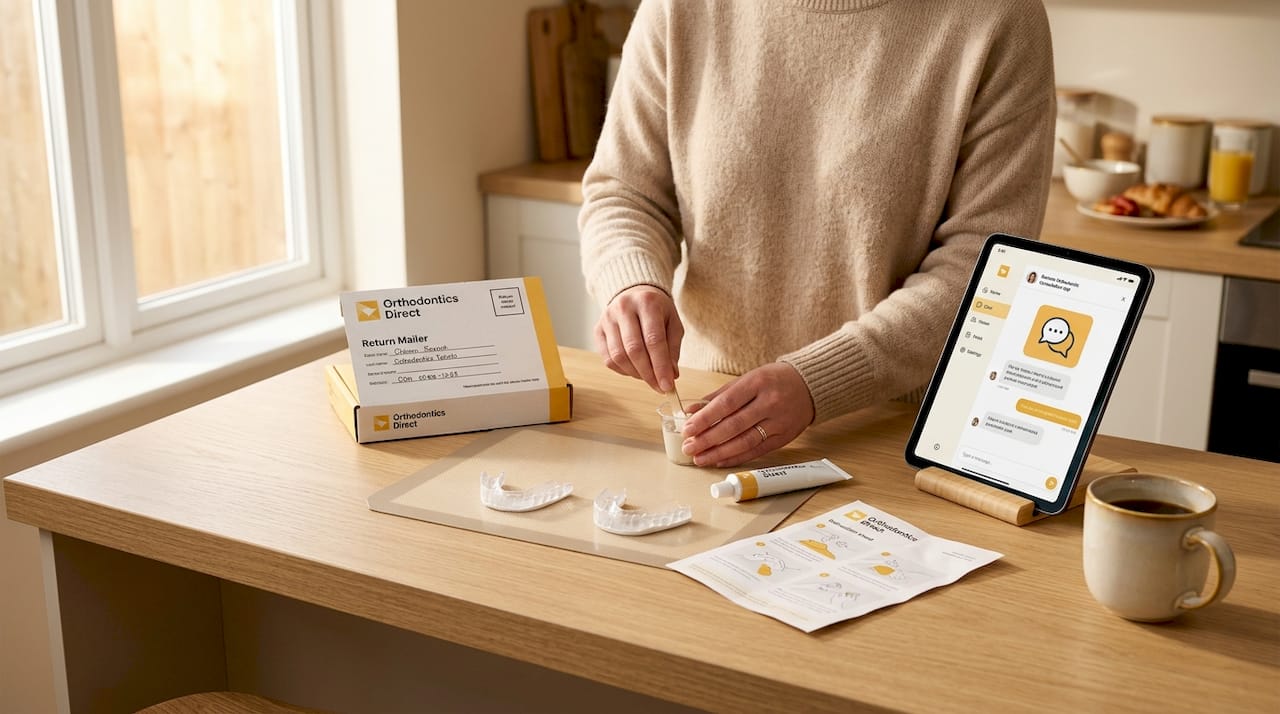
Whitening is included with most packages, which is a genuine perk. Payment plans are available, and the pricing transparency is one of the better aspects of this brand.
3. Smileie: budget aligners with a fast timeline
Smileie targets people who want a quick correction at a low price. Treatment times are often shorter than traditional options because the system is designed for minimal corrections. Pricing typically falls in the $599 to $1,200 range depending on the plan.
Like most at-home brands, Smileie uses a mail-in impression kit and remote oversight. You will not see an orthodontist face to face. That is a real trade-off. The brand does include retainers with some packages, which helps reduce the final out-of-pocket total.
Smileie is a practical choice for adults with stable, healthy teeth who have experienced minor post-treatment drift. It is not recommended for children or teens, or for anyone with significant alignment or bite concerns.
4. NewSmile: mid-range at-home aligners with extras
NewSmile sits slightly above AlignerCo and Smileie in price, typically ranging from $1,195 to $1,895. In exchange, you get a few added features: a dedicated case, a retainer included in the plan, and whitening foam. The brand also uses a more detailed remote monitoring process compared to some competitors.
The treatment is still remote and still limited to mild-to-moderate cases. NewSmile’s strength is the feeling of a more complete package at a price that remains well below professionally supervised treatment. Their customer support is generally rated positively, which matters when you are managing your treatment from home without clinical access.
Pro Tip: NewSmile and similar brands periodically run promotional pricing that can knock $100 to $200 off the standard cost. Signing up for their email list before purchasing is a simple way to access those offers.
5. Budget Invisalign: the professionally supervised option
Invisalign is not a single price. It is a range, and the lower end of that range is more accessible than most people assume. Lite and Moderate tier Invisalign plans, designed for cases involving fewer than 20 aligner stages, can start around $2,500 to $3,500 at many practices. That is meaningfully less than comprehensive full-treatment Invisalign, which can reach $7,000.
The key advantage here is clinical supervision. Dental insurance may cover up to $3,000 of orthodontic costs, making a supervised Invisalign Lite plan potentially comparable in out-of-pocket cost to a premium at-home kit once insurance is factored in.
Timing also makes a difference. Invisalign Open Days promotions can reduce total cost by up to $500 and often bundle in free whitening and scanning appointments. Practices that participate in these events are worth seeking out if you want professional care without paying full price.
6. Clear braces from a local orthodontist: often underpriced
This option surprises many people. Traditional clear (ceramic) braces from a local orthodontist often cost less than full Invisalign and significantly less than many assume. Pricing typically falls between $2,000 and $5,000, and many orthodontic offices offer in-house payment plans, student discounts, or family pricing for multiple family members.
Clear braces are fixed, meaning compliance is not a variable. You wear them because you have no choice, which actually makes them more reliable for some patients than removable aligners. If patient discipline wearing aligners 20 to 22 hours a day is a concern for you or your child, fixed clear braces remove that risk entirely.
For families comparing clear braces versus Invisalign, the cost difference is often smaller than expected, especially when insurance is applied.
7. Invisible braces for kids and teens on a budget
Finding low-cost invisible orthodontics for children requires a different approach than for adults. At-home aligner kits are generally not appropriate for kids or teens because growing mouths need ongoing professional monitoring. Using a remote-only system during active jaw development can create problems that are costly and difficult to fix.
The more practical path for families is Invisalign Teen or a clear ceramic braces option with a supervised treatment plan. Many orthodontic offices offer family-friendly financing and sibling discounts. Starting early with an orthodontic consultation, even just for monitoring, can also prevent more complex and expensive treatment later.
Invisible braces for kids are more accessible than they were five years ago, but the supervision requirement is non-negotiable. Budget here means finding the most affordable supervised option, not skipping supervision altogether.
8. Side-by-side comparison of top options
Here is how the main choices stack up across the factors that matter most when you are comparing cheapest invisible aligners:
| Option | Price range | Supervision | Case suitability | Extras included |
|---|---|---|---|---|
| AlignerCo | $549 to $1,095 | Remote only | Mild cases only | Whitening included |
| Smileie | $599 to $1,200 | Remote only | Mild cases only | Retainers on some plans |
| NewSmile | $1,195 to $1,895 | Remote only | Mild to moderate | Retainer + whitening |
| Invisalign Lite | $2,500 to $3,500 | In-person orthodontist | Mild to moderate | Varies by practice |
| Clear ceramic braces | $2,000 to $5,000 | In-person orthodontist | All complexities | Standard follow-up care |
| Invisalign Comprehensive | $4,000 to $7,000 | In-person orthodontist | All complexities | Retainers often included |
The cost range for invisible braces is genuinely wide, but the table above shows the logic behind each price point. You pay more for supervision, complexity capacity, and clinical diagnostics.
9. Choosing the right option for your situation
The best affordable option is the one that matches your actual clinical needs, not just your budget ceiling. Here is a practical framework:
- Minor crowding or relapse, adult, healthy teeth: An at-home aligner like AlignerCo or NewSmile is a reasonable consideration. Get an in-person dental checkup first to confirm no underlying issues.
- Moderate alignment issues, adult: Invisalign Lite with a supervised orthodontist is likely more cost-effective long-term. Check cheapest Invisalign options to understand what tier applies to your case.
- Teen or child: Skip at-home kits entirely. Focus on supervised options with family payment plans.
- Anyone with bite problems, jaw issues, or significant crowding: Professional treatment is not optional. The risk of worsening the problem with unsupervised care creates costs far above the savings.
Pro Tip: Before committing to any plan, ask for a free or low-cost consultation with a local orthodontist. Many offer complimentary initial exams. The assessment will tell you exactly what tier of treatment you need, which prevents you from paying for an at-home kit that cannot fix your actual problem.
At-home kits that skip attachments are only effective for minimal corrections. If your teeth need attachments (small tooth-colored bumps that enable precise movement), you need a supervised plan regardless of budget.
Also consider your compliance honestly. Treatment failure from inadequate wear time is common, especially with at-home aligners where no one is checking. If you know consistency will be a challenge, fixed options are worth the extra cost.
My honest take on chasing the cheapest price
I’ve seen this play out in a predictable way: someone buys the $600 at-home aligner kit, completes the treatment, and ends up with teeth that look close to what they wanted but not quite there. Then they spend another $300 on refinements. Then a retainer. Then they see a dentist who tells them a bite issue that was already present has gotten slightly worse. The total ends up near $1,500 and they still need professional correction.
That is not an argument against budget options. It is an argument for being honest about what you are treating. At-home aligners are a real solution for real people with the right case profile. Where I’ve seen them fail is when someone with a moderate alignment issue buys a mild-case product because the price was right.
The value of proper diagnostics is not abstract. It means a professional looks at your jaw structure, your bite, your bone health, and tells you what is actually going on before anything moves. That information is worth paying for, even if the treatment itself ends up being affordable.
My recommendation: get the consultation first, always. Go in knowing your case complexity. Then shop aggressively within the tier that actually fits your needs. That approach gets you the best deal on clear braces without the costly detour.
— Juiced
See what Glow Orthodontics can do for your budget
If you are in the Langley, BC area and want professional invisible braces without guessing at costs, Glow Orthodontics makes the process straightforward. The team works with both teens and adults on Invisalign and clear braces treatment, and they actively help patients understand their insurance and financing options before committing to any plan.

Consultations are the starting point for understanding exactly what your treatment needs and what it will realistically cost. Check out the complete teen orthodontics guide for families weighing options for their kids, or review the step-by-step Invisalign process to know what to expect at every stage. Glow Orthodontics combines the clinical oversight that protects your results with the flexible payment options that make treatment real for families on a budget.
FAQ
How much are invisible braces on average?
Invisible braces range from about $549 for basic at-home single-arch kits to $7,000 for comprehensive Invisalign treatment. Most people with mild to moderate cases spend between $1,500 and $4,000.
Are at-home aligner kits safe?
At-home aligner kits are generally safe for adults with mild spacing issues and healthy teeth. They are not recommended for children, teens, or anyone with bite problems or significant crowding.
Can dental insurance help pay for invisible braces?
Yes. Dental insurance, particularly PPO plans, may cover up to $3,000 of orthodontic treatment costs, which can make professionally supervised options much more affordable.
What is the cheapest professionally supervised invisible braces option?
Invisalign Lite is typically the lowest-cost professionally supervised option, starting around $2,500 at many practices. Ceramic clear braces from a local orthodontist are another comparably priced alternative worth asking about.
Does wearing aligners less often save money?
No. Wearing aligners fewer than 20 to 22 hours per day increases the risk of treatment failure and the need for costly refinements, raising your total spend rather than lowering it.