Chewing with Aligners: Habits That Protect Your Smile
May 24, 2026
Chewing with Aligners: Habits That Protect Your Smile
TL;DR:
- Chewing with aligners in causes tray damage, shapes distortion, and increases oral hygiene risks.
- Removing trays before eating, cleaning thoroughly, and using chewies ensure proper fit and effective treatment progression.
Chewing with aligners in is one of the most common questions orthodontists hear, and for good reason. Your trays are in your mouth most of the day, life happens, and the urge to snack or pop a piece of gum is real. But chewing while wearing your aligners is one of the fastest ways to damage your trays, slow your progress, and create oral hygiene problems you did not sign up for. This guide covers exactly what you need to know: why chewing with aligners is discouraged, how to handle meals without derailing treatment, and how tools like chewies can actually make your results better.
Table of Contents
- Key takeaways
- Chewing with aligners: what actually goes wrong
- How to manage meals without wrecking your treatment
- Chewies: the underrated tool that improves your results
- Common mistakes and what to do when things go wrong
- What consistent habits actually produce
- My honest take on chewing and compliance
- Your Glow Orthodontics support team is here
- FAQ
Key takeaways
| Point | Details |
|---|---|
| Never chew with aligners in | Chewing cracks, warps, and stains trays while trapping food against your teeth. |
| Remove aligners before every meal | Take trays out before eating or chewing gum, every single time, without exception. |
| Use chewies after reinsertion | Bite on chewies for 5 to 10 minutes after putting aligners back in to seat them properly. |
| Clean before reinserting | Brush and rinse both your teeth and your aligners before putting trays back in. |
| Contact your orthodontist for damage | Cracked or warped trays should be addressed quickly to prevent treatment setbacks. |
Chewing with aligners: what actually goes wrong
Clear aligners are precision tools. They apply gentle, calculated pressure to shift your teeth into specific positions over time. That process depends entirely on the trays fitting snugly and consistently against your teeth. The moment you start chewing with them in, you introduce forces they were never designed to handle.
Eating with aligners in can crack, warp, or stain your trays and creates hygiene problems from trapped food particles. Even if a tray does not visibly crack, repeated chewing pressure can distort its shape at a microscopic level. That distortion means it no longer fits the way it should, and a tray that does not fit correctly is not moving your teeth correctly.
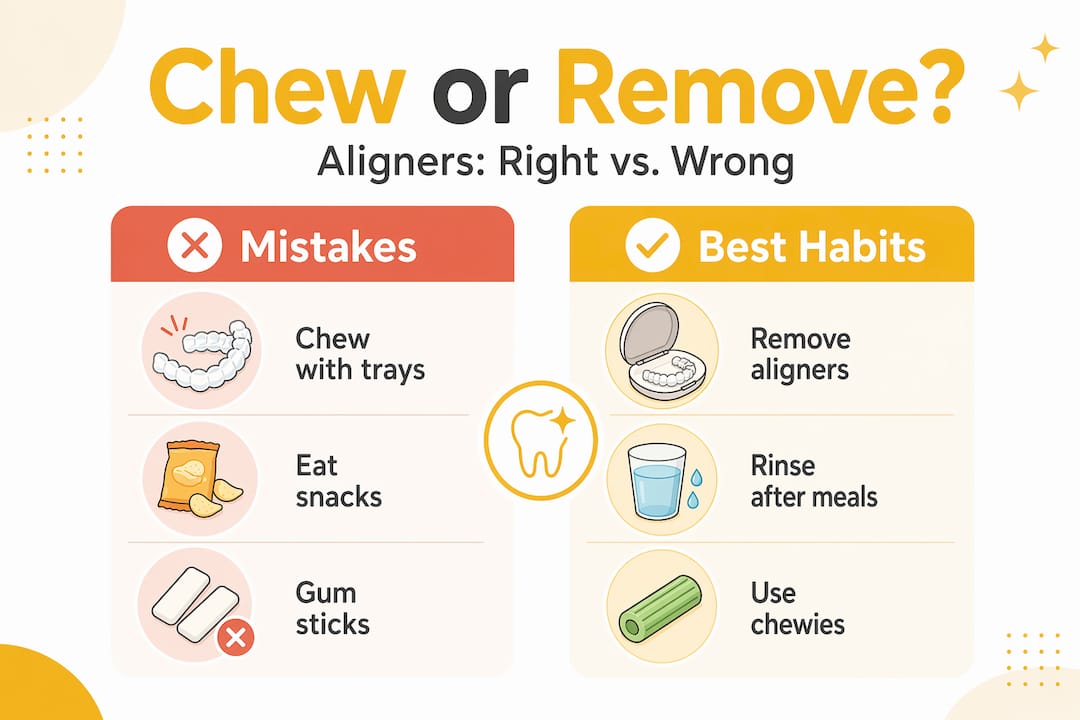
The hygiene issue is just as serious. Food particles get pressed between the tray and your teeth with every bite. Bacteria multiply fast in that warm, moist environment. Over time, that pattern raises your risk for cavities and gum inflammation, which is the exact opposite of the healthy smile you are working toward. Plaque and gingival inflammation risks rise sharply when aligner hygiene is poor, regardless of how good the technology is.
A few specific culprits worth knowing about:
- Hard foods (nuts, raw carrots, ice): These create the most cracking risk. One well-placed bite and your tray could split.
- Sticky or chewy foods (caramel, gummy candy, bagels): These pull at the tray edges and can distort the shape or dislodge the tray mid-bite.
- Hot foods and drinks: Heat warps clear plastic. Even a bowl of soup can soften your aligners enough to change their shape permanently.
- Chewing gum: Many people assume sugar-free gum is fine. It is not. Gum sticks to trays, warps their shape, and traps bacteria. The mechanical motion of chewing gum disrupts fit whether the gum contains sugar or not.
“Even sugar-free gum causes mechanical stress on aligners through stickiness and chewing motion, which can compromise the fit and overall treatment progress.” This is why the rule is not about sugar. It is about the physical act of chewing while trays are in place.
How to manage meals without wrecking your treatment
The good news is that managing eating with aligners is straightforward once you build the habit. The protocol is consistent: remove, eat, clean, reinsert. That loop, repeated every meal, keeps your trays intact and your treatment on track.
Here is how to do it right every time:
-
Remove your aligners before eating anything. This includes snacks, not just full meals. Even a handful of crackers creates chewing pressure your trays cannot handle safely. Take the trays out, set them in their case, and eat freely.
-
Store aligners in their case during meals. Never wrap them in a napkin or set them on a plate. Cases protect against damage, accidental disposal, and loss. Bring your case every time you leave the house.
-
Avoid chewing gum while wearing aligners. If you want gum after a meal, that is fine. Just remove your trays first. Xylitol gum chewed after aligner removal can actually benefit your oral health by reducing cavity-causing bacteria, making it a smart post-meal choice.
-
Brush and floss before reinserting your aligners. This step is non-negotiable. Reinserting trays over unclean teeth seals bacteria and food residue against your enamel for hours. A 90-second brush and quick rinse is all it takes.
-
Rinse your aligners before putting them back in. Cold or lukewarm water only. Hot water warps plastic. A quick rinse removes surface bacteria that accumulated while trays were out.
-
Track your wear time. Aligners need 20 to 22 hours per day to work effectively. Long meals and frequent snacking chip away at that window faster than most people realize. Keep meals consolidated rather than grazing throughout the day.
Pro Tip: Set a timer on your phone when you take trays out for a meal. Even a 45-minute lunch can turn into a 3-hour stretch if you get busy. The timer is a low-effort habit that protects your treatment timeline.
Chewies: the underrated tool that improves your results
Most aligner patients hear about chewies at their first appointment and then forget about them within a week. That is a mistake. Chewies are small cylindrical cushions, usually made from a soft plastic material called styrene copolymer. They look simple, but they do something your fingers cannot: they apply even, distributed pressure around the entire tray to seat it flush against every tooth surface.
Why does that matter? Aligner forces only work when trays fit precisely. When a tray has even a small gap at one or two teeth, the pressure distribution changes and those teeth do not move on schedule. Chewies close those gaps. They are especially important in the first few days of a new tray, when fit is tightest and seating can feel uneven.
| Chewie usage scenario | What it does | How long to use |
|---|---|---|
| Immediately after inserting new trays | Seats the tray and reduces initial discomfort | 5 to 10 minutes |
| After each meal reinsertion | Re-establishes full contact after trays were out | 5 minutes |
| When trays feel loose or uneven | Corrects minor seating gaps throughout the day | Until tray feels snug |
| During the first week of each new tray | Maximizes tooth contact and reduces tracking issues | Multiple times daily |
Using chewies several times per day, particularly for 5 to 10 minutes after inserting aligners and after meals, is the standard recommendation from orthodontists to maintain proper fit and prevent treatment delays.

Here is the correct technique: Place the chewie between your upper and lower teeth on one side, bite down firmly, hold for two to three seconds, and release. Move it around your mouth systematically so every section of the tray gets seated. Front teeth, left side, right side. Repeat the circuit two or three times per session.
Pro Tip: Rinse your chewies with cold water and mild soap after each use and let them air dry. Chewies are porous enough to harbor bacteria if you skip cleaning them, which defeats the hygiene purpose of proper aligner care.
If your orthodontist has not yet recommended chewies or a similar seating tool, ask. Some practices offer alternatives like specialized bite sticks designed for the same purpose. The tool matters less than the habit of using one consistently.
Common mistakes and what to do when things go wrong
Most chewing-related problems with aligners come from the same handful of mistakes. Knowing them in advance is far less stressful than discovering them through a cracked tray.
- Forgetting to remove trays before snacking. The casual, mindless snack is where most people slip up. A handful of trail mix at your desk, a bite of your kid’s apple, a piece of bread at a restaurant. Every single one counts. Build the habit of case-first, snack-second.
- Chewing gum out of routine, trays in. This is especially common for former habitual gum chewers. The sugar-free assumption gives people false confidence. Gum mechanics disrupt aligner fit regardless of what is in the gum.
- Drinking hot beverages with trays in. Coffee, tea, and hot chocolate all warp plastic and stain trays. Cold water is the only safe drink with aligners in.
- Reinserting trays without brushing. This traps residue and elevates cavity risk every time it happens.
If gum does contact your aligners, do not panic. Remove trays immediately, soak them in lukewarm water, and gently peel the gum away. Never use hot water. Clean the tray with a soft toothbrush and clear, unscented soap. Check the tray for deformation afterward.
If your tray is visibly cracked, bent, or no longer seats properly after an incident, contact your orthodontist the same day. Wearing a damaged tray can move teeth incorrectly, and that error is far harder to correct than simply getting a replacement tray issued earlier than scheduled.
A good aligner cleaning routine after any food or gum contact is your best defense against damage escalating into a treatment setback.
What consistent habits actually produce
Patients who follow these practices consistently finish treatment on or ahead of schedule. That is not a coincidence. Aligners require consistent fit and wear time for biological tooth movement to happen. Small gaps in tray seating, repeated over days and weeks, delay progress and may require additional aligner refinements to correct course.
The flip side is also true. Repeated chewing habits that compromise hygiene and tray integrity create compounding problems. Cavities that develop mid-treatment require dental work that interrupts your aligner schedule. Warped trays need replacement, which costs time and sometimes money. These are not rare edge cases. They are the predictable result of skipping the basics.
The patients who get the best results treat aligner care like a non-negotiable daily routine rather than an inconvenience. They remove trays before every meal without hesitation, use chewies consistently, and brush before reinsertion every time. Those habits, repeated over the course of treatment, are what produce the outcome you started this whole process to achieve.
My honest take on chewing and compliance
I have seen patients arrive frustrated midway through treatment wondering why their progress has stalled, and in the majority of those cases, chewing habits and inconsistent wear time are the culprit. Not aligner technology. Not their teeth. Their daily routine.
What surprises me is how underrated chewies are. Patients treat them like optional accessories when they are actually one of the most effective tools in an aligner patient’s hands. A tray that is not fully seated is not working. It is that simple.
I also want to be honest about something most guides do not say clearly: the 22-hours-per-day rule sounds strict because it is strict. Long lunches, frequent snacking, chewing gum out of habit, forgetting to put trays back in after dinner. These are real patterns, and they add up to hours of missed wear time every week.
The practical approach is not perfectionism. It is building two or three anchor habits: always case first, always brush before reinserting, always use chewies with a new tray. Master those three and the rest tends to follow. You can read practical everyday tips to build a routine that actually sticks.
— Gloworthodontics
Your Glow Orthodontics support team is here

Managing chewing habits during aligner treatment is genuinely easier when you have the right guidance from the start. At Glow Orthodontics, we make sure every patient leaves their appointments knowing exactly how to care for their trays, what to eat, and how to handle the moments when life gets in the way. Our team in Langley covers everything from food choices with aligners to step-by-step eating and drinking protocols so you never have to guess. Whether you have questions about chewies, damaged trays, or how to build better habits, we are a call or click away. Book a consultation and get personalized support that moves your treatment forward, not backward.
FAQ
Can you chew with aligners in?
No. Chewing with aligners in place cracks and warps the trays and traps food against your teeth, raising your cavity risk. Always remove aligners before eating anything.
Is sugar-free gum safe to chew with aligners in?
No. Even sugar-free gum sticks to trays and disrupts their fit through mechanical chewing motion. Remove your aligners first, then chew gum if desired.
How often should you use chewies with aligners?
Most orthodontists recommend using chewies for 5 to 10 minutes after inserting aligners and after each meal reinsertion, typically several times per day.
What should you do if gum sticks to your aligner?
Remove the tray immediately and soak it in lukewarm water. Gently peel the gum away, clean the tray with a soft brush, and check for warping before reinserting.
How does chewing affect aligner treatment progress?
Chewing with trays in distorts their shape, reducing the precision fit needed for effective tooth movement. Consistent habits with proper removal and chewie use keep treatment on schedule.