Choosing the right orthodontist in Langley for kids
May 15, 2026
Choosing the right orthodontist in Langley for kids
TL;DR:
- Early orthodontic evaluation by age 7 allows for early detection of jaw and tooth development issues, enabling less invasive treatment. Parents should prioritize consulting a certified orthodontic specialist, inquire about technology used, and understand all costs, including retention, before starting treatment. Choosing between braces and Invisalign depends on the child’s age, responsibility, and treatment complexity, with modern technology enhancing planning and outcomes.
Most parents assume their child doesn’t need an orthodontist until the teenage years, when all the adult teeth are in and a crooked smile is impossible to ignore. That assumption costs families time, money, and sometimes more complex treatment than they ever needed. The AAO recommends an orthodontic check-up no later than age 7, because a trained orthodontist can spot jaw development and tooth eruption issues long before they become serious. This guide cuts through the confusion around timing, treatment options, and the questions that really matter when choosing an orthodontist for your child or teen in Langley.
Table of Contents
- When and why to see an orthodontist
- Key questions to ask your orthodontist
- Braces vs Invisalign: What parents need to know
- New technology in orthodontics: Evaluating diagnostics and digital care
- What most parents overlook when choosing an orthodontist
- Start your child’s confident smile journey today
- Frequently asked questions
Key Takeaways
| Point | Details |
|---|---|
| Early evaluation matters | Having your child’s teeth checked by age 7 can prevent more serious orthodontic concerns later. |
| Ask the right questions | Understanding who performs the work, emergency support, and fee transparency leads to better experiences. |
| Modalities need a match | Both braces and Invisalign can work well, but aligners demand responsible wear to succeed. |
| Technology signals quality | Digital diagnostics and projected results show a practice is up-to-date and prioritizes care quality. |
| Credentials over hype | Verifying orthodontic specialist credentials protects your child’s treatment outcome. |
When and why to see an orthodontist
It might feel early to book an orthodontic visit when your seven-year-old still has a mouth full of baby teeth. But that is precisely the point. The mix of baby and adult teeth in a young child’s mouth tells an orthodontist a remarkable amount about what is coming. Crowding, spacing, jaw alignment, and bite patterns are all visible and measurable at this stage, and catching them early opens up treatment options that simply don’t exist later.
Here’s what typically happens during that first visit:
- Health and dental history review — The orthodontist asks about breathing habits, jaw pain, and prior dental care.
- Clinical exam — A hands-on look at bite, spacing, and symmetry.
- Digital imaging or X-rays — These reveal root development and bone structure invisible to the naked eye.
- Findings discussion — The orthodontist explains what they see and whether intervention is needed now, later, or not at all.
- Custom timeline — You get a clear, personalized roadmap rather than a generic treatment pitch.
Many families walk out of that first visit with nothing more than a monitoring schedule. That is actually a great outcome. It means the orthodontist is watching carefully without rushing into treatment prematurely. For other kids, early intervention, sometimes called Phase 1 treatment, can guide jaw growth and make space for permanent teeth, reducing the need for extractions or complex appliances later.
The approach changes significantly for teenagers. By the early teen years, most permanent teeth are in place, the jaw structure is more defined, and the range of treatment options widens considerably. Teens are also better able to handle the responsibility that comes with certain treatments, like clear aligners, which require consistent wear and daily hygiene habits. Aligners are often better suited to older kids who have developed reliable hygiene routines, while younger children typically do better with fixed appliances.
For a deeper look at what the teenage orthodontic experience looks like, the teens orthodontic care guide covers specific treatment timelines, expectations, and what teens themselves often worry about.
Pro Tip: At your first consultation, ask specifically whether treatment is being recommended for the child’s benefit now or whether it could safely wait. A trustworthy orthodontist will give you an honest, unhurried answer.
“The goal of early evaluation isn’t necessarily early treatment. It’s early awareness so you can make informed decisions on your child’s timeline.”
Key questions to ask your orthodontist
Picking an orthodontist shouldn’t come down to whoever has the fanciest waiting room or the most Instagram ads. The questions you ask during a consultation reveal far more about the quality of care your family will receive. According to established consult frameworks, the most important areas to probe are clinical oversight, emergency handling, ongoing monitoring, and fee transparency.
Here’s a practical list to bring to any first consultation:
- Who performs the actual clinical work? Some practices use dental assistants or hygienists for a significant portion of hands-on care. You want to know how much direct involvement the licensed orthodontist has.
- How does the practice handle orthodontic emergencies? Broken brackets, poking wires, and lost aligners don’t always happen during office hours. Ask about after-hours contacts and typical response times.
- What does the retention phase look like? Treatment doesn’t end when the braces come off. Retainers are critical, and you need to know who monitors them, for how long, and at what cost.
- Is the quoted fee all-inclusive? Ask specifically about costs for retainers, replacement aligners, emergency visits, and any imaging not covered in the initial fee.
- What is the expected treatment duration, and what can extend it? This is especially important for teens who may have school events, sports seasons, or graduations to plan around.
Understanding the consultation process before you walk in puts you in a much stronger position to evaluate what you’re being told. And if a broken bracket ever happens on a Saturday night, you’ll be glad you asked ahead of time about handling orthodontic emergencies.
Pro Tip: If a practice can’t clearly explain who does what, or hesitates on fee transparency, that hesitation itself is valuable information. Take it seriously.
Braces vs Invisalign: What parents need to know
Once you’ve found a practice you trust, the biggest decision most families face is whether to choose traditional braces or clear aligners like Invisalign. The good news is that for the majority of alignment cases, clinical outcomes are similar between the two options. Five-year retrospective research confirms that long-term tooth alignment results are nearly identical, but patient satisfaction tends to run higher with Invisalign.
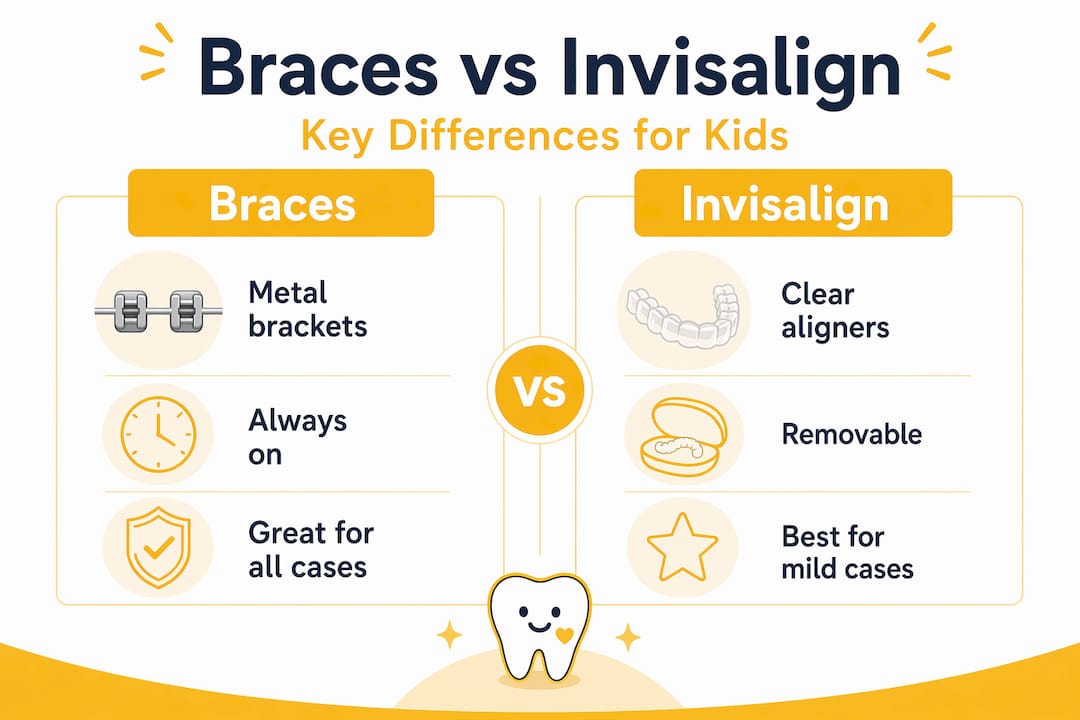
Here’s a side-by-side comparison to help simplify the decision:
| Factor | Traditional braces | Invisalign / clear aligners |
|---|---|---|
| Effectiveness | Excellent for all cases | Excellent for mild to moderate cases |
| Daily responsibility | Low (fixed in place) | High (must wear 20-22 hours/day) |
| Visibility | Noticeable | Nearly invisible |
| Diet restrictions | Yes (avoid sticky, hard foods) | None (remove to eat) |
| Oral hygiene complexity | Requires more effort around brackets | Easier to brush and floss normally |
| Ideal age range | Works for all ages | Best for motivated older teens and adults |
| Comfort | Minor initial discomfort | Similar, smooth edges are gentler |
| Emergency risk | Broken brackets or wires | Lost or cracked aligners |
The table makes it look like Invisalign is the obvious winner, but that misses a crucial variable: compliance. Aligners require consistent, disciplined wear every single day. A teen who removes their aligners during school because they feel self-conscious, or simply forgets to put them back in after lunch, will not get the results the system promises. Braces, by contrast, work continuously without any daily decision-making from the patient.
Factors that point toward braces:
- Younger patients or those not yet ready for daily responsibility
- Complex bite corrections or severe crowding
- Patients who tend to lose things easily
- Cases where the orthodontist needs precise control over individual tooth movement
Factors that point toward Invisalign:
- Motivated teenagers who understand the commitment
- Mild to moderate alignment issues
- Patients in contact sports (fewer injury risks without brackets)
- Kids or teens very concerned about aesthetics
For a detailed breakdown, the guide on clear aligners vs braces walks through seven specific differences that often change how families make their final choice.
New technology in orthodontics: Evaluating diagnostics and digital care
Treatment type is only one piece of the puzzle. The technology a practice uses to plan and monitor treatment is just as important, and it’s something most parents never think to ask about.

Modern orthodontic care has moved well beyond plaster molds and manual measurements. Today’s leading practices use digital tools that improve accuracy, speed, and transparency. Understanding what to look for helps you evaluate the quality of any practice you visit.
| Technology | What it does | Why it matters |
|---|---|---|
| 3D digital scans | Creates a precise digital model of teeth and bite | More comfortable and accurate than traditional impressions |
| Cone beam CT (CBCT) imaging | Shows roots, bone, and jaw in three dimensions | Critical for complex cases or jaw development issues |
| Digital treatment simulation | Projects how teeth will move over treatment | Lets you see the expected outcome before committing |
| AI-assisted planning tools | Analyzes case data to optimize treatment sequencing | Reduces human error in complex multi-stage treatment |
| Digital retainer tracking | Monitors fit and wear compliance over time | Catches problems before they cause relapse |
Modern diagnostic evaluation should include 3D imaging and projected treatment simulations as a baseline, not an upgrade. If a practice still relies exclusively on traditional impressions and 2D X-rays, that is worth noting.
“Before agreeing to any treatment plan, ask to see a projected simulation of your child’s result. A practice confident in its technology will show you willingly.”
When you sit down for a digital consultation, a quality practice should be able to show you a visual model of where your child’s teeth are now and where they’ll be at the end of treatment. That kind of transparency isn’t just reassuring; it’s a sign that the orthodontist can commit to a predictable plan rather than adjusting indefinitely along the way.
Ask directly: does the practice use intraoral scanners or traditional impressions? Can you see a before-and-after simulation? What imaging is included in the initial exam fee? These are reasonable questions, and a confident, modern practice will welcome them.
What most parents overlook when choosing an orthodontist
Here’s what years of experience working with families in Langley has taught us: most parents start their search in the wrong place. They look at price, proximity, or brand recognition first. Those things matter, but they should come last, not first.
The very first step should be verifying specialist credentials. Not every provider offering orthodontic services is a board-certified orthodontist. General dentists can legally perform some orthodontic procedures, but an orthodontic specialist has completed two to three additional years of accredited, full-time residency training focused exclusively on moving teeth and aligning jaws. That difference is not small. The AAO’s guidance consistently emphasizes starting with a certified specialist, especially for growing children where jaw development decisions have long-term consequences.
The second thing most parents miss is that treatment suitability isn’t just about age. It’s about readiness and compliance. A 14-year-old who is highly motivated and organized may be a better Invisalign candidate than a 16-year-old who loses things constantly. A 9-year-old who brushes well and follows instructions may do better with early intervention than a 10-year-old who resists every dental visit. Matching the treatment to the child, not just the diagnosis, is what separates good orthodontic care from excellent orthodontic care.
Third, parents rarely press hard enough on what happens after active treatment ends. Retention is where results are either preserved or lost. Retainers need to be worn, monitored, and replaced. Ask specifically whether retention follow-up is included in your fee, how often check-ins happen, and what triggers a referral back to active treatment.
When evaluating options for teens, be especially deliberate about understanding the full scope of what’s included before signing any financial agreement. A lower upfront quote that excludes retainers, replacement aligners, or emergency visits can end up costing significantly more than a higher all-in fee.
Pro Tip: Doing your homework upfront, asking hard questions before you commit, results in far less regret later. The families who feel best about their orthodontic experience are usually the ones who came in most prepared.
Start your child’s confident smile journey today
Reading this guide is a great first step, but the real clarity comes from sitting down with an experienced orthodontic team who can look at your child’s specific situation and give you honest, personalized guidance.

At Glow Orthodontics Langley, we work with families across Langley every day, from early evaluation check-ups for seven-year-olds to full aligner treatment for high school seniors. Our consultations are designed to answer every question you leave home with, plus the ones you didn’t know to ask. The complete orthodontic care guide is a great resource to explore before your visit, and if you’re still weighing treatment types, the breakdown on clear braces vs Invisalign differences will help you walk in with confidence. Book your consultation today and give your child the start they deserve.
Frequently asked questions
At what age should my child first see an orthodontist?
The AAO recommends an orthodontic evaluation by age 7, when early tooth eruption and jaw development issues can be identified and addressed before they become more complex.
Is Invisalign better than braces for teens?
Long-term studies show both options deliver similar clinical results, but Invisalign consistently scores higher for patient satisfaction when teens commit to wearing their aligners as directed.
What makes an orthodontist different from a regular dentist?
Orthodontists complete two to three additional years of full-time, accredited specialty training beyond dental school, focused entirely on correcting tooth alignment and jaw relationships.
Can younger children get clear aligners like Invisalign?
Clear aligners can work for older, responsible children, but aligners are better suited to kids who have strong hygiene habits and the maturity to wear them consistently, which is why traditional braces remain more common for younger patients.
What questions should I ask at my child’s orthodontic consultation?
Ask who performs the clinical work, how emergencies are handled, what the retention plan looks like after treatment, and whether the quoted fee covers all costs including retainers and replacement aligners.