Clear aligner maintenance tips: the Langley user’s guide
May 16, 2026
Clear aligner maintenance tips: the Langley user’s guide
TL;DR:
- Proper clear aligner maintenance involves regular cleaning with appropriate tools and daily handling to prevent staining, bacteria buildup, and damage. Consistent routines, including thorough brushing, gentle soaking, and careful storage, are essential for treatment success and oral health. Personalized guidance from an orthodontist ensures optimal care throughout and after treatment to maintain a straight, healthy smile.
Cloudy trays, mysterious odors, and aligners that no longer fit snugly are not signs of a failing treatment. They are signs of a maintenance gap. Clear aligner maintenance tips matter more than most patients realize, because the aligners you wear for 20 to 22 hours a day are constantly exposed to saliva, bacteria, and food residue. Miss a few cleaning steps and you create the exact conditions that stain plastic, breed bacteria, and undermine the tooth movement your orthodontist carefully planned. This guide gives you a practical, no-guesswork system to keep your aligners clean, clear, and effective from day one through your final tray.
Table of Contents
- Essential tools and materials for maintaining your clear aligners
- Step-by-step daily and deep cleaning routines for clear aligners
- Daily handling and storage best practices for aligner longevity
- Oral hygiene and routine checks to support aligner maintenance
- Troubleshooting common issues and mistakes to avoid with clear aligners
- Post-treatment retainer care and maintaining your smile
- A fresh perspective on clear aligner maintenance: avoiding common pitfalls and optimizing your routine
- Why choose Glow Orthodontics for your clear aligner care in Langley
- Frequently asked questions
Key Takeaways
| Point | Details |
|---|---|
| Consistent daily cleaning | Clean your aligners every time you remove them using lukewarm water and a soft brush to prevent bacteria buildup. |
| Use approved cleaners | Soak aligners occasionally with dentist-approved solutions for deeper cleaning without damaging the plastic. |
| Proper storage | Always store aligners in a clean protective case when not in use to protect them from damage and contamination. |
| Oral hygiene matters | Brush and floss your teeth thoroughly before reinserting aligners to avoid trapping food and promote oral health. |
| Prompt issue reporting | Inspect aligners daily for fit and damage, and contact your orthodontist immediately if problems arise. |
Essential tools and materials for maintaining your clear aligners
Good clear aligner maintenance starts before you even put the trays in your mouth. Having the right tools within reach makes consistent care easy rather than optional.
Here is what you need in your kit:
- A dedicated soft-bristle toothbrush. Keep one brush exclusively for your aligners. Using your regular toothbrush risks transferring toothpaste residue, which is abrasive enough to scratch clear plastic.
- Mild, clear liquid soap. Unscented dish soap or clear hand soap works well. Avoid colored or heavily fragranced formulas because dyes can tint your trays.
- Aligner-specific cleaning crystals or tablets. Products like Invisalign cleaning crystals are formulated for the plastic used in most trays. Specialty aligner cleaning products or mild dentist-approved solutions are recommended for soaking.
- A protective hard-shell case. This is non-negotiable. Every time you remove your aligners without a case nearby, you risk losing or crushing them.
- Lukewarm water. Both for rinsing and for soaking. Temperature matters: hot water warps the plastic.
- A travel cleaning kit. A small zippered pouch with a travel toothbrush, floss, and your case makes it possible to maintain your daily aligner cleaning routine anywhere, from Langley restaurants to long road trips.
| Tool | Purpose | What to avoid |
|---|---|---|
| Soft-bristle toothbrush | Gentle scrubbing of tray surfaces | Hard bristles that scratch |
| Clear mild soap | Removing bacteria without staining | Colored or scented soaps |
| Cleaning crystals/tablets | Weekly deep soak | Bleach, mouthwash with alcohol |
| Hard-shell case | Protection during storage | Napkins, pockets, open counters |
| Lukewarm water | Rinsing and soaking | Hot water above 130°F |
Think of this kit the way you think of a gym bag. You can technically work out without one, but skipping it means you are always improvising, and improvising leads to skipped sessions. The same principle applies to aligner care.
Step-by-step daily and deep cleaning routines for clear aligners
Now that you know what tools and materials you will need, here are the exact steps for daily and weekly cleaning.
Daily routine (morning and evening)
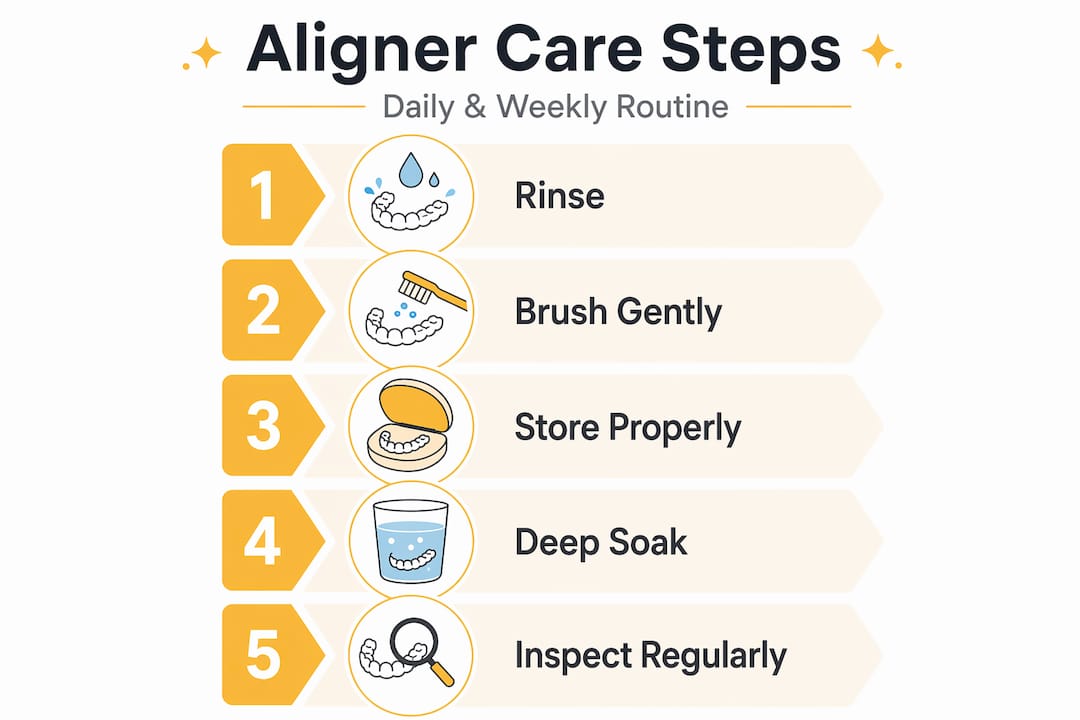
- Remove your aligners and immediately rinse them under lukewarm water. This flushes away the saliva film that accumulates overnight or throughout the day.
- Apply a small drop of clear, mild soap to your dedicated soft-bristle brush.
- Brush the inside and outside of each tray using gentle circular motions. Focus on the ridges and grooves where bacteria accumulate.
- Rinse thoroughly under lukewarm water until no soap remains.
- Before reinserting the trays, brush your teeth and floss. Reinserting aligners over unbrushed teeth traps food debris and accelerates bacterial growth.
Weekly deep soak
Rinse aligners each removal and clean with a soft brush twice daily; soak aligners 15 to 30 minutes a few times per week using approved cleaning solutions. Fill a clean cup with lukewarm water, drop in a cleaning tablet or measured crystals, and fully submerge both trays. Set a timer and walk away. When the time is up, rinse the trays again before reinserting them.
You can also explore natural aligner cleaning methods if you prefer to avoid commercial products between deep soaks.
Pro Tip: Never use toothpaste to clean your aligners. Most toothpastes contain micro-abrasives designed to polish tooth enamel, not smooth plastic. Those same particles scratch your trays, turning them cloudy and creating microscopic grooves where bacteria hide. Mild soap and a soft brush do the job without the damage.
What to skip entirely:
- Hot water (warps the tray shape permanently)
- Colored mouthwash (stains the plastic a yellow or blue tint)
- Harsh household cleaners or bleach (degrades the material over time)
Daily handling and storage best practices for aligner longevity
With a solid cleaning routine in place, let us look at how to handle your aligners throughout the day to maintain their condition and hygiene.

Proper handling is where most people’s routines quietly fall apart. The cleaning part gets attention. The in-between moments often do not.
Core habits to build:
- Remove aligners before eating or drinking anything except plain water. Coffee, tea, juice, and even sports drinks stain the plastic and create a warm, sugary environment inside the tray. Per SureSmile aligner care tips, storing your aligners in their clean, dry case whenever not worn and carrying a travel kit are essential practices for patients on the go.
- Never wrap aligners in a napkin. This is how aligners end up in restaurant trash cans. It happens more than you think, and replacement trays are not free.
- Inspect your trays every day. Hold them up to a light source and look for hairline cracks, warped edges, or unusual cloudiness that persists after cleaning. Catching these early means a faster fix.
- Keep your case clean. Wash it with soap and water a few times per week. A dirty case re-contaminates clean aligners immediately.
When you are away from home in Langley or traveling further, your travel kit is your insurance policy. Pack it in your bag the night before. Review your clean aligners effectively routine so you know exactly what to do in a restaurant bathroom or at the office.
Pro Tip: If you eat lunch out regularly, keep a second case and a small bottle of mild soap at your workplace. Having supplies in two locations eliminates the most common excuse for skipping midday care.
Before reinserting your aligners after a meal, check out the eating with Invisalign guide for a fuller picture of food-related dos and don’ts.
Oral hygiene and routine checks to support aligner maintenance
Knowing how to handle your aligners daily is vital, but your mouth itself needs equal attention. Aligners sit directly against your teeth and gums for most of the day. Any plaque or food debris you skip becomes trapped under the tray, accelerating decay and gum irritation.
Build these habits alongside your aligner care:
- Brush twice daily and floss at least once. This is not optional. Cleaning teeth before reinserting aligners prevents trapped food debris and supports overall oral health.
- Rinse your mouth after meals. Even a 30-second water rinse removes loose particles before you reinsert your trays on the go.
- Use orthodontist-recommended chewies. These small foam cylinders help seat the aligner fully against your teeth, ensuring the tray is doing what it is supposed to do. An aligner that does not sit flush is not moving teeth efficiently.
- Attend every scheduled orthodontic appointment. Your orthodontist in Langley uses these visits to verify tooth movement, check tray fit, and catch problems early. Skipping them does not pause treatment; it risks derailing it.
- Report any persistent discomfort or poor fit promptly. Some pressure is normal when you switch to a new tray. Sharp pain or a tray that suddenly feels looser is not.
For a broader look at long-term hygiene habits that support your treatment, the aligner cleaning guide and retainer care tips are worth bookmarking now.
Troubleshooting common issues and mistakes to avoid with clear aligners
Proper oral hygiene combined with aligner care leads us to the problems that show up when routines slip. Knowing what to look for and how to respond keeps small issues from becoming treatment setbacks.
“Clear aligner maintenance is not just about keeping trays pretty. It is about maintaining the hygienic conditions your teeth need to move predictably and safely.”
The most common problems and how to handle them:
- Yellowing or staining. Usually caused by drinking coffee, tea, or colored beverages with aligners in. The fix is behavioral: remove trays before every drink except water.
- Persistent bad odor. Persistent odor indicates bacterial buildup; improve your cleaning routine and consult your orthodontist if it continues.
- Cloudiness that does not clear. Often caused by toothpaste use or soaking in mouthwash. Switch to mild soap and cleaning crystals.
- Cracks or warping. Do not attempt to bend or fix a cracked tray yourself. Contact your orthodontist immediately. Wearing a damaged tray can apply unintended pressure to teeth.
- Trays that no longer seat fully. This can mean you are not wearing them enough hours, or that the tray needs replacement. Use your chewies and call your provider.
One of the most common habits that quietly undermines treatment is cleaning trays long after removal rather than immediately. Every minute a tray sits dry after being removed, bacteria dry onto the surface and become harder to remove. Clean them within minutes of taking them out. Reviewing common Invisalign mistakes can help you identify other habits worth adjusting.
Post-treatment retainer care and maintaining your smile
Troubleshooting during treatment matters, but the work does not stop when your final aligner tray is done. Teeth are living structures anchored in bone. Without retention, they will begin to drift back toward their original positions. Sometimes quickly.
What to know about retainer care after aligners:
- Wear your retainer consistently. Retainers require daily wear of about 22 hours initially, transitioning to night-only wear over time as your orthodontist advises.
- Clean your retainer daily. Use warm (not hot) water and a soft brush. The same rules that apply to aligners apply here: no toothpaste, no harsh chemicals.
- Store retainers in their case. Exactly as you did with your aligners. The habits you built during treatment carry directly into retention.
- Report fit changes quickly. A retainer that suddenly feels tight means your teeth have started to shift. The sooner you address it, the easier the correction.
- Continued hygiene prevents relapse. Plaque buildup on retainers causes odor and makes the appliance uncomfortable to wear, which leads to wearing it less, which leads to tooth movement. The chain reaction is worth breaking early.
Your retainer wear tips page has specific guidance on night-only wear schedules and what to expect in the months after active treatment ends.
A fresh perspective on clear aligner maintenance: avoiding common pitfalls and optimizing your routine
Most clear aligner care advice focuses almost entirely on the trays themselves. Rinse them, brush them, soak them. That is solid advice, but it misses half the picture.
The bigger issue we see is that patients give their aligners thorough attention and then reinsert them over teeth they have not fully cleaned. Aligners are not a substitute for proper brushing and flossing. They are a layer on top of it. When that layer sits against a tooth surface that has not been properly cleaned, it creates a sealed, warm, moist environment where decay-causing bacteria thrive. You can have perfectly clean trays and still be accelerating cavities.
The second thing that gets overlooked: soaking frequency. More is not better. Soaking too often, especially in solutions with oxidizing agents, can degrade the plastic over time. Daily brushing with mild soap does the heavy lifting. Soaking is a supplement, not the primary method.
There is also the matter of daily inspection. Most people only notice a problem with their aligners when it is already significant. Spending ten seconds holding your trays up to a light source every evening takes almost no time and catches cracks, warping, and unusual cloudiness before they become emergencies. It is the single most underrated step in any comprehensive aligner care routine.
Finally, carrying a travel kit is not a “nice to have.” For patients in Langley who eat out, commute, or travel for work, a kit you leave at home is a kit that cannot help you. The routines that fail are always the ones that depended on perfect conditions. Build a system that works when life is inconvenient, and you will rarely have maintenance problems worth worrying about.
Why choose Glow Orthodontics for your clear aligner care in Langley
Getting your aligners is one step. Knowing exactly how to care for them throughout every stage of treatment is another, and that is where personalized guidance makes a real difference.

At Glow Orthodontics in Langley, every patient receives a treatment plan designed around their specific alignment goals, along with hands-on guidance for daily and travel care routines. You will have access to aligner cleaning guidance tailored to your specific tray brand, clear answers during every follow-up visit, and a team that notices fit and comfort issues before they become delays. Whether you are at the beginning of your Invisalign treatment process or looking for practical Invisalign tips to make everyday life with aligners smoother, the Glow team is ready to support your journey from first tray to final retainer check.
Frequently asked questions
How often should I clean my clear aligners to keep them hygienic?
Rinse, brush, and soak aligners regularly to prevent odor and buildup: rinse every time you remove them, brush gently twice daily with mild soap, and soak for 15 to 30 minutes a few times per week using an approved cleaning solution.
Can I use toothpaste or hot water to clean my clear aligners?
No. Toothpaste abrasives scratch clear plastic, making trays look cloudy and creating surfaces where bacteria accumulate; hot water warps the tray shape permanently.
What should I do if my aligners develop a persistent bad odor?
Step up your cleaning routine with daily brushing and regular soaking; if the odor continues, contact your orthodontist because persistent odor signals bacterial buildup that structured cleaning and professional evaluation can resolve.
How important is wearing retainers after finishing clear aligner treatment?
Extremely important. Daily retainer wear is vital to maintaining tooth alignment after treatment, typically around 22 hours per day initially before gradually transitioning to night-only wear.
What’s the best way to store my aligners when I’m not wearing them?
Always store aligners in their case when not in use: keep the case clean, dry, and with you at all times to prevent loss, contamination, and physical damage.