Clear Braces for Kids: Beyond Invisalign Options
February 2, 2026
Clear Braces for Kids: Beyond Invisalign Options
Choosing the right orthodontic solution for your child can feel daunting when every option promises comfort, confidence, and a straighter smile. For parents in Langley looking beyond Invisalign, clear braces have gained attention for their gentle approach to correcting misalignment and maintaining oral health during the critical ages of seven to twelve. Recent pediatric research confirms clear aligners offer a discreet, effective alternative, making it easier to compare technologies and understand which choices might fit your family’s needs.
Table of Contents
- Clear Braces Explained for Parents
- Types of Clear Braces Available Today
- How Clear Braces Work for Children
- Benefits and Limitations Compared to Invisalign
- Cost, Care, and Common Mistakes
Key Takeaways
| Point | Details |
|---|---|
| Clear Braces Offer Improved Aesthetics | Clear braces provide a visually appealing alternative to traditional metal braces, enhancing self-confidence during treatment. |
| Customizable and Comfortable Treatment | They are designed with patient comfort in mind, using removable aligners for easier maintenance and oral hygiene. |
| Individual Assessment Is Crucial | Consulting an orthodontic professional is essential to determine the best clear braces option based on the child’s specific dental needs. |
| Cost Consideration and Care | Clear braces can range from $3,000 to $8,000, with proper maintenance critical to avoid complications and ensure successful treatment. |
Clear Braces Explained for Parents
Parents exploring orthodontic options for their children now have more choices than ever before. Clear braces represent a modern, sophisticated approach to teeth alignment that offers significant advantages over traditional metal braces. These innovative orthodontic solutions provide children with comfortable, aesthetically pleasing alternatives that can improve both dental health and self-confidence.
Clear braces function through a series of transparent, custom-fitted aligners designed to gradually shift teeth into proper position. Systematic clinical research in pediatric dentistry demonstrates their effectiveness in treating malocclusion during critical oral development phases. Unlike traditional braces, clear aligners offer several unique benefits:
- Minimal visual impact during treatment
- Removable for eating and oral hygiene
- Reduced risk of irritation to gums and cheeks
- More comfortable wearing experience
- Easier maintenance and cleaning
The technology behind clear braces has advanced significantly in recent years. Orthodontic studies comparing treatment methods reveal that clear aligners can improve not just tooth positioning, but also overall periodontal health. They help reduce inflammation and enhance masticatory function, contributing to both physical and psychological well-being for young patients.
Treatment considerations are crucial when selecting clear braces for children. Parents should understand that not every child is an ideal candidate, and individual assessment by an orthodontic professional remains essential. Factors like age, dental complexity, and patient compliance play significant roles in determining treatment success.
Pro tip: Schedule a comprehensive consultation to determine whether clear braces represent the most appropriate orthodontic solution for your child’s specific dental needs.
Types of Clear Braces Available Today
Orthodontic technology has revolutionized the way parents and children approach teeth alignment. Comprehensive research on clear braces reveals multiple innovative options that cater to different dental needs and aesthetic preferences. Clear braces have emerged as a sophisticated alternative to traditional metal orthodontic treatments, offering patients increased comfort and discretion.
The primary types of clear braces currently available include:
- Ceramic Braces: Made from translucent ceramic materials that blend with tooth color
- Clear Aligners: Removable, transparent plastic trays custom-designed for individual patients
- Lingual Braces: Placed behind teeth, completely hidden from view
- Self-Ligating Clear Braces: Advanced brackets that don’t require elastic bands
Advanced orthodontic systems demonstrate that these transparent solutions offer more than just aesthetic benefits. They provide precise tooth movement mechanisms comparable to traditional metal braces while minimizing visual impact. Ceramic braces, for instance, use tooth-colored brackets that make them significantly less noticeable than metal alternatives.

Each clear braces type comes with unique characteristics that parents should carefully consider. Factors like treatment duration, cost, complexity of dental misalignment, and patient age play crucial roles in determining the most suitable option. Clear aligners work particularly well for mild to moderate corrections, while more complex dental issues might require fixed ceramic or lingual braces.
Here’s a comparison of the main types of clear braces for children, helping parents identify which solution may suit their needs:
| Type of Clear Braces | Visibility Level | Best For | Typical Care Required |
|---|---|---|---|
| Ceramic Braces | Low, blends with teeth | Moderate misalignment | Regular brushing, avoid stain |
| Clear Aligners | Almost invisible | Mild-moderate cases | Daily cleaning, wear discipline |
| Lingual Braces | Hidden behind teeth | Complex corrections | Specialized cleaning, dentist checks |
| Self-Ligating Clear Braces | Low, tooth-colored | Fast, precise moves | Standard care, check for breakage |
Pro tip: Consult with an orthodontic specialist to perform a comprehensive assessment and determine which clear braces type best matches your child’s specific dental alignment needs.
How Clear Braces Work for Children
Clear braces represent a sophisticated approach to orthodontic treatment specifically designed to address children’s unique dental development needs. Pediatric orthodontic research reveals that these innovative systems work by applying gentle, consistent pressure to gradually guide teeth into their optimal positions during critical growth phases.
The mechanism of clear braces involves several key principles:
- Customized digital mapping of tooth movement
- Incremental adjustments through sequential alignment trays
- Controlled force application that respects natural tooth development
- Minimal discomfort compared to traditional metal braces
- Adaptable design accommodating children’s changing dental structures
Early orthodontic intervention strategies demonstrate that clear braces are particularly effective during the mixed dentition phase. This period, typically occurring between ages 6-12, represents a critical window where orthodontic corrections can prevent more complex dental issues later in life. Interceptive therapy allows orthodontists to address potential misalignments before they become more challenging to correct.
The treatment process typically involves creating a series of transparent aligners using advanced 3D imaging technology. Each set of aligners is precisely engineered to move teeth incrementally, with patients switching to a new set approximately every two weeks. This approach ensures continuous, controlled tooth movement while maintaining comfort and minimizing invasive procedures.
Pro tip: Maintain consistent communication with your orthodontist and ensure your child follows wearing instructions meticulously to maximize the effectiveness of clear braces.
Benefits and Limitations Compared to Invisalign
Clear braces offer parents and children a nuanced alternative to the well-known Invisalign treatment. Comparative orthodontic research reveals that these options each have distinct advantages and potential drawbacks depending on individual dental needs.
The key benefits of alternative clear braces compared to Invisalign include:
- More affordable treatment options
- Greater flexibility for complex dental corrections
- Potentially faster treatment timelines
- Reduced dependency on patient compliance
- Enhanced mechanical control for specific tooth movements
Orthodontic treatment effectiveness studies highlight important limitations that parents should consider. While Invisalign works exceptionally well for mild to moderate corrections, alternative clear braces might provide more robust solutions for more complex dental misalignments. Mechanical precision becomes crucial when addressing significant rotational challenges or skeletal discrepancies.
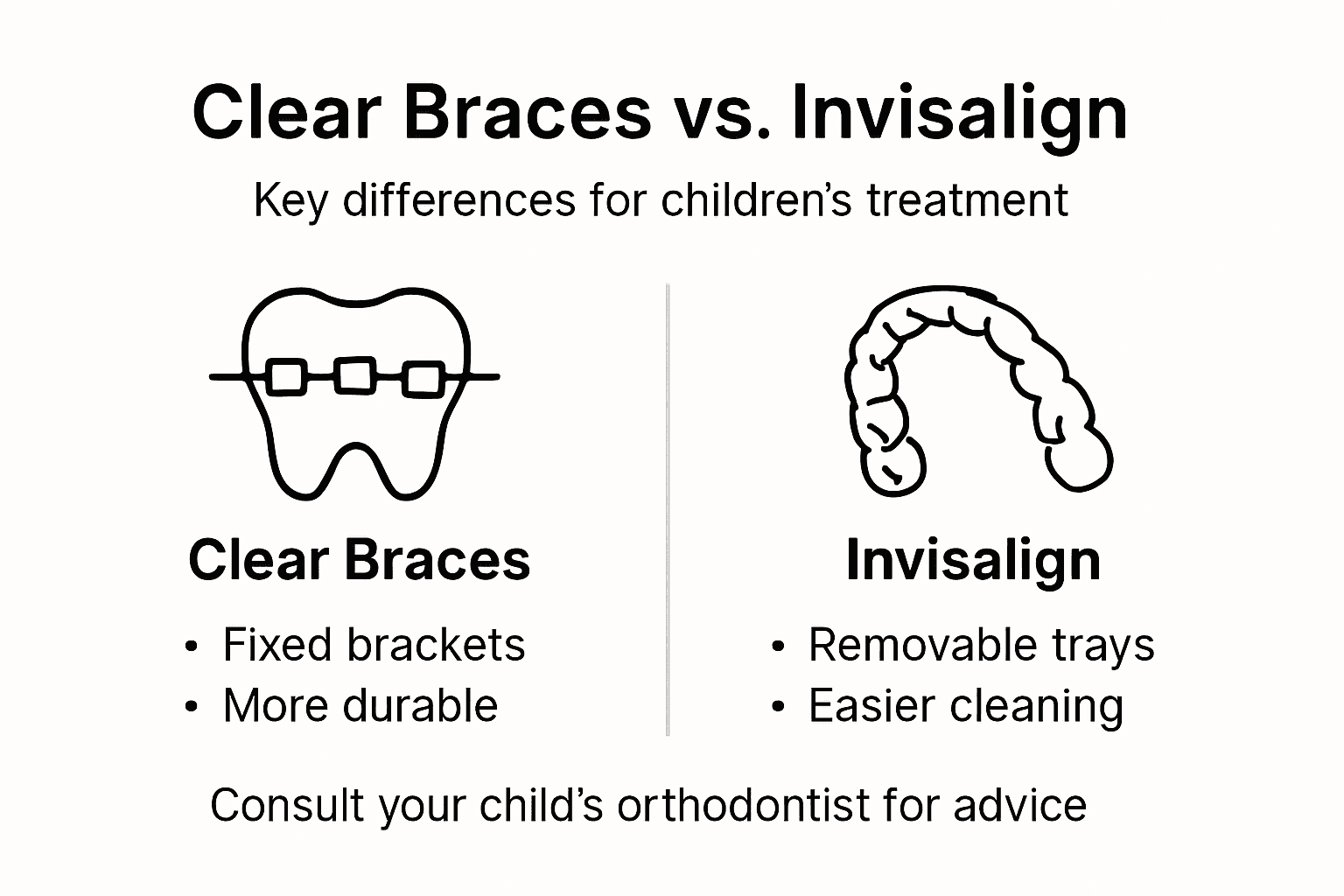
The primary differences emerge in treatment approach and mechanical design. Traditional clear braces use fixed brackets and wires, providing consistent pressure that doesn’t rely on patient discipline. This can be particularly advantageous for younger children who might struggle with the consistent wear requirements of removable aligners. Some alternative clear braces also offer more aggressive correction capabilities, making them suitable for more challenging orthodontic scenarios that Invisalign might not effectively address.
Pro tip: Request a comprehensive assessment from your orthodontist to determine which clear braces option provides the most precise and efficient treatment for your child’s specific dental structure.
Cost, Care, and Common Mistakes
Clear braces represent a significant investment in your child’s dental health, with costs and care requirements that demand careful consideration. Comprehensive orthodontic cost analysis reveals that pricing can vary dramatically based on treatment complexity, duration, and specific type of clear braces selected.
Typical cost considerations and financial aspects include:
- Average treatment costs ranging from $3,000-$8,000
- Potential insurance coverage for pediatric orthodontic treatment
- Flexible payment plans offered by most orthodontic practices
- Variations based on complexity of dental misalignment
- Potential long-term savings by preventing future dental complications
Pediatric dental care guidelines emphasize the importance of proper maintenance to ensure treatment success. Maintenance protocols are critical and include daily cleaning, avoiding certain foods, and protecting braces during physical activities. Parents should be vigilant about potential mistakes that could compromise treatment effectiveness.
Common mistakes parents and children often make during clear braces treatment include neglecting oral hygiene, skipping scheduled appointments, and not following orthodontist instructions precisely. These errors can significantly extend treatment time, increase overall costs, and potentially reduce the effectiveness of dental correction. Understanding these potential pitfalls helps families navigate the orthodontic journey more successfully and minimize unexpected complications.
The following table highlights common mistakes during clear braces treatment and simple ways to avoid them:
| Mistake | Potential Impact | Prevention Strategy |
|---|---|---|
| Skipping oral hygiene | Gum disease, longer treatment | Daily brushing and flossing |
| Missing orthodontic visits | Delayed progress, issues undetected | Keep a treatment calendar |
| Not following instructions | Poor results, discomfort | Review orthodontist’s advice often |
| Eating restricted foods | Bracket breakage, extra costs | Follow dietary recommendations |
Pro tip: Create a dedicated orthodontic care kit with specialized cleaning tools, wax, and backup supplies to help your child maintain consistent oral hygiene throughout treatment.
Discover Clear Braces Solutions Tailored for Your Child
Choosing the right orthodontic treatment for your child can feel overwhelming, especially with so many clear braces options beyond Invisalign. Parents often worry about treatment effectiveness, comfort, visibility, and how to keep their child motivated through the process. At Glow Orthodontics, we understand these challenges and prioritize personalized care that fits your family’s unique needs.
From ceramic braces to clear aligners, our expert team helps you navigate every choice with confidence. We combine the latest orthodontic technology with a warm, supportive environment to ensure your child’s smile journey is both successful and comfortable. Learn more about our welcoming treatment process and meet the team committed to transforming your child’s smile at Glow Orthodontics.

Ready to explore clear braces options that go beyond Invisalign and offer a perfect fit for your child’s dental needs Get started today with a personalized consultation at Glow Orthodontics. Visit our website to book your appointment and take the first step toward a healthier confident smile.
Frequently Asked Questions
What are clear braces and how do they work for kids?
Clear braces are a modern orthodontic solution designed to gradually shift teeth into proper position using a series of transparent, custom-fitted aligners. They apply gentle, consistent pressure while respecting natural tooth development, making them suitable for children’s dental needs.
What are the different types of clear braces available for children?
The primary types of clear braces include ceramic braces, clear aligners, lingual braces, and self-ligating clear braces. Each type has unique characteristics suited for varying levels of dental alignment needs and aesthetic preferences.
How do clear braces compare to Invisalign?
Clear braces provide a more affordable option with enhanced flexibility for complex corrections, while Invisalign is excellent for mild to moderate cases. Traditional clear braces do not rely on patient compliance as much as Invisalign, making them suitable for younger kids.
What should parents be aware of regarding the care and maintenance of clear braces?
Proper maintenance is essential for success with clear braces. This includes daily oral hygiene, following dietary restrictions, attending scheduled orthodontist visits, and adhering to specific treatment instructions to avoid complications and ensure effective results.