Clear Retainers After Braces: Your Complete Care Guide
June 22, 2026
Clear Retainers After Braces: Your Complete Care Guide
TL;DR:
- Clear retainers after braces are transparent, custom-made devices that hold teeth in their corrected positions. Wearing them consistently is essential, as teeth continue to shift without retainer use, making retention a lifelong commitment. Proper cleaning with mild soap, timely replacement, and regular dental check-ups help maintain their effectiveness and protect orthodontic results.
Clear retainers after braces are transparent, custom-made plastic devices designed to hold your teeth in their corrected positions after orthodontic treatment ends. Orthodontists call this style the Essix retainer, and it is the most commonly prescribed removable retainer today. Without consistent wear, teeth shift back toward their original positions, a process called orthodontic relapse. Brands like Invisalign Vivera produce clear retainers using the same thermoformed plastic technology as aligners, making them familiar to patients who completed Invisalign treatment. The bottom line: removing your braces is not the finish line. Wearing your retainer is.
How and when to wear clear retainers after braces
The standard retention schedule calls for 22 hours of daily wear for the first 4–6 months after braces come off. That window covers eating and brushing as the only breaks. After that initial phase, most orthodontists transition patients to nightly wear indefinitely. “Indefinitely” is not an exaggeration.
Teeth never fully stop moving. The periodontal ligaments that anchor teeth to the jawbone remain elastic throughout life, and without a retainer holding position, teeth drift. This is why orthodontists describe retention as a lifelong commitment, not a temporary phase.
The schedule differs slightly by age group:
- Children and teens (under 18): Bone is still developing, which means teeth respond quickly to pressure. Full-time wear for the first 4–6 months is critical. Teens often need reminders to stay consistent, since skipping even a few days can cause noticeable tightness.
- Adults (18 and older): Adults face higher relapse risk due to bone density changes that occur with age. Consistent nightly wear is non-negotiable for this group, even years after treatment ends.
- Patients who had significant crowding: The more correction your braces achieved, the stronger the tendency for teeth to revert. These patients benefit from wearing retainers more frequently, not less.
Inconsistent wear creates a frustrating cycle. A retainer that sits in a drawer for two weeks will feel tight when you try to wear it again. That tightness signals that teeth have already shifted, and forcing the retainer back in can damage both the appliance and your teeth.
Pro Tip: Set a phone alarm for the same time each night as a retainer reminder. Patients who attach retainer wear to an existing habit, like brushing before bed, show far better long-term compliance than those who rely on memory alone.
How to properly clean and maintain clear retainers
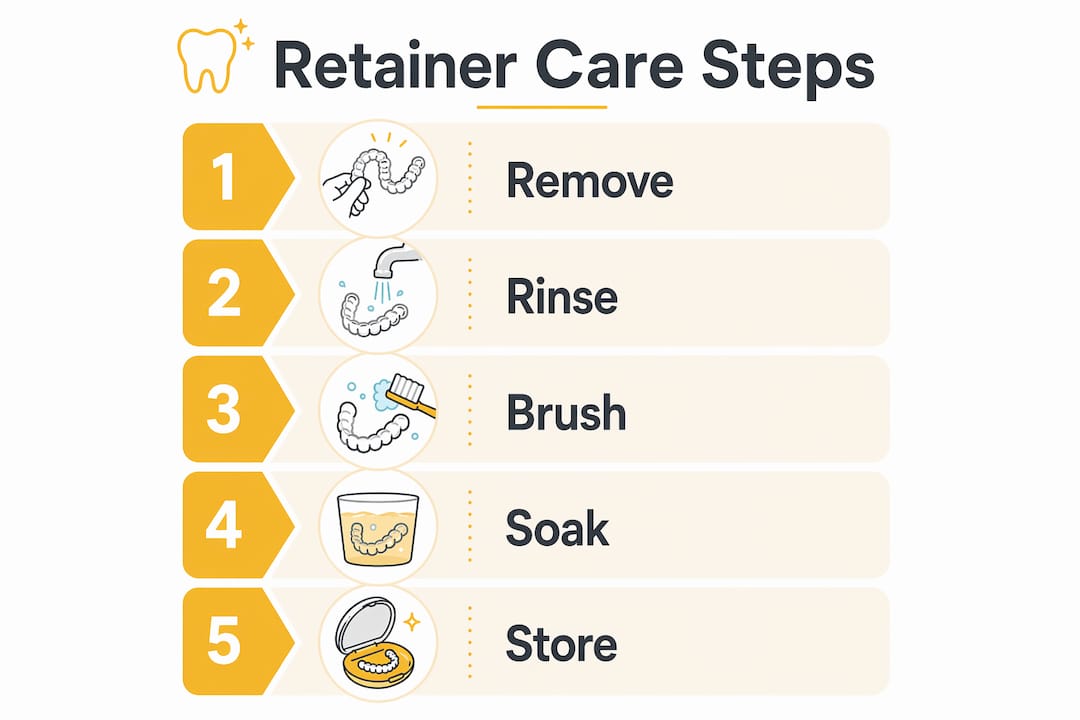
Daily cleaning is the single most important retainer maintenance habit. Bacteria and plaque build up on the plastic surface every time you wear it, and a dirty retainer goes straight back into your mouth.
Safe cleaning methods include:
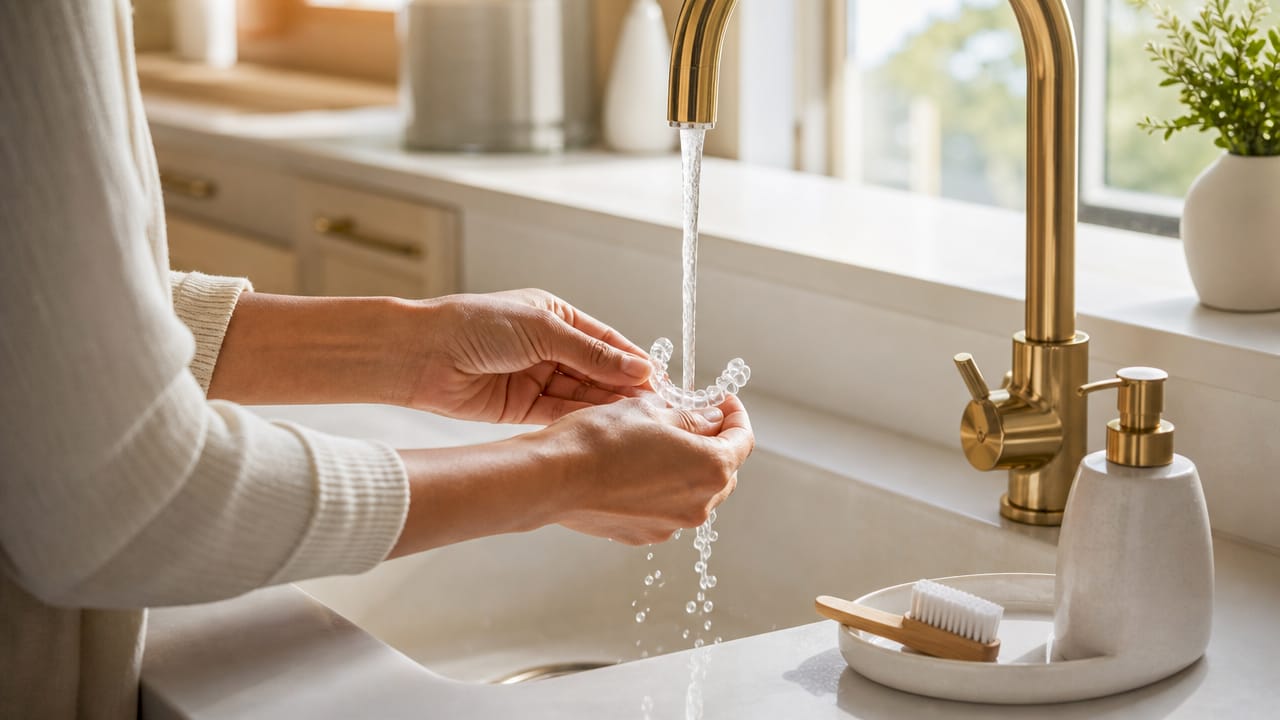
- Lukewarm water and a soft toothbrush: Gently scrub all surfaces after removing the retainer. This removes the daily film before it hardens.
- Mild, uncolored, unscented liquid soap: A small drop works well. Toothpaste scratches retainer plastic at a microscopic level, creating grooves where bacteria hide. Liquid soap cleans without abrading.
- Specialized cleaning tablets: Products like Retainer Brite and Invisalign Cleaning Crystals dissolve in water and provide a deeper weekly clean. Soak for the time listed on the packaging, then rinse thoroughly.
Equally important is what to avoid:
- Hot water: Heat warps the thermoformed plastic, changing the retainer’s shape and fit.
- Dishwashers: The high-temperature wash cycle destroys clear retainers completely.
- Bleach: Too harsh for the plastic and toxic if residue remains.
- Toothpaste: Even whitening toothpaste acts like fine sandpaper on the retainer surface.
The retainer case deserves as much attention as the retainer itself. A dirty or damp case breeds bacteria and causes odors that transfer directly to the retainer. Rinse the case weekly with warm water and mild soap, and let it air dry completely before closing. Replace the case if it develops cracks, since bacteria collect in those crevices and cannot be fully removed.
Signs your retainer needs replacement include persistent odor after cleaning, visible cracks or chips, cloudiness that does not clear with soaking, and any warping that changes how it fits. A retainer that no longer seats flush against your teeth is no longer doing its job.
Pro Tip: Keep a travel-size bottle of unscented liquid soap in your retainer case bag. Cleaning on the go prevents the buildup that makes retainers smell and discolor faster.
For a full aligner cleaning routine that applies equally to Essix-style retainers, Gloworthodontics has a detailed step-by-step guide worth bookmarking.
Clear retainers vs. other retainer types: which is right for you?
Three main retainer types exist after braces: clear (Essix), Hawley, and permanent (bonded). Each has real trade-offs.
| Retainer type | Appearance | Durability | Lifespan | Hygiene | Cost |
|---|---|---|---|---|---|
| Clear (Essix) | Nearly invisible | Lower | 6–12 months | Easy to clean | $100–$300 per set |
| Hawley | Visible metal wire | Higher | Several years | Moderate | Higher upfront |
| Permanent (bonded) | Hidden behind teeth | Very high | Many years | Harder to floss | Varies |
Clear retainers win on aesthetics. Patients wear them more consistently because they are discreet, which matters especially for teens and adults in professional settings. The trade-off is durability. Clear retainers cost $100–$300 per set but require replacement every 6–12 months, meaning the long-term cost can exceed that of a Hawley retainer, which lasts several years with proper care.
One clinical consideration worth knowing: clear retainers cover the biting surfaces of the teeth, which can interfere with natural bite settling in the months immediately after braces. Hawley retainers leave the biting surfaces free, allowing the back teeth to settle into a more natural occlusion. Your orthodontist may recommend a Hawley retainer for the first few months for this reason, then transition you to a clear retainer for long-term nightly wear.
Permanent retainers are bonded to the back of the front teeth and require no patient compliance at all. That sounds ideal, but flossing around the wire requires a floss threader or a water flosser, and buildup under the wire can cause gum issues if oral hygiene slips. For a thorough comparison of fixed versus removable retainers, Gloworthodontics covers the clinical pros and cons in detail.
Common issues and expert tips for getting the most from your retainer
A tight retainer after a period of non-wear is the most common complaint orthodontists hear. The correct response is not to force it. Forcing a tight or ill-fitting retainer risks damaging the appliance and putting harmful pressure on teeth. Contact your orthodontist promptly. They will assess whether the retainer can still be used or whether a new one is needed.
Other common issues and how to handle them:
- Cloudiness: Normal mineral buildup from saliva. A 20-minute soak in Retainer Brite or Invisalign Cleaning Crystals usually clears it. Persistent cloudiness after soaking means the plastic has degraded and replacement is due.
- Persistent odor: Usually caused by bacteria in the retainer or the case. Deep clean both with liquid soap and a soaking tablet. If the smell remains after two weeks of consistent cleaning, replace the retainer.
- Cracks or chips: Stop wearing the retainer immediately. Cracked plastic has sharp edges that can cut soft tissue, and a cracked retainer no longer holds the correct shape.
- Retainer no longer seats flush: Teeth have shifted enough that the retainer no longer fits properly. Do not try to force alignment. See your orthodontist for a new impression and a replacement set.
Adults need to take the long-term picture seriously. Adults face a higher relapse risk than teens, and the consequences of skipping retainer wear compound over years. A patient who wore braces for two years and then stops wearing their retainer at age 30 may need retreatment by age 40. That is a preventable outcome.
Maintaining good daily dental hygiene alongside retainer wear also reduces the bacterial load on the retainer itself, extending its usable life and keeping your gums healthy.
Key Takeaways
Clear retainers after braces require consistent daily wear, careful cleaning with mild soap, and timely replacement to protect your orthodontic results for life.
| Point | Details |
|---|---|
| Wear schedule is non-negotiable | Wear 22 hours daily for 4–6 months, then every night indefinitely to prevent relapse. |
| Cleaning method matters | Use mild liquid soap and a soft toothbrush daily; avoid toothpaste, hot water, and dishwashers. |
| Clear retainers need replacement | Replace every 6–12 months; cracks, cloudiness, and persistent odor are clear signals. |
| Adults face higher relapse risk | Bone density changes with age make lifelong nightly wear more critical for adults than teens. |
| Retainer type affects bite settling | Clear retainers cover biting surfaces and may slow natural bite settling versus Hawley retainers. |
The part most patients get wrong about retainer wear
Most patients treat the retainer phase as a countdown. They wear it faithfully for six months, then gradually stop, assuming their teeth have “locked in.” That assumption is the most expensive mistake in orthodontics.
Teeth respond to pressure throughout your entire life. The same biological mechanism that allowed braces to move your teeth is still active at 35, 50, and 70. Bone remodels. Ligaments pull. Teeth drift. The retainer is not a temporary cast. It is a permanent maintenance tool, the same way glasses correct vision every single day.
What I find most overlooked is case hygiene. Patients obsess over cleaning the retainer and then drop it back into a damp, cracked case that has not been washed in months. The retainer picks up bacteria from the case immediately. Clean both, every time.
The aesthetics argument for clear retainers is real and valid. Patients wear what they are comfortable wearing, and a nearly invisible retainer beats a visible wire for compliance. But do not let the aesthetic appeal distract from the durability reality. A clear retainer that cracks at month four and sits unrepaired for two months has done nothing to protect your investment. Budget for replacements, keep a spare set if your orthodontist provides one, and treat the retainer as a small recurring cost of maintaining a result that took years to achieve.
Regular check-ins with your orthodontist, even once a year, catch fit problems before they become relapse problems. That appointment is worth more than any cleaning product on the market.
— Juiced
Retainer care and fitting support at Gloworthodontics
Gloworthodontics serves patients and families across the Langley, BC area with personalized post-braces retention plans, including clear retainer fitting, replacement sets, and ongoing maintenance support.

Whether your child just finished braces or you are an adult looking to replace a worn retainer, the team at Gloworthodontics can assess your current fit and recommend the right retainer type for your bite and lifestyle. The orthodontic care guide for teens and families covers retention schedules, what to expect after braces, and how to keep results lasting. Book a consultation to get a retainer plan built around your specific needs, not a generic protocol.
FAQ
How long do you wear a clear retainer after braces?
Wear your retainer 22 hours daily for the first 4–6 months after braces, then every night for life to prevent teeth from shifting back.
What is the best way to clean a clear retainer?
Brush your retainer daily with a soft toothbrush and uncolored, unscented liquid soap using lukewarm water. Avoid toothpaste, which scratches the plastic surface and creates grooves where bacteria collect.
How often should clear retainers be replaced?
Clear retainers typically need replacement every 6–12 months. Replace sooner if you notice cracks, persistent odor after cleaning, or a fit that no longer feels flush against your teeth.
Can I wear my retainer at night only right away?
No. Most orthodontists require full-time wear for the first 4–6 months before transitioning to nightly use. Switching to nights-only too early increases the risk of orthodontic relapse.
What should I do if my retainer feels too tight?
Do not force a tight retainer. Contact your orthodontist promptly to assess whether the retainer still fits correctly or whether a replacement is needed.