Does Principal Dental Insurance Cover Invisalign?
June 20, 2026
Does Principal Dental Insurance Cover Invisalign?
TL;DR:
- Principal dental insurance covers Invisalign only if the plan includes an orthodontic benefit. Coverage typically pays 50% of treatment costs up to a lifetime maximum of $1,000 to $2,500, depending on the plan. Age limits and waiting periods can restrict coverage, especially for adults or dependents over age 19.
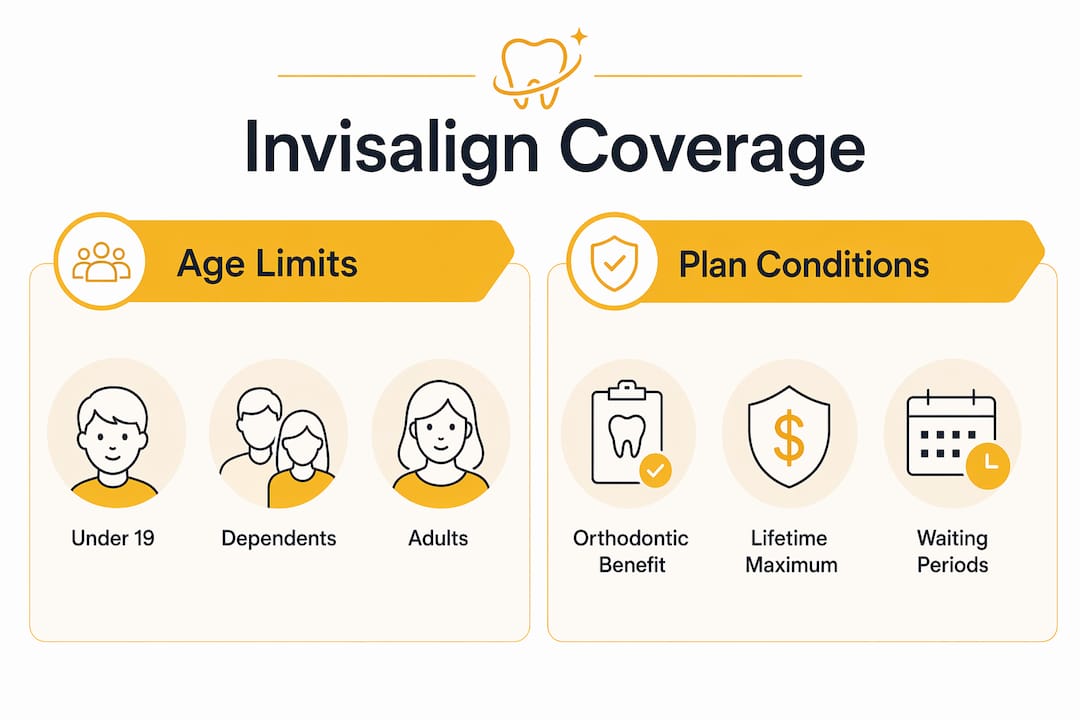
Principal dental insurance covers Invisalign only when your specific plan includes an orthodontic benefit. That single variable determines everything. If the benefit exists, coverage typically runs about 50% of treatment cost, subject to a lifetime maximum between $1,000 and $2,500. If it does not exist, you pay the full cost out of pocket. This guide breaks down how Principal orthodontic coverage works, what age limits apply, how much Invisalign costs with and without insurance, and how clear aligners compare to traditional braces under the same plan.
Does Principal dental insurance cover Invisalign under orthodontic benefits?
Orthodontic coverage under Principal is a separate plan component, not a standard feature included in every dental policy. Your employer or plan sponsor chooses whether to add it. That means two people with “Principal dental insurance” can have completely different Invisalign benefits depending on which plan their employer selected.
When the orthodontic benefit is included, the structure is consistent across most Principal plans:
- Coverage percentage: Principal typically pays 50% of orthodontic treatment costs once the benefit is active.
- Lifetime maximum: The plan caps total orthodontic payouts at a set dollar amount, usually $1,000–$2,500. This limit does not reset each year.
- Waiting period: Many plans require you to be enrolled for 6–12 months before orthodontic benefits activate. Treatment started before that window closes is typically excluded entirely.
- Plan documentation: The plan’s Summary of Benefits will list orthodontic services specifically. Search for the “Orthodontic Services” section, not just the word “Invisalign,” since brand name alone is insufficient to confirm coverage.
The waiting period rule catches a lot of families off guard. If your child needs Invisalign now but you just switched to a new Principal plan, starting treatment immediately could mean paying the full cost yourself. Timing your treatment start date around the waiting period end date is one of the most practical ways to protect your benefit.
Pro Tip: Call Principal directly at the member services number on your insurance card and ask two specific questions: “Does my plan include an orthodontic benefit?” and “Does that benefit cover clear aligners?” Get the representative’s name and note the date of the call.
What age restrictions affect Invisalign coverage in Principal plans?
Age limits are one of the most common reasons adults get denied orthodontic coverage they expected to have. Most Principal plans that include orthodontic benefits restrict them to dependents under age 19. That restriction exists because orthodontic coverage was historically designed for children and teenagers, not adults seeking cosmetic alignment.
Here is what you need to know about eligibility:
- Children and teens under 19 are covered under most standard Principal orthodontic benefits, provided the plan includes that benefit at all.
- Dependents ages 19–26 may retain coverage if the plan extends dependent status to age 26, which some employer plans do under the Affordable Care Act’s dependent coverage rules. However, orthodontic benefits specifically may still cut off at 19 even when general dental coverage continues.
- Adults (employees themselves) are generally not covered for orthodontics under standard Principal plans. Adult orthodontic coverage requires a specific plan rider or an enhanced plan tier that your employer must have selected.
- Verification is required. Do not assume your age group is covered. Pull your Summary of Benefits and look for language specifying the eligible age range under orthodontic services.
The distinction between general dental coverage and orthodontic coverage matters here. Your plan may cover your 22-year-old dependent for cleanings and fillings but exclude them from Invisalign entirely. These are separate benefit categories with separate eligibility rules.
Pro Tip: If you are a parent with multiple children who may need orthodontic treatment, check whether your lifetime orthodontic maximum applies per patient or per family. Some plans share one lifetime cap across all covered dependents, which changes your planning entirely.
How do Invisalign costs and insurance coverage add up?
Understanding the real numbers helps you plan before you commit to treatment. Invisalign treatment costs between $3,000 and $8,000 nationwide, depending on case complexity, the provider’s location, and the number of aligners required. That is a wide range, and most families land somewhere in the middle.
Here is how the math typically works with Principal insurance:
| Scenario | Total Treatment Cost | Insurance Pays (up to lifetime max) | Your Out-of-Pocket Cost |
|---|---|---|---|
| Moderate case, $1,500 lifetime max | $4,500 | $1,500 | $3,000 |
| Complex case, $2,500 lifetime max | $7,000 | $2,500 | $4,500 |
| Simple case, $1,000 lifetime max | $3,000 | $1,000 | $2,000 |
Insurance contributions typically fall between $1,000 and $2,500 over the life of the plan. That leaves most patients paying $2,000–$5,500 out of pocket even with coverage. That gap is real, and it requires a plan.
Two tools close that gap effectively:
- FSAs and HSAs: Flexible Spending Accounts and Health Savings Accounts let you pay for Invisalign with pre-tax dollars. That effectively reduces your real cost by your marginal tax rate, often 20–30%.
- In-office financing: Most orthodontic practices offer monthly payment plans, sometimes interest-free for 12–24 months. Spreading $3,500 over 24 months at zero interest is far more manageable than a lump sum.
One critical detail about lifetime maximums: once the lifetime max is exhausted, the plan pays nothing further for orthodontic treatment, regardless of how long you remain enrolled. Families with multiple children should plan the timing of each child’s treatment carefully to maximize what the plan pays across all dependents.
How does Invisalign coverage compare to traditional braces under Principal?
The short answer is that most Principal plans treat Invisalign and traditional braces equally for insurance purposes, as long as the orthodontic benefit is included. The plan pays the same percentage up to the same lifetime maximum regardless of which appliance you choose.

The catch is in the plan language. Some older or more restrictive plans use the phrase “fixed orthodontic appliances” to describe what they cover. Traditional metal braces are fixed. Invisalign aligners are removable. If your plan document uses that specific wording without explicitly including clear aligners, your Invisalign claim could be denied even when braces would have been covered.
| Feature | Traditional Braces | Invisalign |
|---|---|---|
| Covered under standard ortho benefit | Yes, typically | Yes, if plan includes clear aligners |
| Coverage percentage | ~50% | ~50% |
| Lifetime maximum applies | Yes | Yes |
| Risk of plan exclusion | Low | Moderate (check appliance language) |
| Patient preference factor | Lower visibility concern | Higher visibility concern |
Patients should verify plan language regarding appliance type before choosing a treatment. If you prefer Invisalign but your plan only covers fixed appliances, you have two options: appeal the exclusion with a letter of medical necessity from your orthodontist, or accept that you will pay the full Invisalign cost while braces would have been partially covered. Knowing this before treatment starts prevents a very unpleasant billing surprise.
For a deeper look at how the two treatments differ beyond insurance, the differences between clear braces and Invisalign go well beyond what your plan document will tell you.
Key takeaways
Principal dental insurance covers Invisalign only when the plan includes an orthodontic benefit, typically paying 50% up to a $1,000–$2,500 lifetime maximum, with age limits and waiting periods that vary by plan.
| Point | Details |
|---|---|
| Coverage is not automatic | Principal covers Invisalign only if your plan includes an orthodontic benefit. |
| Lifetime max limits total payout | Insurance pays $1,000–$2,500 total; this cap never resets annually. |
| Age restrictions are common | Most plans cover dependents under 19; adult coverage requires a specific plan rider. |
| Waiting periods matter | Starting treatment before the 6–12 month waiting period ends can void your coverage entirely. |
| FSAs and HSAs reduce real cost | Pre-tax accounts lower your effective out-of-pocket expense by your marginal tax rate. |
What I have learned navigating orthodontic insurance for families
Working with families at Gloworthodontics, I have seen the same mistake repeated: parents assume their dental insurance covers Invisalign because they have “good insurance.” Good general dental coverage and good orthodontic coverage are two different things. They are purchased separately, priced separately, and governed by separate rules.
The lifetime maximum issue is the one that creates the most friction. A family with three kids and a $2,000 lifetime maximum per family is not getting $2,000 per child. They are splitting $2,000 across all three. Strategic timing of treatment across siblings is not overthinking it. It is the difference between getting $2,000 in benefits versus getting $600 per child.
Pre-authorization is the single most underused tool available to patients. Submitting a pre-authorization request through your orthodontist before treatment begins forces Principal to state in writing what they will and will not cover. That document protects you. Without it, you are relying on a phone call that may or may not reflect what actually happens when the claim is filed.
My honest advice: read your plan’s Summary of Benefits before your first orthodontic consultation, not after. Bring it to the consultation. A good orthodontic office will help you interpret it. That 20-minute conversation can save you thousands of dollars and months of confusion.
— Juiced
Start your Invisalign journey with expert insurance guidance
Figuring out what your Principal plan actually covers should not fall entirely on your shoulders. At Gloworthodontics in Langley, BC, the team helps families understand their dental insurance for Invisalign before treatment begins, so there are no surprises when the bill arrives.

Whether you are a parent exploring options for your teen or an adult considering Invisalign for yourself, Gloworthodontics offers personalized consultations that include a review of your coverage, a clear breakdown of out-of-pocket costs, and flexible financing options. The orthodontic care guide for teens is a strong starting point for parents researching treatment options. Book a consultation at Gloworthodontics and get the answers you need before you commit to treatment.
FAQ
Does Principal dental insurance always cover Invisalign?
No. Principal covers Invisalign only when your specific plan includes an orthodontic benefit. Coverage is not standard across all Principal plans and must be verified in your Summary of Benefits.
What is the typical lifetime maximum for orthodontic coverage under Principal?
Most Principal orthodontic benefits carry a lifetime maximum of $1,000–$2,500. This cap applies to all orthodontic treatment combined and does not reset each year.
Does Principal cover Invisalign for adults?
Standard Principal plans typically restrict orthodontic benefits to dependents under age 19. Adult coverage requires a specific plan rider that your employer must have selected when setting up the group plan.
How much will I pay out of pocket for Invisalign with Principal insurance?
With a lifetime maximum of $1,000–$2,500 and total Invisalign costs ranging from $3,000 to $8,000, most patients pay $2,000–$5,500 out of pocket even with coverage active.
Is Invisalign covered the same as braces under Principal?
Most Principal plans treat Invisalign and braces equally, but some plans use language covering only “fixed orthodontic appliances.” Patients should check plan wording carefully to confirm clear aligners are explicitly included before starting treatment.