Emergencies in Orthodontics: A Parent’s Action Guide
July 20, 2026
Emergencies in Orthodontics: A Parent’s Action Guide
TL;DR:
- Most orthodontic emergencies are appliance problems that are manageable at home until professional care is available. Serious issues like uncontrolled bleeding or difficulty breathing require immediate 911 attention. Preparing a home emergency kit and knowing when to contact the orthodontist can prevent treatment delays and discomfort.
Emergencies in orthodontics are unexpected problems with braces, wires, or appliances that cause significant discomfort, functional interference, or risk of injury. The American Association of Orthodontists (AAO) draws a clear line between true medical emergencies and urgent orthodontic issues. True emergencies, like uncontrolled bleeding, severe trauma, or difficulty breathing, require a 911 call or an ER visit. Most appliance problems, including broken brackets and poking wires, are urgent but manageable at home until your orthodontist can see your child. Knowing the difference keeps you calm, keeps your child comfortable, and keeps treatment on track.
What are the most common emergencies in orthodontics?
Most orthodontic emergencies fall into two categories: appliance problems and soft tissue problems. Appliance problems are far more common and rarely dangerous. Soft tissue problems can escalate if ignored.
Appliance issues to watch for:
- Loose or broken brackets. A bracket that slides along the wire is annoying but rarely urgent. A broken bracket still attached to the wire does not require an ER visit. Cover it with orthodontic wax and call your orthodontist the next business day. Left unaddressed for more than 48 hours, loose appliances can cause unwanted tooth movement and extend treatment time.
- Poking or broken wires. A wire that shifts out of its bracket and pokes the cheek or gum is one of the most common complaints. It causes irritation quickly and needs same-day attention at home.
- Lost, cracked, or warped retainers or clear aligners. A lost retainer allows teeth to shift within days. A warped aligner from heat exposure fits poorly and applies uneven pressure. Both need a replacement appointment as soon as possible.
- Mouth sores, swelling, or signs of infection. Persistent sores from appliance friction are common. Swelling, fever, or pus around a tooth or gum is not. Those signs point to infection and need urgent dental or medical care.
- True medical emergencies. Severe trauma, uncontrolled bleeding, or breathing difficulties require 911 or an ER immediately. These situations are rare, but every parent should recognize them.
One thing many parents miss: mild soreness after adjustments is normal tooth movement, not an emergency. Discomfort that lasts 3–7 days after a wire change is expected and responds well to over-the-counter pain relief.
How can parents manage braces emergencies safely at home?
Home management buys time. The goal is to reduce discomfort and prevent further damage until your orthodontist can make a proper repair. Most common orthodontic issues respond well to a few simple steps.
- Cover poking wires with orthodontic wax. Roll a small piece of wax into a ball and press it firmly over the sharp end of the wire. This protects the cheek and gum from cuts and sores. Wax is the single most useful item in any home orthodontic kit.
- Trim a poking wire only as a last resort. If wax does not stay in place and the wire is causing real injury, you can trim it. Use sterilized wire cutters or heavy-duty nail clippers, not kitchen scissors or standard nail clippers. Sterilize the tool with rubbing alcohol first. Cut as close to the bracket as possible and collect the trimmed piece so your child does not swallow it.
- Stabilize a loose bracket with wax. If a bracket is spinning or digging into soft tissue, cover it with wax to hold it in place. Do not try to reattach it with household glue.
- Rinse with warm saltwater. A saltwater rinse (half a teaspoon of salt in eight ounces of warm water) reduces inflammation and keeps sores clean. Use it two to three times a day when soft tissue irritation is present.
- Manage pain with over-the-counter medication. Ibuprofen or acetaminophen, dosed appropriately for your child’s age and weight, handles most orthodontic discomfort. Post-adjustment soreness is a normal part of tooth movement and does not signal a problem.
- Check and replace lost aligners. If a clear aligner is lost or cracked, put in the previous tray to hold tooth position while you arrange a replacement. Do not skip to the next tray without orthodontist guidance.
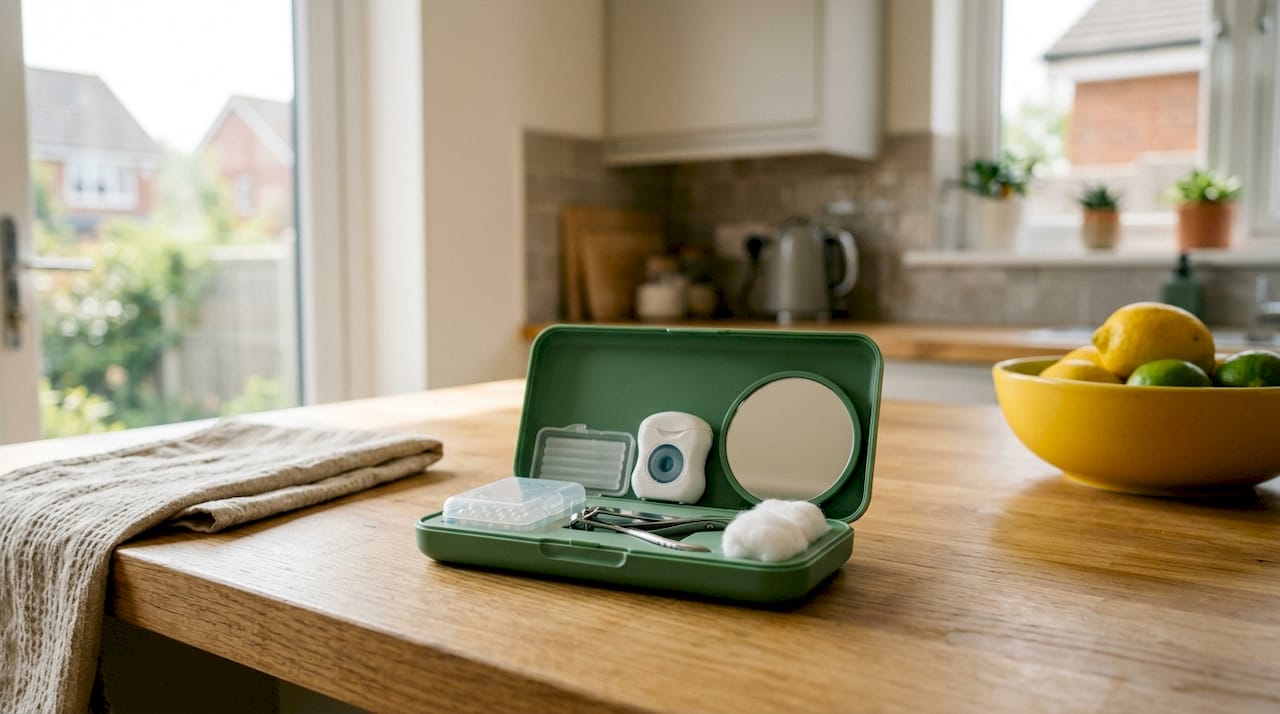
Pro Tip: Build an emergency orthodontic kit before your child’s first appointment. The Florida Association of Orthodontists recommends including orthodontic wax, sterilized tweezers, nail clippers, a small mirror, and over-the-counter pain relief. Keep it in your bathroom cabinet and pack a travel version for school bags and sports bags.
When should parents contact their orthodontist or go to the ER?
The decision tree is simpler than most parents expect. The key question is: does this involve a risk to life or breathing?
Call 911 or go to the ER if your child has:
- Difficulty breathing or swallowing
- Uncontrolled bleeding that does not stop with pressure
- Severe facial trauma, such as a broken jaw or knocked-out permanent tooth with heavy bleeding
- Signs of a serious allergic reaction
Contact your orthodontist same-day or next-day for:
- Broken or loose brackets
- Poking or broken wires that wax cannot control
- Lost or damaged retainers or aligners
- Persistent mouth sores that are not improving
- Any appliance causing sharp pain or cutting soft tissue
“Most orthodontic issues that feel urgent at 10 PM are manageable with wax and a phone call in the morning. Orthodontists provide after-hours voicemail and on-call support specifically to help parents avoid unnecessary ER visits. Save your orthodontist’s emergency number in your phone before you ever need it.”
When you call, be ready to describe the problem clearly. Tell the office which appliance is affected, whether there is pain or bleeding, and whether your child can eat and speak normally. That information helps the team triage your call and schedule the right appointment. Contacting your orthodontist within 24–48 hours of a loose appliance prevents unwanted tooth movement and avoids adding weeks to treatment. If your orthodontist is unavailable, a general dentist or emergency dental clinic can assess soft tissue injuries and infections while you arrange follow-up orthodontic care.
How can parents prevent orthodontic emergencies?
Prevention is the most effective form of urgent orthodontic care. Most appliance breakages are avoidable with consistent habits.
Dietary rules that protect appliances:
- Avoid hard foods: ice, raw carrots, hard pretzels, whole apples, and hard candy all crack brackets.
- Avoid sticky foods: caramel, gummy bears, and chewy candy pull brackets off teeth.
- Avoid crunchy foods: popcorn, chips, and hard crackers wedge under wires and cause breakage.
- Cut firm foods into small pieces rather than biting into them directly.
Diet plays a direct role in preventing common appliance damage. A single piece of hard candy can break a bracket that would otherwise have lasted months without issue.
Pro Tip: Talk to your child about why food rules matter. Kids who understand that a broken bracket means an extra appointment, and possibly a longer treatment time, tend to follow the rules more consistently than kids who are just told “no.”
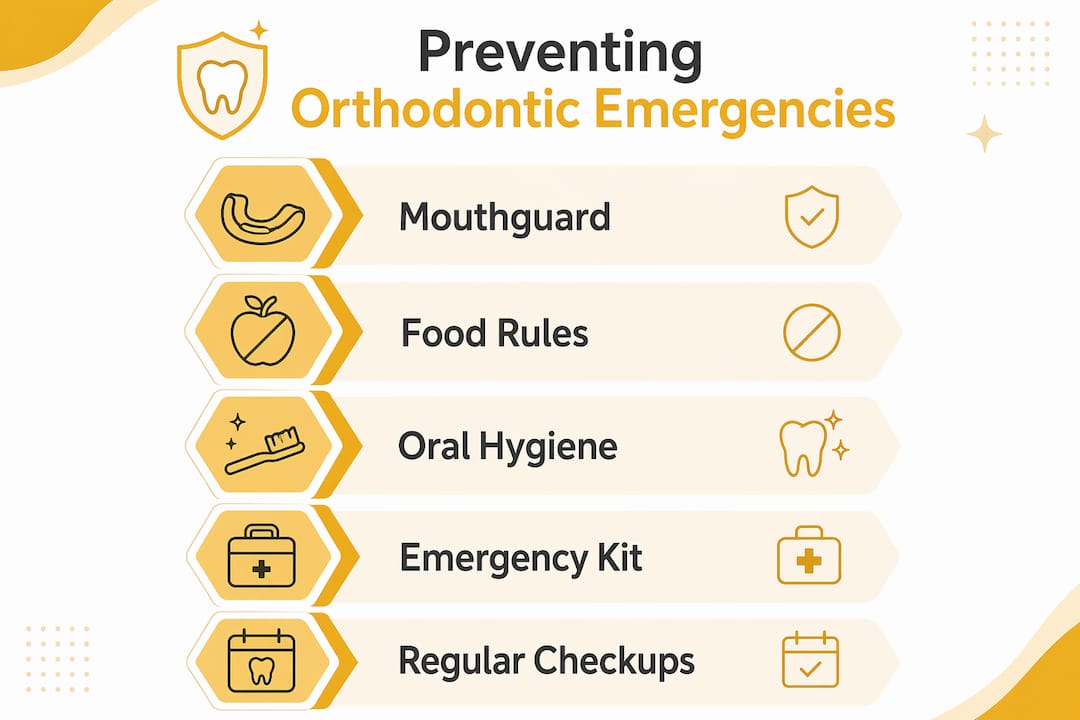
Additional prevention strategies:
| Strategy | Why it works |
|---|---|
| Wear a mouthguard during sports | Protects brackets and wires from impact; reduces soft tissue injuries |
| Attend every scheduled appointment | Allows the orthodontist to catch loose appliances before they become urgent |
| Brush and floss after every meal | Removes food debris that weakens bracket adhesive over time |
| Keep an emergency kit at home | Enables immediate home management before a professional appointment |
| Educate your child on appliance care | Reduces accidental damage from habits like chewing pencils or fingernails |
Good oral hygiene with braces also reduces the risk of gum inflammation and infection, two issues that can turn a routine orthodontic visit into an urgent one. Plaque buildup around brackets irritates gum tissue and creates the conditions for swelling and soreness.
What parents actually get wrong about orthodontic emergencies
Most parents I talk to fall into one of two camps. The first group panics at the first sign of discomfort and heads to urgent care at midnight for a poking wire. The second group waits too long, assuming everything is fine, while a loose bracket quietly allows a tooth to drift out of position for two weeks.
Both responses are understandable. Neither is helpful. The reality is that the vast majority of orthodontic appliance problems sit in a middle zone: genuinely uncomfortable, worth addressing promptly, but not dangerous. That distinction matters because it changes how you respond. Panic leads to unnecessary ER visits, which are expensive and rarely equipped to handle orthodontic appliance repairs. Avoidance leads to extended treatment timelines and sometimes more complex corrections.
The parents who handle these situations best are the ones who have a plan before anything goes wrong. They know their orthodontist’s after-hours number. They have wax in the bathroom cabinet. They have had a calm conversation with their child about what to do if something feels wrong at school. That preparation does not eliminate orthodontic emergencies. It just makes them manageable instead of terrifying.
Trust your care team. Gloworthodontics, and any good orthodontic practice, wants to hear from you when something goes wrong. A two-minute phone call is almost always better than a sleepless night of worry.
— Juiced
Gloworthodontics is here when your child needs urgent care
Appliance problems do not follow a schedule. When something goes wrong with your child’s braces or aligners, you need clear answers fast.

Gloworthodontics prioritizes same-day and next-day appointments for urgent orthodontic issues, so your child is never left waiting in discomfort. The team provides after-hours guidance to help you manage problems at home until an appointment is available. For a full breakdown of what qualifies as urgent and how to respond, the orthodontic emergencies resource covers every common scenario in plain language. Families with teens in treatment can also find condition-specific guidance in the orthodontic care for teens guide. Reach out to Gloworthodontics to book an appointment or ask a question. The team is ready to help.
FAQ
What counts as a true orthodontic emergency?
A true orthodontic emergency involves uncontrolled bleeding, severe facial trauma, or difficulty breathing and requires 911 or an ER visit. Most appliance problems, like broken brackets or poking wires, are urgent but not life-threatening.
Can a broken bracket wait until the next business day?
A broken bracket still attached to the wire can usually wait 24–48 hours if covered with orthodontic wax and not causing sharp pain. Contact your orthodontist the next business day to schedule a repair and prevent unwanted tooth movement.
Is soreness after a wire adjustment an emergency?
Soreness lasting 3–7 days after an adjustment is a normal part of tooth movement, not an emergency. Over-the-counter pain relief like ibuprofen or acetaminophen manages this discomfort effectively.
How do I handle a poking wire at home?
Press orthodontic wax over the sharp end of the wire to protect the cheek and gum. If wax does not hold, use sterilized wire cutters or heavy-duty nail clippers to trim the wire, then call your orthodontist for a same-day or next-day appointment.
What should be in a home orthodontic emergency kit?
A basic kit includes orthodontic wax, sterilized tweezers, nail clippers, a small mirror, and over-the-counter pain relief. Keep one at home and a smaller version in your child’s school bag for quick access during the day.