How Orthodontics Supports Better Health for Langley Families
May 11, 2026
How Orthodontics Supports Better Health for Langley Families
TL;DR:
- Orthodontic treatment improves oral health, function, and sleep quality, especially with early intervention.
- However, its effects on systemic health are limited, emphasizing the importance of hygiene and retention.
Straightening teeth sounds simple on the surface, but orthodontic treatment does far more than improve a child’s photo. For families in Langley weighing their options, the real value lies in understanding what orthodontics can genuinely change about oral function, daily comfort, injury risk, and even sleep quality. There are also limits worth knowing, and a few myths worth clearing up. This guide walks you through the real evidence so you can make confident, informed decisions for your child or teenager.
Table of Contents
- How orthodontics impacts oral health and quality of life
- Beyond the smile: Connections to airway health, sleep, and development
- What orthodontics can—and can’t—change about overall health
- Safety first: Risks, prevention, and making evidence-based choices
- Our take: Clear communication and prevention trump one-size-fits-all promises
- Explore orthodontic solutions for Langley families
- Frequently asked questions
Key Takeaways
| Point | Details |
|---|---|
| More than aesthetics | Orthodontics can boost oral health and confidence, not just smiles. |
| Airway and injury links | Treatments may reduce risk of dental trauma and provide early clues about airway or sleep issues. |
| Risks need active prevention | Families should focus on hygiene and ask about risk management to prevent common problems. |
| Evidence-based expectations | Some systemic benefits are less certain, so aim for realistic goals and work closely with your provider. |
| Customized care matters | The right approach depends on your child’s specific health and development needs. |
How orthodontics impacts oral health and quality of life
Before exploring broader health connections, it helps to understand what orthodontics does closest to home: inside the mouth, in everyday comfort, and in your child’s confidence at school.
The research on this is consistent and encouraging, though with an honest caveat. A JCO-IOS systematic review of randomized controlled trials found that orthodontic treatment improves oral-health-related quality of life over time, but outcomes are time-dependent. Right after appliance placement, most children and teens experience a noticeable dip in comfort and function. That dip is temporary. As patients adapt over weeks and months, quality of life gradually improves and often surpasses where they started.
This pattern matters because many families hear complaints from their kids in the first few weeks and worry something is wrong. The adjustment period is normal and expected.
The clear aligner vs. fixed braces difference
Not all appliances feel the same. Here is a quick comparison of the two most common options:
| Factor | Fixed braces | Clear aligners |
|---|---|---|
| Initial discomfort | Moderate to high | Mild to moderate |
| Oral hygiene difficulty | Higher (brackets collect plaque) | Lower (removable for brushing) |
| Compliance requirement | Passive (always worn) | High (must wear 20-22 hrs/day) |
| Enamel protection | Requires diligent brushing | Easier to maintain |
| Visibility | Noticeable | Minimal |
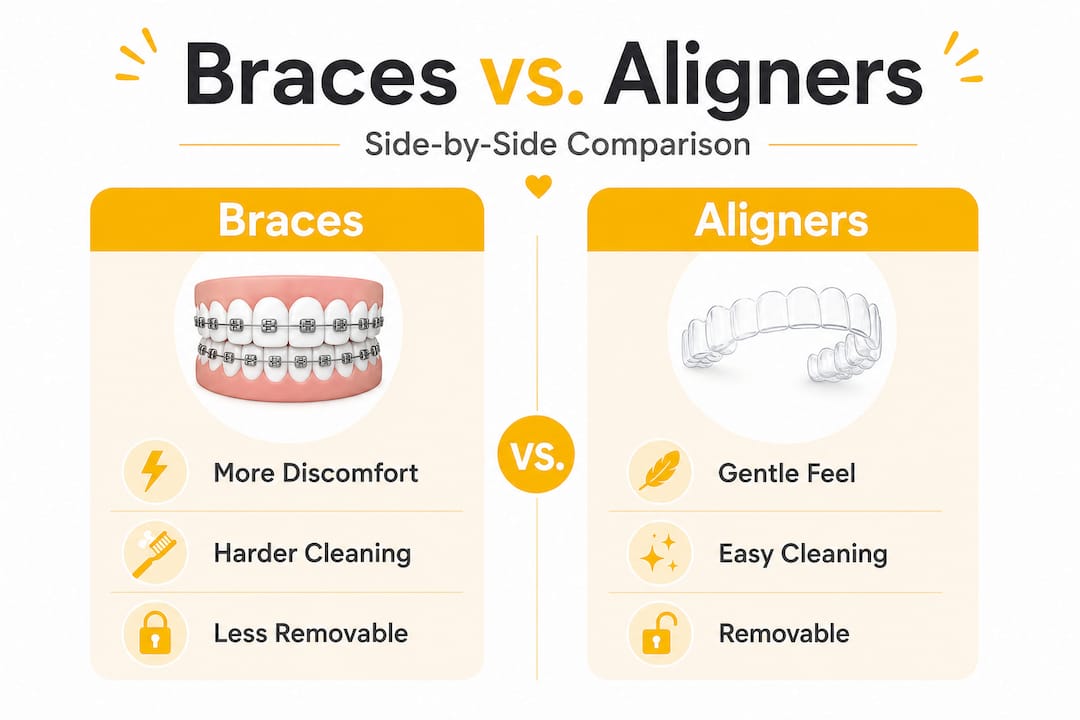
For most children and younger teens, fixed braces are often the more reliable option because they work without requiring the child to remember to put them back in. For motivated older teens, aligners can offer real hygiene advantages. Either way, the first step is knowing how to protect the enamel underneath.
Key daily habits that protect your child’s teeth during treatment include:
- Brushing after every meal, not just morning and night
- Using a fluoride rinse or remineralizing toothpaste
- Avoiding sticky and sugary foods that sit on brackets
- Attending every scheduled check-up without skipping
Pro Tip: Learning the right technique matters as much as frequency. A quick read through brushing with braces gives your child a practical, visual breakdown of exactly how to clean around brackets and wires each day.
Being prepared also means knowing what to do when something goes wrong mid-treatment. Wires poking, brackets loosening, or sudden pain are all manageable, and the handling orthodontic emergencies guide walks families through exactly what to do before their next appointment.
Beyond the smile: Connections to airway health, sleep, and development
Building on the direct oral health picture, orthodontics also connects to how children breathe, sleep, and even behave throughout the day. These links are real, though they are not always widely discussed at the first consultation.

A clinical study published in MDPI found associations between orthodontic conditions and airway and sleep pathways, including behavioral symptoms that can mimic attention or focus difficulties. Orthodontic settings may actually be a relevant place to identify early signs of sleep-disordered breathing, since orthodontists regularly examine facial structure, airway width, tongue position, and palate shape.
This is meaningful for Langley families because children who mouth breathe, snore frequently, or seem chronically tired may be showing signs of something correctable. An orthodontist who screens for these patterns and communicates with your family doctor or pediatrician adds a real layer of value to care.
“Orthodontic offices can function as an early identification point for sleep and airway concerns in children, especially when behavioral symptoms like inattention or fatigue are present alongside dental findings.”
Beyond sleep, there is another strong, evidence-supported benefit: injury prevention. Children with prominent upper front teeth face a statistically higher risk of dental trauma from falls, sports, and everyday bumps. Cochrane evidence found that early orthodontic treatment reduces the incidence of incisal trauma compared to treatment started only in adolescence. That is a concrete, measurable benefit with real-world impact.
Key connections between orthodontics and broader child health include:
- Airway screening during routine orthodontic visits
- Reduced risk of dental trauma for children with protruding front teeth
- Potential improvement in sleep quality when airway issues are addressed
- Referral opportunities to other specialists when behavioral or health patterns emerge
- Earlier identification of jaw development problems before growth closes
Understanding treating overbites is especially relevant here because an uncorrected overbite is one of the most common contributors to elevated trauma risk and jaw discomfort. Families interested in what this looks like long-term can also explore the orthodontic care for teens guide for a full picture of treatment options through the adolescent years.
What orthodontics can—and can’t—change about overall health
After outlining the potential connections, it is important to separate what orthodontics can directly influence from what the science shows as genuinely uncertain.
There is a version of orthodontic marketing that positions straight teeth as the gateway to total body wellness. The honest answer is more nuanced. A qualitative study on medical necessity of orthodontic care found that evidence linking malocclusion (teeth misalignment) to systemic or general health improvements is not consistently strong. Orthodontics is genuinely valuable, but families should be cautious of sweeping claims that treatment will resolve unrelated health conditions.
What is well-supported:
- Reduction in dental trauma risk for certain bite types
- Improved oral hygiene access when teeth are well-aligned
- Better chewing function and jaw comfort in some cases
- Quality of life improvements that are real but take time to develop
What is less certain:
- Broad claims that orthodontics improves cardiovascular or systemic health
- That malocclusion alone causes significant general health problems
- That bite correction automatically prevents gum disease without maintenance
The gum disease point is particularly important. A longitudinal BMC Oral Health study found that long-term periodontal stability is comparable between patients with and without prior orthodontic treatment, as long as both groups receive consistent supportive care. In other words, what happens after braces matters just as much as the treatment itself.
This is where retention and maintenance come into the picture. Teeth naturally want to drift after treatment. Families often underestimate this reality. Reading up on teeth shifting after braces and understanding orthodontic relapse causes helps set realistic expectations from day one.
One underrated post-treatment resource worth noting: some families explore CBD mouthwash for post-orthodontic care as part of their recovery and maintenance routine, which reflects the broader trend of patients taking a more active role in post-treatment wellness.
Pro Tip: Ask your orthodontist specifically about the retention plan before treatment starts, not after. Knowing whether your child will need a fixed wire retainer, a removable one, or both helps your family prepare and reduces the chance of relapse later.
Safety first: Risks, prevention, and making evidence-based choices
Making the most of any orthodontic investment depends on avoiding complications. Here is what families should know to stay healthy and safe throughout treatment.
A narrative review from IJODR confirmed that orthodontic treatment carries real biological and mechanical risks that require active prevention strategies. These are not rare or extreme risks, but they are common enough that every family should know them going in.
The most frequently encountered risks include:
- White spot lesions (enamel demineralization): These are the chalky marks that can appear on teeth after braces are removed, caused by plaque sitting on enamel around brackets. Fluoride application and diligent brushing are the primary prevention tools.
- Gum inflammation and early periodontal changes: Brackets and wires make it easier for plaque to accumulate near the gum line. Without daily flossing and brushing, early gingivitis can develop quickly.
- Root resorption: In some cases, especially with prolonged treatment or high orthodontic forces, roots can shorten slightly. Careful force management and regular X-rays reduce this risk significantly.
- Discomfort and soreness: Pain is most intense in the first few days after adjustments but usually settles within a week. Over-the-counter pain relief, soft foods, and warm salt water rinses help manage this stage.
- Appliance breakage and soft tissue irritation: Broken brackets or poking wires cause pain and can slow treatment if not addressed promptly.
The good news is that most of these risks are well-understood and manageable. The families who navigate treatment most smoothly are the ones who ask questions, show up to every appointment, and stay consistent with hygiene.
Pro Tip: Before committing to any orthodontic plan, ask your provider two specific questions: “What is your protocol for preventing enamel demineralization?” and “How do you monitor and control force levels?” These questions signal that you are an engaged partner in your child’s care, and a great orthodontist will have clear, confident answers.
When something unexpected happens during treatment, knowing your options matters. Bookmark the orthodontic emergencies guide and the how to brush with braces resource so your child always has reliable guidance available.
Our take: Clear communication and prevention trump one-size-fits-all promises
Years of working with Langley families have taught our team something that textbooks rarely emphasize: the families who get the best outcomes are not the ones who started the most expensive treatment. They are the ones who asked the most questions and followed through on the basics.
The idea that one orthodontic solution fits every child is not just oversimplified, it can lead to unnecessary treatment, unrealistic expectations, and preventable complications. Every child’s jaw, bite, growth timeline, and daily habits are different. A treatment plan that ignores those differences is doing families a disservice, even if the result looks good in a photo.
We also want to be honest about the “whole-health” promises that occasionally circulate in wellness spaces. Some claims about orthodontics improving posture, resolving chronic pain, or preventing systemic illness are not supported by strong clinical evidence. Families deserve to know this, because it helps them focus on what orthodontics can reliably deliver, rather than hoping for outcomes that fall outside its scope.
What we believe every Langley family should prioritize: a clear-eyed conversation with their orthodontist about hygiene risks, retention planning, and how care will be monitored from start to finish. Being an informed participant is not a burden on your provider; it is a sign of a healthy, productive patient relationship.
Short-term discomfort after treatment starts is normal, predictable, and manageable. Do not let the first two weeks of soreness become the lens through which your child views the entire experience. Most kids adapt faster than parents expect, especially when they feel supported and informed.
The family orthodontic guide is one resource we recommend for parents who want to go into their consultation already familiar with the landscape, the common questions, and the realistic timeline for seeing results.
Explore orthodontic solutions for Langley families
If this guide has clarified what orthodontic treatment can realistically offer your family, the next step is exploring specific options matched to your child’s needs.

At Glow Orthodontics, we have built resources designed specifically for Langley families navigating these decisions. Whether your teenager is weighing traditional braces against aligners or you are trying to understand the right age to start treatment, our guides walk through every stage clearly and without the pressure. Our orthodontic care for teens guide is a natural starting point for families with kids in middle or high school. If you are already comparing appliance types, the breakdown on comparing clear braces and Invisalign covers seven key differences that most consultations do not fully address. Book a consultation anytime at gloworthodontics.ca and let us help your family find the right path forward.
Frequently asked questions
Does orthodontic treatment improve my child’s long-term overall health?
Some outcomes like reduced dental trauma and improved oral function are well-supported, but limited evidence exists for broad claims that orthodontics reliably improves general systemic health.
Is early orthodontic treatment better than waiting until adolescence?
For children with prominent upper front teeth, early treatment reduces the risk of dental trauma more effectively than treatment delayed until the teen years.
Will orthodontics change my child’s posture or balance?
According to a Springer study on functional orthodontic therapy, orthodontic treatment is not expected to cause clinically meaningful postural changes in children who already have normal posture and balance.
What risks should families watch for during orthodontic care?
White spot lesions, gum inflammation, and discomfort are the most common risks, and an evidence-based prevention approach including diligent hygiene, fluoride use, and force monitoring keeps these manageable.
How can orthodontists spot airway or sleep problems early?
Orthodontists can identify patterns like mouth breathing and facial structure concerns during routine visits, and clinical research shows that orthodontic settings are well-positioned for early identification of sleep-disordered breathing risks in children.