Illusion Aligners Price: What You’ll Really Pay
July 14, 2026
Illusion Aligners Price: What You’ll Really Pay
TL;DR:
- Illusion Aligners’ total cost ranges from ₹50,000 to ₹2,00,000, depending on case complexity and treatment requirements. Higher prices reflect advanced AI technology, detailed monitoring, and expert oversight, especially for complex corrections. Patients should budget for hidden expenses like scans, refinements, and retainers, which can add 10-15% to the initial estimate.
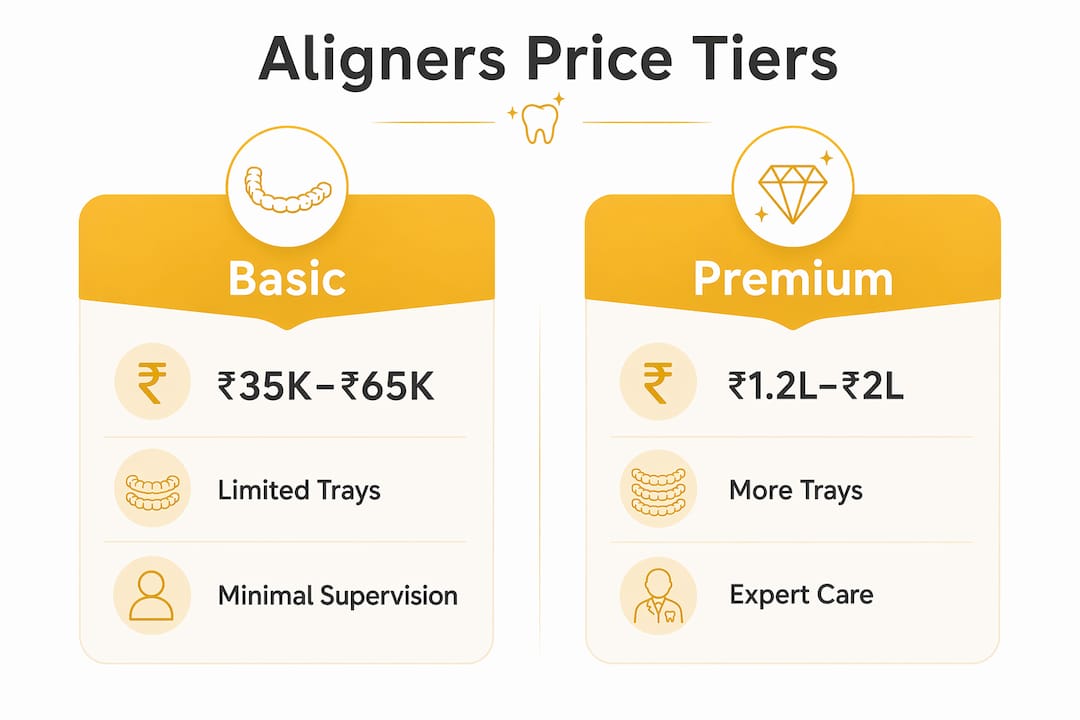
Illusion Aligners price is defined as the total cost of orthodontic treatment using this clear aligner system, covering everything from the initial trays to post-treatment retention. The total treatment cost ranges from ₹50,000 to ₹2,00,000 depending on case complexity and the number of trays required. Basic corrections start around ₹35,000 to ₹65,000, while complex bite corrections reach ₹1,20,000 to ₹1,90,000. That wide range reflects a simple truth: no two smiles are the same, and pricing follows the same logic. Understanding what drives these numbers puts you in a far better position to plan and budget.
What determines the cost of Illusion Aligners treatment?
The cost of Illusion Aligners treatment is not just the price of plastic trays. Aligner price includes clinic overhead, orthodontist expertise, digital treatment planning, and the frequency of monitoring appointments. Each of these factors adds real value, and each adds real cost.
Malocclusion complexity
The severity of your bite or alignment issue is the single biggest cost driver. A mild spacing issue requires fewer trays and less clinical time. A complex case involving overbite, underbite, or crowding demands more trays, more monitoring, and more precise planning. Clinics typically price treatment across three tiers: basic, mid-range, and premium, with complexity determining which tier applies to you.
Orthodontist expertise and clinic location
Price varies by orthodontist experience, clinic location, digital planning precision, and monitoring frequency. A specialist clinic in a metro area with advanced 3D imaging technology will charge more than a general dental practice in a smaller city. That difference is not arbitrary. Higher overhead and greater expertise typically produce more predictable outcomes, especially for complex cases.
Additional costs built into treatment
Several line items appear in most Illusion Aligners treatment quotes:
- 3D digital scans and diagnostic X-rays at the start of treatment
- Dental cleaning required before aligners are fitted
- Periodic progress assessments throughout the treatment period
- Refinement trays if teeth do not move exactly as planned
- Post-treatment retainers to hold your results
Pro Tip: Ask your clinic for an itemized quote before signing anything. Some clinics bundle all costs into one figure; others list them separately. Knowing what is included prevents surprises later.
How does treatment duration affect the price?
Treatment duration directly determines how many trays you need, and tray count is one of the clearest predictors of total cost. Orthodontic treatment with aligners typically lasts 6–18 months, with mild cases requiring 10–15 trays and severe cases requiring 40 or more. More trays mean more material, more lab work, and more clinical time.
Here is how the relationship between duration and cost plays out in practice:
- Mild corrections (6–9 months, 10–15 trays): These cases involve minor spacing or slight crowding. Treatment is shorter, monitoring is less frequent, and the total cost sits at the lower end of the price range.
- Moderate corrections (9–12 months, 20–30 trays): These cases address more significant crowding or mild bite issues. Patients in this range can expect mid-tier pricing and more frequent check-ins.
- Complex corrections (12–18 months, 40+ trays): Severe crowding, significant overbite, or underbite corrections fall here. These cases require the most trays, the most monitoring, and the highest investment.
Refinement trays and retention
Refinement trays are an often-overlooked cost. If your teeth do not move exactly as the digital plan predicted, your orthodontist will order additional trays to complete the correction. These are not always included in the original quote. Post-treatment retainers are equally important. Replacement retainers typically cost ₹2,000 to ₹9,000 if the originals are lost or worn out. Skipping retainers risks relapse, which means paying for treatment all over again. You can read more about why this matters in this guide on orthodontic relapse causes.
Pro Tip: Budget for at least one set of replacement retainers from the start. Treating retention as optional is the most expensive mistake patients make after completing aligner therapy.
How does Illusion Aligners price compare to other clear aligners?
Illusion Aligners sits firmly in the premium tier of the clear aligner market. Premium aligners like Illusion incorporate proprietary materials and AI-driven treatment mapping, which produces more predictable results in complex corrections. That technology and oversight cost more to deliver, and the price reflects it.
The clear aligner market in India breaks down into three broad pricing categories as of 2026:
| Tier | Typical price range | What you get |
|---|---|---|
| Basic | ₹35,000–₹65,000 | Fewer trays, limited orthodontist oversight, suitable for mild cases |
| Mid-range | ₹65,000–₹1,20,000 | Moderate complexity, some digital planning, periodic check-ins |
| Premium (Illusion) | ₹1,20,000–₹1,90,000 | AI treatment planning, proprietary materials, full orthodontist supervision |
The premium price is not just a brand markup. Higher price reflects more predictable and faster results for complex corrections. Patients with straightforward cases may find a mid-range option adequate. Patients with moderate to severe malocclusion get meaningfully better outcomes from a premium system with full orthodontist oversight. For a detailed look at how clear aligners compare to braces on cost and other factors, see this breakdown of aligners vs braces.
What hidden expenses should you budget for beyond the base price?
The quoted treatment price rarely covers everything. Online price estimates provide only a rough baseline. The accurate cost only becomes clear after an in-office consultation and 3D scan evaluation. Patients who plan only for the headline number often find themselves caught off guard mid-treatment.
The most common additional expenses include:
- Initial diagnostic records: 3D scans and X-rays are required before treatment begins and are not always included in the base quote.
- Pre-treatment dental cleaning: Most orthodontists require a professional cleaning before fitting aligners. This is typically billed separately by a general dentist.
- Refinement trays: If your teeth do not track as planned, additional trays are ordered. These can add meaningful cost depending on how many are needed.
- Replacement retainers: As noted above, replacement retainers cost ₹2,000 to ₹9,000 and are a near-certainty over a lifetime of retention.
- Follow-up monitoring fees: Some clinics charge separately for progress appointments beyond a set number.
Budgeting an additional 10–15% beyond the quoted treatment cost is the standard recommendation to cover these expenses. On a ₹1,50,000 treatment, that means setting aside an extra ₹15,000 to ₹22,500 as a buffer. Proper oral hygiene during treatment also matters for avoiding extra dental costs. This guide on maintaining oral hygiene naturally covers what to do while wearing aligners.
For patients exploring post-treatment oral care, CBD mouthwash for post-orthodontic care is one option gaining attention in 2026 for supporting gum health after aligner therapy.
Pro Tip: When you receive a treatment quote, ask specifically: “Does this include diagnostic records, refinement trays, and the first set of retainers?” If the answer to any of those is no, add those costs to your total before comparing quotes from different clinics.
Key Takeaways
Illusion Aligners price ranges from ₹50,000 to ₹2,00,000, and the final number depends on case complexity, tray count, clinic expertise, and the hidden costs most patients do not budget for upfront.
| Point | Details |
|---|---|
| Price range is wide by design | Basic cases start at ₹35,000; complex corrections reach ₹1,90,000 based on individual needs. |
| Tray count drives total cost | Mild cases need 10–15 trays; severe cases require 40+, directly raising the final price. |
| Hidden costs add 10–15% | Diagnostic scans, cleaning, refinements, and retainers are rarely included in the base quote. |
| Premium tier delivers more for complex cases | AI planning and orthodontist oversight justify the higher cost for moderate to severe malocclusion. |
| Consultation is the only accurate price source | Online estimates are starting points only; a 3D scan and in-office exam confirm the real number. |
What I’ve learned about evaluating aligner pricing honestly
Patients consistently make the same mistake: they compare headline prices across clinics without comparing what those prices actually include. A ₹90,000 quote that excludes diagnostic records, refinements, and retainers is not cheaper than a ₹1,20,000 quote that bundles everything. The math only works in your favor when you compare total cost, not the number on the first page of a brochure.
The second thing I have seen trip people up is underestimating the value of orthodontist supervision. Consultations are critical for accurate pricing, and the diagnostic process that produces a reliable price estimate is the same process that produces a reliable treatment outcome. Clinics that rush through the consultation to give you a fast quote are often the same ones that order refinement trays more frequently, because the initial plan was not thorough enough.
Ask about monitoring fees directly. Some clinics include unlimited check-ins; others charge per visit after a set number. For a long treatment, that difference adds up. Also ask about their refinement policy. A clinic that includes one round of refinements in the base price is offering real value that a lower-quoted competitor may not match.
The technology matters too. AI-driven treatment planning, which Illusion uses, produces more accurate tooth movement predictions. That means fewer surprises mid-treatment and fewer refinement rounds. Paying more upfront for better planning often costs less in total than paying less upfront and then paying again for corrections.
— Juiced
Gloworthodontics and your clear aligner treatment
Choosing the right orthodontic provider matters as much as choosing the right aligner system. Gloworthodontics serves patients in Langley, British Columbia, with personalized treatment plans, thorough diagnostic consultations, and transparent pricing that covers the full scope of care.

Families and teens researching aligner options can find detailed guidance in the orthodontic care for teens resource, which covers treatment timelines, monitoring, and what to expect at each stage. Gloworthodontics also offers flexible payment plans to make treatment accessible without compromising on the quality of care or the technology behind your results. Book a consultation to get an accurate, itemized quote built around your specific smile.
FAQ
How much do Illusion Aligners cost on average?
Illusion Aligners treatment typically costs between ₹1,20,000 and ₹1,90,000 for complex cases, with basic corrections starting around ₹35,000 to ₹65,000. The final price depends on case complexity, tray count, and clinic-specific factors.
Are Illusion Aligners more expensive than traditional braces?
Illusion Aligners sit in the premium clear aligner tier and often cost more than traditional metal braces, but they offer advantages like removability and a discreet appearance that many patients prioritize. The cost difference between aligners and braces depends heavily on case complexity.
What payment options are available for Illusion Aligners?
Many orthodontic clinics offer installment plans that spread the total treatment cost over the treatment period. Ask your clinic directly about financing options, as terms vary by provider.
Do Illusion Aligners prices include retainers?
Initial retainers are often included in the quoted treatment price, but replacement retainers are typically billed separately at ₹2,000 to ₹9,000 per set. Always confirm what your quote covers before committing.
Why do Illusion Aligners cost more than basic clear aligners?
Illusion Aligners use proprietary materials and AI-driven treatment mapping, which produces more predictable results for complex corrections. That technology and the orthodontist oversight required to use it effectively account for the higher price compared to entry-level aligner options.