Invisalign Cleaning Instructions: 2026 Updated Guide
July 25, 2026
Invisalign Cleaning Instructions: 2026 Updated Guide
How to clean your Invisalign aligners every day
Rinse, brush, soak, rinse again. That four-step sequence, done consistently, is what keeps your aligners clear, odor-free, and working the way they should. Daily rinsing after removing aligners prevents buildup and bacterial growth, which directly supports both oral hygiene and treatment effectiveness. The whole routine takes under five minutes once you have it down.
Here is exactly what to do each day:
- Rinse immediately after removal. Run your aligners under lukewarm water every single time you take them out. This removes loose saliva and food debris before it dries and hardens onto the plastic.
- Brush gently with clear soap. Use a soft-bristled toothbrush dedicated only to your aligners. Apply a small amount of clear, unscented antibacterial liquid soap and brush in small circles, inside surfaces first, then outside. Never scrub hard.
- Soak once daily for 15 minutes. Drop one packet of Invisalign Cleaning Crystals into 100 ml of warm water, add your aligners, and let them sit for 15 minutes. This removes plaque and discoloration without brushing required.
- Rinse thoroughly before reinserting. After any soak, rinse your aligners well under lukewarm water to clear all residue before putting them back in.
- Store in a clean case. Any time aligners are out of your mouth, they go in their case. A napkin or pocket is how aligners get lost, cracked, or contaminated.
Pro Tip: Clean your aligners in the morning before reinserting them. Bacteria multiply overnight, so a quick rinse and brush first thing makes a real difference in daily hygiene.
Table of Contents
- Which cleaning products actually work for Invisalign?
- Expert precautions that protect your aligners and your treatment
- Gloworthodontics offers personalized Invisalign care in Langley
- Key Takeaways
Which cleaning products actually work for Invisalign?
Not every cleaning product is safe for aligner plastic. Some damage the material, some stain it, and a few do both. Knowing which products to reach for, and which to leave on the shelf, saves you from cloudy, yellowed trays.
Recommended products and methods
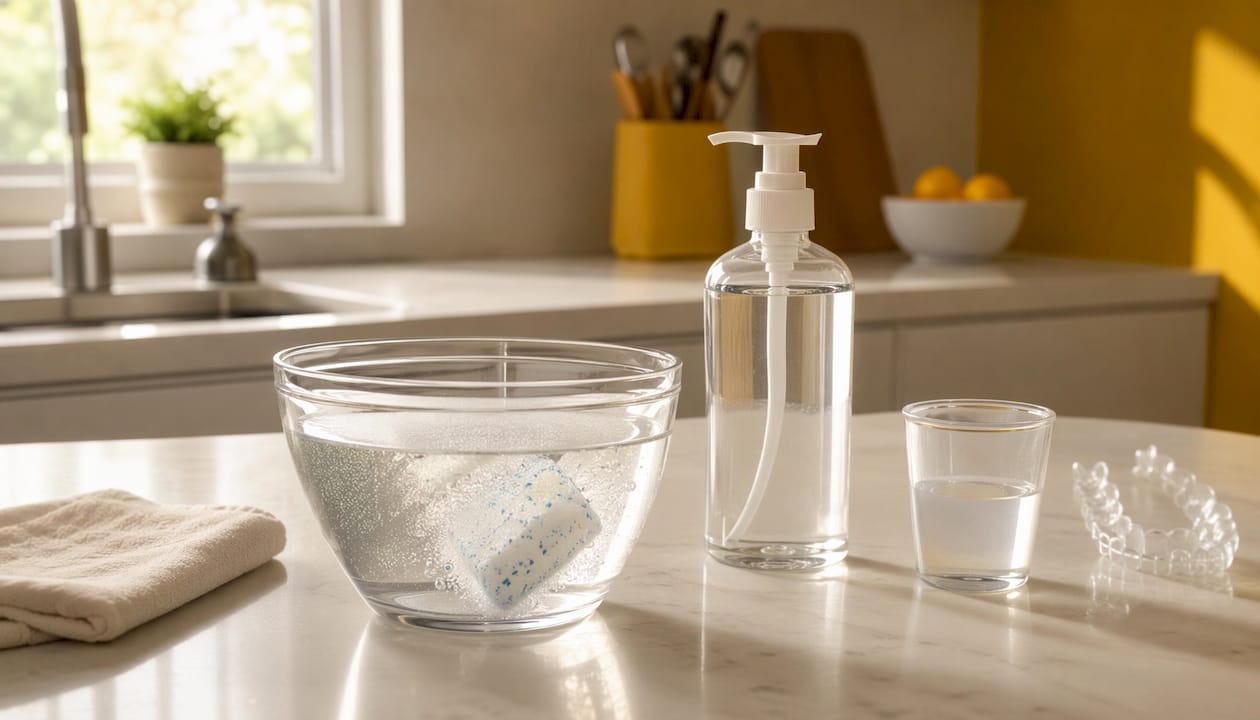
Invisalign Cleaning Crystals are the top recommendation from orthodontists. Each packet dissolves in warm water, and a 15-minute soak removes plaque and keeps aligners clear. No brushing needed. The Invisalign Cleaning System bundles 50 packets with a dedicated cleaning tub that has a built-in measurement line, which is handy if you want a mess-free setup at home or while traveling. Invisalign Cleaning Crystals+ offers the same formula in an updated version for patients who want the latest iteration.
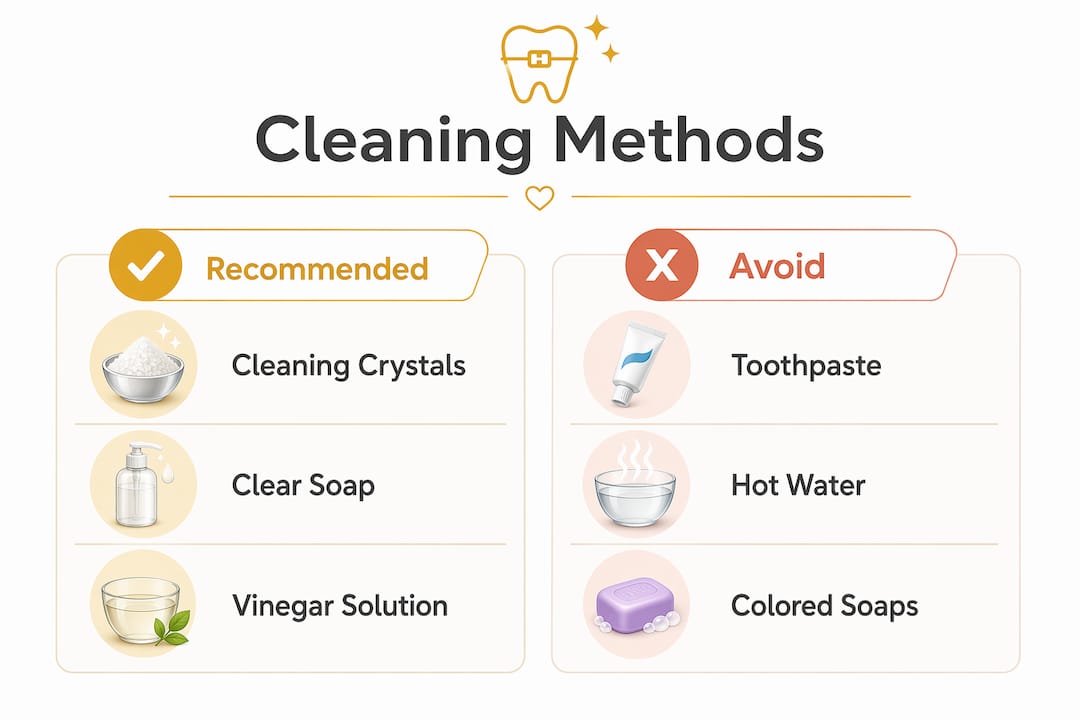
Clear antibacterial soap works well for daily brushing. The key word is clear: colored soaps can tint aligner plastic over time, and fragranced ones leave a taste you will notice all day.
White vinegar solution is a solid budget alternative. Mix equal parts white vinegar and cool water, soak for 15–20 minutes, then rinse thoroughly. Stick to plain white vinegar only since colored varieties stain.
Diluted hydrogen peroxide also works for a deeper clean. Combine one part 3% hydrogen peroxide with two parts water and soak for 15–20 minutes. This is particularly useful for removing stubborn buildup.
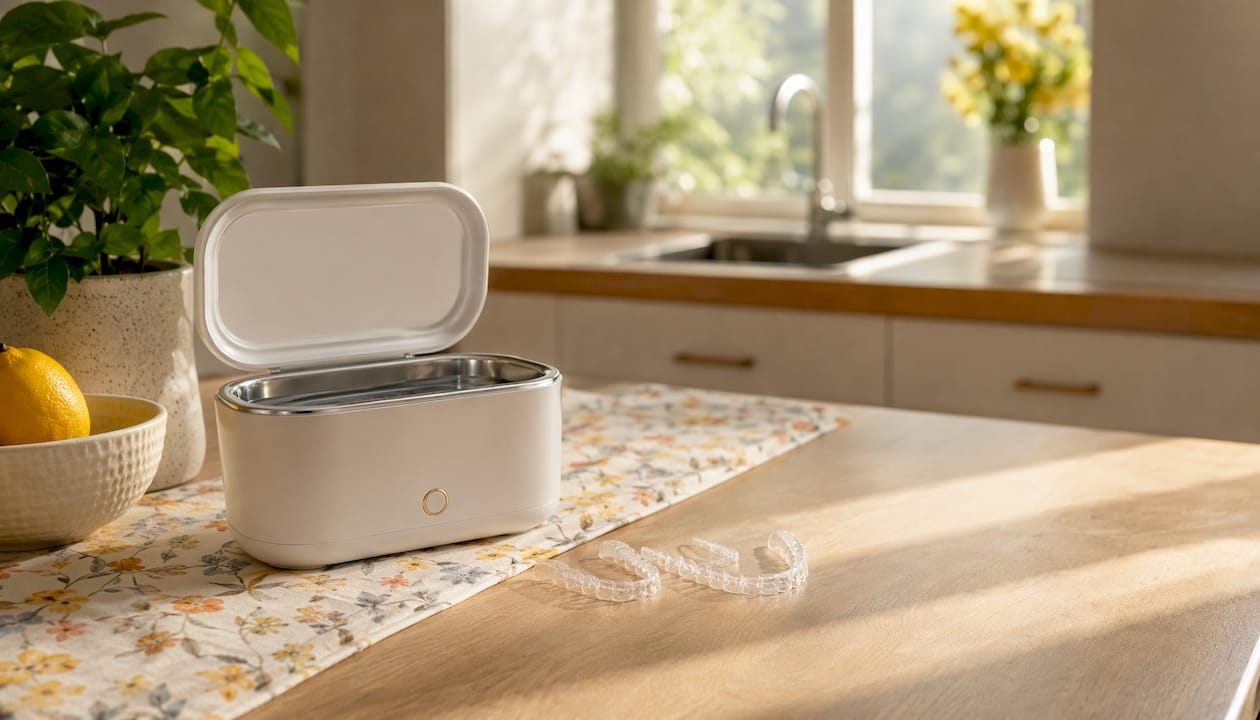
Ultrasonic cleaners use high-frequency sound waves to dislodge plaque in spots a toothbrush cannot reach. The Invisalign Ultrasonic Cleaner powered by Zima Dental is one option in this category. These devices are not essential, but they offer a more thorough clean for patients who want one. UV cleaning devices work on a similar principle, using light to reduce bacteria on aligner surfaces.
For a broader look at keeping aligners clean and odor-free, the approach is the same regardless of which product you choose: soak at least once daily.
What to avoid
- Toothpaste (abrasive particles scratch the plastic)
- Hot water (warps the thermoplastic material)
- Colored or fragranced soaps (stain and leave taste residue)
- Alcohol-based mouthwash (causes yellowing and brittleness)
- Bleach or abrasive powders (damage aligner surfaces)
Cleaning method comparison
| Method | Ease of use | Effectiveness | Key precaution |
|---|---|---|---|
| Invisalign Cleaning Crystals | Very easy | High | Use warm, not hot, water |
| Clear antibacterial soap | Easy | Good for daily use | Must be clear and unscented |
| White vinegar solution | Easy | Good | Plain white vinegar only |
| Hydrogen peroxide solution | Moderate | High for deep clean | Dilute to 1:2 ratio |
| Ultrasonic cleaner | Easy once set up | Very high | Not a replacement for daily soaking |
| Alcohol mouthwash | N/A | Avoid | Stains and damages plastic |
For deeper cleaning beyond the daily routine, a weekly soak using the hydrogen peroxide method for 30 minutes removes stubborn buildup that a standard 15-minute soak may miss. Patients dealing with persistent odor should increase soaking to twice daily. You can also find practical everyday Invisalign tips that cover cleaning alongside other care habits.
Expert precautions that protect your aligners and your treatment
Getting the cleaning routine right matters, but avoiding a few specific mistakes matters just as much. These are the errors that orthodontists see most often, and the ones most likely to set back your treatment.
Hot water is the single biggest risk. Orthodontists consistently warn that hot water warps aligner plastic and can alter the fit permanently, which may require replacement trays. Even briefly rinsing under a hot tap can subtly distort the shape. Always use lukewarm or cool water, every time.
Toothpaste does more damage than most patients expect. Abrasive particles in toothpaste create microscopic scratches on aligner surfaces. Those scratches trap bacteria, cloud the plastic, and make the aligners progressively harder to clean. Clear antibacterial soap or Invisalign Cleaning Crystals are the right substitutes.
Colored or fragranced soaps stain the plastic and leave an unpleasant taste that lingers. Clear, unscented antibacterial liquid soap is the professional standard for daily cleaning.
Mouthwash with alcohol or artificial dyes damages aligners. Many patients assume mouthwash is a safe cleaning option. It is one of the most common causes of yellowed, brittle trays. If you want to use mouthwash as part of your oral care routine, remove your aligners first.
Signs your aligners need professional attention or replacement
- Persistent odor that does not clear after consistent soaking
- Visible cracks, chips, or warping
- Cloudiness that does not improve with cleaning crystals
- Aligners that no longer fit snugly against your teeth
Pro Tip: Clean your aligner case every week with soap and water, and replace it every few months. A dirty case recontaminates freshly cleaned aligners immediately.
Additional precautions worth building into your routine:
- Remove aligners before eating anything, and before drinking anything other than plain water
- Brush your teeth before reinserting aligners after meals to avoid trapping food particles
- When traveling, pack a travel toothbrush, a small bottle of clear soap, and a few cleaning crystal packets
- Avoid soaking aligners for more than an hour in any solution, as prolonged exposure can weaken the plastic
Patients who want to avoid the most common cleaning errors can review Invisalign care mistakes that affect hygiene and treatment outcomes. For a complete picture of what to eat and drink during treatment, the guidance on Invisalign-safe foods covers which choices protect your aligners from staining.
Gloworthodontics offers personalized Invisalign care in Langley
Knowing the right cleaning steps is one part of a successful Invisalign experience. Having an orthodontic team that walks you through every stage, answers your questions, and adjusts your plan when needed is the other part.

Gloworthodontics provides personalized Invisalign care for patients in the Langley, BC area, with a warm, family-centered approach that goes beyond handing you a tray and sending you home. The team offers hands-on guidance on hygiene, fit, and treatment progress at every appointment, so you are never left guessing whether you are doing things right. Patients consistently highlight the clear communication and the welcoming environment as reasons they trust the practice with their care. To get a cleaning routine and Invisalign treatment plan tailored to your specific needs, book a consultation with Gloworthodontics today.
Key Takeaways
Rinsing, brushing with clear soap, and soaking daily with Invisalign Cleaning Crystals or an approved alternative keeps aligners clear, odor-free, and effective throughout treatment.
| Point | Details |
|---|---|
| Daily routine | Rinse, brush with clear unscented soap, soak 15 minutes, rinse again before reinserting. |
| Best soaking product | Invisalign Cleaning Crystals dissolve in warm water and remove plaque in 15 minutes without brushing. |
| Temperature rule | Always use lukewarm or cool water; hot water warps aligner plastic and can affect fit permanently. |
| What to avoid | Toothpaste, alcohol mouthwash, colored soaps, and hot water all damage or stain aligner material. |
| Gloworthodontics | Offers personalized Invisalign care and cleaning guidance for patients in the Langley, BC area. |