Invisalign Effectiveness: Everything You Need to Know
November 2, 2025
Invisalign Effectiveness: Everything You Need to Know
Did you know that over 12.2 million people worldwide have straightened their teeth with Invisalign? This clear aligner system is changing the way people think about orthodontics, offering a nearly invisible path to a healthier, more confident smile. With custom-fit trays and a focus on comfort and aesthetics, Invisalign appeals to both teens and adults who want real dental results without the look or hassle of metal braces.
Table of Contents
- Defining Invisalign And Its Core Concepts
- How Invisalign Aligners Straighten Teeth
- Who Is An Ideal Candidate For Invisalign?
- Evidence And Results Of Invisalign Treatment
- Comparing Invisalign To Traditional Braces
- Potential Risks, Costs, And What To Expect
Key Takeaways
| Point | Details |
|---|---|
| Innovative Orthodontic Solution | Invisalign offers a modern, nearly invisible alternative to traditional braces, effectively treating over 12.2 million patients globally. |
| Patient Compliance is Crucial | Success with Invisalign largely depends on patients wearing aligners 20-22 hours per day and maintaining a commitment to follow treatment plans. |
| Ideal Candidates | Best suited for individuals with mild to moderate dental misalignments; a thorough consultation with an orthodontist is essential for suitability assessment. |
| Comparison with Traditional Braces | While Invisalign is aesthetically pleasing and comfortable, traditional braces may be necessary for severe cases due to their consistent pressure and effectiveness. |
Defining Invisalign and Its Core Concepts
Invisalign represents a modern orthodontic solution that transforms traditional teeth straightening approaches. According to Wikipedia, clear aligners are transparent, plastic orthodontic devices designed to adjust teeth positioning, with Invisalign standing as a prominent brand that has successfully treated over 12.2 million patients worldwide.
The history of Invisalign traces back to Align Technology, a pioneering company founded in 1997. They developed this innovative teeth alignment system, which received FDA approval in 1998 and was introduced to the U.S. market in 1999. Unlike traditional metal braces, Invisalign offers a nearly invisible method of dental correction that appeals to both teenagers and adults seeking a more discreet orthodontic treatment.
Key characteristics of Invisalign include:
- Transparent design that remains nearly undetectable when worn
- Custom-manufactured plastic aligners tailored to individual dental structures
- Removable technology allowing easier eating and oral hygiene
- Gradual, controlled teeth movement through sequential aligner sets
The technology works by creating a precise digital mapping of your teeth, then designing a series of custom aligners that incrementally shift teeth into their ideal positions. Each set of aligners is typically worn for approximately two weeks before transitioning to the next in the sequence, providing a systematic and controlled approach to teeth realignment.
How Invisalign Aligners Straighten Teeth
Teeth alignment through Invisalign represents a sophisticated process of controlled, incremental movement. According to PubMed, these aligners utilize a series of custom-made, removable trays that systematically adjust tooth position, with each aligner typically worn for approximately two weeks.
The mechanism of tooth movement is intricate and precise. Journals LWW explains that Invisalign aligners apply strategic pressure through specialized attachments, enabling complex tooth movements like:
- Tipping: Rotating teeth along their central axis
- Translation: Moving teeth horizontally without changing their angle
- Root torque: Adjusting the root’s position while maintaining crown alignment
These attachments are small, tooth-colored bumps temporarily bonded to specific teeth, acting as anchors that help guide more complex dental adjustments. By creating these strategic contact points, Invisalign can manipulate tooth position with remarkable precision.
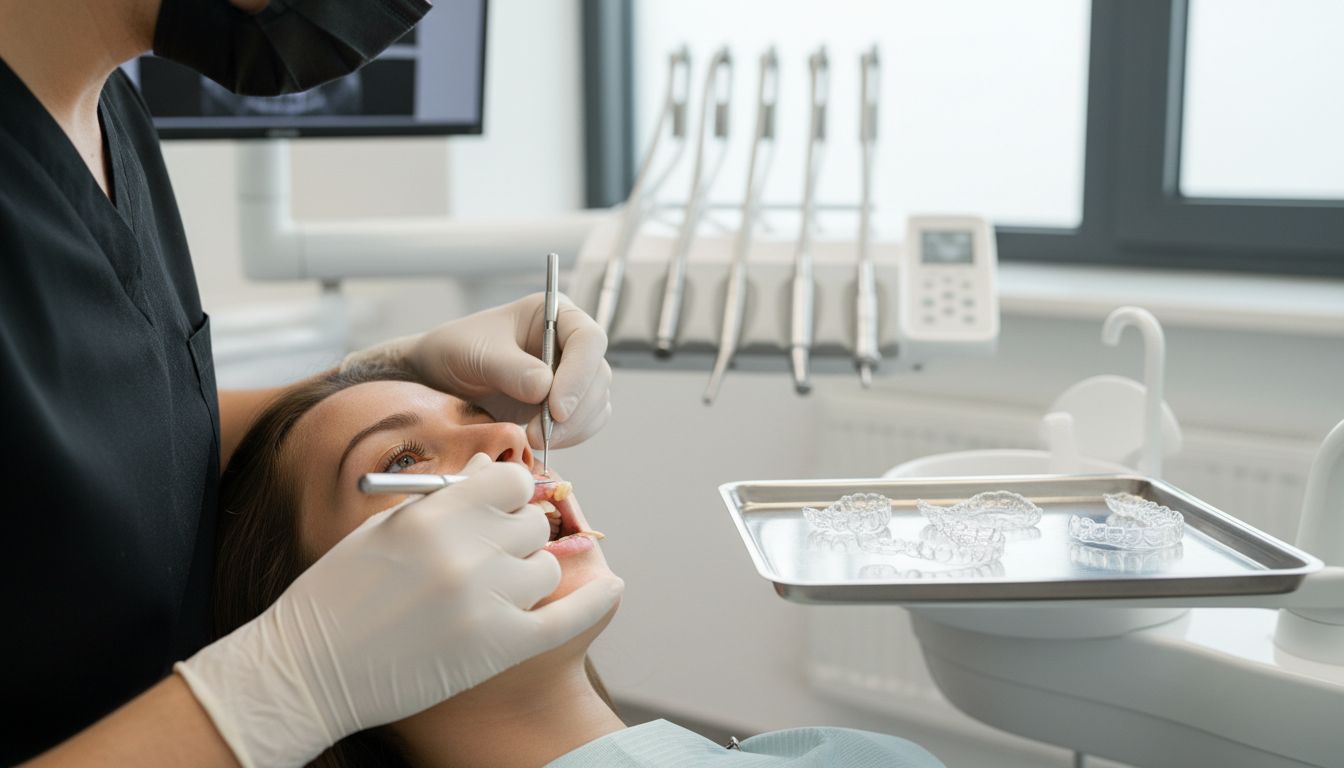 The aligners apply gentle, consistent force, gradually shifting teeth into their desired alignment through a carefully planned sequence of custom-designed trays.
The entire process begins with a comprehensive digital scan of your teeth, which allows orthodontists to create a personalized treatment plan. This digital mapping enables the creation of a series of aligners that will progressively move your teeth, with each set slightly different from the last, ensuring a controlled and predictable path to your ideal smile.
Who Is an Ideal Candidate for Invisalign?
Dental alignment is a personalized journey, and not everyone is an immediate match for Invisalign treatment. According to Wikipedia, Invisalign works best for patients with mild to moderate dental challenges, specifically those experiencing crowding between 1-6 mm and spacing issues without significant jawbone discrepancies.
PubMed research indicates that Invisalign is most effective for non-growing patients with specific dental misalignment characteristics. Ideal candidates typically demonstrate the following dental conditions:
- Mild to moderate teeth crowding
- Small gaps between teeth
- Slight tooth rotation issues
- Minor bite misalignments
- Previous orthodontic treatment relapse
Certain dental scenarios might require alternative treatments. Complex cases involving severe jaw misalignments, significant bite problems, or extensive tooth movement may not be suitable for Invisalign. Factors like age, overall dental health, and patient commitment to wearing aligners consistently play crucial roles in determining treatment success. Teenagers and adults with responsible oral hygiene habits and realistic expectations often make excellent Invisalign candidates.
Ultimately, a comprehensive consultation with an experienced orthodontist remains the most reliable method to determine individual Invisalign suitability. During this assessment, professionals will conduct detailed digital scans, evaluate tooth positioning, and discuss personalized treatment goals to ensure the most effective approach to achieving your ideal smile.
Evidence and Results of Invisalign Treatment
Understanding the scientific evidence behind Invisalign is crucial for patients considering this orthodontic treatment. PubMed conducted a systematic review that reveals a nuanced perspective on Invisalign’s effectiveness, noting that while the treatment shows promise for mild to moderate dental misalignments, the current research quality prevents drawing absolutely definitive conclusions.
PubMed research highlights that Invisalign’s success significantly depends on two critical factors:
- Patient compliance with wearing aligners
- The complexity of individual dental cases
Key clinical observations suggest Invisalign can effectively address various dental alignment challenges. The treatment demonstrates particular strength in scenarios involving:
- Mild to moderate tooth crowding
- Small interdental spacing
- Minor rotational corrections
- Slight bite adjustments
While scientific evidence continues to evolve, patient testimonials and clinical studies consistently demonstrate Invisalign’s ability to produce meaningful dental transformations. The technology’s precision, combined with personalized treatment planning, offers a compelling alternative to traditional orthodontic approaches. However, patients should maintain realistic expectations and understand that individual results can vary based on specific dental conditions and adherence to recommended treatment protocols.
Comparing Invisalign to Traditional Braces
Choosing between Invisalign and traditional braces involves understanding their unique characteristics and trade-offs. According to PubMed, Invisalign offers aesthetic and comfort advantages over traditional braces, but may be less effective for complex dental movements, making patient compliance a critical factor in successful treatment outcomes.
Journals LWW highlights that the choice between these treatments depends on individual patient needs and case complexity. Key differences include:
Invisalign Advantages:
- Nearly invisible appearance
- Removable for eating and cleaning
- More comfortable with no metal components
- Fewer dietary restrictions
Traditional Braces Advantages:
- More effective for severe malocclusions
- Consistent pressure application
- No risk of forgetting or losing alignment device
- Generally more cost-effective
The decision ultimately requires a comprehensive evaluation by an orthodontic professional. While Invisalign provides an innovative, discreet treatment option, traditional braces remain a powerful solution for more complex dental realignment scenarios. Factors like treatment complexity, patient age, lifestyle, and personal preference all play crucial roles in determining the most appropriate orthodontic approach.
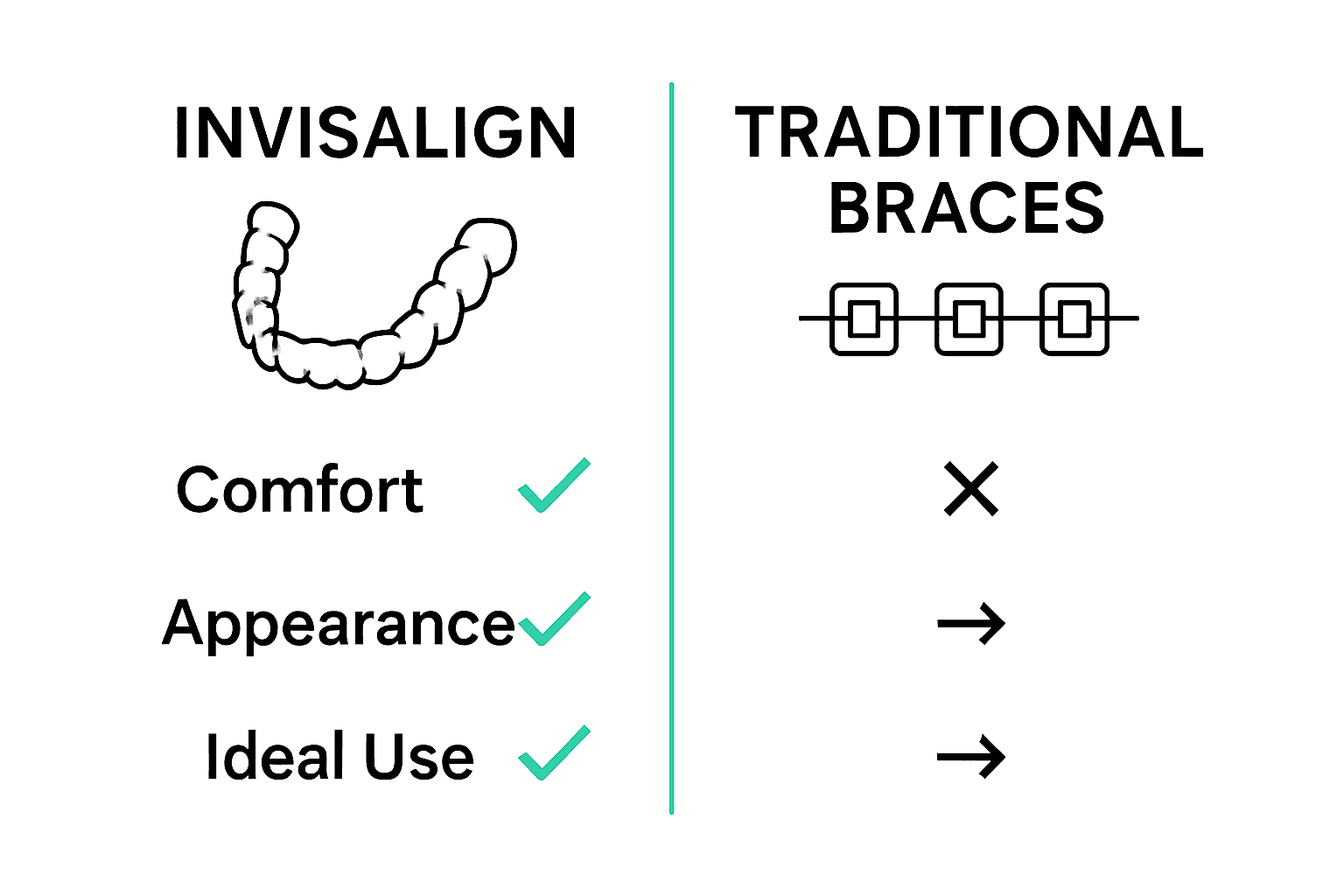
Here’s a comparison of Invisalign and traditional braces:
| Feature | Invisalign | Traditional Braces |
|---|---|---|
| Appearance | Nearly invisible | Highly visible metal or ceramic |
| Removability | Removable for eating/cleaning |
Fixed not removable |
| Comfort | Smooth plastic minimal irritation |
Metal brackets/wires possible irritation |
| Dietary Restrictions | Few limitations | Many foods restricted |
| Best For | Mild-moderate cases | Mild-severe cases |
| Maintenance | Requires regular cleaning | Requires special cleaning tools |
| Patient Compliance | Must wear 20-22 hrs/day | Always in place |
| Cost Range | $3,000-$8,000+ | Generally lower |
Potential Risks, Costs, and What to Expect
Invisalign treatment involves careful consideration of potential challenges and financial investments. PubMed research indicates that the effectiveness of treatment varies significantly, with costs and outcomes directly influenced by the complexity of dental misalignment and patient commitment.
Journals LWW highlights that patients should anticipate several key aspects of the Invisalign journey:
Potential Risks and Considerations:
- Potential for less effective treatment in complex cases
- Requires strict patient compliance
- Possibility of temporary speech adjustments
- Potential for minor discomfort during initial fitting
Cost Factors:
- Treatment complexity
- Duration of treatment
- Geographic location
- Orthodontist’s expertise
Typical treatment costs range from $3,000 to $8,000, with more complex cases potentially exceeding this range. Insurance coverage varies, so patients should carefully review their dental plans. The success of Invisalign heavily relies on wearing aligners 20-22 hours daily, making patient discipline a crucial factor in achieving desired results.
Patients can expect regular dental visits every 4-6 weeks to monitor progress and receive new aligners. While the treatment offers a more aesthetic alternative to traditional braces, it demands personal responsibility and commitment to achieve optimal dental alignment.
Discover the Power of Invisalign with Glow Orthodontics
Struggling with mild to moderate teeth misalignment or seeking a discreet, comfortable alternative to traditional braces? This article on Invisalign effectiveness highlights key challenges like the need for patient compliance and treatment suitability that determine your success. At Glow Orthodontics, we specialize in personalized Invisalign treatments tailored to your unique dental needs. Our professional team in Langley ensures a warm, supportive experience from your initial consultation through every step toward achieving the confident smile you deserve.

Take control of your dental journey today by visiting Glow Orthodontics. Learn more about our expertise and how Invisalign can work for you in our welcoming environment. Don’t wait because optimal results depend on starting your treatment now and staying committed. Schedule your appointment online and begin your path to a glowing smile with trusted care that puts you first.
Explore your options and get started here: Glow Orthodontics homepage.
Frequently Asked Questions
What is Invisalign and how does it work?
Invisalign is a modern orthodontic treatment that uses transparent, custom-made aligners to gradually shift teeth into their ideal positions. The process begins with a digital scan to create a personalized treatment plan, allowing for precise tooth movement through a series of aligners worn over time.
Who are the ideal candidates for Invisalign treatment?
Ideal candidates for Invisalign are typically non-growing patients with mild to moderate dental misalignment, such as tooth crowding, small gaps, or minor bite issues. A thorough consultation with an orthodontist is crucial to determine individual suitability.
How does Invisalign compare to traditional braces?
Invisalign offers aesthetic benefits, as the aligners are nearly invisible and removable. However, traditional braces may be more effective for severe dental issues and provide consistent pressure for complex adjustments. The best option depends on individual treatment needs and lifestyle preferences.
What are the potential risks and costs associated with Invisalign?
Potential risks include less effective treatment for complex cases and the necessity of strict patient compliance. Costs typically range from $3,000 to $8,000, influenced by treatment complexity and geographical location. Insurance coverage varies, so patients should review their dental plans carefully.