Is Invisalign More Effective Than Braces? Key Facts
February 6, 2026
Is Invisalign More Effective Than Braces? Key Facts
Every parent faces questions about how to balance function and confidence when it comes to their child’s smile. Choosing between Invisalign and traditional braces is more than just a cosmetic decision—it can impact your child’s comfort, daily routine, and overall dental health. For families in Langley, British Columbia, understanding the real-world differences between clear aligners like Invisalign and classic metal braces will help you find the solution that keeps your child’s smile healthy and self-esteem high.
Table of Contents
- Understanding Invisalign and Traditional Braces
- Treatment Process and Expected Outcomes
- Effectiveness for Different Orthodontic Issues
- Factors Influencing Success and Suitability
- Cost, Comfort, and Lifestyle Impact
Key Takeaways
| Point | Details |
|---|---|
| Understanding Treatment Options | Parents should evaluate both traditional braces and Invisalign to determine the best fit for their child’s dental needs. |
| Compliance is Key | Successful treatment relies on patient adherence to wearing schedules and hygiene routines, impacting outcomes significantly. |
| Complexity of Issues Matters | Traditional braces are more suitable for severe misalignments, while Invisalign works best for mild to moderate cases. |
| Cost and Lifestyle Considerations | Assessing financial implications and personal lifestyle impact is crucial when choosing between treatment options. |
Understanding Invisalign and Traditional Braces
Orthodontic treatments have dramatically evolved, offering patients more choices than ever before in correcting dental misalignments. Parents seeking effective solutions for their children now face two primary options: traditional metal braces and modern clear aligners like Invisalign. Understanding the nuanced differences between these treatments becomes crucial for making an informed decision.
Traditional metal braces have been the standard orthodontic solution for decades. These systems use metal brackets and wires strategically attached to teeth, providing continuous and precise control over tooth movement. Traditional braces excel at addressing complex dental issues, particularly in cases involving severe misalignment or significant bite corrections. Their key advantages include:
- Consistent tooth repositioning
- Highly predictable treatment outcomes
- Effective for complicated orthodontic challenges
- Less dependent on patient compliance
In contrast, Invisalign represents a more modern, aesthetic approach to orthodontic treatment. Clear custom-fit aligners offer virtually invisible treatment with several unique benefits. These transparent plastic trays gradually shift teeth into proper alignment, appealing to patients who desire a more discreet orthodontic solution. Invisalign aligners provide notable advantages such as:
- Removable for eating and cleaning
- Enhanced aesthetic appeal
- Improved oral hygiene
- Greater comfort compared to metal braces
Treatment effectiveness varies depending on individual dental conditions. While Invisalign works wonderfully for mild to moderate misalignments, traditional braces remain superior for more complex orthodontic scenarios. The key distinguishing factor lies in the precision and continuous force application that metal braces provide.
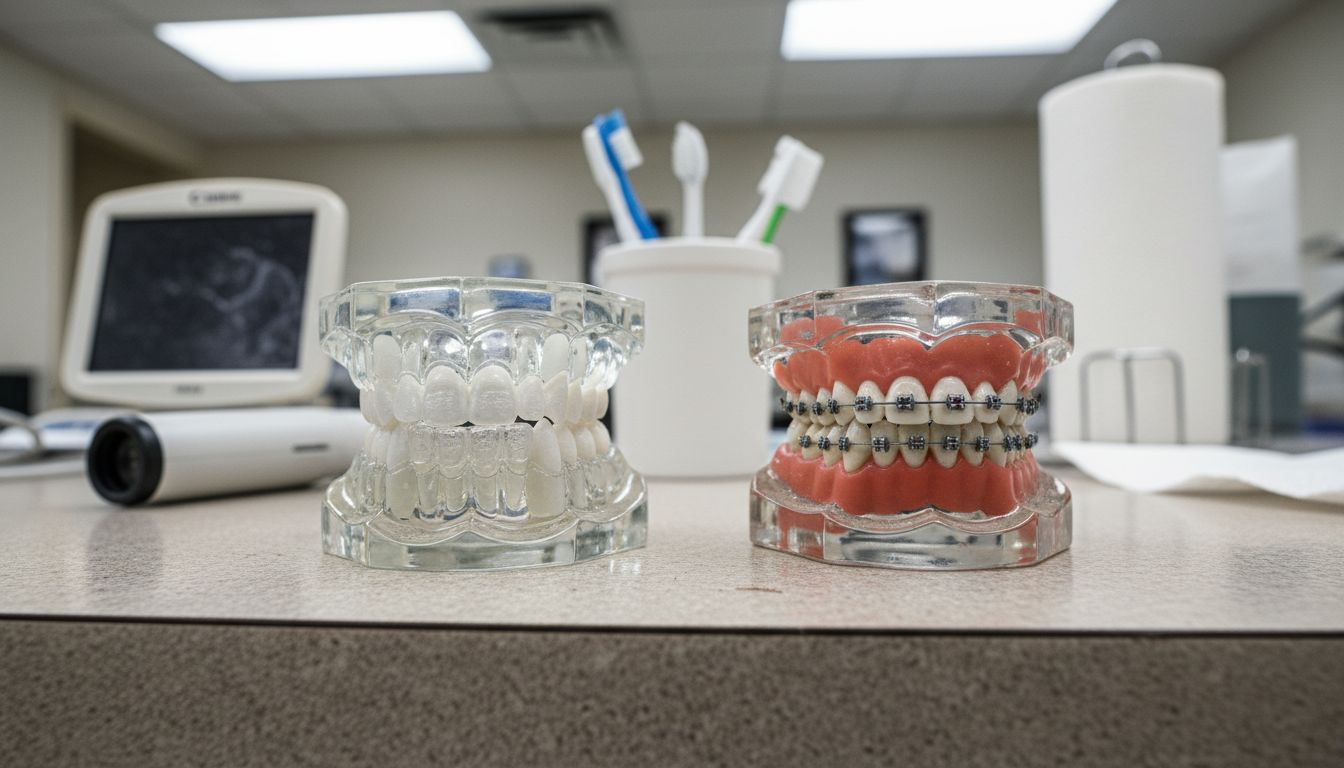
Here’s a side-by-side comparison of Invisalign and traditional braces for common orthodontic considerations:
| Aspect | Invisalign | Traditional Braces |
|---|---|---|
| Visibility | Nearly invisible | Highly visible metal components |
| Comfort | Smooth, minimal discomfort | May cause mouth irritation |
| Eating Restrictions | Removable, no food limits | Avoid sticky/hard foods |
| Hygiene Maintenance | Easy brushing and flossing | Cleaning brackets is challenging |
| Adjustment Frequency | Change aligners every 1-2 weeks | In-office tightening monthly |
Pro Tip: Schedule a comprehensive consultation with an orthodontic specialist to determine which treatment best suits your child’s specific dental needs and alignment challenges.
Treatment Process and Expected Outcomes
Orthodontic treatment represents a significant journey toward achieving optimal dental alignment, with both Invisalign and traditional braces offering unique pathways to transforming smiles. Understanding the nuanced treatment process helps parents and patients set realistic expectations and prepare for the transformative experience ahead.
For Invisalign treatment, patients receive a series of custom-designed clear aligners that progressively shift teeth into their desired positions. Systematic reviews reveal important expansion dynamics that impact treatment effectiveness. The process typically involves:
- Initial digital dental scan and 3D treatment planning
- Custom aligner fabrication
- Sequential aligner replacements every 1-2 weeks
- Regular progress monitoring by orthodontic professionals
- Gradual tooth movement with minimal discomfort
Treatment precision requires careful planning. Orthodontists recommend overcorrection strategies to accommodate potential variability in tooth movement, particularly in more challenging dental arch areas. This approach ensures more predictable outcomes and helps address potential limitations in aligner effectiveness.
Traditional braces follow a more mechanical approach, utilizing metal brackets and wires to apply consistent pressure for realigning teeth. The treatment process involves periodic adjustments, allowing orthodontists to make precise modifications throughout the correction journey. Patients can expect:
- Initial bracket placement and wire installation
- Scheduled tightening and adjustment appointments
- Gradual but consistent tooth repositioning
- Potential use of additional orthodontic accessories
- Comprehensive monitoring of dental movement
Expected treatment duration varies significantly between individual cases. Invisalign treatments typically range from 6-18 months for mild to moderate corrections, while traditional braces might require 18-36 months for more complex realignments. The specific timeline depends on the complexity of dental misalignment and patient compliance.
Overcorrection and strategic planning are crucial for achieving optimal dental alignment results.
Pro Tip: Request a comprehensive digital simulation of your expected treatment outcomes during your initial consultation to gain a clear understanding of potential results.
Effectiveness for Different Orthodontic Issues
Orthodontic treatments are not one-size-fits-all solutions. The complexity of dental misalignments demands a nuanced approach that carefully matches treatment method to specific orthodontic challenges. Parents and patients must understand how different orthodontic issues respond to various correction techniques.
Long-term research comparing treatment outcomes reveals distinct effectiveness for different dental conditions. Traditional braces demonstrate superior capabilities in addressing complex orthodontic issues, particularly those involving significant misalignments. Key challenges where traditional braces excel include:
- Severe teeth crowding
- Significant rotational misalignments
- Complex bite corrections
- Substantial vertical or horizontal jaw discrepancies
- Advanced tooth positioning problems
Invisalign, while innovative and aesthetically appealing, has more limited effectiveness for intricate dental scenarios. Traditional braces provide greater versatility in managing challenging orthodontic cases. Ideal scenarios for Invisalign typically involve:
- Mild to moderate tooth spacing
- Slight dental crowding
- Minor bite adjustments
- Cosmetic dental realignments
- Minimal rotational corrections
Treatment selection depends on multiple factors beyond just the visible misalignment. Orthodontists consider bone structure, tooth root positioning, patient age, and potential future dental development when recommending a specific approach.
Comprehensive assessment by a professional is crucial in determining the most effective orthodontic treatment strategy.
Pro Tip: Request a detailed 3D digital scan and comprehensive consultation to understand which treatment approach best matches your specific dental alignment challenges.
Factors Influencing Success and Suitability
Selecting the most appropriate orthodontic treatment involves a complex evaluation of multiple interconnected factors. Parents and patients must consider a comprehensive range of personal, physiological, and lifestyle considerations that extend far beyond simple visual appearance or initial cost considerations.
Patient Compliance emerges as a critical determinant of treatment success. Different orthodontic approaches demand varying levels of patient commitment and discipline. Key compliance factors include:
- Age and maturity level
- Ability to follow precise wearing instructions
- Motivation for consistent treatment
- Personal responsibility and self-discipline
- Willingness to maintain oral hygiene standards
Dental Complexity plays a pivotal role in treatment selection. Orthodontists thoroughly assess several critical anatomical and structural elements to determine the most effective intervention:
- Severity of dental misalignment
- Existing bite relationship
- Jaw structure and alignment
- Tooth root positioning
- Potential for future dental development
Lifestyle Considerations significantly impact treatment choice and potential success. Young patients and their families must evaluate practical aspects that could influence treatment effectiveness:
- Daily activity levels
- Sports participation
- Musical instrument playing
- Social comfort and confidence
- Professional or academic presentation needs
Individual treatment success depends on a holistic assessment of physical, personal, and behavioral factors.
Pro Tip: Schedule a comprehensive initial consultation that includes a detailed discussion of your lifestyle, personal habits, and treatment expectations to optimize your orthodontic outcome.
Cost, Comfort, and Lifestyle Impact
Orthodontic treatment represents a significant investment in both financial resources and personal adaptation. Parents and patients must carefully consider the comprehensive impact of their chosen treatment, weighing potential benefits against practical challenges and lifestyle modifications.
Invisalign offers unique comfort and lifestyle advantages that distinguish it from traditional braces. The removable nature of these aligners provides several key benefits:
- Unrestricted eating capabilities
- Enhanced oral hygiene maintenance
- Minimal visual interference
- Greater social confidence
- Reduced physical discomfort
Cost Considerations play a crucial role in treatment selection. Typically, Invisalign represents a more expensive option compared to traditional braces, with price variations depending on treatment complexity:
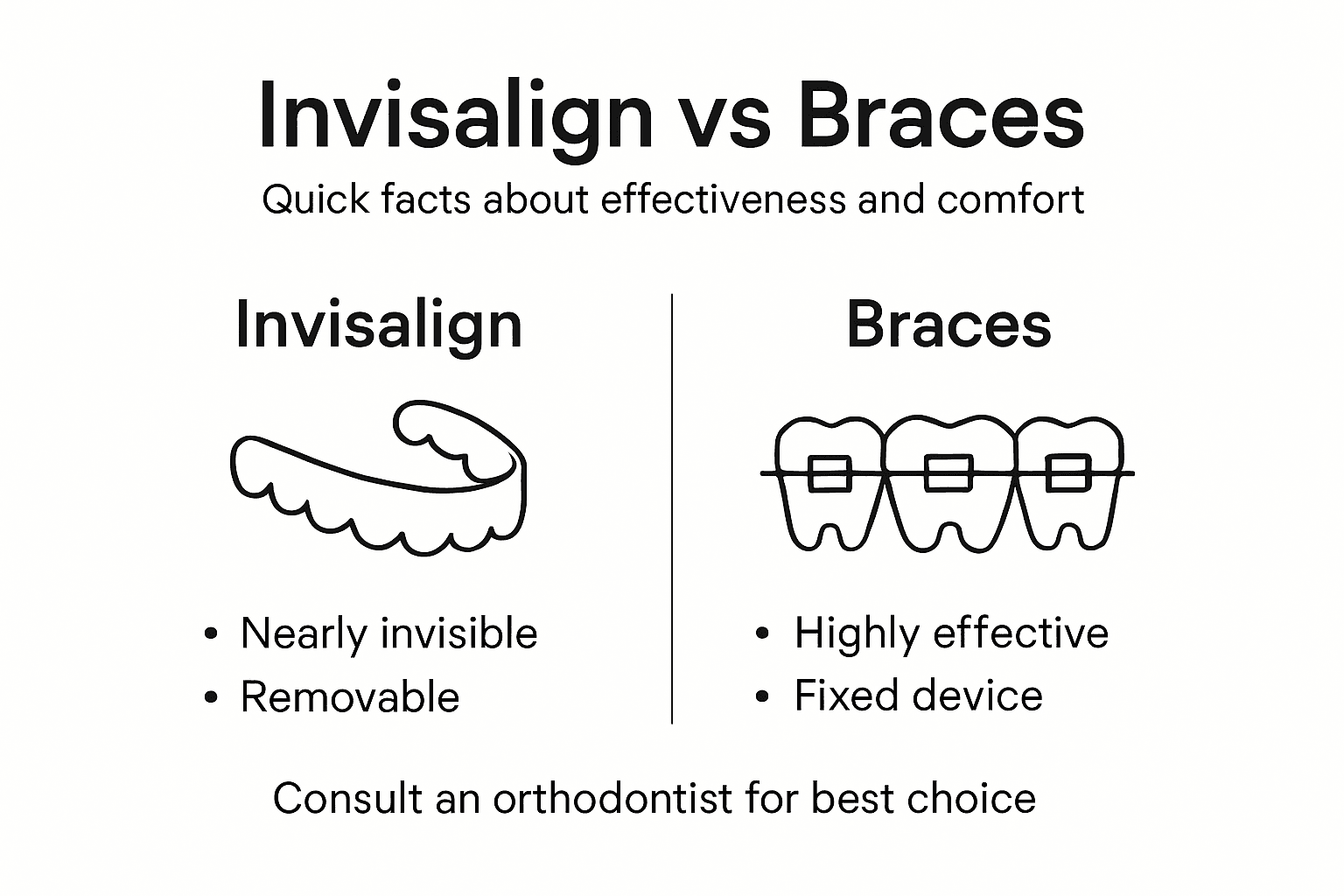
The following table summarizes average treatment durations and cost ranges for both orthodontic options:
| Factor | Invisalign | Traditional Braces |
|---|---|---|
| Average Duration | 6–18 months | 18–36 months |
| Cost Range | $3,000 – $8,000 | $2,000 – $6,000 |
| Insurance Cover | Often partial or variable | Frequently available |
- Invisalign: $3,000 – $8,000
- Traditional Braces: $2,000 – $6,000
- Additional potential expenses for adjustments
- Insurance coverage variability
- Potential long-term dental health savings
Lifestyle Impact extends beyond mere financial considerations. Different orthodontic approaches significantly influence daily activities, social interactions, and personal comfort. Patients must evaluate:
- Sports and physical activity limitations
- Social and professional presentation
- Dietary adjustments
- Maintenance and cleaning requirements
- Psychological comfort and self-perception
Treatment success depends not just on technical effectiveness, but on patient adaptation and commitment.
Pro Tip: Request a comprehensive cost breakdown and lifestyle impact assessment during your initial consultation to make a fully informed treatment decision.
Discover Your Best Smile with Expert Invisalign and Braces Solutions
Choosing between Invisalign and traditional braces can feel overwhelming given the unique benefits and limitations of each method. Whether you seek the subtlety of clear aligners or the precision of metal braces, understanding your child’s specific dental needs and lifestyle preferences is key to successful treatment. This article highlights critical factors like treatment effectiveness for different orthodontic issues, patient compliance, and comfort—areas where Glow Orthodontics excels.

At Glow Orthodontics, we specialize in personalized orthodontic care that fits your family’s goals and schedule. Our warm, professional team in Langley, British Columbia, provides thorough consultations to assess dental complexity and recommend the best solution for your child’s smile journey. From initial digital planning to gentle adjustments, we focus on delivering confidence-boosting results with options tailored for comfort and lifestyle. Act now to schedule your consultation and step toward a glowing smile with trusted Invisalign and braces experts at Glow Orthodontics. Learn more about our treatment process and book your appointment today to take control of your orthodontic future.
Frequently Asked Questions
Is Invisalign more effective than traditional braces?
While Invisalign is effective for mild to moderate dental misalignments, traditional braces are generally more effective for complex orthodontic issues, such as severe crowding or significant bite corrections.
What are the main differences between Invisalign and braces?
The primary differences include visibility (Invisalign is nearly invisible), comfort (Invisalign is generally smoother and less irritating), and maintenance (Invisalign aligners are removable for easier cleaning, while braces can be harder to keep clean).
How long does treatment take with Invisalign compared to braces?
Invisalign treatments typically last between 6 to 18 months, whereas traditional braces may require anywhere from 18 to 36 months, depending on the complexity of the dental issue.
Are there any lifestyle impacts to consider when choosing between Invisalign and braces?
Yes, Invisalign allows for unrestricted eating and easier oral hygiene maintenance, while traditional braces can limit certain foods and require more effort to clean around the brackets and wires.
Recommended
- Glow Orthodontics Langley | #1 Orthodontist in Langley, BC
- Invisalign vs Traditional Braces – Expert Comparison 2025 – RG API
- Master Dental Hygiene with Braces: Your Step-by-Step Guide – RG API
- How Braces Are Put On: A Step-by-Step Guide for 2025 – RG API
- Invisalign – TopTeeth – strahlende & gerade Zähne