Invisible Aligners Braces: What You Need to Know
July 6, 2026
Invisible Aligners Braces: What You Need to Know
TL;DR:
- Invisible aligners are removable, clear plastic devices that straighten teeth faster than traditional braces, requiring 20-22 hours of daily wear. Their movement relies on bone remodeling, with attachments sometimes needed for complex tooth shifts, all planned through digital models. Success depends on patient discipline, proper monitoring, and case suitability, with refinements and retention being integral to achieving optimal results.
Invisible aligners braces are clear, removable orthodontic devices that reposition teeth without metal brackets or wires. The industry standard term is clear aligners, and both names refer to the same treatment. Treatment typically lasts 6–18 months, which is faster than the 18 months to 3 years often required for traditional fixed braces. That speed advantage comes with one firm requirement: wearing aligners 20–22 hours daily is the clinical standard, not a suggestion. Whether you are an adult considering clear teeth straightening or a parent researching options for your teen, understanding how these devices work will help you make a confident, informed choice.
How do invisible aligners work to move teeth?
Clear aligners move teeth through controlled, gentle pressure applied to specific surfaces. Each aligner tray is slightly different from the last, nudging teeth a fraction of a millimeter closer to their target position. The process is gradual by design.
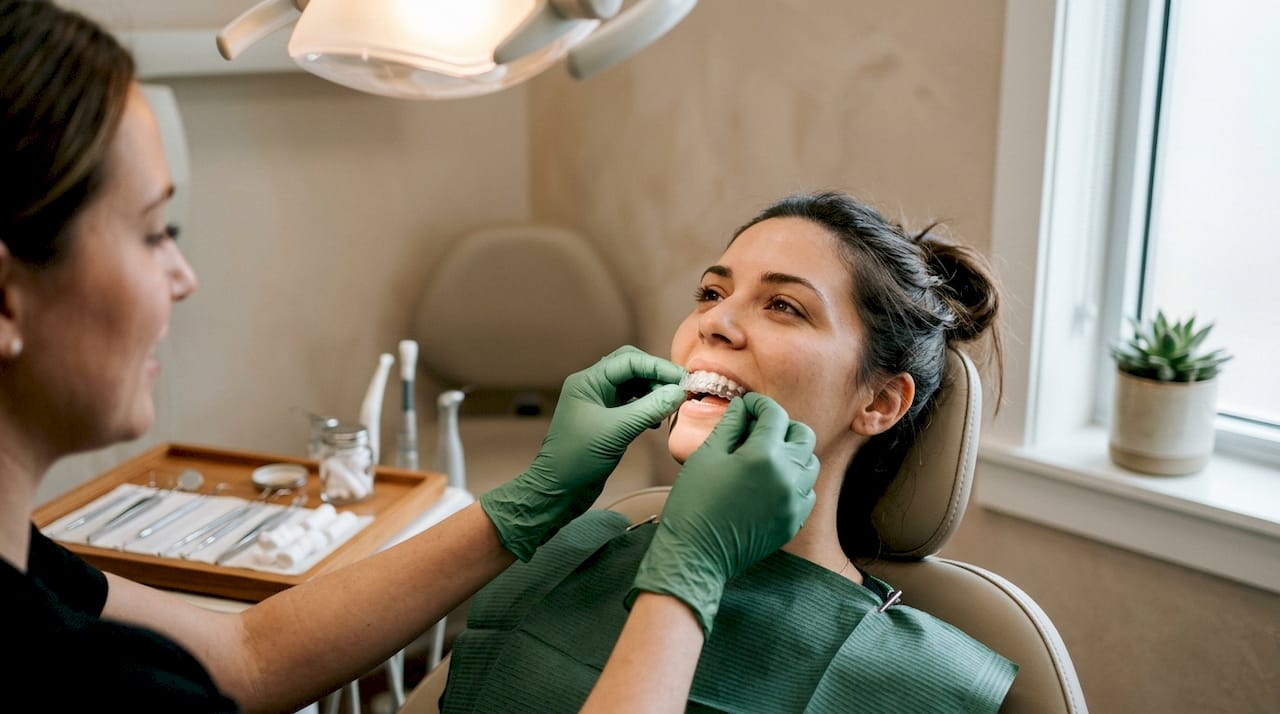
The biological mechanism behind tooth movement is bone remodeling. When steady pressure is applied to a tooth, the bone on the pressure side slowly breaks down, and new bone forms on the tension side. This allows the tooth to shift safely without surgery or invasive procedures.
Not every movement is possible with plastic alone. Tooth-colored resin attachments are small bumps bonded directly to teeth that act as handles, enabling rotations and vertical shifts the aligner material cannot achieve on its own. Your orthodontist decides where attachments are needed based on your specific case.
The entire treatment plan is built from digital 3D models, which allow the orthodontist to map out every tooth movement before a single tray is made. Patients can often preview their projected final result before treatment even begins.
- Each aligner tray is worn for approximately 1–2 weeks before switching to the next
- Bone remodeling is the same biological process used by all orthodontic treatments
- Attachments are tooth-colored and barely visible to others
- Digital planning improves predictability and reduces mid-treatment surprises
Pro Tip: Keep your previous aligner set until you confirm the new one fits correctly. If a new tray feels too loose, your orthodontist may want you to wear the prior set a few extra days.
What are the benefits and limitations of clear aligners?
Clear aligners offer real advantages over traditional braces, but they are not the right tool for every case. Knowing where they excel and where they fall short helps you set realistic expectations.
Smooth plastic aligners reduce tissue irritation and result in fewer unplanned orthodontic visits compared to fixed braces. There are no wires to poke your cheek and no brackets to pop off at dinner. For adults and teens who want discreet dental braces, the near-invisibility of clear trays is a significant quality-of-life benefit.
The removability factor is both a strength and a risk. You can eat anything you want, brush and floss normally, and take photos without hardware showing. The risk is that removability requires discipline. Trays left out too long each day directly delay results.
Complex cases with severe crowding or significant bite issues are still better managed with fixed braces. Orthodontists retain precise control over tooth torque and vertical movement with brackets and wires in ways that aligners cannot fully replicate. Case complexity is the main deciding factor in treatment choice.
| Feature | Clear aligners | Fixed braces |
|---|---|---|
| Visibility | Nearly invisible | Visible metal or ceramic |
| Removability | Yes, for meals and hygiene | No, fixed throughout treatment |
| Comfort | Smooth plastic, less irritation | Wires and brackets can cause soreness |
| Best case type | Mild to moderate issues | Mild to severe, including complex bites |
| Emergency visits | Less frequent | More frequent |
Key limitations to keep in mind:
- Aligners for adults work best when the case involves spacing, mild crowding, or minor bite correction
- Patients who struggle with compliance see slower results and longer treatment times
- Some tooth movements, such as large vertical shifts, still require fixed appliances
- A thorough clinical evaluation is the only reliable way to confirm you are a good candidate
What does invisible aligner treatment look like from start to finish?
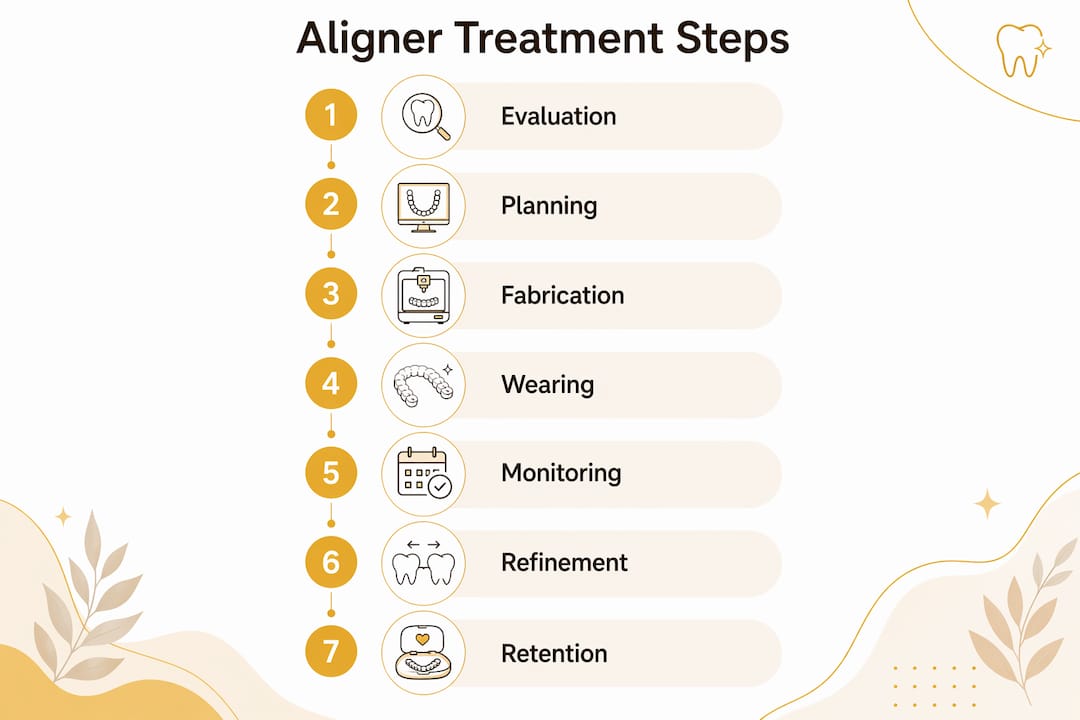
The treatment process follows a clear sequence. Each stage builds on the last, and skipping steps creates problems downstream.
1. Comprehensive evaluation. Your orthodontist takes digital scans, photographs, and X-rays. This gives a full picture of your teeth, roots, and jaw structure. No guesswork is involved.
2. Digital treatment planning. Using 3D software, the orthodontist maps out every planned tooth movement. Many practices use ClinCheck simulation, which lets you see a digital preview of your projected smile before committing to treatment.
3. Aligner fabrication. Custom trays are manufactured from your digital models. The full series of aligners is often delivered at once or in batches, depending on your provider.
4. Wearing your aligners. You switch to a new tray roughly every 1–2 weeks. Consistent 20–22 hour daily wear is what keeps tooth movement on schedule. Meals, brushing, and flossing are the only reasons to remove them.
5. Progress check-ins. Your orthodontist monitors tooth movement at regular appointments, typically every 6–8 weeks. Adjustments to the plan happen here if teeth are not tracking as predicted.
6. Refinement aligners. A second scan and a new set of refinement trays are standard after the initial series. These close micro-gaps and perfect final tooth position. Refinements are not a sign that something went wrong. They are a built-in part of achieving the best result.
7. Retention. After active treatment ends, retainers hold your teeth in their new positions. Skipping retainers is the most common cause of relapse.
Pro Tip: Set a phone alarm for when you remove your aligners at meals. It is easy to lose track of time, and even 30 extra minutes out per day adds up to hours lost each week.
You can find a detailed walkthrough of each phase in this step-by-step treatment guide from Gloworthodontics.
How much do clear aligners cost?
Clear aligner pricing varies more than most patients expect. The range is wide because provider type, case complexity, and geographic location all affect the final number.
Traditional fixed braces typically cost between $5,000 and $8,000. Orthodontist-led clear aligner treatment often falls in a comparable range, especially for moderate cases requiring attachments, refinements, and regular monitoring. That price includes the clinical expertise, not just the plastic trays.
Direct-to-consumer aligner options advertise lower entry costs. The trade-off is reduced or no in-person orthodontic oversight. For straightforward spacing cases in adults, some patients find this acceptable. For anyone with bite issues, root concerns, or complex crowding, the absence of specialist monitoring carries real clinical risk. Reviewing your insurance coverage options before committing to a provider is worth the time.
Factors that influence your final cost:
- Case complexity: More movements and longer treatment mean more aligners and more appointments
- Provider type: Orthodontist-led treatment costs more than general dentist or direct-to-consumer options, but includes specialist oversight
- Geographic location: Urban practices in high-cost areas typically charge more than suburban or rural providers
- Insurance coverage: Many dental plans include an orthodontic benefit that applies to clear aligners; check your policy’s lifetime maximum
- Refinements: Some providers include refinements in the base fee; others charge separately
The effectiveness of clear aligners is well-documented for mild to moderate cases, which makes the investment worthwhile when the treatment is matched to the right patient.
Practical tips for successful invisible aligner treatment
Success with clear aligners depends more on patient behavior than on the technology itself. The trays only work when they are in your mouth.
Failure to maintain the recommended daily wear time is the leading reason treatment extends beyond its planned duration. Every hour the trays sit on a nightstand is an hour of zero tooth movement. Patients who hit 22 hours consistently finish on time. Those who average 18 hours often need extra aligner sets.
Oral hygiene requires more attention during aligner treatment, not less. Food trapped between teeth and a sealed plastic tray creates the ideal environment for cavities. Brush and floss before reinserting your trays after every meal. Rinse the trays themselves with cool water, not hot, which can warp the plastic.
Mild discomfort after switching to a new tray is normal. It reflects the bone remodeling process doing its job. The soreness typically peaks in the first 24–48 hours and fades. Switching to a new tray at night lets you sleep through the worst of it.
Pro Tip: Pack your aligner case every time you leave the house. Patients who wrap trays in napkins at restaurants lose them far more often than those who carry a case.
For more daily guidance, the practical tips for Invisalign resource from Gloworthodontics covers real-world scenarios in detail.
Key Takeaways
Clear aligner treatment succeeds when the right case is matched to the right provider, and when the patient wears their trays consistently for 20–22 hours every day.
| Point | Details |
|---|---|
| Wear time is non-negotiable | Missing daily wear hours is the top reason treatment runs longer than planned. |
| Case complexity drives the decision | Mild to moderate cases suit clear aligners; severe bite issues still favor fixed braces. |
| Refinements are standard | A second set of trays after initial treatment is normal and improves final results. |
| Cost matches provider type | Orthodontist-led treatment costs more but includes clinical oversight and monitoring. |
| Attachments expand what aligners can do | Tooth-colored resin bumps enable complex movements that plastic trays alone cannot achieve. |
What I have learned after watching hundreds of aligner cases
The most common mistake patients make is treating clear aligners like a passive treatment. They assume the trays do all the work. They do not. The patient is an active participant, and compliance is the single biggest variable in outcomes.
I have seen patients with moderate crowding finish ahead of schedule because they were meticulous about wear time and showed up to every check-in. I have also seen straightforward cases drag on for months longer than projected because trays were coming out at social events, during long work calls, and “just for a bit” at the gym.
The second thing worth saying plainly: not all clear aligner programs are equal. Orthodontist-led treatment and direct-to-consumer kits are not the same product at different price points. They are different levels of care. An orthodontist monitors root health, tracks bone response, and can intervene when teeth are not moving as planned. A mailed kit cannot do any of that. For mild spacing in a healthy adult mouth, the risk may be low. For a teenager, or for anyone with a history of gum disease or prior dental work, professional supervision is not optional.
Refinements also deserve a better reputation. Patients sometimes feel discouraged when their orthodontist recommends a second round of trays. The reality is that refinements are a sign the orthodontist is paying attention. Biological tooth movement never follows a digital plan perfectly. Refinements close the gap between the predicted result and the actual one. They are not a failure. They are the finish line.
— Juiced
Gloworthodontics can guide your clear aligner treatment
Choosing clear aligners is a clinical decision, not just a lifestyle one. Gloworthodontics provides expert-guided invisible aligner treatment for patients in Langley, BC, from the initial digital scan through refinements and retention.

Every treatment plan at Gloworthodontics starts with a thorough evaluation to confirm clear aligners are the right fit for your case. The team handles the full process, including ClinCheck planning, attachment placement, progress monitoring, and refinement trays. Parents researching options for teens will find the orthodontic care guide for teens a useful starting point. Adults ready to move forward can book a consultation directly at Gloworthodontics to get a personalized assessment and a clear picture of what treatment will involve.
FAQ
What are invisible aligners braces?
Invisible aligners braces, also called clear aligners, are custom-made removable plastic trays that gradually reposition teeth through gentle, controlled pressure. They are an alternative to fixed metal braces for mild to moderate orthodontic cases.
How long does clear aligner treatment take?
Treatment typically lasts 6–18 months, which is generally faster than traditional braces. Actual duration depends on case complexity and how consistently the patient wears their trays.
Are invisible aligners suitable for adults?
Clear aligners are well-suited for invisible aligners for adults with mild to moderate spacing, crowding, or bite issues. Adults often prefer them for their discreet appearance and the ability to remove them for professional and social situations.
What happens if I do not wear my aligners enough?
Skipping wear time is the main reason treatment extends beyond the planned schedule. Teeth only move when the trays are in place, so consistent 20–22 hour daily wear is required for on-time results.
Do clear aligners work for teens as well as adults?
Clear aligners work effectively for teens with mild to moderate orthodontic needs, provided they maintain the required wear schedule. Orthodontist supervision is especially important for teens to monitor growth and ensure teeth are tracking correctly.