Is Braces Necessary? What Families Need to Know
July 12, 2026
Is Braces Necessary? What Families Need to Know
TL;DR:
- Braces are necessary when misalignment affects chewing, speaking, or increases dental disease risk.
- Treatment decisions depend on functional problems, not just appearance, with evaluation by an orthodontist.
Braces are medically necessary when dental misalignment affects chewing, speaking, jaw function, or raises the risk of dental disease. That definition comes directly from how insurance classifies necessity: treatment qualifies when it corrects a functional problem, not just an aesthetic one. Whether you are a parent wondering about your child’s crowded teeth or an adult who never got treatment, the question of whether orthodontics is necessary deserves a clear, clinical answer. About one in four orthodontic patients is an adult, which shows this is not a childhood issue alone. The American Association of Orthodontists recommends a first evaluation by age 7 for children, but the need for braces spans every age group.
Is braces necessary, or is it just cosmetic?
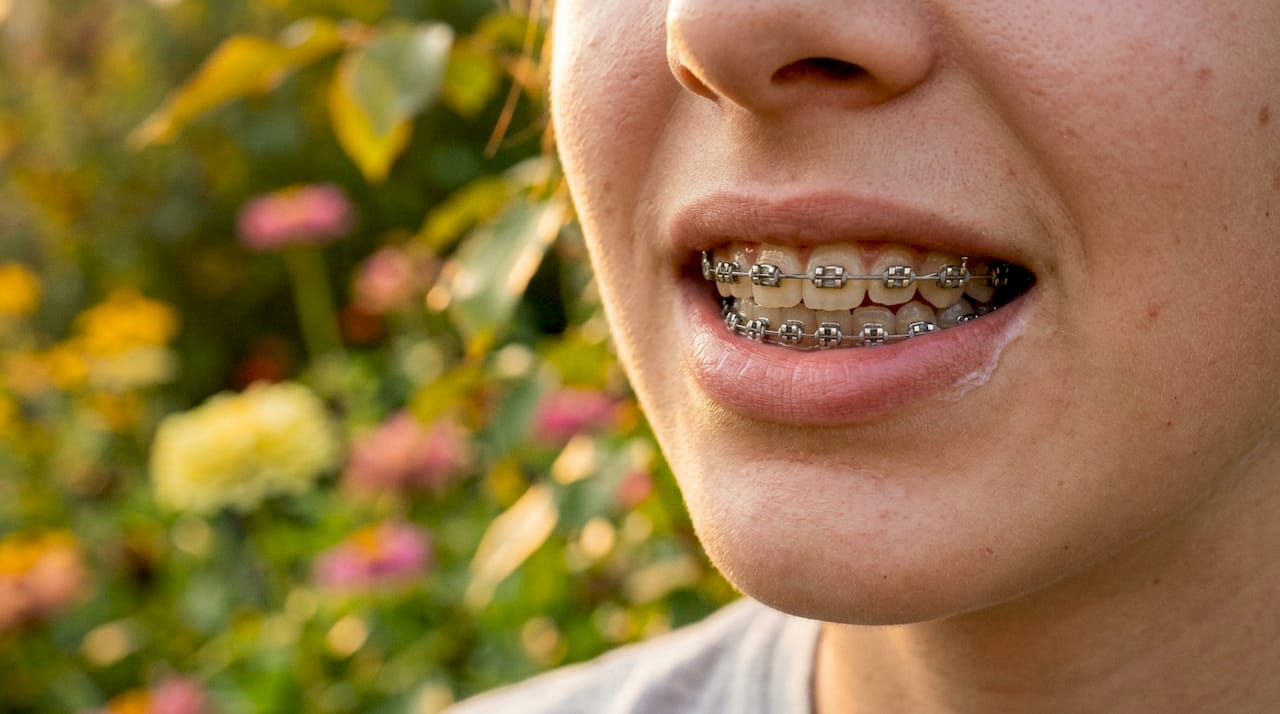
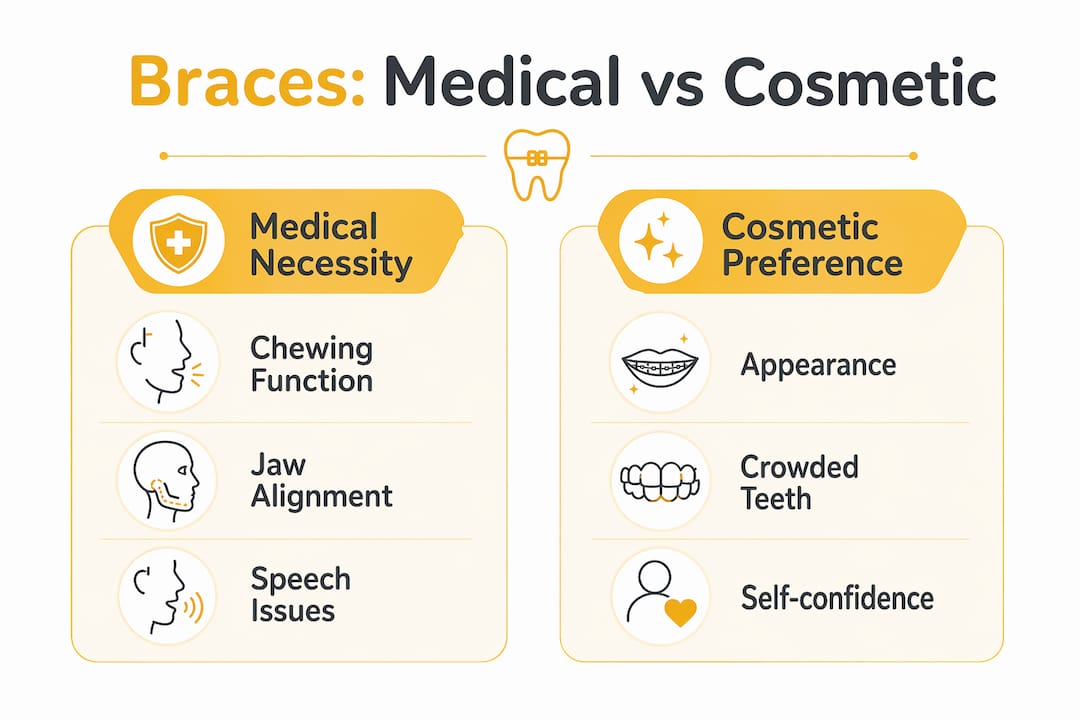
The honest answer is: it depends on what is happening in your mouth. Braces correct two distinct categories of problems. The first is functional, where misalignment interferes with how you eat, speak, or breathe. The second is cosmetic, where teeth are slightly uneven but cause no health consequences. Orthodontic treatment is medically necessary when misalignment interferes with function or heightens the risk of dental disease. Cosmetic treatment is elective, and that distinction matters for both your decision and your insurance coverage.
The tricky part is that mild misalignment often sits in a gray zone. Teeth that look only slightly crowded can still create real health problems. Mild misalignment creates cleaning challenges that increase the risk of gum disease and decay. That means a case that looks cosmetic on the surface may qualify as medically necessary once an orthodontist examines it properly.
What are the signs you actually need braces?
Some indicators are obvious. Others surprise people who assumed their teeth were “good enough.” The following signs point toward a clinical need for orthodontic treatment.
- Crowded or overlapping teeth that trap food and make flossing difficult, raising the risk of cavities and gum disease
- Overbite where the upper front teeth cover too much of the lower teeth, causing wear or jaw strain
- Underbite where the lower jaw protrudes past the upper, affecting chewing and sometimes speech
- Crossbite where upper and lower teeth do not align properly side to side, which can cause uneven jaw growth
- Open bite where front teeth do not meet when the mouth closes, making biting into food difficult
- Jaw pain or clicking that signals the bite is placing uneven stress on the temporomandibular joint
- Chronic mouth breathing or speech difficulties linked to how teeth and the jaw are positioned
- Uneven tooth wear where certain teeth grind against each other because the bite is off
Correcting bite imbalances protects long-term oral health well beyond any cosmetic benefit. An orthodontist does not just straighten teeth. They realign the entire bite system.
Pro Tip: If you notice your child grinding teeth at night or favoring one side when chewing, book an orthodontic evaluation. These are early functional warning signs, not just habits.
How do braces work, and what should you expect?
Braces move teeth through gentle, sustained pressure applied to the roots via brackets, wires, and bands. The biology behind this is specific: gentle pressure is optimal, because heavy force can cause hyalinization, a process where tissue dies and actually stops tooth movement. More force does not mean faster results. It means damaged tissue and stalled progress.
Here is what the treatment process looks like from start to finish:
- Consultation and records. Your orthodontist takes X-rays, photographs, and digital scans to map your bite and bone structure before recommending any treatment.
- Bonding appointment. Initial bonding takes 1–2 hours. The orthodontist attaches brackets to each tooth with dental adhesive, then threads the archwire through them.
- Adjustment visits. You return every 4–8 weeks. Each visit lasts 15–20 minutes. The orthodontist tightens or replaces the wire to maintain steady pressure as teeth shift.
- Retention phase. Once braces come off, retainers hold teeth in their new positions. Skipping this phase is the most common reason teeth shift back.
Types of braces include traditional metal brackets, ceramic brackets that blend with tooth color, and lingual braces bonded to the back of teeth for near-invisible treatment. Clear aligners, such as Invisalign, are a separate category covered in the next section. Treatment duration ranges from 12 months for simple cases to 3 years for complex ones. Adults often sit at the longer end of that range because mature bone responds more slowly to pressure.
What are the alternatives to traditional braces?
Clear aligners are the most widely used alternative to traditional braces for mild to moderate cases. They work on the same pressure principle but use a series of custom-fitted plastic trays instead of brackets and wires. Patients swap trays every one to two weeks as teeth gradually shift. The Invisalign treatment process follows this same tray-based approach and is effective for a broad range of alignment issues.
The table below compares the two main treatment categories across key decision factors.
| Factor | Traditional braces | Clear aligners |
|---|---|---|
| Best for | Moderate to severe cases, complex bites | Mild to moderate misalignment |
| Visibility | Visible metal or ceramic brackets | Nearly invisible when worn |
| Removability | Fixed, cannot be removed | Removable for eating and cleaning |
| Compliance required | Low (fixed in place) | High (must be worn 20–22 hours daily) |
| Typical cost range | Varies by case complexity | Varies by case complexity |
| Orthodontist supervision | Required throughout | Required throughout |
Removable appliances, such as palate expanders or simple retainers, handle minor tooth movement or space maintenance in younger patients. These are not substitutes for full orthodontic treatment in complex cases. The right choice depends entirely on your specific bite, bone structure, and treatment goals. An orthodontist evaluation is the only reliable way to know which option fits your situation.
Pro Tip: Clear aligners require strict daily wear to work. If you or your child are likely to remove them frequently, traditional braces will produce more consistent results.
Children vs. adults: does age change whether braces are necessary?
Age changes the timing, the approach, and sometimes the duration of treatment. It does not change whether treatment is necessary.
For children:
- The American Association of Orthodontists recommends a first evaluation by age 7, when the first permanent molars and incisors have emerged
- Early evaluation does not always mean early treatment. Many children are monitored and treated later
- Treating crossbites or jaw discrepancies early can prevent more complex problems in adolescence
- Children’s bones are still growing, which makes certain corrections easier and faster
- Early orthodontic evaluation helps identify potential problems, though not all children need immediate treatment
For adults:
- Approximately one in four orthodontic patients is an adult, often seeking correction for issues missed in childhood or for teeth that shifted over time
- Adult treatment works well but may take longer because the jaw has stopped growing and bone density is higher
- Adults are more likely to have existing dental work, such as crowns or implants, that complicates treatment planning
- The psychological benefit of treatment is real for adults. Confidence in professional and social settings improves measurably after alignment correction
- For adults researching fixing crooked teeth later in life, the health rationale is just as strong as it is for children
One nuance worth knowing: orthodontists may recommend watchful waiting over immediate treatment for minor cases that do not affect function. A first consultation is diagnostic, not a sales appointment. You leave with information, not a commitment.
Key Takeaways
Braces are medically necessary when misalignment affects function, raises disease risk, or causes jaw problems, and the decision applies equally to children and adults.
| Point | Details |
|---|---|
| Medical necessity defined | Braces qualify as necessary when misalignment affects chewing, speech, or raises dental disease risk. |
| Early evaluation matters | The American Association of Orthodontists recommends a first evaluation by age 7 for children. |
| Adults need treatment too | One in four orthodontic patients is an adult; mature bone responds well but treatment may take longer. |
| Gentle pressure is key | Braces work through sustained light force; excessive pressure stops tooth movement by damaging tissue. |
| Alternatives have limits | Clear aligners work for mild to moderate cases but are not suitable for all bite or jaw problems. |
What I have learned about necessity versus preference
The question “do I need braces?” is one of the most loaded questions in dentistry. Patients often arrive already convinced of the answer, either certain they need treatment or certain they do not. Both groups are frequently wrong.
What I have seen consistently is that the people who delay treatment the longest are the ones who frame it as purely cosmetic. They tell themselves their teeth are “not that bad.” But mild crowding that makes flossing difficult compounds over years into gum disease, bone loss, and expensive restorative work. The cost of avoiding braces often exceeds the cost of getting them.
The other side of this is equally real. Not every slightly imperfect smile needs correction. Orthodontists who recommend treatment for every patient who walks in are not serving their patients well. A good evaluation ends with honest options, including the option to monitor and do nothing.
My practical advice: get the evaluation. Braces insurance coverage and treatment costs are easier to plan once you have a clinical picture. You cannot self-diagnose a bite problem from a mirror. The consultation is the first real data point you have, and it costs nothing to get one.
— Juiced
Gloworthodontics offers evaluations for every age and case
Gloworthodontics serves families and adults across the Langley, British Columbia area with a full range of orthodontic options, from traditional braces to Invisalign. Every treatment plan starts with a thorough evaluation that distinguishes functional necessity from cosmetic preference, so you get honest guidance rather than a sales pitch.

Whether you are booking a first evaluation for a 7-year-old or finally addressing an adult bite issue, Gloworthodontics matches the treatment to the patient. Families can explore the full orthodontic care for teens guide to understand what to expect at each stage. Adults considering a removable option can review the complete Invisalign treatment process before their first appointment. Book a consultation at gloworthodontics.ca to get a clear answer on what your smile actually needs.
FAQ
When is orthodontic treatment medically necessary?
Orthodontic treatment is medically necessary when misalignment affects chewing, speaking, or jaw function, or when it increases the risk of gum disease and tooth decay. Insurance providers use these functional criteria to distinguish necessary treatment from elective cosmetic correction.
At what age should children get their first orthodontic evaluation?
The American Association of Orthodontists recommends a first evaluation by age 7. Early evaluation does not always lead to immediate treatment; many children are monitored until the right time for intervention.
How long does braces treatment take?
Treatment duration ranges from 12 months for simple cases to 3 years for complex ones. Adults typically require more time than children because mature bone density slows the rate of tooth movement.
Are clear aligners as effective as traditional braces?
Clear aligners are effective for mild to moderate misalignment but have limitations with severe bite problems or complex jaw corrections. An orthodontist evaluation determines which option produces the best outcome for a specific case.
Do I need braces if my teeth look mostly straight?
Teeth that appear straight can still cause functional problems, including bite imbalances, jaw strain, and cleaning difficulties that raise the risk of decay. An orthodontic evaluation is the only reliable way to determine whether treatment is necessary.