Metal or Ceramic Braces: A Parent’s Decision Guide
June 30, 2026
Metal or Ceramic Braces: A Parent’s Decision Guide
TL;DR:
- Metal and ceramic braces both use brackets and wires to straighten teeth, but they differ in material and appearance. Metal brackets are durable and lower in cost, while ceramic brackets are tooth-colored but more brittle and expensive. Parents should consider their child’s activity level, hygiene habits, and case complexity when choosing between them.
Metal and ceramic braces are both fixed orthodontic appliances that straighten teeth using the same bracket-and-wire system. The core difference is the bracket material: metal uses medical-grade stainless steel, while ceramic uses tooth-colored polycrystalline alumina. Both types are clinically effective and endorsed by orthodontic associations worldwide. Choosing between them comes down to your child’s case complexity, lifestyle, budget, and how much the appearance of braces matters during treatment. This guide gives you the facts on both options so you can walk into your orthodontist’s office with a clear picture.
What are the key material differences between metal or ceramic braces?
Metal and ceramic braces share the same core mechanics but differ significantly in what the brackets are made of. Those material differences affect durability, comfort, and how the braces look on your child’s teeth every single day.
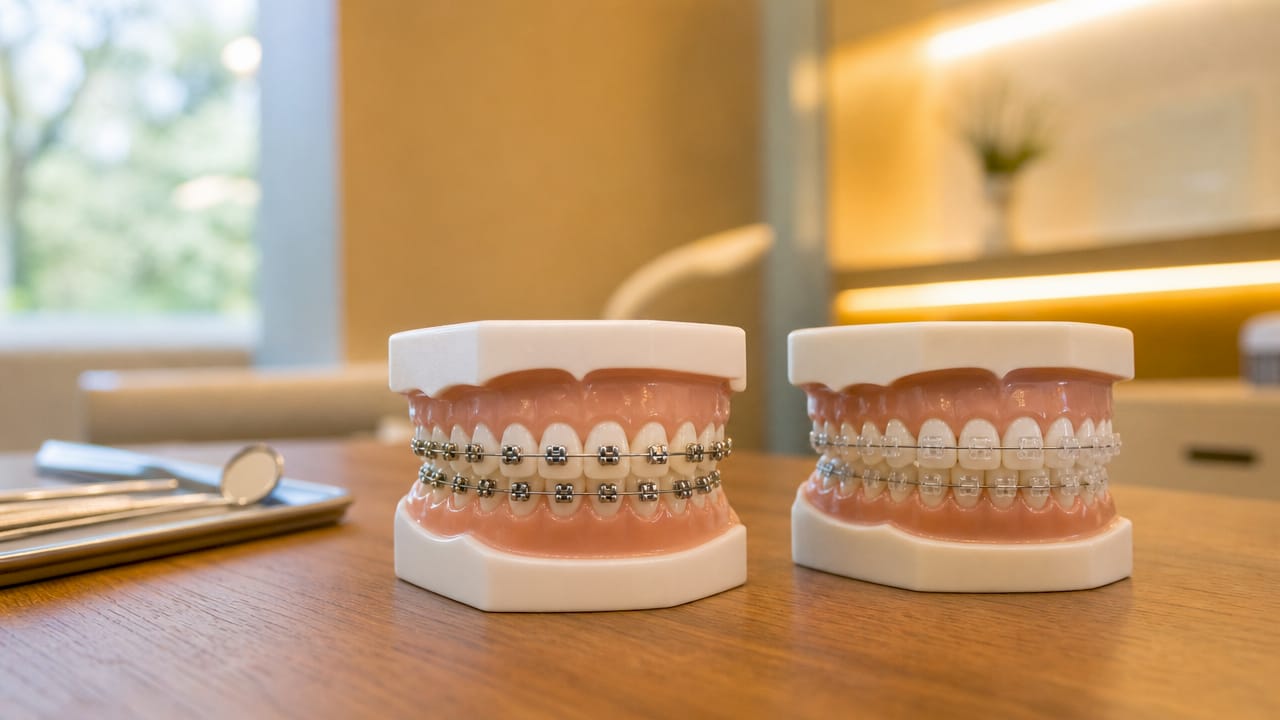
Metal brackets are made from medical-grade stainless steel. They are highly durable, resistant to chipping, and can withstand the strong forces needed to correct complex bite problems. That toughness is why orthodontists have relied on them for decades.
Ceramic brackets are made from polycrystalline alumina, a material engineered to blend with tooth enamel. They are more brittle than metal and more prone to chipping under heavy force. To compensate for that brittleness, ceramic brackets are built slightly larger than their metal counterparts.
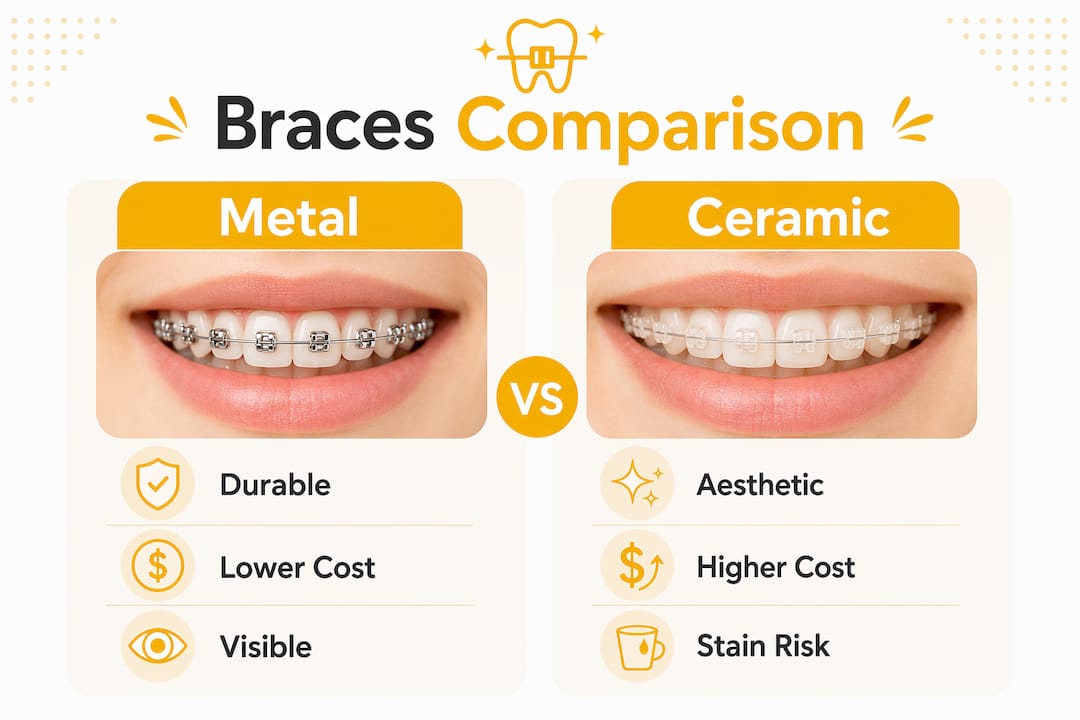
That size difference matters more than most parents expect. Ceramic brackets’ bulk results from structural design requirements, and it can cause increased soft tissue irritation during the first few weeks of treatment. Most patients adjust within a month, but younger children with lower pain tolerance may find the initial period harder with ceramic brackets.
Here is a quick breakdown of the core material differences:
- Stainless steel (metal): High fracture resistance, smaller bracket profile, silver appearance, lower cost
- Polycrystalline alumina (ceramic): Tooth-colored appearance, larger bracket size, more brittle, higher cost
- Elastic ties: Metal ties are metal colored and durable; ceramic ties are clear or white but stain easily from food and drink
- Archwires: Both types use the same metal archwires, so wire mechanics are identical
Pro Tip: Ask your orthodontist whether self-ligating ceramic brackets are available. They eliminate the elastic ties that stain, which is the biggest aesthetic drawback of standard ceramic braces.
How do metal and ceramic braces compare in treatment effectiveness?
Both systems move teeth using the same fundamental mechanics: brackets bonded to teeth, connected by an archwire that applies controlled pressure over time. The clinical outcome is equivalent for most cases.
| Factor | Metal braces | Ceramic braces |
|---|---|---|
| Treatment duration | 12–24 months (typical) | 12–24 months, sometimes 1–2 months longer |
| Case complexity | Handles severe cases well | Better suited for mild to moderate cases |
| Force tolerance | High | Moderate |
| Friction on wire | Lower | Slightly higher |
| Breakage risk | Very low | Low to moderate |
Treatment duration for both types averages 12–24 months, though ceramic braces may add 1–2 months in some cases due to slightly higher friction between the bracket and archwire. That extra friction slows tooth movement marginally. For most families, a month or two is not a dealbreaker, but it is worth knowing upfront.
Metal braces are recommended for complex cases because stainless steel withstands greater mechanical forces without risk of bracket failure. Severe crowding, significant overbites, and complex bite corrections all benefit from the added strength. Ceramic braces perform well for mild to moderate alignment issues, which covers the majority of teen orthodontic cases.
Patient compliance also shapes outcomes. With ceramic braces especially, consistent oral hygiene and avoiding staining foods directly affect how well treatment progresses. A teen who skips brushing or eats curry and coffee daily will face more maintenance visits and potentially longer treatment. Understanding how long braces last depends as much on patient behavior as on bracket material.
What are the cost differences between metal and ceramic braces?
Cost is one of the most practical factors for families, and the gap between the two options is real.
Metal braces average $3,000–$7,000 for a full treatment course. Ceramic braces run $4,000–$8,000 for the same treatment, depending on case complexity and the provider’s location. That means ceramic braces typically cost $1,000–$2,000 more than metal braces overall.
That price gap reflects the higher manufacturing cost of ceramic brackets and the more frequent maintenance they require. Elastic ties on ceramic braces stain from foods and drinks like coffee, curry, and red wine, requiring more frequent replacement visits to keep the braces looking clean. Those extra appointments add up over a 12–24 month treatment period.
A few other cost factors parents should account for:
- Insurance coverage: Many dental plans cover a fixed orthodontic benefit regardless of brace type, meaning you absorb the full cost difference out of pocket
- Geographic variation: Urban practices in major cities often charge at the higher end of both ranges
- Emergency visits: Ceramic brackets that chip or crack require repair visits that metal brackets rarely need
- Retainers: Post-treatment retainer costs are the same for both brace types
For a detailed breakdown of braces pricing in Langley, Gloworthodontics provides transparent cost information specific to the local market. Parents who want to compare the most affordable paths to straight teeth can also review cheapest braces options to understand where metal braces fit in the broader pricing picture.
What lifestyle and maintenance differences should parents expect?
Daily life with braces varies more between the two types than most families anticipate before treatment starts. Maintenance routines, food choices, and activity levels all interact differently with metal versus ceramic brackets.
-
Oral hygiene is more demanding with ceramic braces. Ceramic braces patients require more diligent oral hygiene to prevent staining of elastic ties and discoloration around brackets. Brushing after every meal is not optional with ceramic braces. It is the minimum standard.
-
Metal braces are easier to clean. Metal brackets and ties do not stain, so a standard twice-daily brushing routine with a floss threader is sufficient. The lower maintenance burden suits younger children who are still building hygiene habits.
-
Ceramic brackets cause more initial irritation. The larger bracket size means more contact with the inner cheeks and lips during the first few weeks. Orthodontic wax helps, but parents should prepare children for a longer adjustment period compared to metal.
-
Metal braces are the better choice for active kids. Metal braces resist fracturing under impact, making them the preferred option for children who play contact sports like hockey, football, or basketball. Ceramic brackets can chip or crack on impact, which means an emergency orthodontic visit and added cost. Pairing metal braces with a proper mouthguard for braces gives active kids the best protection.
-
Ceramic braces may require more frequent office visits. Clear elastic ligatures stain quickly and often need replacement between standard adjustment appointments to maintain appearance. Parents should factor in additional scheduling flexibility.
Pro Tip: If your teen chooses ceramic braces, have them rinse with water immediately after eating or drinking anything colored. It takes seconds and significantly reduces tie staining between appointments.
Knowing how to clean braces properly is the single most important skill for any patient with ceramic braces. The difference between a clean, white ceramic brace and a yellowed, stained one comes down entirely to daily habits.
Key Takeaways
Metal braces are the more durable, lower-cost option for complex cases, while ceramic braces offer better aesthetics at a higher price and maintenance commitment.
| Point | Details |
|---|---|
| Material and durability | Metal brackets are stainless steel and highly durable; ceramic brackets are polycrystalline alumina and more brittle. |
| Treatment timeline | Both types average 12–24 months; ceramic may add 1–2 months due to higher bracket friction. |
| Cost difference | Ceramic braces cost $1,000–$2,000 more than metal braces for a full treatment course. |
| Lifestyle fit | Metal braces suit active children and easier hygiene routines; ceramic braces require strict daily care to prevent staining. |
| Clinical priority | Case complexity should drive the final decision, not appearance preference alone. |
What I’ve learned after seeing hundreds of families choose between these two options
Parents almost always walk in asking about ceramic braces first. The appeal is obvious: less visible hardware, a more confident-looking teen. I understand that instinct completely. But the families who are happiest at the end of treatment are the ones who matched the brace type to their child’s actual life, not their ideal version of it.
Orthodontists prioritize clinical efficacy over aesthetics when selecting appliances, and that professional instinct is worth trusting. A ceramic brace on a 12-year-old who plays lacrosse three times a week and forgets to brush at night is a setup for stained brackets, chipped hardware, and frustrated parents. Metal braces on that same kid? Clean, durable, and done on schedule.
Ceramic braces genuinely shine for a specific patient: a mature teenager or young adult who is self-motivated about hygiene, not involved in contact sports, and genuinely bothered by the look of metal brackets. Patient maturity and compliance are the real deciding factors, not age alone. I have seen 14-year-olds who are perfect ceramic candidates and 17-year-olds who are not.
The other thing I tell parents: ceramic braces are less visible, not invisible. Up close, in photos, and under certain lighting, they are clearly there. If your teen’s goal is truly invisible orthodontic treatment, that conversation should shift toward clear aligner options entirely. Ceramic braces occupy a middle ground that works well when the expectations match reality.
— Juiced
How Gloworthodontics helps families choose the right braces
Choosing between metal and ceramic braces is easier with an orthodontist who takes the time to assess your child’s specific case, not just hand you a brochure.

Gloworthodontics offers personalized consultations for families in the Langley area, evaluating bite complexity, lifestyle factors, and budget before recommending a treatment path. The team works with both metal and ceramic braces and provides clear guidance on what daily maintenance looks like for each option. Families leave consultations knowing exactly what to expect, not guessing. For a thorough overview of what orthodontic treatment looks like for teens, the orthodontic care for teens guide covers everything from first consultation through retention. Book a consultation with Gloworthodontics to get a recommendation built around your child’s needs.
FAQ
What is the main difference between metal and ceramic braces?
Metal braces use stainless steel brackets and ceramic braces use tooth-colored polycrystalline alumina brackets. Both straighten teeth using the same wire mechanics, but ceramic brackets blend with tooth color and cost more.
Are ceramic braces as effective as metal braces?
Yes, ceramic braces are clinically effective for most cases. Metal braces are preferred for complex corrections because they withstand greater force without risk of bracket failure.
How much more do ceramic braces cost than metal braces?
Ceramic braces typically cost $1,000–$2,000 more than metal braces for a full treatment. Metal braces average $3,000–$7,000 and ceramic braces average $4,000–$8,000 depending on case complexity and provider.
Do ceramic braces stain?
The ceramic brackets themselves resist staining, but the elastic ties that hold the archwire stain easily from coffee, curry, and red wine. More frequent tie replacements are needed to keep ceramic braces looking clean.
Which braces are better for kids who play sports?
Metal braces are the better choice for children in contact sports. Ceramic brackets can chip or crack on impact, while metal brackets resist fracturing and reduce the risk of emergency orthodontic visits.