Oral Hygiene With Invisalign: Daily Care Guide
June 16, 2026
Oral Hygiene With Invisalign: Daily Care Guide
TL;DR:
- Maintaining proper oral hygiene with Invisalign involves consistent brushing, flossing, and cleaning aligners to prevent cavities and treatment delays. Proper cleaning of aligners with lukewarm water and soap, avoiding toothpaste and hot water, is essential to preserving their integrity and effectiveness. Regular habits such as brushing after meals, flossing daily, and avoiding eating or drinking with aligners reduce risks of staining, warping, and decay during treatment.
Oral hygiene with Invisalign is defined as the combined practice of brushing, flossing, and cleaning your aligners consistently to prevent cavities, plaque buildup, and treatment delays. Unlike traditional braces, Invisalign aligners sit directly against your teeth for 20–22 hours daily, creating a sealed environment where bacteria thrive if you skip even one cleaning step. The good news is that the routine is straightforward once you understand exactly what to do and why each step matters. This guide covers every daily habit, cleaning method, and common mistake you need to know to protect your teeth and keep your treatment on track.
What does oral hygiene with invisalign actually require?
Maintaining oral hygiene with Invisalign means more than brushing twice a day. The aligners create a biofilm-promoting environment against your enamel, so any food residue or bacteria trapped underneath accelerates decay. The core requirement is simple: clean your teeth before reinserting your aligners every single time you remove them.
Three non-negotiable daily habits form the foundation:
- Brush after every meal. Brushing after every meal and flossing daily are critical for cavity protection. Reinserting aligners over unbrushed teeth traps sugars and acids directly against enamel.
- Floss daily without exception. Tighter contact areas during orthodontic movement increase the risk of interdental decay, making flossing more important during Invisalign treatment than at any other time.
- Rinse your mouth and aligners with water every time you remove them. This removes loose debris before it has a chance to settle.
Alcohol-free mouthwash like Listerine Zero or ACT Anticavity Fluoride Rinse adds a useful layer of protection. Use it after brushing, never with aligners in. The alcohol in standard mouthwash can degrade the plastic over time.
Pro Tip: Keep a travel toothbrush and floss picks in your bag or car. If you eat lunch away from home, you have no excuse to skip the pre-reinsertion brush.
Food choices matter just as much as brushing. Eating or drinking with aligners in causes staining, warping, and traps sugars against enamel. Only plain water is safe to drink while wearing your trays. Everything else requires removal first. For a full breakdown of what you can safely eat during treatment, the Invisalign foods guide from Gloworthodontics covers the topic in detail.
How should you clean invisalign trays properly?
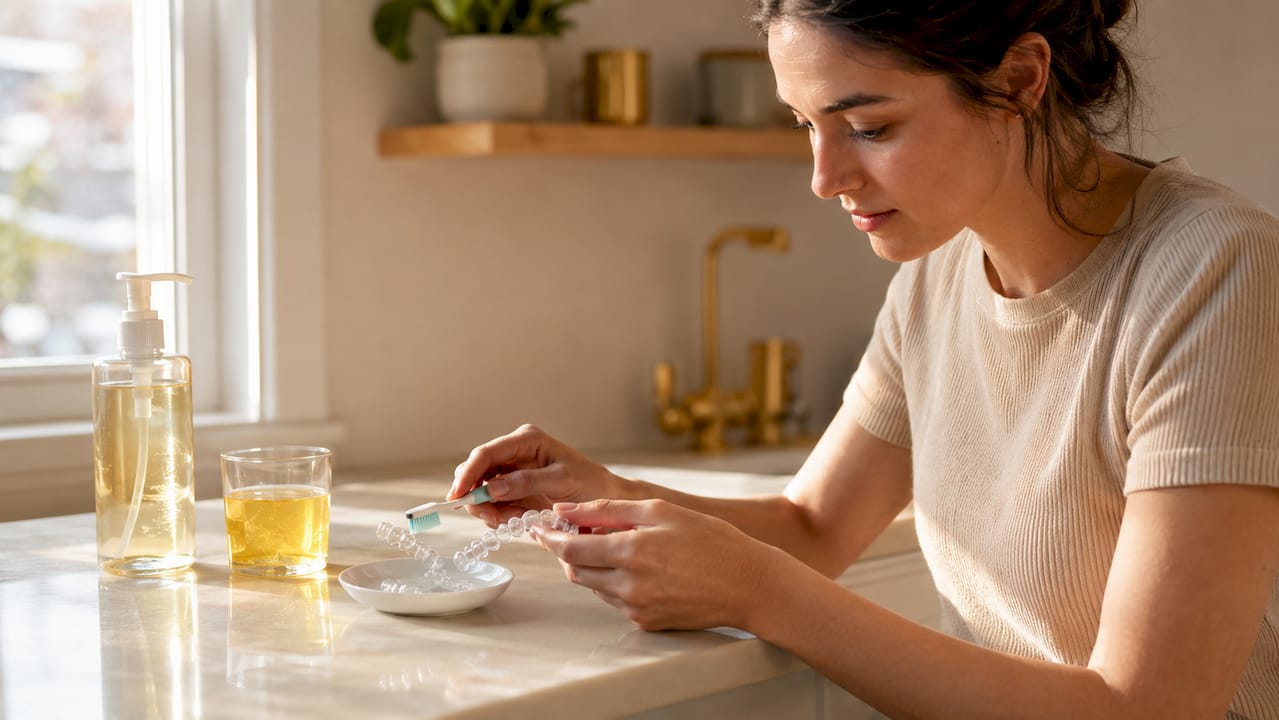
Cleaning your aligners is a separate task from cleaning your teeth, and most people get it wrong at first. The two biggest mistakes are using toothpaste and rinsing with hot water. Both damage the plastic in ways that hurt your hygiene and your treatment.
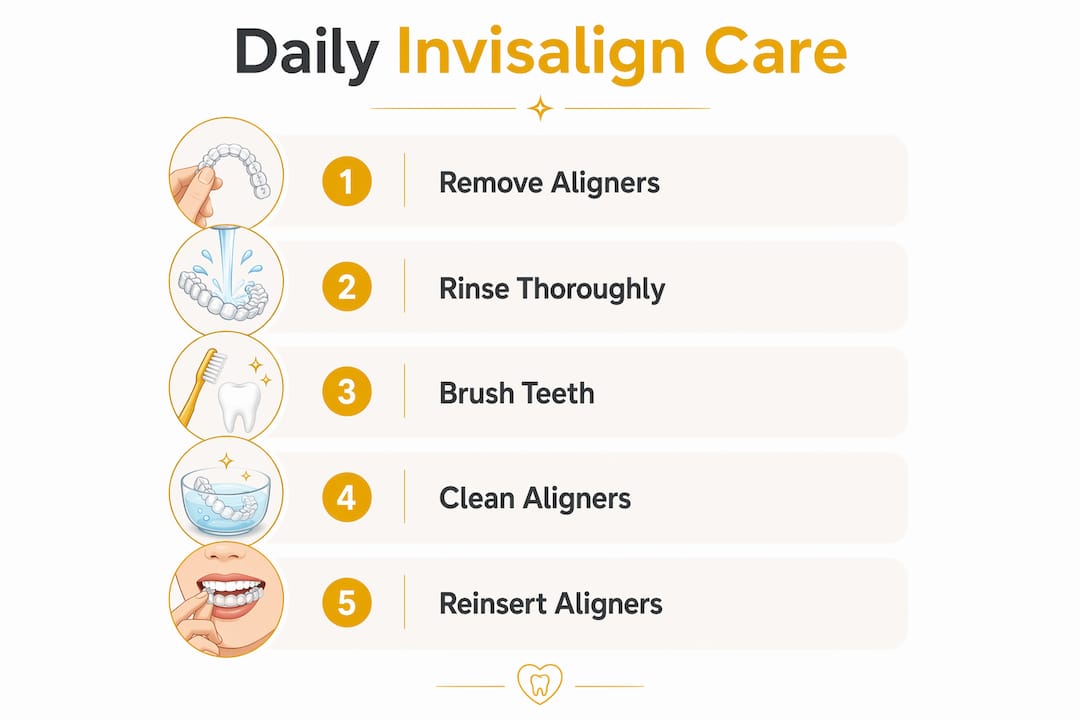
Follow this sequence every day:
- Remove aligners and rinse them immediately under lukewarm water. Hot water warps the plastic, permanently distorting the fit. Lukewarm is the ceiling.
- Brush aligners with a soft-bristled toothbrush and clear, unscented soap. Dish soap like Dawn Free and Clear works well. Avoid colored or scented varieties that leave residue.
- Skip the toothpaste entirely. Toothpaste abrasives scratch the plastic, creating microscopic grooves where bacteria adhere and the trays turn cloudy.
- Soak aligners in Invisalign cleaning crystals or a retainer cleaning tablet like Retainer Brite. Deep-clean frequency depends on the product, but once daily or several times per week is standard for most cleaning tablets.
- Rinse thoroughly after soaking before reinserting. Residual cleaning solution against your gums causes irritation.
The Gloworthodontics aligner cleaning guide walks through each of these steps with product-specific timing if you want more detail.
Pro Tip: Never wrap aligners in a napkin or paper towel when you remove them at a restaurant. They get thrown away constantly. Always use your aligner case.
Mechanical plaque removal through brushing and rinsing is more effective than soaking alone. Soaks dissolve early biofilm buildup, but they do not replace the physical scrubbing action of a brush. Think of soaking as a supplement, not a substitute.
What common mistakes damage your teeth during invisalign?
Most hygiene problems during Invisalign treatment come from a handful of predictable errors. Recognizing them before they become habits saves you from cavities, discolored trays, and extended treatment timelines.
- Drinking coffee, tea, or juice with aligners in. Colored and hot drinks stain the plastic and trap sugars against enamel. The damage happens faster than most people expect.
- Skipping brushing after a snack. Even a handful of crackers leaves fermentable carbohydrates on your teeth. Reinserting aligners over them creates a perfect decay environment.
- Using abrasive toothpaste on your trays. This is one of the most common Invisalign care mistakes and one of the easiest to avoid. Switch to soap.
- Neglecting to rinse aligners after removal. Dry saliva and food particles left on trays cause odor and cloudiness within days.
- Removing aligners too frequently. Dropping below the recommended wear time delays tooth movement and extends your overall treatment.
“Consistency in brushing, flossing, and rinsing is more important than any special cleaning trick.” — Historic Hyde Park Dentistry
One mistake that surprises many new Invisalign users is skipping flossing because their teeth feel fine. Aligners actively move teeth, which temporarily tightens contact points between them. That tightness traps food and plaque in spots your toothbrush cannot reach. Daily flossing is not optional during treatment. For a broader look at errors to watch for, the Gloworthodontics guide on common care mistakes covers additional scenarios worth reviewing.
If brushing immediately after eating is not possible, rinsing your mouth and aligners with water is an acceptable temporary measure. It reduces plaque accumulation until you can brush properly. Do not make it a permanent substitute.
Which tools and products best support invisalign care?
The right tools make the daily routine faster and more effective. You do not need an expensive kit, but a few specific products make a real difference.
| Cleaning Method | Best For | Key Limitation |
|---|---|---|
| Soft-bristled toothbrush + clear soap | Daily mechanical cleaning | Requires manual effort twice daily |
| Invisalign cleaning crystals | Dissolving biofilm and odor | Does not replace brushing |
| Retainer Brite tablets | Convenient weekly deep soak | Tablet cost adds up over time |
| Ultrasonic cleaner (e.g., iSonic) | Thorough cleaning with minimal effort | Higher upfront cost |
| Lukewarm water rinse | Quick removal of loose debris | Insufficient as sole cleaning method |
For daily oral care, a soft-bristled brush like the Oral-B Soft or Colgate Extra Soft paired with waxed floss or a Waterpik Water Flosser covers the basics well. Waxed floss slides more easily through tight contact points during treatment. A Waterpik is especially useful if you find traditional flossing difficult with aligners in and out multiple times a day.
Mouthwash options worth considering include ACT Anticavity Fluoride Rinse for decay prevention and TheraBreath Fresh Breath Oral Rinse for odor control. Both are alcohol-free, which protects your aligner material. For natural cleaning approaches, the Gloworthodontics guide on cleaning aligners naturally offers practical alternatives to commercial products.
Pro Tip: Tie your aligner cleaning to an existing habit. Clean your trays while you shower in the morning and while you brush your teeth at night. Attaching new habits to existing ones makes them stick.
The oral health mistakes most patients make with aligners often come down to product choice. Using the wrong cleaner once or twice will not ruin your trays. Using it every day for six months will.
Key takeaways
Consistent daily cleaning of both your teeth and aligners is the single most effective practice for protecting your oral health and treatment timeline during Invisalign.
| Point | Details |
|---|---|
| Brush before reinserting aligners | Clean teeth after every meal to prevent trapping bacteria under trays. |
| Use soap, not toothpaste, on trays | Toothpaste scratches plastic, causing cloudiness and bacterial adhesion. |
| Lukewarm water only for rinsing | Hot water permanently warps aligner fit; always use lukewarm or cool water. |
| Floss daily throughout treatment | Tooth movement tightens contact points, increasing interdental decay risk. |
| Wear aligners 20–22 hours daily | Dropping below this threshold delays tooth movement and extends treatment. |
What i’ve learned from watching patients succeed and struggle
The patients who finish Invisalign treatment on schedule almost always share one trait: they treat the hygiene routine as non-negotiable from day one. They do not wait until they see cloudiness or smell something off. They clean their trays every morning and every night, and they brush before reinserting after every meal. That sounds simple, but it requires real discipline when you are tired or in a hurry.
What surprises most new patients is how quickly the routine becomes automatic. The first two weeks feel awkward. By week four, most people do not think about it. The habit is just there.
The patients who struggle tend to rationalize small shortcuts. “I only had a coffee, I’ll skip the rinse.” “I’ll floss tonight instead of now.” Those shortcuts compound. A week of skipped flossing during active tooth movement is enough to start an interdental cavity in a vulnerable spot.
One thing I tell every Invisalign patient: if your trays are consistently cloudy despite daily cleaning, or if they smell despite rinsing, do not try to fix it with harsher products. Damaged or persistently cloudy aligners are a signal to contact your orthodontist. Harsh DIY fixes like bleach or boiling water cause more damage than the cloudiness itself.
The other thing worth saying plainly: Invisalign does not make oral hygiene harder than braces. It makes it more flexible. You can remove the trays, clean everything properly, and reinsert. That is a genuine advantage over fixed brackets and wires. Use it.
— Juiced
Start your invisalign treatment the right way

Good hygiene habits are easiest to build before treatment starts, not after problems appear. Gloworthodontics works with patients in Langley, British Columbia, to set up clear, personalized care routines from the first appointment. If you are considering Invisalign or already in treatment and want to make sure your hygiene plan is solid, the Invisalign treatment process guide from Gloworthodontics walks through every stage, including what to expect for oral care at each step. For families with teens in treatment, the orthodontic care for teens guide covers age-specific hygiene challenges worth knowing about. Book a consultation with Gloworthodontics to get a care plan built around your specific treatment timeline.
FAQ
How often should i clean my invisalign aligners?
Clean your aligners at least twice daily, morning and night, using a soft-bristled brush and clear soap. Supplement with a deep soak using cleaning crystals or tablets several times per week depending on the product instructions.
Can i drink water with invisalign aligners in?
Plain water is the only drink safe to consume while wearing aligners. All other beverages, including coffee, tea, and juice, should be consumed only after removing your trays.
What happens if i skip brushing before reinserting aligners?
Skipping brushing traps food particles and bacteria directly against your enamel under the aligner, accelerating plaque buildup and significantly increasing your cavity risk.
Why are my invisalign trays turning cloudy?
Cloudiness is caused by toothpaste abrasion, mineral deposits from tap water, or bacterial biofilm. Switch to clear soap for cleaning and use cleaning tablets regularly. If cloudiness persists, contact your orthodontist.
Does invisalign make flossing more important than usual?
Yes. Tooth movement during Invisalign treatment tightens the contact points between teeth, making interdental spaces harder to clean and more vulnerable to decay. Daily flossing is more critical during treatment than before it.