Orthodontic Retainers Explained: What You Need to Know
May 31, 2026
Orthodontic Retainers Explained: What You Need to Know
TL;DR:
- Retainers are essential for maintaining the results of orthodontic treatment by preventing teeth from shifting back. Different types suit various lifestyles, and lifelong wear, especially at night, significantly reduces relapse risk. Proper retention care and timely follow-up are crucial to preserving your smile’s stability long-term.
Most people celebrate the day their braces come off and assume the hard work is done. It isn’t. Orthodontic retainers explained properly reveal something most patients don’t hear clearly enough: without retention, teeth start shifting back almost immediately. Retainers are not an optional bonus step. They are the mechanism that preserves every month of treatment you just completed. This article covers how retainers work biologically, the main types available, how long you need to wear them, how to care for them properly, and what happens when you skip that step.
Key takeaways
| Point | Details |
|---|---|
| Retainers prevent relapse | Teeth naturally drift after treatment; retainers hold them while bone and tissue stabilize. |
| Multiple retainer types exist | Hawley, Essix, and fixed bonded retainers each serve different needs and lifestyles. |
| Wear time is lifelong | Full-time wear in year one transitions to nightly wear that ideally continues indefinitely. |
| Adherence dramatically cuts risk | Full-time wear during the first year reduces relapse odds by a striking margin (OR=0.070). |
| Care protects your investment | Daily cleaning and prompt replacement when fit changes protect your results long-term. |
Orthodontic retainers explained: how they work biologically
When braces or clear aligners finish moving your teeth, the surrounding bone and periodontal ligaments have not caught up. Think of the ligaments like stretched rubber bands attached to each tooth root. They hold a memory of where the teeth used to sit, and they will pull teeth back toward their original positions if nothing holds them in place.
This process is called orthodontic relapse, and it is not a sign that your treatment failed. It is simply biology. The bone around your teeth needs time to remodel and solidify around the new tooth positions. That process takes months to years, not weeks.
A retainer holds your teeth in the corrected position while that remodeling happens. It does not actively move teeth the way braces do. It simply prevents movement during the stabilization window. Retention biologically counteracts relapse by giving tissue the time it needs to set around your new alignment.
“Adherence to retainer regimens is the single most critical factor for long-term orthodontic stability.”
— BMC Oral Health, retrospective cohort study, 2026
The numbers behind this are striking. Research confirms that full-time wear in year one reduces relapse odds dramatically (OR=0.070, p<0.001), and patients who wear their retainers for over two years face a significantly lower relapse hazard (HR=0.231) compared to those who stop early. This isn’t a recommendation based on preference. It’s evidence.
Understanding the biology helps you take the retainer seriously, not as an inconvenience, but as the final and ongoing stage of your orthodontic treatment.
Types of orthodontic retainers and how to choose
There are three main categories of retainers, and each one suits a different patient profile. Knowing what separates them helps you and your orthodontist choose the option that fits your lifestyle and your treatment history.
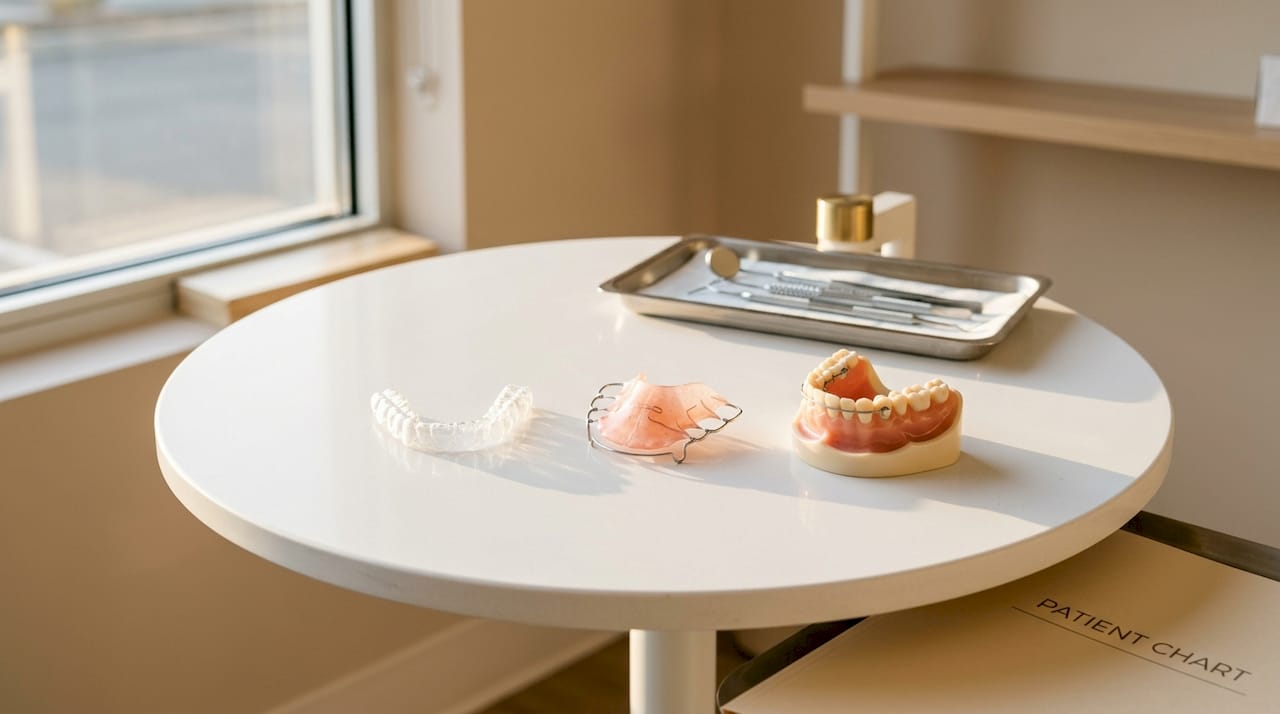
Hawley retainers
Hawley retainers use a metal wire that sits across the front teeth, anchored to an acrylic base that rests against the roof of the mouth or the lower gum line. They are the original retainer design and have been used for decades because they are durable and adjustable. If minor tooth movement occurs, an orthodontist can bend the wire slightly to compensate. Hawley retainers typically last five years or more with proper care, making them cost-effective over time.
Essix retainers
Essix retainers are the clear plastic trays that look nearly identical to Invisalign aligners. They fit snugly over the entire arch of teeth and are virtually invisible when worn. They are popular after Invisalign treatment since patients are already accustomed to wearing trays. The tradeoff is durability: clear retainers can crack or distort over time, especially if exposed to heat or worn while eating.
Fixed (bonded) retainers
Fixed retainers are thin wires bonded directly to the back surfaces of the front teeth. They are invisible from the outside and require zero daily compliance, since they never come out. They are particularly well-suited for patients who have a history of forgetting to wear removable devices. The main challenge is oral hygiene: flossing requires a floss threader or a water flosser to get beneath the wire.
Comparison at a glance
| Feature | Hawley | Essix (Clear) | Fixed (Bonded) |
|---|---|---|---|
| Visibility | Visible wire | Nearly invisible | Invisible (behind teeth) |
| Durability | High (5+ years) | Moderate (2-3 years) | Long-term if intact |
| Compliance needed | Yes | Yes | No |
| Adjustable | Yes | No | No |
| Flossing ease | Easy | Easy | Requires threading |
| Best for | Active patients needing durability | Invisalign patients, aesthetics | Low-compliance risk patients |
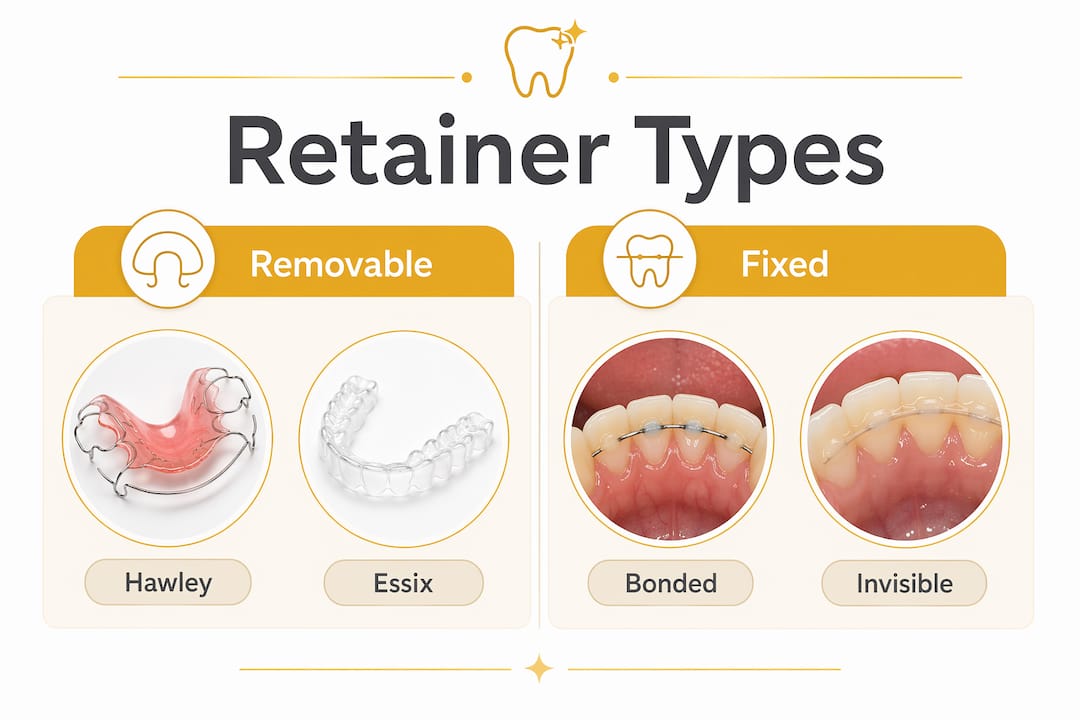
You can also explore a detailed breakdown of removable vs. fixed options to see how each type fits different orthodontic situations and patient needs.
Pro Tip: If you’re a parent choosing retainers for a child or teen, Essix trays can work well for kids who are responsible and organized. For younger patients or those who tend to lose things, a fixed retainer removes the compliance variable entirely. Check out retainer options for kids for age-specific guidance.
How long you need to wear retainers
This is where most patients get surprised. There is no defined endpoint after which you can safely stop wearing your retainer forever. Teeth continue to shift gradually throughout adult life, driven by normal forces like chewing, speech, and even sleep position.
Here is what a typical retention schedule looks like after treatment:
- Months 1 through 6: Wear your retainer full-time, removing it only to eat and brush. This is the highest-risk window for relapse because bone remodeling is most active.
- Months 6 through 12: Your orthodontist may clear you to transition toward night-time only wear, depending on how stable your teeth look at check-ups.
- Year two and beyond: Nightly wear becomes the long-term standard. Lifelong night-time use is the best defense against gradual adult shifting.
- Long-term maintenance: Continue seeing your orthodontist or dentist periodically to check retainer fit and condition. Retainers degrade silently, and a retainer that looks fine may no longer be doing its job.
The data backs up the indefinite approach. Patients who wear retainers for over two years post-treatment show significantly lower relapse rates than those who stop after year one. Missing even a few nights per week over time adds up.
For practical tips on making nightly wear a sustainable habit, the guide on wearing retainers at night covers compliance strategies that actually work.
Pro Tip: Set your retainer case next to your toothbrush so putting it in becomes as automatic as brushing. Habit stacking is one of the most reliable ways to maintain nightly wear without having to think about it.
Caring for your retainer the right way
A retainer that isn’t properly maintained loses its effectiveness faster, and a damaged retainer that still gets forced in can actually make your alignment worse. Here’s what proper care looks like day to day.
- Clean removable retainers daily using a soft-bristled toothbrush and mild dish soap or a non-abrasive retainer cleaner. Toothpaste is slightly abrasive and can scratch clear plastic over time, creating grooves where bacteria collect.
- Keep retainers away from heat. Never leave a clear retainer in a hot car, in direct sunlight, or near hot water. Heat warps the plastic and changes the fit.
- Use a floss threader or water flosser if you have a fixed retainer. Flossing is more challenging with bonded wires, but skipping it creates tartar buildup directly around the retainer wire, which threatens both gum health and retainer integrity.
- Store removable retainers in their case when not in your mouth. The number one way retainers get damaged or lost is by being wrapped in a napkin at a restaurant.
- Know the replacement timeline. Retainers typically last two to five years before they need replacing, even with good care. Budget for periodic replacement as part of your overall orthodontic aftercare plan.
- Watch for fit changes. If your retainer feels tighter than usual or doesn’t fully seat without pressure, that is an early sign of tooth movement. Do not force a poorly fitting retainer into place. Forcing it can damage teeth or worsen alignment. Contact your orthodontist promptly.
Pro Tip: Order a backup retainer at the same time as your original. Having a backup eliminates the gap that happens when a retainer is lost or breaks and you’re waiting for a replacement. Even a few weeks without retention can cause noticeable shifting.
Benefits of consistent wear and consequences of neglect
Wearing your retainer consistently protects more than just the aesthetic result of your treatment. Here’s what you stand to gain, and what you risk losing.
What consistent retainer wear gives you:
- Long-term smile stability without the need for retreatment
- Protection of the financial investment you made in braces or aligners
- Reduced crowding, which makes teeth easier to clean and supports gum health
- Confidence knowing your result is being actively maintained
What happens without a retainer:
- Teeth begin shifting within weeks of stopping wear, especially the front teeth
- Lower front teeth are among the most prone to crowding relapse, even in adults
- Moderate to severe relapse may require full retreatment with braces or aligners
- Retreatment costs significantly more than replacement retainers
“A comprehensive aftercare protocol includes risk-based monitoring, early intervention for minor relapse, and routine retainer replacement planning.”
— American Aligner Society, Official Guide to Orthodontic Aftercare
If you notice your retainer fitting tighter after a break, don’t panic. Minor relapse caught early can sometimes be corrected conservatively. Understanding orthodontic relapse causes helps you recognize warning signs before the shift becomes significant.
My honest take on retention and why patients get it wrong
I’ve seen patients go through 18 months of treatment, do everything right, and then gradually abandon their retainer because life got busy. Six months later, they’re back, frustrated that their teeth have shifted. That pattern is more common than most people realize, and it usually comes from the same misunderstanding: the idea that the retainer is temporary.
Here’s what I believe after years of seeing this play out. Retention isn’t a phase. It’s the permanent maintenance mode that protects everything you worked for. We don’t hesitate to maintain our cars, our homes, or our health routines indefinitely. Wearing a retainer for a few minutes each night deserves the same framing.
The behavioral challenge is real. Compliance drops sharply after the first year because patients feel fine and assume the work is done. But feeling fine and being stable are not the same thing. Teeth can shift slowly without any discomfort at all.
Choosing the right retainer from the beginning matters more than most people think. When a patient is matched with a retainer that fits their lifestyle, rather than just whatever is easiest to prescribe, long-term adherence goes up. If someone hates the way a removable retainer feels, a fixed one removes the daily decision entirely. That’s not a shortcut. That’s smart treatment planning.
The bottom line: approach retention as an investment in the result you already paid for, and you’ll wear your retainer. Treat it as optional, and you’ll likely be back for retreatment.
— Juiced
How Glow Orthodontics helps with retainer care

At Gloworthodontics, retention is treated as a core part of every patient’s orthodontic experience, not an afterthought. Whether you’re finishing active treatment or coming in as a new patient who has already had braces, the team works with you to find the retainer type that fits your life. That means a proper fitting, a clear wear schedule, and follow-up appointments to catch any changes early. Parents looking for age-appropriate guidance can explore the teen orthodontic care guide for a complete overview of what post-treatment care looks like for younger patients. Ready to get started? Contact Gloworthodontics to book a retainer consultation and protect the smile you worked hard to achieve.
FAQ
What are orthodontic retainers and why are they needed?
Orthodontic retainers are custom devices worn after braces or aligners to hold teeth in their corrected positions while bone and ligaments stabilize. Without them, teeth naturally drift back toward their original positions.
How long do you have to wear a retainer after braces?
Most patients wear retainers full-time for the first six to twelve months, then transition to nightly wear. Long-term nightly use is recommended indefinitely to prevent gradual adult shifting.
What is the best type of retainer?
The best retainer depends on your lifestyle and compliance history. Essix trays suit patients who want discretion; Hawley retainers offer durability; fixed bonded retainers work best for patients who struggle with consistent removable wear.
How do you clean a retainer properly?
Clean removable retainers daily with a soft toothbrush and mild soap. Avoid heat, abrasive toothpaste, and leaving them unprotected outside their case. Fixed retainers require a floss threader or water flosser for thorough cleaning around the wire.
What happens if your retainer no longer fits?
If your retainer feels tight or doesn’t seat fully, it likely means some tooth movement has occurred. Do not force it in. Contact your orthodontist for a professional assessment before the shift progresses further.