Retainers After Treatment: Your Complete Care Guide
June 19, 2026
Retainers After Treatment: Your Complete Care Guide
TL;DR:
- Retainers are custom devices that maintain teeth alignment after orthodontic treatment and prevent relapse. They require consistent wear, with full-time use for several months followed by lifelong nightly wear to ensure stability. Proper cleaning, prompt replacement when damaged, and adherence to personalized advice are essential for long-term orthodontic retention.
A retainer is a custom orthodontic device that holds your teeth in their corrected positions after braces or Invisalign, preventing the natural shifting that begins the moment active treatment ends. Retainers after treatment are not optional follow-up gear. Retention is the most critical phase of orthodontic therapy, converting a temporary result into a permanent smile. Without consistent wear, your teeth will drift back toward their original positions due to periodontal fiber memory and ongoing jaw development. This guide covers how long to wear your retainer, which type suits you best, how to clean it properly, and what to do when something goes wrong.
How long should you wear retainers after treatment?
The standard wear schedule for post-treatment retainers has two phases. The first phase runs for roughly 4–12 months after your braces or aligners come off. During this window, most orthodontists prescribe full-time wear, meaning 20–22 hours per day. Your teeth are most vulnerable to shifting in this period because the bone and soft tissue around them are still stabilizing.
The second phase is nighttime-only wear. Once your orthodontist confirms your teeth have stabilized, you transition to wearing your retainer only while you sleep. Most orthodontists recommend lifelong nightly wear to prevent age-related tooth shifting. This recommendation applies even to people who never had orthodontic treatment, because late mandibular crowding is a biological reality, not a treatment side effect.
Pro Tip: Set a phone alarm labeled “retainer in” for 30 minutes after your usual bedtime. Patients who tie retainer wear to an existing habit, like brushing teeth, are far more consistent than those who rely on memory alone.
| Phase | Duration | Daily wear hours |
|---|---|---|
| Active retention | 4–12 months post-treatment | 20–22 hours |
| Maintenance | Ongoing, lifelong | Nightly only |
| After a break | Restart full-time until fit normalizes | 20–22 hours |
Younger patients and those with higher relapse risk, such as those who had significant crowding or spacing, may need to stay in full-time wear longer before transitioning. Your orthodontist sets that timeline based on your specific case.
What are the different types of retainers?
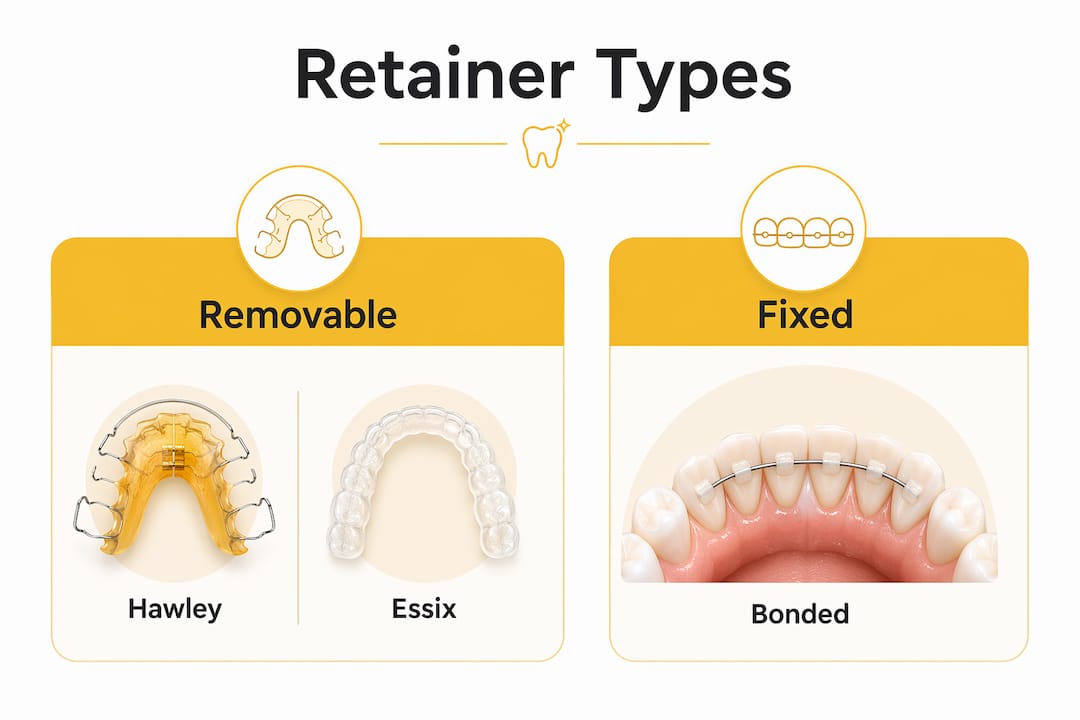
Three main retainer types exist: Hawley, Essix (clear), and bonded (fixed). Each has real trade-offs, and not every patient needs the same retainer after braces. Selection depends on your periodontal health, age, relapse risk, and lifestyle.
Hawley retainers
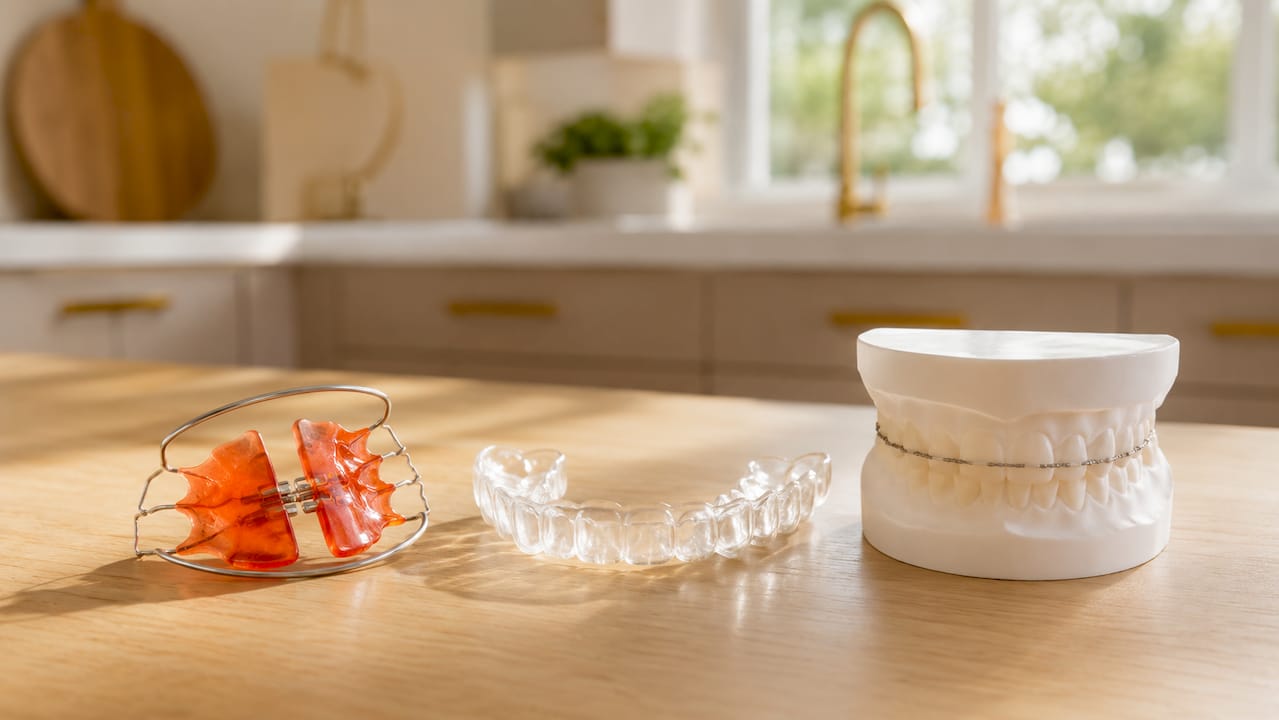
A Hawley retainer is a wire-and-acrylic device that sits against the roof of your mouth or tongue-side of your lower teeth. It is durable, adjustable, and lasts 5–10 years with proper care. The visible wire across the front teeth is the main aesthetic drawback. Hawley retainers work well for patients who need minor adjustments post-treatment or who have a history of grinding.
Essix (clear) retainers
Essix retainers are thin, clear plastic trays that fit over your teeth. They are nearly invisible and the most popular choice for adults. With proper retainer care, Essix retainers last 2–3 years. Improper care, such as using hot water or toothpaste, shortens that lifespan to 12–18 months. They are not adjustable, so any significant tooth movement requires a new tray.
Bonded (fixed) retainers
A bonded retainer is a thin wire cemented to the back of your front teeth. You cannot remove it, which eliminates compliance issues entirely. Fixed retainers are ideal for patients with high relapse risk or those who struggled with consistent wear during active treatment. The downside is that flossing requires a floss threader, and the wire can break if you bite into hard foods.
| Retainer type | Visibility | Lifespan | Compliance required | Best for |
|---|---|---|---|---|
| Hawley | Visible wire | 5–10 years | Yes | Durability, adjustability |
| Essix (clear) | Nearly invisible | 2–3 years | Yes | Aesthetics, adults |
| Bonded (fixed) | Not visible | 5–10 years | No | High relapse risk |
For a deeper look at how these options compare clinically, the types of dental retainers guide from ClearRetain covers material differences and maintenance in detail. You can also explore removable vs. fixed retainers through Gloworthodontics for a patient-focused breakdown.
How to clean your retainer and make it last
Daily retainer care is straightforward, but the wrong habits destroy retainers faster than anything else. Rinse your retainer with cool water every time you remove it. Wash it with a small amount of mild, unscented soap and a soft toothbrush. That routine takes 60 seconds and removes the bacteria and plaque that cause odor and buildup.
Four things you must never do:
- Use hot water. Heat warps plastic retainers permanently.
- Use toothpaste. Toothpaste is abrasive and scratches Essix trays, creating grooves where bacteria hide.
- Put it in the dishwasher. The heat and pressure will destroy the fit.
- Soak it in alcohol-based mouthwash. Alcohol degrades the plastic over time.
For weekly deep cleaning, use specialized retainer cleaning tablets such as Retainer Brite or Polident. Drop one tablet in a glass of cool water, soak your retainer for 15–20 minutes, then rinse thoroughly. Patients in hard water areas face a specific problem: calcium buildup accumulates faster on retainer surfaces. Ultrasonic cleaning is effective and non-damaging for long-term maintenance in those cases. An ultrasonic cleaner uses sound waves to dislodge deposits without scrubbing.
Pro Tip: Clean your retainer case just as often as the retainer itself. A dirty case recontaminates a clean retainer immediately. Wash the case with soap and water weekly, and let it air dry completely before closing it.
Signs your retainer needs replacing: visible cracks or chips, a persistent odor that cleaning does not remove, visible warping or a change in fit, and discoloration that does not clear up. If you notice any of these, contact your orthodontist rather than continuing to wear a compromised appliance.
For guidance on cleaning clear plastic dental appliances more broadly, the aligner cleaning guide from Gloworthodontics applies directly to Essix retainer maintenance.
What should you do if your retainer feels tight?
A tight retainer almost always means your teeth have shifted. This happens most often after a period of inconsistent wear, even a few days without your retainer can allow measurable movement. The tightness you feel is your retainer pushing against teeth that have drifted from their corrected positions.
Here is what to do and what to avoid:
- Do not force the retainer onto your teeth. Forcing a tight retainer risks cracking the appliance and putting damaging stress on your teeth and roots.
- Try wearing it for short periods. If the retainer seats with mild pressure but no sharp pain, wear it for a few hours to see if the fit improves over 24–48 hours.
- Contact your orthodontist promptly. If the retainer does not seat comfortably within a day or two, call your provider.
“If teeth have shifted noticeably, retainers cannot correct them. Active orthodontic intervention is required.” — Nipissing Dental
This is the point most patients miss. A retainer holds teeth in place. It is not designed to move them. If the shift is significant, you may need a new set of aligners, a revised retainer, or a short course of orthodontic relapse treatment. The sooner you act, the less intervention you will need. Waiting weeks or months turns a minor correction into a major one.
Common mistakes that undermine long-term retention
Retention is a permanent lifestyle commitment, not a temporary phase you graduate from. The most common mistake patients make is treating retainer wear as optional once their teeth look stable. Teeth continue shifting throughout life due to aging, jaw changes, and periodontal fiber tension. Stopping retainer wear at any point creates relapse risk.
The second most common mistake is losing the retainer. The napkin trap is the leading cause of lost retainers: patients wrap their retainer in a napkin during a meal and it gets thrown away. The fix is simple. Always use a hard-shell retainer case. Keep a spare case at work, school, or in your bag.
Pro Tip: If you miss a night of wear, do not skip the next night to “make up” for it. Just resume your normal schedule. Consistency over months matters far more than perfection on any single night.
Additional habits that protect your results long-term:
- Schedule retainer check-ups every 12 months so your orthodontist can catch fit changes early.
- Replace Essix retainers on schedule, typically every 2–3 years, rather than waiting until they fail.
- If you grind your teeth at night, tell your orthodontist. A night guard may be more appropriate than a standard Essix retainer.
- Consistent retainer wear must be treated like professional sports equipment care: skip the routine and the results deteriorate fast.
Understanding the benefits of wearing retainers at night and building a reliable routine around sleep is the single most effective long-term strategy for protecting your smile.
Key takeaways
Retention is a lifelong commitment, and the patients who protect their results longest are those who treat retainer wear as a permanent habit, not a temporary inconvenience.
| Point | Details |
|---|---|
| Wear schedule matters | Full-time wear for 4–12 months post-treatment, then nightly for life. |
| Retainer type is personal | Hawley, Essix, and bonded retainers each suit different risk profiles and lifestyles. |
| Cleaning method is critical | Use cool water and mild soap daily; avoid hot water, toothpaste, and alcohol-based products. |
| Tight fit needs attention | A tight retainer signals tooth shifting; contact your orthodontist rather than forcing it. |
| Consistency beats perfection | Missing one night matters less than abandoning the habit; resume immediately and stay consistent. |
Why retention deserves more respect than it gets
Most patients treat the day their braces come off as the finish line. I understand why. You have invested months or years in treatment, and seeing your straight smile for the first time feels like the end of the process. But from a clinical standpoint, that day is the beginning of the most important phase.
What I have seen repeatedly is that patients who skip retainer wear for even a few weeks in the first year after treatment often end up with noticeable shifting by year two. The biology does not care how long you wore braces. Periodontal fibers have memory, and they pull teeth back toward their pre-treatment positions unless you counteract that force consistently.
The other thing I want to push back on is the idea that one retainer type works for everyone. A teenager with high relapse risk and a 45-year-old adult with stable bone density need completely different retention strategies. Individualized retainer selection is not a luxury. It is the difference between a result that lasts five years and one that lasts a lifetime.
My practical advice: build retainer wear into your bedtime routine the same way you build in brushing. Make it automatic. The patients who succeed long-term are not the ones with the most willpower. They are the ones who made the habit invisible.
— Juiced
Protect your smile with Gloworthodontics

Completing orthodontic treatment is a major achievement, and Gloworthodontics is here to make sure your results last. The team at Gloworthodontics provides personalized retainer consultations to determine the right type and wear schedule for your specific case, whether you finished braces, Invisalign, or ClearCorrect. Regular follow-up appointments catch fit changes early, before minor shifting becomes a bigger problem. If you are a parent navigating post-treatment care for your teen, the orthodontic care guide for teens is a practical starting point. Book a retainer check-up with Gloworthodontics in Langley, BC, and keep your smile exactly where it belongs.
FAQ
How long do you have to wear a retainer after braces?
Most orthodontists recommend wearing a retainer full-time for 4–12 months after braces, then nightly for life. Stopping retainer wear at any point creates a risk of tooth shifting due to natural biological forces.
How often should you clean your retainer?
Clean your retainer every day with cool water and mild soap. Do a deeper clean with retainer cleaning tablets once per week to remove buildup and prevent odor.
Can a retainer fix teeth that have shifted after treatment?
No. A retainer holds teeth in place but cannot move them back if significant shifting has occurred. Noticeable tooth movement requires active orthodontic intervention, not just retainer wear.
What is the difference between a fixed and removable retainer?
A fixed retainer is bonded to the back of your teeth and requires no compliance effort, while a removable retainer like a Hawley or Essix tray must be worn consistently by the patient. Fixed retainers are better for high-relapse-risk patients; removable retainers offer easier cleaning and flexibility.
How do you know when a retainer needs to be replaced?
Replace your retainer when you notice cracks, warping, a persistent odor that cleaning does not resolve, or a change in fit. Essix retainers typically last 2–3 years with proper care and should be replaced on schedule rather than worn until they fail.