Scheduling Orthodontic Appointments: A Parent’s Guide
June 8, 2026
Scheduling Orthodontic Appointments: A Parent’s Guide
TL;DR:
- Scheduling orthodontic appointments involves careful planning of each visit type and timing to ensure optimal treatment outcomes for your child. Understanding and booking the right duration for consultations, adjustments, and other procedures helps minimize disruptions to family and school life. Modern clinics utilize AI scheduling and flexible options, making coordination easier and reducing missed appointments.
Scheduling orthodontic appointments means booking the right type of visit, at the right time, with the right preparation to keep your child’s treatment on track. Most parents underestimate how much the timing and sequencing of appointments affects outcomes. A missed adjustment or a rushed initial consultation can add months to treatment. This guide covers every appointment type your child will need, how to fit visits around school and family life, and how modern tools like AI scheduling portals make the process faster and less stressful for busy families.
What types of orthodontic appointments should parents expect?
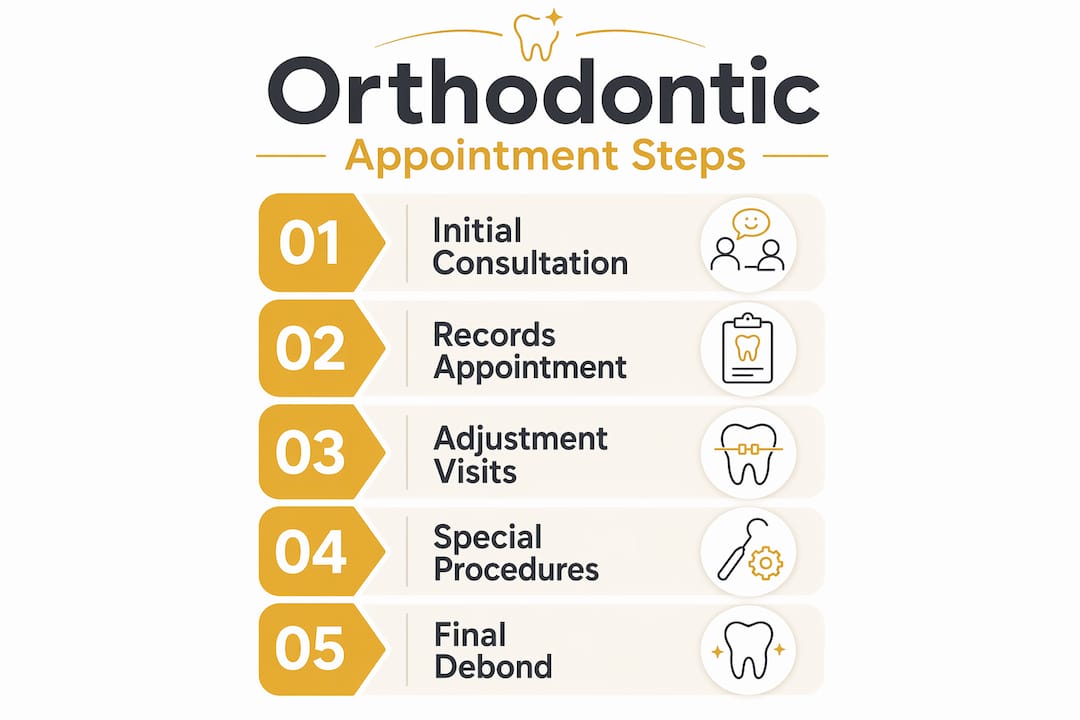
Orthodontic visit planning starts with understanding that not all appointments are the same length or purpose. Each visit type has a distinct role in the treatment timeline, and knowing the difference helps you plan your calendar without surprises.
The initial intake consultation typically runs 60 to 90 minutes. This visit includes a full clinical examination, diagnostic imaging such as X-rays and photographs, and a detailed records review. It is the most time-intensive appointment in the entire treatment process, and it sets the foundation for every decision that follows. Rushing this visit leads to misdiagnosis and complications down the line.
After the consultation, a separate records appointment is often scheduled, running 30 to 45 minutes. This is where impressions, scans, or additional imaging are collected. Once treatment begins, the bonding appointment, where braces are placed or aligners are fitted, takes 1 to 2 hours. Routine adjustment visits are the shortest, typically 15 to 30 minutes, and occur every 6 to 10 weeks throughout active treatment.
| Appointment type | Typical duration | Primary purpose |
|---|---|---|
| Initial consultation | 60–90 minutes | Examination, imaging, treatment planning |
| Records appointment | 30–45 minutes | Impressions, scans, diagnostic records |
| Bonding/fitting | 1–2 hours | Placing braces or fitting aligners |
| Adjustment visit | 15–30 minutes | Wire changes, aligner progression checks |
| Debond and retainer | 60–90 minutes | Removing appliances, fitting retainers |
| Retainer check | 15–20 minutes | Monitoring retention and compliance |
Pro Tip: When making an orthodontic appointment, ask the front desk for the exact chair time for each visit type. Clinics vary, and knowing the duration in advance lets you plan school pickups, work schedules, and transportation without last-minute scrambling.
Understanding these categories also helps you advocate for your child. A thorough first visit reduces the risk of treatment complications and improves overall satisfaction. Do not let a clinic book your child’s initial consultation into a 30-minute slot.
How to schedule orthodontic appointments around family and school commitments
The biggest challenge most parents face is not finding a clinic. It is finding appointment times that do not require pulling a child out of school repeatedly or rearranging work schedules every six weeks. Orthodontic treatment typically spans 18 to 24 months, which means you will manage dozens of visits over that period.

Many orthodontic practices now offer evening hours, Saturday appointments, and virtual initial consultations specifically to address this problem. A virtual orthodontic consultation booking lets you complete the first conversation with the orthodontist from home, saving the longer in-person records visit for a time that works better. This is especially useful for parents evaluating multiple clinics before committing.
Here are practical scheduling tips for busy families:
- Book adjustment appointments in advance. At the end of each visit, schedule the next one before you leave. Clinics fill their most convenient time slots weeks ahead.
- Use school breaks strategically. Plan bonding appointments and debonds during spring break, winter break, or professional development days when missing school is not an issue.
- Group siblings consecutively. Clinics often accommodate back-to-back sibling appointments, cutting your total trips to the office in half.
- Request early morning or late afternoon slots. These slots minimize school absence and are often available for families who ask specifically.
- Confirm cancellation policies upfront. Knowing the 24-hour or 48-hour cancellation window lets you swap appointments when school events conflict without incurring fees.
- Ask about flexible orthodontic appointment scheduling for families. Many clinics have a dedicated family coordinator who can block recurring time slots for the duration of treatment.
Communication with the clinic is the most underused tool parents have. A single conversation with the scheduling coordinator, explaining your family’s constraints, often unlocks options that are never advertised on the website.
How does technology improve orthodontic appointment scheduling?
Generic scheduling software fails orthodontic practices because orthodontic appointments require provider-specific time blocks and buffer management that standard tools cannot handle. A bonding appointment cannot be booked into the same slot type as a 15-minute adjustment. Clinics that use specialized orthodontic appointment schedulers avoid double-booking and reduce the chair time gaps that cost practices revenue.
The most significant development in recent years is AI-powered scheduling. An AI scheduling system can book appointments 24/7 through phone, text, and online portals, syncing instantly with the practice management system for real-time accuracy. For parents, this means you can book your child’s next adjustment at 10 p.m. on a Sunday without waiting for the office to open Monday morning.
The missed call problem is larger than most parents realize. Approximately one-third of all calls to orthodontic offices go unanswered during peak hours, and 80% of those missed callers are trying to book appointments. That means a significant portion of families trying to schedule are simply not getting through. Clinics that use dedicated answering services or AI receptionists recover those missed bookings and convert them into confirmed appointments.
Automated reminders, waitlist management, and cancellation handling are additional features that reduce no-shows and keep your child’s treatment moving forward. When a cancellation opens up, a waitlist system can notify you immediately, letting you grab an earlier slot without calling the office.
Pro Tip: When choosing a clinic, ask whether they offer real-time online booking and automated reminders. A clinic with a modern orthodontic appointment scheduler signals that they take patient experience seriously, not just clinical outcomes.
Step-by-step guide to booking your child’s first orthodontic appointment
Follow this process to move from first inquiry to confirmed appointment without confusion or delays.
- Identify the right appointment type. For a new patient, this is always the initial consultation. Do not book a records appointment or a treatment visit before the consultation is complete.
- Gather the information you need before calling. Have your child’s dental insurance card, the name of their general dentist, and a brief summary of any previous orthodontic evaluations ready. Clinics ask for this at booking.
- Use the clinic’s online portal or call during off-peak hours. Mid-morning on Tuesday, Wednesday, or Thursday tends to have shorter hold times than Monday mornings or Friday afternoons.
- Ask about the consultation process in detail. Confirm whether the initial visit includes imaging, how long it runs, and whether a treatment plan is presented the same day.
- Schedule the records appointment at the same time if possible. Some clinics combine consultation and records into one visit. Others separate them. Knowing this upfront prevents a scheduling gap that delays treatment start.
- Prepare your child before the visit. Review what to expect together. The preparation guide for braces from Glow Orthodontics covers exactly what children and parents should know before walking in.
- Confirm the appointment details 48 hours in advance. Verify the time, location, and any pre-visit instructions such as brushing before arrival or bringing previous dental records.
- Plan follow-up appointments at the end of each visit. The best time for orthodontic appointments is the one you book before leaving the office, not the one you try to find three weeks later when the schedule is full.
The entire process from first call to confirmed consultation can take as little as one phone call if you are prepared. High-performing orthodontic clinics use structured consultation pipelines with clear preparation instructions, which means the intake process is faster and less stressful for families who arrive ready.
Key takeaways
Effective scheduling orthodontic appointments requires knowing your appointment types, planning around your family calendar, and choosing a clinic with modern booking tools that work for you.
| Point | Details |
|---|---|
| Know your appointment types | Initial consultations run 60 to 90 minutes; adjustments run 15 to 30 minutes. Plan accordingly. |
| Book follow-ups before leaving | Scheduling the next visit at checkout secures the best time slots before they fill. |
| Use flexible scheduling options | Evening, weekend, and virtual consults reduce school absences and scheduling conflicts. |
| Choose tech-enabled clinics | AI scheduling portals and automated reminders reduce missed appointments and no-shows. |
| Prepare before you call | Having insurance details and dental history ready speeds up the booking process significantly. |
What most parents get wrong about orthodontic scheduling
Parents consistently underestimate the planning required for a treatment that spans nearly two years. The initial consultation gets booked carefully. Then the follow-up system falls apart because no one told them that adjustment slots fill weeks in advance at most clinics.
The second mistake is treating every appointment as interchangeable. A 15-minute adjustment and a 90-minute bonding visit are not the same logistical challenge. Parents who plan for the wrong duration end up late, stressed, or pulling their child out of an important class at the wrong time.
What I have seen work consistently is treating the orthodontic schedule like a recurring commitment from day one. Block the approximate adjustment windows on your family calendar at the start of treatment. You will not hit every date exactly, but having placeholders prevents the scramble of trying to find a slot when the office calls to remind you that you are overdue.
The technology piece matters more than most families realize. A clinic that still relies entirely on phone-only booking during business hours is asking you to rearrange your workday every time you need to schedule. Clinics with 24/7 online portals and automated reminders respect your time. That is a reasonable standard to hold when choosing where your child spends the next two years of their dental care.
Finally, parent engagement directly affects how well children comply with treatment. Children whose parents are organized, present at appointments, and communicative with the clinic show better outcomes. Scheduling is not just logistics. It is part of the care itself.
— Juiced
Flexible scheduling and expert care at Glow Orthodontics
Glow Orthodontics serves families in the Langley, British Columbia area with a patient-centered approach that includes flexible appointment times and an easy online booking system. Whether you are booking an initial orthodontic consultation or managing ongoing adjustments for a teenager, the team at Glow Orthodontics works around your family’s schedule.

The clinic offers personalized treatment options including Invisalign and traditional braces, with a warm office environment designed to put children and parents at ease. For families navigating the full scope of teen orthodontic care, the teen orthodontic care guide covers treatment timelines, scheduling expectations, and what to prepare at each stage. Ready to get started? Visit Glow Orthodontics to book your child’s consultation today.
FAQ
What is the first step in scheduling an orthodontic appointment?
The first step is booking an initial consultation, which runs 60 to 90 minutes and includes a clinical examination, diagnostic imaging, and a treatment plan discussion. Have your child’s dental insurance information and dental history ready before you call or book online.
How often do orthodontic adjustment appointments occur?
Adjustment visits typically occur every 6 to 10 weeks throughout active treatment and last 15 to 30 minutes each. Booking the next appointment before leaving the office is the most reliable way to secure a convenient time slot.
Can I schedule an orthodontic consultation online?
Most modern clinics offer 24/7 online booking through patient portals that sync directly with the practice management system, allowing you to book at any time without calling during office hours. Many also offer virtual initial consultations for families who want to evaluate the clinic before committing to an in-person visit.
How do I avoid scheduling conflicts with school?
Plan longer appointments such as bonding and debond visits during school breaks, and request early morning or late afternoon slots for routine adjustments. Clinics that offer flexible orthodontic appointment scheduling for families can often block recurring time slots for the duration of treatment.
What should I bring to my child’s first orthodontic visit?
Bring your dental insurance card, your child’s most recent dental X-rays if available, and a list of any medications your child takes. Reviewing the visit expectations guide beforehand helps both you and your child feel prepared and reduces appointment time spent on basic intake questions.