Straighten teeth without braces: 40% early benefit
March 5, 2026
Straighten teeth without braces: 40% early benefit
Many parents believe traditional braces are the only proven way to straighten their child’s teeth. Yet early orthodontic intervention reduces severe malocclusion by approximately 40% when started during the mixed dentition phase. Clear aligners, removable appliances, and other non-brace treatments now offer comfortable, effective alternatives for children aged 7 to 12. This guide explores safe orthodontic options that fit your child’s lifestyle and developmental needs.
Table of Contents
- Understanding Orthodontic Needs In Children Aged 7-12
- Non-Brace Orthodontic Options Available For Children
- Effectiveness And Limitations Of Non-Brace Treatments
- Common Misconceptions About Non-Brace Orthodontics
- Choosing The Best Treatment For Your Child
- Bridging To Practical Application
- Explore Non-Brace Orthodontic Options At Glow Orthodontics
- Frequently Asked Questions
Key takeaways
| Point | Details |
|---|---|
| Non-brace options work | Clear aligners and removable appliances effectively treat many mild to moderate cases in children. |
| Early treatment matters | Starting orthodontic care between ages 7 and 12 reduces severe bite problems by about 40%. |
| Compliance drives success | Removable treatments require 20 to 22 hours of daily wear for optimal results. |
| Complex cases need braces | Traditional braces remain necessary for severe crowding, large jaw discrepancies, and complex rotations. |
| Specialist consultation essential | An orthodontist evaluates your child’s unique needs to recommend the best individualized treatment. |
Understanding orthodontic needs in children aged 7-12
Children between ages 7 and 12 navigate the mixed dentition phase, a period when baby teeth and permanent teeth coexist. This developmental window offers orthodontists a critical opportunity to guide jaw growth and tooth alignment before all permanent teeth erupt. Addressing issues now prevents more invasive treatment later.
Common orthodontic challenges during these years include:
- Crowding where permanent teeth lack adequate space to align properly
- Crossbites causing upper teeth to close inside lower teeth
- Overbites or underbites creating functional bite problems
- Misaligned midlines affecting facial symmetry
- Narrow palates restricting breathing and proper tooth positioning
Research confirms that early orthodontic intervention reduces severe malocclusion risk by approximately 40% compared to waiting until all permanent teeth emerge. Starting treatment during mixed dentition allows specialists to harness natural growth patterns. Your child’s jaw is still developing, making bone and tissue more responsive to gentle forces applied by orthodontic appliances.
Early treatment also builds positive dental habits. Children who begin orthodontic care between 7 and 12 typically adapt faster to wearing appliances and maintaining oral hygiene routines. They gain confidence as they see their smile improve, reducing anxiety about later treatment phases if needed.
Non-brace orthodontic options available for children
Parents now have multiple alternatives to traditional metal braces for treating their child’s orthodontic needs. Modern technology delivers precise, comfortable solutions tailored to young patients.
Clear aligners represent the most popular non-brace option. Invisalign First and similar systems are FDA-approved for children aged 7 to 11, designed specifically for mixed dentition. These transparent plastic trays gently shift teeth into proper alignment over several months. Digital scanning replaces messy impressions, and 3D modeling lets you preview treatment outcomes before starting.
Removable appliances offer another category of treatment:
- Palate expanders widen narrow upper jaws to create space for permanent teeth
- Habit correctors address thumb sucking or tongue thrusting behaviors
- Functional appliances reposition the lower jaw to correct bite relationships
- Retainers maintain tooth positions after initial correction
These devices work by applying controlled pressure to specific areas. Your child removes them for eating and brushing, simplifying oral hygiene compared to fixed braces. Understanding clear aligners vs braces differences helps you evaluate which approach suits your family best.
Digital orthodontics enhances treatment precision. Specialists use intraoral scanners to capture detailed 3D images of your child’s teeth and jaw structure. Custom treatment plans map each tooth’s movement in weekly or biweekly stages. This technology reduces chair time and improves comfort throughout the process.
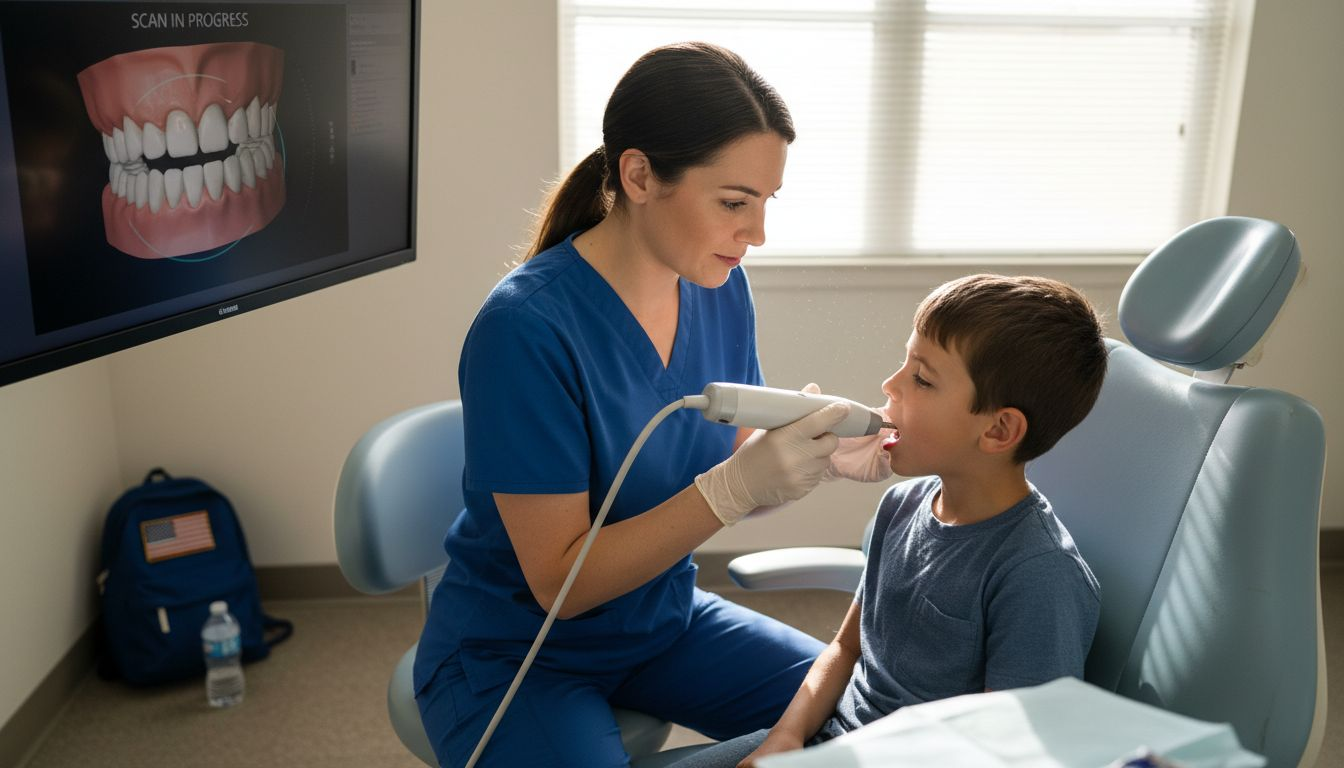
Many mild orthodontic problems respond well to non-brace treatments. Spacing issues, minor crowding, and early bite problems often resolve without metal brackets. Learning about Invisalign versus braces for kids clarifies which conditions each method handles most effectively. The effectiveness of clear aligners is supported by extensive clinical evidence showing comparable outcomes to traditional approaches for appropriate cases.
Effectiveness and limitations of non-brace treatments
Non-brace orthodontic options deliver impressive results when patients follow treatment protocols consistently. Understanding both capabilities and boundaries helps set realistic expectations.
Clear aligners work by applying gentle, constant pressure to move teeth gradually. Studies show aligners can reduce overall treatment time by approximately 20% when worn 20 to 22 hours daily. This compliance requirement is non-negotiable. Removing aligners for more than two to four hours daily extends treatment duration and compromises outcomes.
Benefits of non-brace treatments include:
- Less discomfort than traditional braces with no metal brackets irritating soft tissues
- Easier oral hygiene since appliances remove completely for brushing and flossing
- Fewer dietary restrictions because you take aligners out before eating
- Nearly invisible appearance boosting confidence during social interactions
- Fewer emergency visits since no wires break or brackets detach
These advantages make non-brace options attractive for families with active children. Sports, music lessons, and school photos become simpler without visible metal hardware. The effectiveness and compliance of clear aligners directly correlates with patient dedication to wearing schedules.
However, limitations exist. Severe crowding requiring tooth extraction typically needs traditional braces for optimal control. Large jaw discrepancies, significant rotations, and complex vertical movements challenge aligner systems. Your orthodontist evaluates whether your child’s specific issues fall within non-brace treatment capabilities.
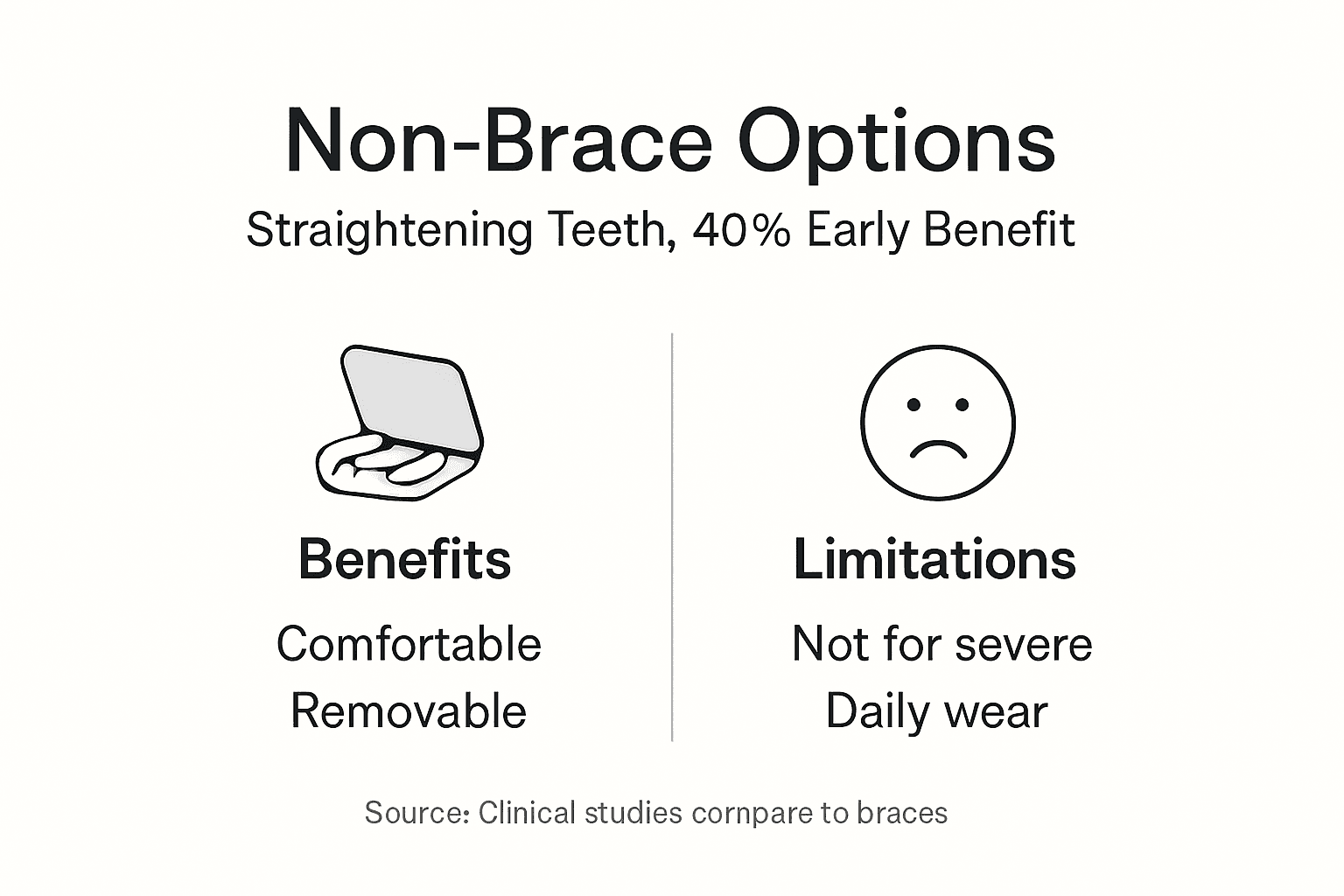
Functional problems like crossbites often respond well to early aligner intervention. Clinical evidence demonstrates aligners effectively correct these issues in children, preventing more serious complications later. The key is starting treatment at the right developmental stage.
Pro Tip: Create a morning and evening routine chart with your child to track aligner wear time. Visual reminders build consistency and turn compliance into a fun habit rather than a chore.
Common misconceptions about non-brace orthodontics
Myths about non-brace treatments persist despite strong clinical evidence supporting their effectiveness. Clearing up these misunderstandings helps parents make informed decisions.
Myth: Clear aligners only provide cosmetic fixes
Reality: Aligners effectively treat functional issues including crossbites, crowding, and bite misalignment in children, not just aesthetic concerns. Orthodontists use them to guide jaw development and correct bite relationships that affect chewing, speech, and long-term oral health.
Myth: Non-brace options are less effective than traditional braces
Reality: For mild to moderate cases, compliant patients achieve results matching traditional braces. Success depends on case selection and patient cooperation. Complex cases still require braces, but many children qualify for aligner treatment.
Myth: Treatment without braces takes much longer
Reality: Digital planning and optimized force delivery often reduce treatment duration by about 20% compared to conventional methods. Aligners move teeth efficiently when worn as prescribed.
Myth: Children cannot handle removable appliances responsibly
Reality: Many children aged 7 to 12 demonstrate excellent compliance with proper parent support and motivation. Setting clear expectations and celebrating milestones encourages responsibility.
One compelling statistic deserves emphasis:
Clinical studies show clear aligners successfully treat up to 85% of mild to moderate orthodontic cases in children when patients maintain proper wear schedules.
This success rate rivals traditional braces for appropriate cases. The difference lies in patient selection and commitment to treatment protocols. Parents who understand these realities approach consultations with realistic expectations and better questions for their orthodontist.
Choosing the best treatment for your child
Selecting the right orthodontic approach requires evaluating your child’s unique needs, lifestyle, and treatment goals. A systematic decision process leads to better outcomes.
Start by assessing severity through a specialist consultation. An orthodontist examines tooth alignment, bite relationships, jaw growth patterns, and overall oral health. Digital imaging and diagnostic records reveal issues invisible to untrained eyes. This comprehensive evaluation determines whether non-brace options will achieve optimal results.
Questions to ask during consultations:
- Does my child’s case fall within the mild to moderate range suitable for clear aligners?
- What specific movements need to occur to correct the orthodontic issues?
- How long will treatment take with aligners versus traditional braces?
- What happens if my child struggles with compliance?
- Are there any dental health issues we must address before starting orthodontics?
Lifestyle considerations matter significantly. Active children involved in contact sports may prefer removable aligners they can take out during games. Musicians playing wind instruments find aligners interfere less with embouchure than brackets. Social dynamics at school also influence treatment acceptance.
Your child’s maturity level and willingness to comply with wear schedules determines candidacy for removable treatments. Honest conversations about responsibility help gauge readiness. Some children thrive with the flexibility aligners provide, while others do better with fixed appliances requiring no daily decision-making.
Financial factors require careful review. Exploring cost considerations for aligners reveals typical investment ranges. Many dental insurance plans cover orthodontics for children, though coverage percentages vary. Payment plans spread costs over treatment duration, making care more accessible. Understanding clear braces versus Invisalign differences helps compare value propositions.
Comparing clear aligners vs braces explained side by side clarifies trade-offs between approaches. Some families prioritize aesthetics and comfort, while others focus on treatment efficiency for complex cases. Neither choice is universally superior; the best option matches your specific circumstances.
Convenience plays a role too. Virtual consultation options let busy families connect with specialists remotely before committing to in-office visits. Initial screenings via video call save time while providing expert guidance on whether to pursue treatment.
Bridging to practical application
Once you decide to pursue orthodontic treatment, understanding next steps helps you move forward confidently. A clear roadmap reduces anxiety and sets your family up for success.
-
Schedule an initial consultation with a pediatric orthodontic specialist who has experience treating children aged 7 to 12. Glow Orthodontics provides comprehensive evaluations tailored to young patients in British Columbia.
-
Expect digital scanning and imaging during your first visit. Modern orthodontics uses 3D scans instead of uncomfortable putty impressions. Your specialist explains findings and discusses treatment options suited to your child’s case.
-
Review the detailed treatment plan together. Ask about expected duration, required appointments, and specific milestones. Understanding the timeline helps you plan around school schedules and family activities.
-
Begin treatment with your chosen non-brace option if your child qualifies. The orthodontist fits initial appliances and demonstrates proper insertion, removal, and cleaning techniques. Your child practices under supervision until comfortable with the process.
-
Maintain regular follow-ups every 6 to 10 weeks. These appointments monitor progress, provide new aligners or adjustments, and address any concerns. Consistent monitoring ensures treatment stays on track.
-
Track compliance daily using apps or charts. Many aligner systems include wear-time indicators that show whether your child meets the 20 to 22 hour requirement. Celebrate weekly successes to maintain motivation.
Understanding realistic timelines prevents disappointment. Most non-brace treatments for children last 12 to 18 months, though individual cases vary. Mild spacing issues may resolve in 6 months, while comprehensive bite correction takes longer. Patience and consistency yield the best outcomes.
Pro Tip: Pack a small orthodontic care kit in your child’s backpack with a case for storing aligners during lunch, a travel toothbrush, and floss. Easy access to supplies increases compliance throughout the school day.
Exploring resources about best braces options for kids provides backup knowledge if your specialist recommends traditional braces instead. Some families start with aligners and transition to braces for final refinements. Understanding all options keeps you flexible.
Practical tips like travel tips with braces apply to aligners too. Planning ahead for family vacations ensures your child maintains treatment progress even away from home. Simple preparation prevents setbacks.
Explore non-brace orthodontic options at Glow Orthodontics
Your child deserves orthodontic care that fits their lifestyle while delivering excellent results. Glow Orthodontics specializes in tailored non-brace treatments designed specifically for children aged 7 to 12 in British Columbia.
Our team uses advanced clear aligner systems like Invisalign First to gently guide developing smiles. We combine cutting-edge technology with compassionate care, making orthodontics comfortable and stress-free for young patients.

Learn about our detailed Invisalign treatment process that walks you through every stage from consultation to final results. We provide comprehensive orthodontic care for kids and teens throughout their developmental years.
Scheduling a consultation is simple through our website. Discover how non-brace options can give your child a confident, healthy smile without the discomfort of traditional metal braces. Let’s start this journey together.
Frequently asked questions
What ages are suitable for non-brace orthodontic treatments?
Children aged 7 to 12 are ideal candidates for non-brace treatments during the mixed dentition phase. This developmental window allows orthodontists to guide jaw growth and tooth alignment effectively. Some treatments work as early as age 6 for specific issues like crossbites.
Are clear aligners safe for children aged 7-12?
Yes, clear aligners are FDA-approved and clinically proven safe for children in this age range. They contain no harmful materials and cause less soft tissue irritation than metal braces. Proper supervision and regular orthodontic monitoring ensure treatment progresses safely.
How long does treatment without braces typically take?
Most non-brace treatments for children last 12 to 18 months depending on case complexity. Mild spacing or crowding issues may resolve in 6 to 9 months, while comprehensive bite correction takes longer. Consistent appliance wear and regular appointments keep treatment on schedule.
Will my child’s lifestyle impact treatment success?
Lifestyle significantly affects outcomes with removable appliances. Active children who play contact sports appreciate the ability to remove aligners during games. However, forgetting to reinsert them or losing appliances extends treatment time. Establishing routines maximizes success.
Does insurance cover non-brace orthodontic options?
Many dental insurance plans include orthodontic coverage for children, typically paying 50% of treatment costs up to a lifetime maximum. Coverage applies equally to clear aligners and traditional braces in most cases. Contact your insurance provider to verify specific benefits and confirm your orthodontist participates in your network.