Teeth alignment and your health: A family guide
May 13, 2026
Teeth alignment and your health: A family guide
TL;DR:
- Malocclusion affects oral function and long-term tooth health, not just appearance.
- Orthodontic treatment improves bite forces, reduces risks of decay, gum disease, and tooth loss.
Straight teeth look great in photos, but the impact of how your teeth fit together goes much deeper than appearance. Malocclusion — the clinical term for misaligned teeth or a poor bite — can compromise how you chew, how clearly you speak, and how effectively you clean your mouth every day. For families in Langley weighing orthodontic decisions for kids or adults, understanding the real health connections makes the difference between choosing treatment for the right reasons versus simply chasing a picture-perfect smile. This guide walks you through what the evidence actually shows, where the benefits are real, and where healthy skepticism is warranted.
Table of Contents
- Why teeth alignment matters for your health
- Oral health risks: Tooth decay, gum disease, and cleaning challenges
- Jaw joints, headaches, and sleep: More than just the teeth
- Beyond the smile: Confidence, social life, and mental health
- Starting early: Pediatric orthodontics and health outcomes
- A family orthodontist’s view: The real story behind alignment and health
- Exploring orthodontic options in Langley: Next steps for families
- Frequently asked questions
Key Takeaways
| Point | Details |
|---|---|
| Alignment affects more than looks | Straight teeth help prevent tooth wear, improve chewing, and support overall oral health. |
| Hygiene is easier with alignment | Properly aligned teeth are simpler to clean, which lowers the risk of cavities and gum disease. |
| Jaw and airway factors need expert care | Not all jaw pain and sleep issues are solved by orthodontics, and sometimes a team approach is needed. |
| Confidence and quality of life benefit | Aligning teeth often boosts self-esteem and emotional well-being, impacting both children and adults. |
| Early checks, not early braces for all | Early dental evaluations help guide care, but treatment should match the individual’s specific needs. |
Why teeth alignment matters for your health
Most people think orthodontics is about aesthetics. That belief isn’t entirely wrong, but it misses a bigger picture. The way your upper and lower teeth meet, called your “occlusion,” influences nearly every oral function you perform dozens of times a day.
What malocclusion means in practical terms: When teeth are crowded, rotated, gapped, or when jaws don’t fit together well, bite forces don’t distribute evenly. Think of it like four legs on a table. If one leg is shorter, the entire surface tilts and the other legs carry unequal stress. Your teeth work the same way. Uneven bite force distribution can accelerate enamel wear on some teeth while leaving others underworked, and over time this can loosen teeth or lead to fractures.
Learning about malocclusion types and causes can help families put their specific situation in context before an orthodontic consultation.
“People often assume that crooked teeth are merely a cosmetic issue. In reality, how teeth align shapes everything from how well food gets broken down to long-term tooth survival.”
| Feature | Aligned teeth | Misaligned teeth |
|---|---|---|
| Chewing efficiency | High, even distribution | Reduced, uneven forces |
| Speech clarity | Generally unaffected | Possible lisping or distortion |
| Enamel wear | Even, predictable | Accelerated on specific teeth |
| Gum disease risk | Lower | Higher due to cleaning difficulty |
| Tooth loosening risk | Lower | Higher with extreme forces |
The importance of dental esthetics is real, but the table above makes clear that function and longevity matter just as much as appearance. Straightening teeth is not vanity; for many people it is a meaningful investment in keeping their natural teeth for life.
Oral health risks: Tooth decay, gum disease, and cleaning challenges
Crowding is one of the most common reasons families visit us. When teeth overlap or rotate, they create tight pockets and surfaces that a toothbrush simply cannot reach at the right angle. Floss snaps in and out without really cleaning between the contact points. The result is consistent plaque buildup in the same spots, every single day.

Persistent plaque is not just an inconvenience. It feeds bacteria that produce acids, wearing down enamel and starting cavities. It also triggers the immune response in your gum tissue, causing inflammation known as gingivitis. Left untreated, that inflammation can progress to periodontitis, where the bone supporting your teeth begins to break down. Misaligned teeth create tight, hard-to-clean spaces that raise risks for both cavities and gum disease significantly over time.
Here is how the cleaning difficulty plays out practically:
- Overlapping front teeth: The inner surfaces collect plaque that standard brushing skips entirely.
- Rotated premolars or molars: The flat chewing surface faces at an angle, making it harder to clean and easier for food to pack in.
- Deep overbite: The lower front teeth can bite into the roof of the mouth, irritating gum tissue and accelerating wear in that area.
- Spacing issues: Large gaps can trap food and create uneven gum contours that are harder to maintain.
Check out our guide on hygiene with braces if you are currently in treatment, and our natural oral hygiene tips for building habits that support your orthodontic results.
The dental hygiene impact of good cleaning routines cannot be overstated. Whether you are in braces, clear aligners, or no appliance at all, consistency and the right technique matter enormously for long-term outcomes.
Pro Tip: If you have crowding, add an interdental brush or a water flosser to your routine. These tools reach angles that standard floss misses, especially around rotated teeth or tight contact points. Your gums will show the difference within two weeks.
Jaw joints, headaches, and sleep: More than just the teeth
The teeth do not work alone. They connect through the jawbone to the temporomandibular joints (TMJ), the hinges on either side of your skull that allow your mouth to open, close, and shift side to side. When your bite is significantly off, the muscles and ligaments surrounding those joints compensate constantly. Over months and years, that compensation can create real discomfort.
Here is how the chain of effects typically unfolds:
- Misalignment creates an uneven bite. Certain teeth hit first or harder, disrupting the balanced contact your jaw expects.
- Muscles compensate. The jaw muscles work overtime trying to find a comfortable resting position, especially during chewing.
- Joint stress accumulates. Uneven bite forces strain the jaw joint and may contribute to clicking, popping, or chronic pain.
- Referred pain develops. Overworked jaw muscles can trigger tension headaches, ear aches, and facial soreness that patients often don’t connect to their teeth.
If your child or a family member has persistent jaw pain or unexplained headaches, looking at the bite is a reasonable first step. Understanding overbite correction options is a good starting point for families with this concern.
“Chronic headaches and jaw soreness are often dismissed as stress-related. In some cases, an uneven bite is contributing significantly to that daily discomfort.”
On the topic of sleep, the research is promising but nuanced. Orthodontic intervention may help select children with sleep-disordered breathing by improving airway space, but current evidence does not support braces or aligners as routine preventive therapy for snoring or sleep apnea. Airway concerns typically need evaluation by a multidisciplinary team, including a sleep specialist, an ear nose and throat doctor, and sometimes an orthodontist working together.
Pro Tip: If your child snores regularly, struggles to breathe through their nose, or seems fatigued despite a full night of sleep, request a referral for a sleep evaluation. Orthodontic input may be part of the picture, but it rarely solves airway issues on its own.
Beyond the smile: Confidence, social life, and mental health
Here is something that gets overlooked in clinical conversations: the emotional weight of living with teeth you feel ashamed of. For children and teens especially, appearance is tied tightly to social confidence. Kids who cover their mouths when they laugh, who avoid smiling in photos, or who pull back from social situations because of their teeth are experiencing a real reduction in quality of life.
Research from the American Association of Orthodontists confirms that malocclusion can affect self-esteem, emotional well-being, and overall quality of life, and that successful orthodontic treatment consistently improves those measures. This is not a superficial outcome. Confidence shapes how children engage in the classroom, how adults perform in professional settings, and how families interact socially.
The psychological and social benefits of orthodontic treatment are well documented:
- Reduced social anxiety related to speaking or smiling in front of others
- Improved self-image that carries into academic and professional performance
- Greater willingness to seek dental care because patients feel motivated to protect their results
- Better communication as speech issues tied to alignment are addressed
- Increased sense of control over personal appearance, particularly for teens
For adults, this is equally relevant. Many people spent childhood without access to orthodontic care and carry both physical and emotional effects into adulthood. Orthodontic care is not just for teenagers, and the emotional return on investment for adult treatment can be just as significant. Options like invisible aligners for adults have made it far easier for adults to pursue treatment without the social discomfort of traditional metal braces.
Knowing when to act matters too. Delays that result in worsening alignment sometimes lead to orthodontic emergencies that are more complicated and costly to address than early, planned treatment.
“The social confidence that comes from a comfortable, functional smile is not a luxury. For many kids, it is the foundation for healthy development.”
Starting early: Pediatric orthodontics and health outcomes
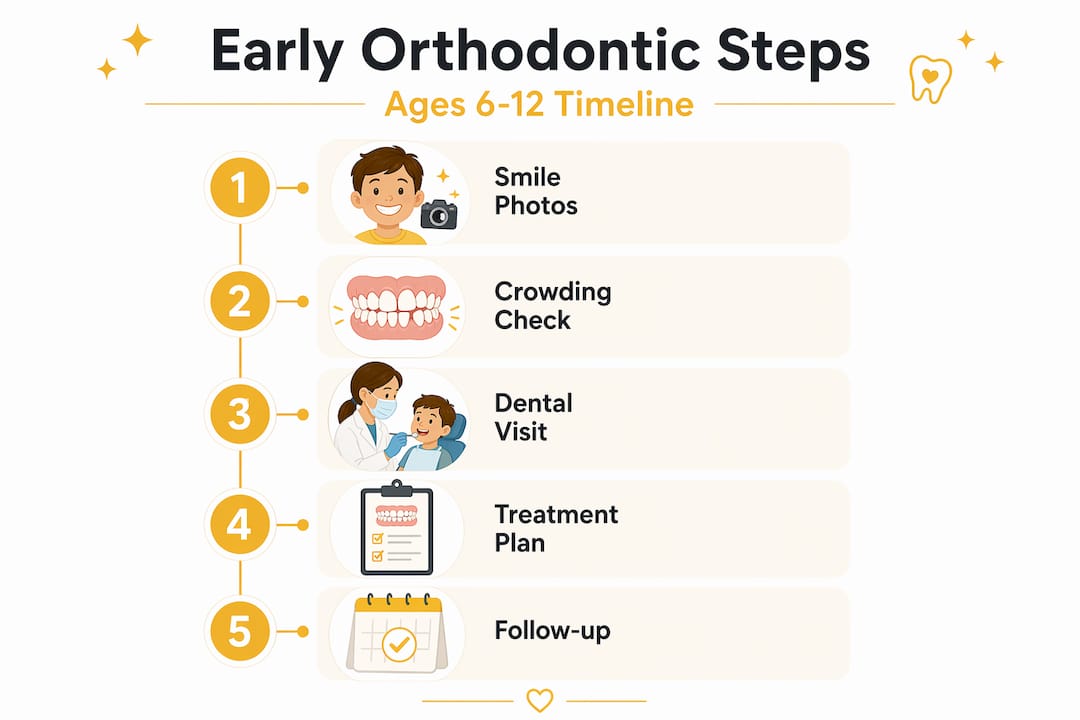
A common question from Langley parents is: “When should we bring our child in?” The answer most orthodontists agree on is around age 7, even if teeth look fine. At that age, a professional can spot developing patterns that may create bigger problems later, while there is still time to guide jaw growth and tooth eruption effectively.
Here is how early intervention typically works:
- Evaluation: An orthodontist assesses jaw development, tooth eruption sequence, spacing, and bite. X-rays reveal what is happening beneath the gumline.
- Diagnosis: Some children have clear indications for early treatment, such as crossbites, severe crowding, or harmful habits like thumb-sucking. Others simply need monitoring.
- Treatment or monitoring plan: For children who need intervention, early treatment (Phase 1) aims to correct structural problems when the jaw is still growing. This can reduce the complexity of treatment needed later.
- Long-term follow-up: After Phase 1, children are typically monitored through mixed dentition (the stage where baby and permanent teeth coexist) until all permanent teeth have erupted.
AAPD Best Practices are clear that early diagnosis and treatment have genuine short and long-term benefits, but also that not every developing malocclusion requires treatment. Responsible orthodontics means recommending treatment only when the evidence supports it for that individual child.
Pro Tip: Keep a simple photo record of your child’s smile every six months from ages 6 to 12. If you notice crowding increasing, teeth erupting in unusual positions, or persistent mouth breathing, bring those photos to your orthodontic evaluation. They give valuable context.
Concerns about overbite are one of the most common reasons parents bring children in early. Our resource on treating an overbite explains what correction involves and when the right time to act is. For families just starting the journey, reviewing guidance on first dental visits for children helps set realistic expectations.
A family orthodontist’s view: The real story behind alignment and health
Here is something we feel strongly about: the phrase “straight teeth equal good health” is not always accurate, and claiming it is does families a disservice.
Orthodontic treatment genuinely improves function, oral hygiene access, jaw mechanics, and quality of life for many patients. Those benefits are real and well supported. But orthodontics is not a cure for sleep apnea, a guaranteed fix for TMJ disorders, or a substitute for broader medical care when complex health issues are involved. When families come to us with concerns about their child’s snoring or jaw pain, our job is to be honest about what orthodontics can and cannot address.
Complex cases, particularly those involving airway problems, chronic pain, or significant jaw discrepancies, need multidisciplinary evaluation. That might mean working alongside a sleep specialist, a pediatric dentist, a physiotherapist, or an oral surgeon. We see this as a strength, not a limitation. Recommending the right team for each patient protects families from unnecessary treatment and ensures every intervention serves a clear purpose.
We also believe strongly in individualized timing. Comparing your child’s orthodontic timeline to a neighbor’s or a classmate’s is rarely useful. Development varies enormously, and the right time for treatment depends on your child’s specific biology, not a generic schedule.
When treatment is appropriate, families often wonder about clear aligners vs braces. Both are effective tools, and the best choice depends on the case complexity, the patient’s age, lifestyle, and commitment level. Our role is to help you weigh those factors clearly, without defaulting to the newest or most expensive option just because it is available.
The families we see who get the best results are those who come in with genuine questions, realistic expectations, and a willingness to stay engaged throughout the process. That partnership between family and orthodontist is what produces outcomes worth smiling about.
Exploring orthodontic options in Langley: Next steps for families
If this article has raised questions about your child’s bite, your own alignment, or when to seek an evaluation, the best next step is a professional consultation with an orthodontist who takes the time to explain your specific situation clearly. Local, expert-led care means your treatment plan reflects your actual needs, not a generic template.

At Glow Orthodontics in Langley, we work with families at every stage, from early childhood evaluations to adult treatment options. Whether you are exploring orthodontic care for teens or looking into options for fixing crooked teeth as an adult, our team provides personalized guidance rooted in evidence. We welcome your questions, encourage your involvement, and believe that an informed family makes the best orthodontic decisions. Book a consultation at gloworthodontics.ca to get started.
Frequently asked questions
Can crooked teeth affect my child’s speech or eating?
Yes, significant misalignment impairs chewing and can make certain speech sounds harder to produce clearly, though the severity depends on the type and degree of misalignment.
Is orthodontic treatment necessary for every child with crooked teeth?
No. Not every malocclusion requires active treatment; the decision depends on the severity of the bite problem, the child’s oral development, and individual risk factors.
Can braces or aligners prevent snoring or sleep apnea in children?
Orthodontics can help in select cases, but current evidence does not support routine use of braces or aligners as preventive therapy for sleep-disordered breathing, which usually requires a broader medical evaluation.
Does fixing teeth alignment make it easier to keep teeth and gums clean?
Yes. Aligned teeth reduce plaque retention by eliminating the tight, hard-to-reach spaces that crowding and rotation create, which lowers the risk of cavities and gum disease over time.
How soon should I bring my child for an orthodontic evaluation?
Most orthodontists recommend a first evaluation by age 7. Early assessment allows professionals to identify developing problems while there is still time to guide jaw growth and tooth eruption effectively.