Toothsi Braces Price: 2026 Buyer’s Guide
July 11, 2026
Toothsi Braces Price: 2026 Buyer’s Guide
TL;DR:
- Toothsi braces start at ₹52,999, with final costs depending on case complexity and treatment length. EMI plans from ₹1,499 monthly make treatment accessible, but supervision with an orthodontist improves outcomes for moderate or complex cases. Overall, Indian homegrown aligners offer a cost-effective alternative to international brands for mild to moderate dental corrections.
Toothsi braces price starts at ₹52,999, making clear aligners one of the more accessible orthodontic options in India today. The industry term for this treatment is “clear aligner therapy,” and Toothsi is one of the leading domestic brands offering it. Your final cost depends on how complex your case is, how many aligner trays you need, and how long treatment runs. EMI plans starting at ₹1,499 per month make the total more manageable for families on a budget. This guide breaks down every cost factor so you can plan with confidence.
What factors influence the cost of Toothsi clear aligners?
The final Toothsi cost depends primarily on case complexity. A patient with mild crowding needs fewer trays and a shorter timeline. Someone with significant bite issues or spacing problems needs more trays, more clinical visits, and a longer commitment. That gap in treatment scope directly drives the price difference between entry-level and complex cases.
Several specific variables shape what you pay:
- Case severity: Mild misalignment cases stay closer to the ₹52,999 starting price. Moderate and complex cases push costs higher as more aligner sets are required.
- Number of aligners: Each tray in the sequence adds to manufacturing and material costs. More aligners and longer treatment mean a higher final bill.
- Technology and materials: Higher-grade thermoplastic materials and 3D scanning technology improve fit and outcomes. These are often included in the base price, but confirm this before signing.
- Inclusions in the package: Toothsi’s all-inclusive pricing covers diagnostic scans, consultations, aligner delivery, and pre-specified clinical visits. Knowing what is bundled prevents surprise charges later.
- Care model: Direct-to-consumer aligner programs cost less upfront but offer limited professional oversight. Hybrid models that include in-person orthodontist visits cost more and deliver better outcome predictability.
Pro Tip: Always ask your provider for a written breakdown of what the quoted price includes. Scans, retainers, and mid-treatment adjustments are sometimes billed separately.
Material quality and orthodontist involvement heavily influence both price and treatment success. Choosing a hybrid care model, where a licensed orthodontist monitors your progress, reduces the risk of missed complications. The extra cost is worth it for anything beyond a mild case.

How does Toothsi braces pricing compare with traditional braces?
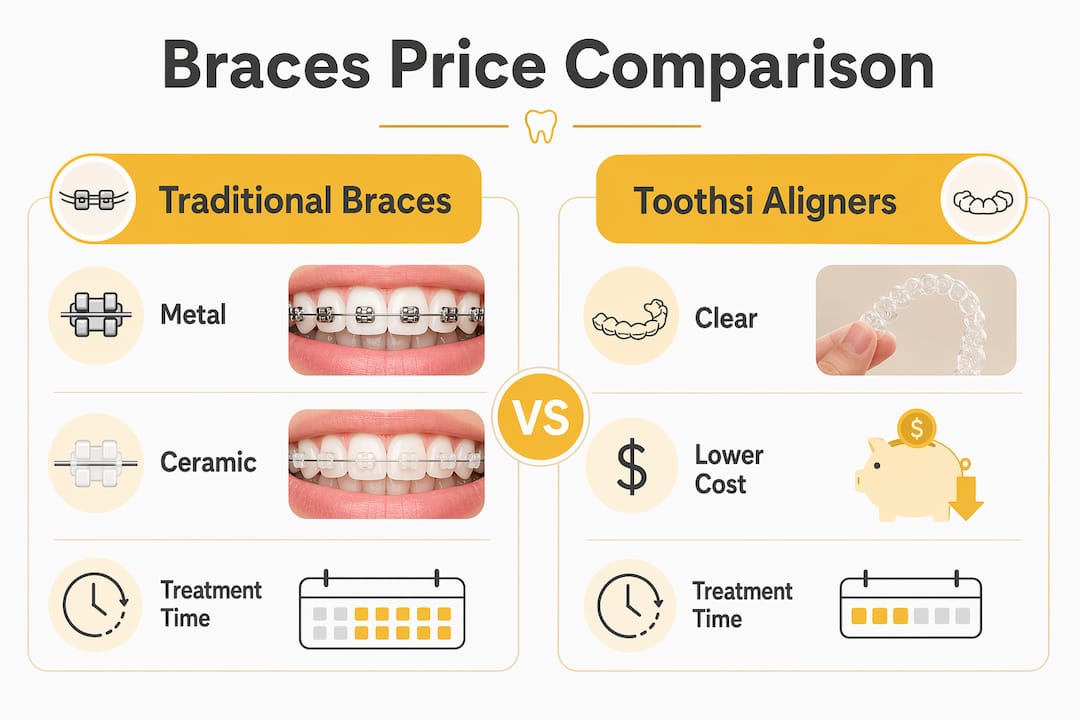
Price context matters when evaluating clear aligner therapy. Toothsi sits in a specific range relative to both traditional braces and international aligner brands. The table below shows approximate price ranges and typical treatment timelines across the main orthodontic options available in India.
| Treatment type | Approximate price range (INR) | Typical treatment timeline |
|---|---|---|
| Metal braces | ₹25,000–₹65,000 | 18–36 months |
| Ceramic braces | ₹40,000–₹70,000 | 18–30 months |
| Lingual braces | Up to ₹2,00,000 | 18–36 months |
| Toothsi clear aligners | ₹52,999–₹1,50,000 | 6–18 months |
| International aligners | ₹2,00,000–₹3,50,000 | 6–18 months |
Indian aligner brands like Toothsi cost 30–60% less than international brands. That is a significant saving for comparable results in mild to moderate cases. The quality of domestic Indian aligners has improved substantially, and they now deliver results that match international products for the majority of patients.
Price alone should not drive your decision. Traditional braces remain superior for very complex cases, including severe bite corrections and significant jaw misalignment. Clear aligners, including Toothsi, work best for mild to moderate dental issues. If your case falls into the complex category, a higher investment in traditional braces or lingual braces may produce better long-term results.
For patients comparing clear aligner options, the differences between clear braces and Invisalign are worth reviewing before committing to any single brand or treatment type.
Pro Tip: Get a clinical assessment from a licensed orthodontist before choosing your treatment type. A professional evaluation tells you whether clear aligners are genuinely appropriate for your case.
What payment options can make Toothsi aligners more affordable?
Affordability is one of Toothsi’s strongest selling points. The brand structures its payment options to reduce the barrier of a large upfront cost. Here is how the main options work:
- No-cost EMI plans: EMI plans start at ₹1,499 per month, spreading the total cost across a set number of months with no added interest. This makes the treatment accessible even for patients who cannot pay the full amount upfront.
- Student discounts: Toothsi offers student-specific pricing in select periods. If you or your child qualifies, this can reduce the base price meaningfully.
- Seasonal promotions: Periodic promotional offers lower the entry price or add value through free scans and extended retainer coverage. Timing your purchase around these promotions can produce real savings.
- Bundled packages: Some pricing tiers include retainers and follow-up visits at no extra charge. Choosing a bundled package over a base plan often costs less over the full treatment period.
- Flexible down payment structures: Certain plans allow a lower initial payment followed by monthly installments. This helps families manage cash flow without delaying treatment.
No-cost EMI plans remove the biggest financial obstacle for most patients. Spreading ₹52,999 across 36 months, for example, brings the monthly cost below ₹1,500. That is comparable to many monthly subscription services most families already pay.
Pro Tip: Confirm every included service in writing before starting your EMI plan. Some providers charge separately for retainers, replacement trays, or additional scans. Knowing the full cost upfront prevents budget surprises at the end of treatment.
Patients should also prioritize value features like free scans and mid-treatment adjustment policies over the lowest advertised price. A plan that costs slightly more but includes retainers and adjustments often saves money in the long run.
What is the typical treatment timeline for Toothsi braces?
Treatment duration is one of the most direct drivers of total cost. The longer your treatment runs, the more aligner trays you need, and the higher your final bill. Clear aligner treatment in India typically runs 6–18 months depending on case severity.
Here is how timelines break down by case type:
- Mild cases (6–9 months): Minor crowding, small gaps, or slight rotations. These cases need the fewest trays and stay closest to the entry-level price. Patients in this category often see the best value from clear aligner therapy.
- Moderate cases (9–14 months): More significant crowding, spacing issues, or bite corrections within the aligner’s capability. Costs rise proportionally with the number of trays required.
- Complex cases (14–18 months or more): Significant misalignment, multiple teeth involved, or cases requiring attachments. These cases approach the upper end of the ₹1,50,000 range and may require more frequent clinical check-ins.
Timeline also affects payment planning. A 9-month treatment on a 12-month EMI plan means your payments continue after treatment ends. A 15-month treatment on the same plan means you are paying while still wearing aligners. Aligning your EMI term with your treatment duration avoids that overlap.
Indian aligners deliver comparable results for mild to moderate cases at a fraction of international prices. For families evaluating whether clear aligners are the right choice, understanding how clear aligners actually work helps set realistic expectations about timelines and outcomes.
Key Takeaways
Toothsi braces pricing starts at ₹52,999, but the total cost depends on case complexity, treatment duration, and whether orthodontist supervision is included in the plan.
| Point | Details |
|---|---|
| Starting price | Toothsi clear aligners begin at ₹52,999, with complex cases reaching ₹1,50,000. |
| EMI accessibility | No-cost EMI plans from ₹1,499 per month make treatment manageable for most budgets. |
| Comparison with traditional braces | Indian aligners cost 30–60% less than international brands for comparable mild-to-moderate results. |
| Timeline drives cost | Longer treatments require more trays; mild cases run 6–9 months, complex cases up to 18 months. |
| Supervision matters | Hybrid care models with orthodontist oversight improve outcomes and reduce the risk of complications. |
The real cost question nobody asks
Most people researching Toothsi braces price focus entirely on the monthly EMI number. That is the wrong question. The right question is: what does this treatment actually include, and who is monitoring my progress?
I have seen patients choose the lowest-priced aligner plan available, only to discover mid-treatment that retainers, replacement trays, and follow-up scans were all billed separately. By the end, they paid more than a mid-tier plan with full inclusions would have cost. The advertised price and the actual cost are two different numbers.
The other thing most articles skip is the supervision gap. Purely remote aligner models, where you do everything from home with no in-person visits, are cheaper for a reason. Orthodontic supervision is what catches problems early. A tray that fits slightly wrong, a tooth that is not tracking as planned, an emerging bite issue. These are things a licensed orthodontist catches at a check-in. A remote model misses them until the damage is done.
My honest take: for mild cases, Toothsi’s pricing is genuinely competitive and the results are real. For anything moderate or complex, spend the extra money on a hybrid model with clinical oversight. The price difference is small compared to the cost of retreatment.
— Juiced
Gloworthodontics: clear aligner care with professional oversight
Families in the Langley, British Columbia area looking for clear aligner therapy with proper clinical supervision have a trusted option in Gloworthodontics. The practice specializes in personalized orthodontic treatment for both teens and adults, with flexible payment options designed to fit real family budgets.

Gloworthodontics offers thorough consultations that assess your case complexity before recommending a treatment path. That means you get a realistic cost estimate upfront, not a surprise bill halfway through. For families with teenagers, the orthodontic care guide for teens covers treatment options, financing, and what to expect at every stage. Book a consultation at gloworthodontics.ca to get a personalized treatment plan with transparent pricing.
FAQ
What is the starting price for Toothsi clear aligners?
Toothsi clear aligners start at ₹52,999, with EMI plans available from ₹1,499 per month. Complex cases cost more depending on the number of trays and treatment duration required.
Are Toothsi braces cheaper than traditional metal braces?
Toothsi aligners overlap in price with ceramic braces and cost more than basic metal braces, which start around ₹25,000. However, Toothsi costs 30–60% less than international aligner brands like Invisalign.
How long does Toothsi treatment take?
Treatment runs 6–18 months depending on case severity. Mild cases typically finish in 6–9 months, while moderate to complex cases take up to 18 months.
What does the Toothsi price include?
Toothsi’s pricing covers diagnostic scans, consultations, aligner delivery, and clinical visits as pre-specified in the plan. Always confirm in writing whether retainers and replacement trays are included before committing.
Are Toothsi braces worth it for moderate dental issues?
Toothsi aligners deliver comparable results for mild to moderate cases at a fraction of international aligner costs. For complex cases, traditional braces with full orthodontist supervision remain the more reliable option.