Transparent Aligners Cost: What Parents Need to Know
January 28, 2026
Transparent Aligners Cost: What Parents Need to Know
Every parent faces the question of how to approach their child’s orthodontic needs with comfort and confidence. The search for kid-friendly options brings transparent aligners into the spotlight, especially for families in Langley, BC looking for gentle solutions. With features like being nearly invisible and easy to remove, transparent aligners offer a custom, adaptable way to manage mild to moderate dental misalignments while keeping daily routines simple.
Table of Contents
- Transparent Aligners Defined and Common Myths
- Key Types of Transparent Aligners for Kids
- How Transparent Aligners Work Step by Step
- Major Factors That Affect Total Cost
- Comparing Costs: Aligners Vs. Braces
- Insurance, Payment Plans, and Saving Options
Key Takeaways
| Point | Details |
|---|---|
| Transparent Aligners Offer Discretion | Custom-designed aligners are nearly invisible and removable, appealing to patients seeking a discreet orthodontic option. |
| Suitable for a Range of Ages and Conditions | Contrary to common myths, transparent aligners are effective for both adults and children with mild to moderate dental issues. |
| Cost Influenced by Complexity and Location | The overall cost of treatment varies based on case complexity, geographic location, and additional dental procedures required. |
| Financial Options Are Available | Patients can utilize dental insurance, flexible spending accounts, and orthodontist payment plans to manage treatment costs effectively. |
Transparent Aligners Defined and Common Myths
Transparent aligners are custom-designed orthodontic devices crafted from clear plastic materials that gradually shift teeth into proper alignment. Unlike traditional metal braces, these innovative appliances offer a nearly invisible treatment option for patients seeking discrete dental corrections. Clear aligners are orthodontic devices designed to move teeth incrementally through a series of precisely engineered plastic trays.
The technology behind transparent aligners involves advanced digital scanning and treatment planning. Orthodontists use 3D imaging to create a personalized sequence of aligners that apply gentle, consistent pressure to reposition teeth. Each set of aligners is typically worn for approximately two weeks before transitioning to the next set in the series. While many people assume these devices work only for minor adjustments, modern innovations have expanded their capabilities to address a range of dental misalignments.
Common myths about transparent aligners often prevent potential patients from exploring this treatment option. Many believe these devices are suitable only for adults or those with minimal dental issues. However, research shows clear aligners can effectively treat mild to moderate dental crowding and spacing concerns. Some complex orthodontic movements remain challenging, but technological advancements continue to broaden their applications.
Key features of transparent aligners include:
To better understand transparent aligners, here is a comparison between transparent aligners and traditional braces:
| Aspect | Transparent Aligners | Traditional Braces |
|---|---|---|
| Visibility | Nearly invisible | Highly visible metal |
| Food Restrictions | Few to none | Many food limitations |
| Office Visits | Less frequent | Monthly adjustments |
| Emergency Repairs | Rarely needed | Common for broken parts |
| Hygiene | Easy brushing/flossing | Challenging cleaning routines |
| Common Age Group | Teens and adults | All ages |
- Removable for eating and oral hygiene
- Nearly invisible appearance
- Customized digital treatment planning
- Comfortable compared to traditional braces
- Shorter adjustment periods
Pro tip: Schedule a comprehensive consultation with an orthodontist to determine whether transparent aligners represent the most appropriate treatment for your specific dental alignment needs.
Key Types of Transparent Aligners for Kids
Pediatric transparent aligners represent a specialized category of orthodontic devices designed specifically for children’s unique dental development needs. Clear aligner therapy for children has evolved to address the complex challenges of growing patients, offering customized solutions for mild to moderate dental misalignments.
The primary types of transparent aligners for children include phase-specific designs that accommodate different stages of dental growth. Interceptive aligners are particularly noteworthy, targeting early dental interventions during mixed dentition periods. These specialized aligners can address emerging orthodontic issues before they become more complex, potentially reducing the need for extensive future treatments. Pediatric orthodontic treatments now emphasize individualized assessment to ensure the most appropriate aligner approach for each child’s specific dental landscape.
Key variations in pediatric transparent aligners include:
- Invisalign First: Designed for younger patients with mixed dentition
- Growth Modification Aligners: Specifically engineered to work with ongoing jaw and teeth development
- Interceptive Treatment Aligners: Focused on early correction of emerging dental misalignments
- Comprehensive Growth Aligners: Adaptable designs that can adjust as children’s mouths continue to develop
Material composition and thickness differ significantly between adult and pediatric aligners. Children’s aligners are typically crafted with more flexible materials that can accommodate rapid dental changes, with additional considerations for comfort and ease of use. The thickness and precision of these aligners are carefully calibrated to provide gentle, consistent pressure without overwhelming young patients.
Pro tip: Request a comprehensive orthodontic assessment that includes digital imaging to determine the most appropriate transparent aligner type for your child’s specific dental development stage.
How Transparent Aligners Work Step by Step
Transparent aligners represent a sophisticated orthodontic treatment that transforms dental alignment through a carefully engineered process. Clear aligner treatment begins with comprehensive diagnostic records, including detailed x-rays and digital dental impressions that create a precise 3D model of a patient’s teeth.
The treatment process unfolds through several key stages. First, orthodontists conduct a thorough digital scan to map the current tooth positioning. Digital workflow in aligner therapy involves advanced computer software that simulates the entire tooth movement journey, creating a series of custom aligners designed to progressively shift teeth into their optimal position. Each aligner is meticulously crafted to apply specific biomechanical forces, targeting precise tooth movements.
The step-by-step progression of transparent aligner treatment includes:
- Initial Consultation and Digital Scanning
- Treatment Plan Simulation
- Custom Aligner Fabrication
- Progressive Aligner Sequence
- Wear each aligner for 1-2 weeks
- Remove only for eating and oral hygiene
- Maintain approximately 22 hours of daily wear
- Periodic Orthodontist Check-ups
Patient compliance plays a critical role in the success of transparent aligner therapy. The aligners must be worn consistently, with patients switching to a new set every one to two weeks. Each successive aligner applies incrementally different pressure, gradually guiding teeth into their targeted positions. The average treatment duration spans approximately 13.5 months, though this can vary based on individual dental complexity and patient adherence.
Pro tip: Create a digital calendar reminder system to track aligner change dates and ensure consistent wear throughout your treatment journey.
Major Factors That Affect Total Cost
Transparent aligner costs are not a one-size-fits-all expense, but rather a complex calculation involving multiple interconnected factors. Orthodontic treatment expenses involve a nuanced evaluation of several key variables that can significantly impact the overall financial investment parents will need to consider.

The complexity of the dental correction required stands as the primary cost driver. Cases involving minor tooth adjustments will naturally cost less compared to more extensive realignment challenges. Orthodontists assess factors like tooth crowding, bite misalignment, and the number of teeth requiring movement to determine the treatment’s complexity. Each additional corrective requirement increases the number of custom aligners needed, directly influencing the total treatment expense.
Key factors affecting transparent aligner costs include:
- Orthodontic Case Complexity
- Geographic Location
- Provider’s Professional Expertise
- Number of Required Aligners
- Additional Treatment Procedures
- Dental Attachments
- Interproximal Reduction
- Preparatory Dental Work
- Treatment Duration
- Follow-up Appointment Frequency
Supplementary costs often surprise parents and can significantly expand the overall treatment budget. These may include diagnostic imaging, initial consultation fees, periodic adjustment appointments, and potential refinement aligners needed to achieve optimal results. Some orthodontic practices offer comprehensive packages, while others bill individual components separately, making transparent cost comparisons crucial for budget-conscious families.
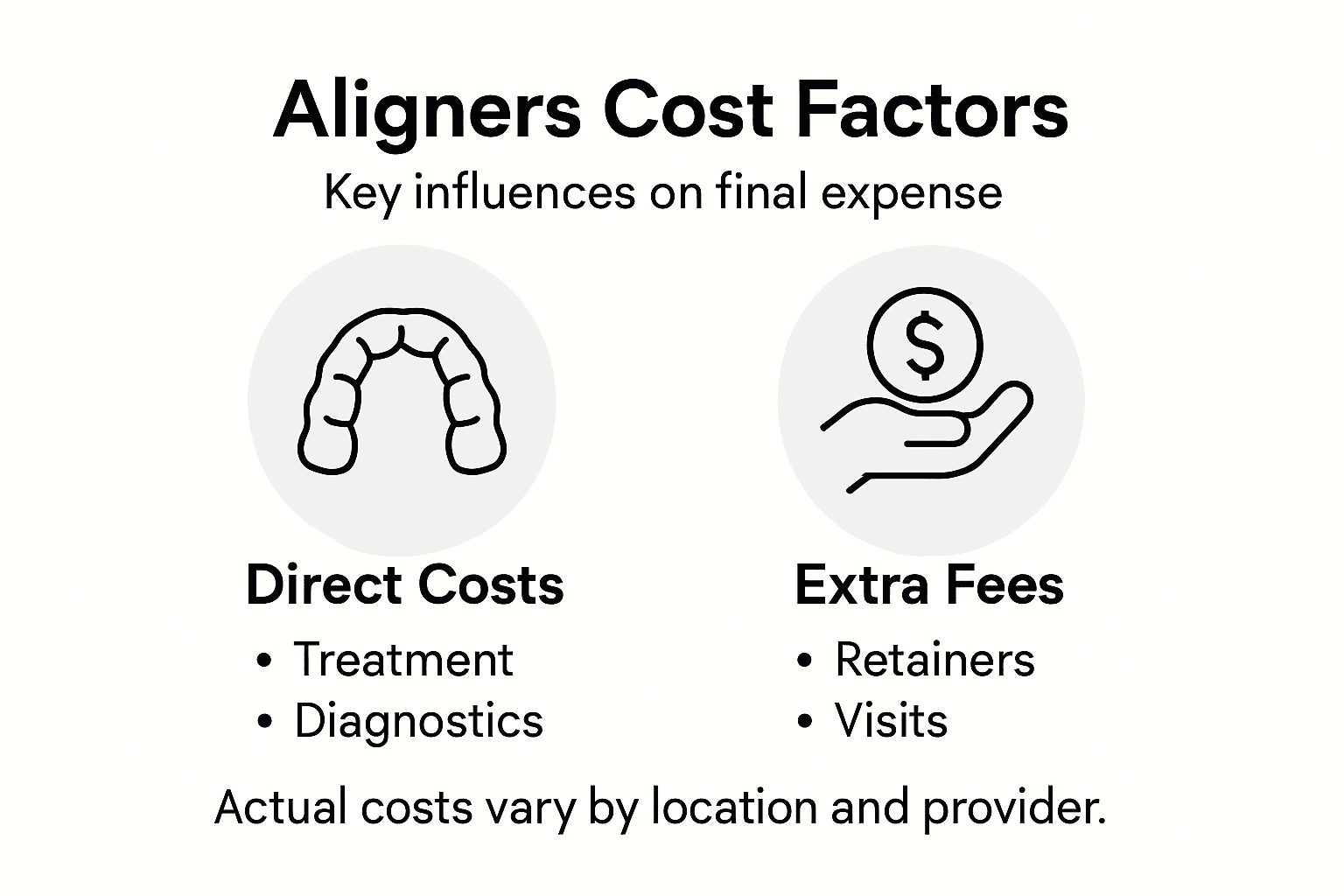
Here is a summary of common supplemental costs associated with transparent aligner treatment to help families budget more accurately:
| Additional Item | Typical Impact | Budgeting Tip |
|---|---|---|
| Diagnostic Imaging | $100–$500 extra | Request fee details upfront |
| Refinement Aligners | $300–$800 | Ask about inclusion in plan |
| Retainers Post-Treatment | $150–$500 each | Factor into long-term costs |
| Missed Appointment Fees | $25–$75 per visit | Check clinic policies |
| Replacement Aligners | $100–$200 per tray | Avoid loss or damage |
Pro tip: Request a detailed, itemized treatment plan that breaks down all potential costs upfront to avoid unexpected financial surprises during your child’s orthodontic journey.
Comparing Costs: Aligners vs. Braces
Parents navigating orthodontic options often find themselves comparing the financial investments of transparent aligners and traditional braces. Comparative orthodontic treatment costs reveal that both approaches have nuanced pricing structures with compelling advantages and potential trade-offs.
Traditional metal braces typically represent a lower upfront cost, ranging from $3,000 to $7,000 for comprehensive treatment. Transparent aligners, by contrast, often fall within a similar price range of $4,000 to $8,000, with slight variations based on treatment complexity. The key difference lies not just in the initial expense, but in the associated indirect costs that can significantly impact the overall financial commitment.
Cost comparison breakdown:
Traditional Braces:
- Lower initial treatment cost
- More frequent in-office adjustment appointments
- Potential additional expenses for broken brackets
- Limited aesthetic appeal
Transparent Aligners:
- Slightly higher initial investment
- Fewer in-person adjustment visits
- Reduced risk of emergency repair costs
- Improved aesthetic and comfort
Indirect costs play a crucial role in the true financial comparison. Traditional braces require more frequent orthodontist visits, potentially increasing time and transportation expenses. Transparent aligners often involve fewer appointments and provide greater flexibility, which can translate to reduced indirect expenses for busy families. Additional factors like treatment duration, patient compliance, and potential refinement stages further influence the total financial investment.
Pro tip: Request a comprehensive cost breakdown from your orthodontist that includes both direct treatment expenses and potential indirect costs to make a more informed financial decision.
Insurance, Payment Plans, and Saving Options
Navigating the financial landscape of orthodontic treatment requires strategic planning and a comprehensive understanding of available resources. Insurance coverage for orthodontics varies significantly, with many dental and medical insurance plans offering partial reimbursement for transparent aligner treatments.
Most dental insurance plans provide coverage ranging from 25% to 50% of orthodontic expenses, typically with lifetime maximum benefits between $1,000 and $3,000. Parents should carefully review their specific insurance policy, paying close attention to age limitations, waiting periods, and whether the plan distinguishes between traditional braces and transparent aligners. Some employers offer flexible spending accounts (FSAs) or health savings accounts (HSAs) that can be used to cover orthodontic expenses, providing additional financial flexibility.
Financial options for managing orthodontic treatment costs include:
- Dental Insurance Reimbursement
- Flexible Spending Accounts (FSA)
- Health Savings Accounts (HSA)
- Orthodontic Office Payment Plans
- Interest-free monthly installments
- Extended payment terms
- Sliding scale options
- Third-Party Medical Credit Services
- Potential Discounts for:
- Upfront full payment
- Multiple family member treatments
- Early treatment enrollment
Many orthodontic practices offer creative financing solutions to make treatment more accessible. These may include interest-free payment plans, discounts for upfront payments, and sliding scale fees based on family income. Some providers also offer sibling discounts or seasonal promotions that can significantly reduce the overall financial burden. Parents should not hesitate to discuss financial constraints openly with their orthodontic provider, as many offices are willing to develop personalized payment strategies.
Pro tip: Request a comprehensive consultation that includes a detailed breakdown of all potential financial assistance options and payment plans before committing to treatment.
Discover Clear and Affordable Solutions for Your Child’s Smile
Understanding the total cost of transparent aligners can feel overwhelming, especially when balancing treatment complexity, additional fees, and insurance details. At Glow Orthodontics, we recognize these challenges and offer personalized care designed to fit your family’s unique needs. From initial consultation through treatment completion, our team provides clear guidance on every step including an itemized breakdown of costs so you face no surprises along the way.

Don’t let uncertainty delay your child’s journey to a healthier smile. Explore how our comfortable, nearly invisible aligner options can deliver effective orthodontic results with fewer office visits and flexible payment plans. Visit Glow Orthodontics now to schedule your consultation and gain confidence in your treatment investment. Learn more about our comprehensive process and patient-friendly approach at Glow Orthodontics and take the first step toward a glowing smile today.
Frequently Asked Questions
What are the main factors that affect the cost of transparent aligners?
The cost of transparent aligners is influenced by factors such as the complexity of the dental correction required, geographic location, the provider’s expertise, the number of aligners needed, and any additional treatment procedures that may be necessary.
How do the costs of transparent aligners compare to traditional braces?
Transparent aligners generally range from $4,000 to $8,000, while traditional braces usually cost between $3,000 to $7,000. While the initial costs are similar, the total expense can vary based on indirect costs like appointment frequency and emergency repairs.
Are there any additional costs associated with transparent aligner treatment?
Yes, common supplemental costs include diagnostic imaging, refinement aligners, retainers post-treatment, missed appointment fees, and replacement aligners, which can significantly affect the overall budget for orthodontic treatment.
Does dental insurance usually cover transparent aligners?
Many dental insurance plans offer partial coverage for orthodontic expenses, typically ranging from 25% to 50% of the total cost. It’s important to review your specific policy to understand the coverage details and any limitations related to transparent aligners.