What Does an Orthodontist Do: Your Complete Guide
May 23, 2026
What Does an Orthodontist Do: Your Complete Guide
TL;DR:
- Orthodontists are highly trained specialists who diagnose, prevent, and treat bite, jaw, and facial development issues. They utilize advanced technology and personalized treatment plans beyond just braces, emphasizing health benefits and the importance of patient compliance. Early evaluation and choosing qualified experts ensure effective, safe, and comprehensive orthodontic care for all ages.
Most people assume orthodontists fix crooked teeth and call it a day. The reality is far more complex. Understanding what does an orthodontist do means recognizing a specialist trained to correct bite problems, guide jaw development, and reshape how your face functions. Whether you’re a parent researching options for your child or an adult considering treatment for yourself, knowing the full scope of orthodontic care helps you make smarter, more confident decisions about your oral health.
Table of Contents
- Key takeaways
- What does an orthodontist do and why it matters
- What to expect at your first orthodontic visit
- Orthodontic treatment types you should know about
- The real health benefits of orthodontic care
- My take on what patients consistently underestimate
- Start your orthodontic care at Gloworthodontics
- FAQ
Key takeaways
| Point | Details |
|---|---|
| Orthodontists are specialists | They complete 2-3 years of residency beyond dental school, focusing on bite, jaw, and tooth movement. |
| Treatment goes beyond braces | Orthodontic services include clear aligners, palatal expanders, and early interceptive care for children. |
| Diagnosis uses modern tech | 3D scans and digital imaging replace guesswork, giving you a personalized, accurate treatment plan. |
| Health benefits are real | Aligned teeth reduce cavity and gum disease risk while a balanced bite prevents jaw pain and tooth wear. |
| Compliance drives results | Wearing aligners 22 hours daily and following your orthodontist’s instructions directly determines your outcome. |
What does an orthodontist do and why it matters
What is orthodontics, exactly? It is a dental specialty focused on diagnosing, preventing, and correcting misaligned teeth and jaws. An orthodontist is not a general dentist who also happens to offer braces. The distinction matters more than most people realize.
General dentists receive broad training in dental care, covering everything from fillings to extractions. Orthodontists go further. After completing four years of dental school, they complete 2-3 years of specialized residency training focused entirely on tooth movement, bite correction, and facial growth. That adds up to six or seven years of education before they see a single patient independently.
Here is what that specialized training covers:
- Tooth movement mechanics. Orthodontists understand how forces applied to teeth cause them to shift through bone tissue safely and predictably.
- Bite correction. They diagnose and treat malocclusions, the clinical term for misaligned bites, including overbites, underbites, crossbites, and open bites.
- Jaw and facial development. Orthodontists track how the upper and lower jaws grow relative to each other, especially in children, and intervene when that growth is heading in the wrong direction.
- Anchorage control. Managing resistance to tooth movement is a core biomechanical skill that directly influences appliance selection and treatment outcomes.
This depth of training is why not all providers offering braces or aligners are qualified specialists. Verifying your provider’s credentials is not excessive caution. It is a reasonable step toward safer, more effective care.
What to expect at your first orthodontic visit
Many people walk into an orthodontic consultation expecting a quick look and a brochure. In practice, the initial consultation lasts 60 to 90 minutes and covers a lot of clinical ground. Here is a realistic breakdown of what happens:
- Clinical examination. Your orthodontist visually examines your teeth, gums, and jaw. They check how your teeth come together, assess tooth spacing, and look for signs of jaw dysfunction.
- Panoramic and cephalometric X-rays. These images show the position of unerupted teeth, root lengths, and the relationship between your upper and lower jaw bones.
- 3D digital scans. Digital scanning technology has largely replaced traditional putty impressions. The scan creates an exact digital model of your teeth in minutes and lets you see a simulation of potential results before treatment begins.
- High-resolution photographs. Facial and intraoral photos document your starting point and inform the treatment design.
- Treatment discussion. After reviewing all records, your orthodontist explains their findings, recommends a treatment approach, and walks you through options, timeline, and costs.
The goal of this visit is not to sell you a treatment. It is to build a complete diagnostic picture so your plan is personalized to your specific anatomy and goals. Cookie-cutter plans do not work in orthodontics because every bite and every jaw is different.
Pro Tip: Before your consultation, write down any symptoms you have noticed. Jaw clicking, frequent headaches, or difficulty chewing are all clinically relevant and worth mentioning. They can signal bite issues your orthodontist needs to factor into the treatment plan.

You can get a deeper look at each step in this consultation process guide before your first appointment.
Orthodontic treatment types you should know about
Braces are the most recognized tool in orthodontics, but orthodontist responsibilities extend well beyond wiring teeth together. Understanding the full range of treatments helps you have a more informed conversation with your provider.
Traditional braces vs. clear aligners
| Feature | Traditional Braces | Clear Aligners |
|---|---|---|
| Visibility | Metal brackets and wires are visible | Nearly invisible when worn |
| Removability | Fixed in place for treatment duration | Removed for eating and brushing |
| Complex cases | Highly effective for severe corrections | Best suited for mild to moderate cases |
| Compliance required | Low (fixed to teeth) | High (must be worn 22 hours daily) |
| Age suitability | Children, teens, and adults | Primarily teens and adults |
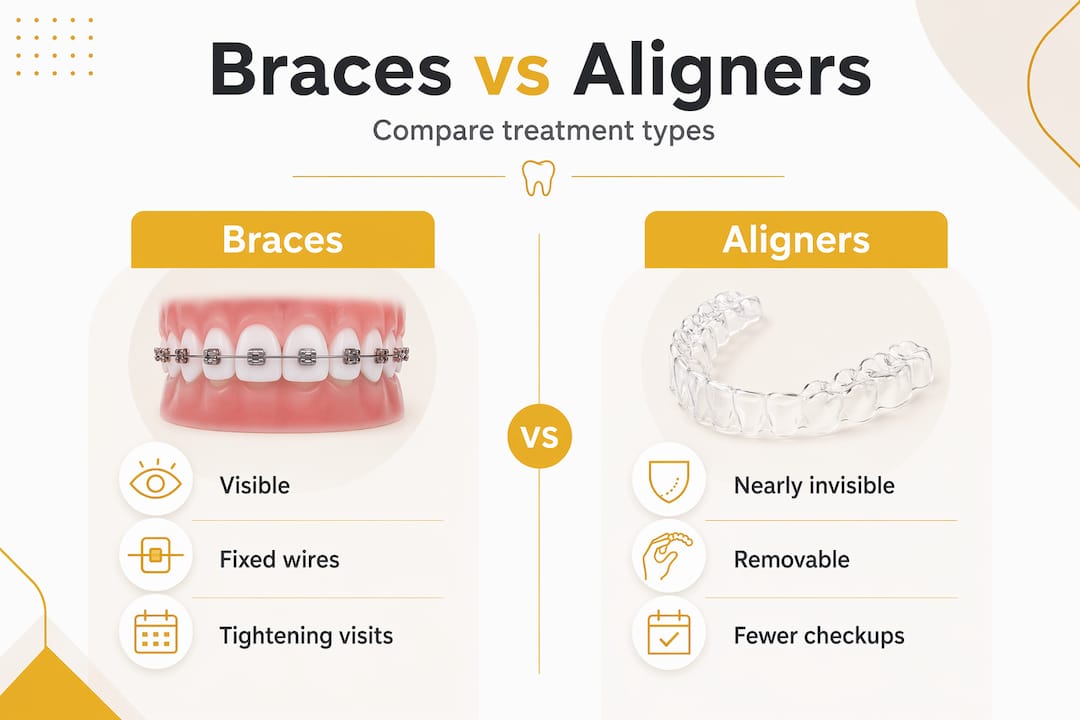
Patients using clear aligners must wear them at least 22 hours daily for treatment to stay on schedule. Skipping hours might feel harmless in the moment, but it directly risks treatment delays and complications. This is not a rule that orthodontists enforce arbitrarily. It reflects the biological reality of tooth movement.
Beyond braces: other devices orthodontists use
Orthodontic treatments beyond braces include devices that most people have never heard of until they need one:
- Palatal expanders. These widen the upper jaw gradually, creating space for crowded teeth and correcting narrow arches. They work most effectively during childhood when jaw bones are still growing.
- Growth guidance appliances. Devices like herbst appliances or functional appliances are used to redirect jaw growth in children, reducing the need for more invasive corrections later.
- Retainers. After active treatment, retainers hold teeth in their new positions. Skipping this phase is one of the most common reasons orthodontic results shift over time.
Two-phase treatment for children
Two-phase treatment is an approach specific to growing patients. Phase one begins while baby teeth are still present and focuses on guiding jaw development and correcting significant bite problems early. Phase two follows after permanent teeth have erupted and addresses final alignment. Early intervention during phase one can reduce the complexity of phase two significantly, and in some cases eliminates the need for certain procedures entirely.
Pro Tip: The American Association of Orthodontists recommends that children receive their first orthodontic evaluation by age seven. This does not mean treatment starts at seven. It means your orthodontist can identify developing problems early enough to act at the right time.
The real health benefits of orthodontic care
There is a common misconception that orthodontic treatment is primarily cosmetic. A straighter smile is a real benefit. But it is not the only one, and for many patients it is not even the most important one.
Properly aligned teeth are significantly easier to clean. Crowded or overlapping teeth create pockets where a toothbrush and floss simply cannot reach effectively. Those pockets become breeding grounds for bacteria, raising your risk of cavities and gum disease over time. Orthodontic treatment removes those hiding spots.
A balanced bite protects your teeth from uneven wear. When teeth do not come together correctly, some bear disproportionate force with every bite. That stress adds up over years, contributing to worn enamel, fractures, and chronic jaw discomfort.
“Orthodontic care improves oral health by facilitating easier cleaning and reducing jaw discomfort, highlighting its medical significance beyond appearance.” — American Association of Orthodontists
Timing matters too. Treatment outcomes are driven more by the quality of the custom plan and patient compliance than by which appliance is used. An expert orthodontist sequences tooth movements strategically, managing forces across the full arch rather than simply pushing teeth into new positions. That expertise is what separates specialist care from general dental offices offering orthodontic services as an add-on.
My take on what patients consistently underestimate
Most people who walk into an orthodontic office for the first time are focused on the appliance. They want to know if it is braces or Invisalign, how long it takes, and roughly what it costs. All reasonable questions. But in my experience, that framing skips over the part that actually determines whether treatment succeeds.
What I have seen consistently is that patients underestimate the complexity behind the plan itself. Moving teeth is not mechanical. It is biological. An orthodontist is managing bone remodeling, soft tissue response, and growth patterns all at once. The appliance is just the tool. The sequencing, the timing, the management of anchorage, these are the variables that experienced orthodontists have spent years learning to control.
I also think the credential question does not get enough attention. Not every provider placing aligners or braces completed a formal orthodontic residency. It is worth asking directly. A specialist who completed the full residency training brings a level of biomechanical understanding that simply cannot be replicated through a weekend course or a software subscription.
The other thing patients consistently overlook is how much their own behavior shapes the result. Compliance with aligner wear, attending scheduled adjustments, wearing retainers after treatment. These are not optional. They are built into the outcome. The best orthodontist in the world cannot compensate for a patient who wears their aligners six hours a day.
— Juiced
Start your orthodontic care at Gloworthodontics
If you have been researching what orthodontists do and wondering what the next step looks like for your family or yourself, Gloworthodontics in Langley, British Columbia, is built for exactly that conversation.

The team at Gloworthodontics offers personalized consultations where your bite, jaw, and alignment goals are assessed with modern digital imaging. Whether you are exploring Invisalign treatment for adults or looking into treatment options for a teenager, every plan is designed around your specific needs, not a one-size-fits-all approach. Families can explore the teen orthodontic guide to understand what to expect throughout the process. And if you are dealing with crooked teeth and want to understand what correction looks like step by step, that resource walks you through the full journey. Reach out to Gloworthodontics to book your consultation and get a clear picture of your options from a qualified specialist.
FAQ
What is the difference between an orthodontist and a dentist?
An orthodontist is a dental specialist who completes 2-3 years of additional residency training beyond dental school, focusing exclusively on tooth movement, bite correction, and jaw alignment. A general dentist provides broad dental care but does not have this specialized training.
What age should a child first see an orthodontist?
The American Association of Orthodontists recommends a first orthodontic evaluation by age seven. Early assessment allows the orthodontist to monitor jaw growth and identify any issues that benefit from early intervention.
How long does orthodontic treatment take?
Treatment duration varies depending on the complexity of the case, but most patients complete treatment within 12 to 24 months. Early intervention in children can shorten the length of later comprehensive treatment.
Are clear aligners as effective as braces?
Clear aligners work well for mild to moderate alignment issues, while traditional braces remain more effective for complex corrections involving significant bite or jaw problems. Your orthodontist’s expertise and your compliance with wearing the aligners are the biggest factors in the outcome.
Do I need a referral to see an orthodontist?
No referral is typically required to schedule an orthodontic consultation. You can contact an orthodontic office directly to book an initial assessment and begin the diagnostic process.