Orthodontic Treatment in BC: What You Need to Know
July 24, 2026
Orthodontic Treatment in BC: What You Need to Know
TL;DR:
- Orthodontic treatment in BC improves dental function and appearance through appliances like braces and aligners.
- It involves three phases: diagnosis, active treatment, and lifelong retention to maintain results.
What is orthodontic treatment in BC, explained simply
Orthodontic treatment is a dental specialty focused on correcting misaligned teeth and jaws to improve both function and appearance. In British Columbia, licensed orthodontists diagnose and treat these issues using appliances like braces, clear aligners, retainers, and expanders. The goal is not just a straighter smile. Correcting a bad bite reduces wear on teeth, makes cleaning easier, and can prevent jaw pain down the road.
Here is what orthodontic treatment in BC typically involves:
- Appliances: Metal braces, ceramic braces, clear aligners (such as Invisalign), retainers, and palatal expanders
- Purpose: Correcting malocclusion (misaligned bite), crowding, spacing, and jaw imbalance
- Duration: Around two years on average, though this varies by age and case complexity
- Commitment: Regular adjustment visits every 6–8 weeks throughout active treatment
- Aftercare: Retainer wear after active treatment to maintain results long term
Who actually needs orthodontic care, and why it starts young
Malocclusion, or “bad bite,” covers a range of issues: crowded teeth, overbites, underbites, crossbites, and gaps. Left untreated, these problems can cause uneven tooth wear, difficulty chewing, and increased cavity risk. The Canadian Dental Association recommends an orthodontic assessment at around age 7, when the jaw is still developing and early intervention can prevent more invasive procedures later.
Orthodontists are not the same as general dentists. They complete an additional two to three years of specialty training after dental school, focusing exclusively on tooth movement and jaw development. That distinction matters when a case involves jaw surgery, significant crowding, or a growing child whose bone structure is still changing.
Patients who benefit from orthodontic care include:
- Children (ages 7–12): Early screening catches jaw development issues while bone is still malleable
- Teens: The most common treatment window, when most permanent teeth have erupted
- Adults: Orthodontic treatment works at any age, though cases can be more complex and take longer
- Patients with craniofacial conditions: Cleft palate, severe skeletal discrepancies, and similar conditions often require coordinated orthodontic and surgical care
How the treatment process unfolds from start to finish
A comprehensive orthodontic treatment plan moves through three distinct phases, each with its own timeline and goals.
| Phase | What happens | Typical duration |
|---|---|---|
| Consultation and diagnosis | X-rays, photos, impressions, treatment planning | 1–2 appointments |
| Active treatment | Appliance wear, regular adjustments, monitoring | Around two years on average, though duration varies by age and case complexity, and adults may require longer |
| Retention | Retainer wear to stabilize new tooth positions | Lifelong |
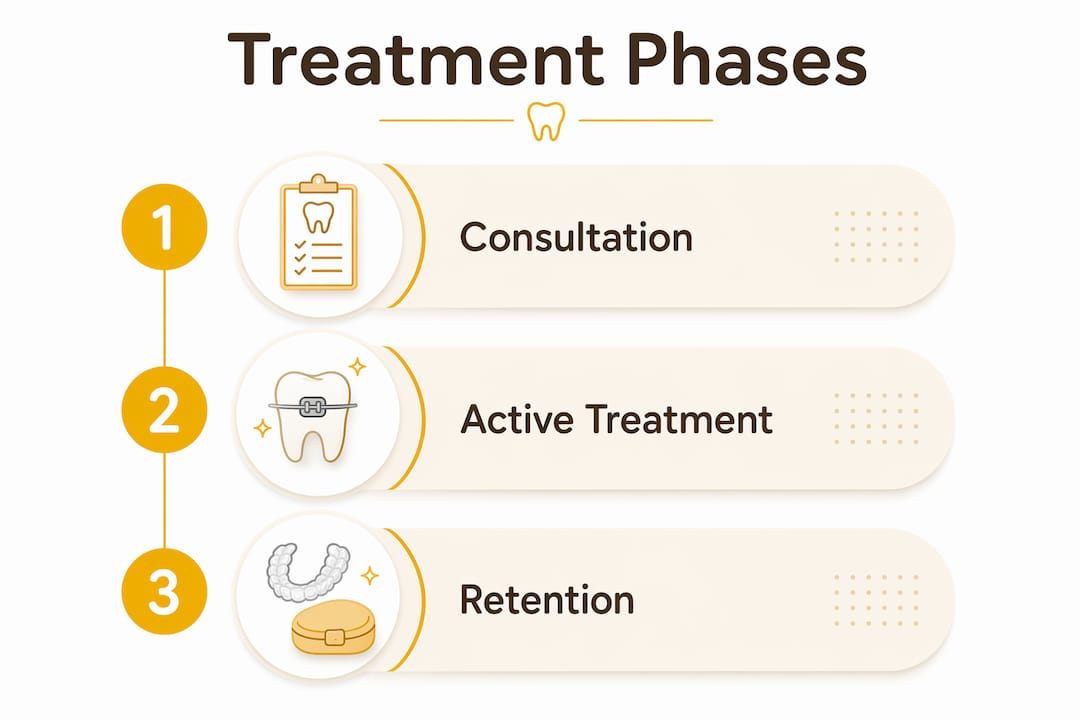
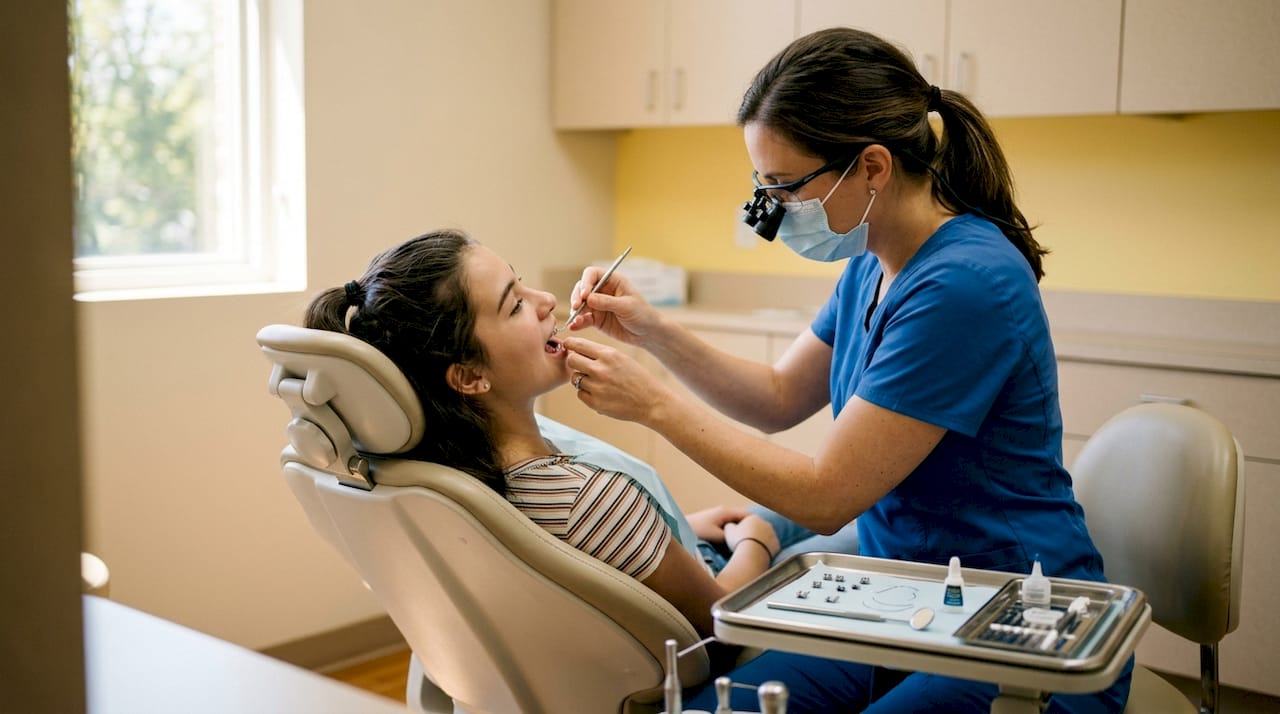
Phase 1: Consultation. Your orthodontist takes X-rays and digital scans to map your bite and jaw structure. This is where the treatment plan is built, including which appliances will be used and a projected timeline.
Phase 2: Active treatment. Braces or aligners apply gentle, continuous pressure to shift teeth into their target positions. Adjustment visits every 6–8 weeks let the orthodontist monitor progress and make changes. Age and case severity are the two biggest factors affecting how long this phase runs.
Phase 3: Retention. Once active treatment ends, retainers hold teeth in place while the surrounding bone rebuilds. Skipping this phase is the most common reason teeth drift back. The Invisalign treatment process follows the same three-phase structure, just with removable trays instead of fixed brackets.
What types of appliances are used in BC orthodontic offices
| Appliance | How it works | Best for |
|---|---|---|
| Metal braces | Fixed brackets and wires apply continuous pressure | Complex cases, all ages |
| Ceramic braces | Same as metal but tooth-colored brackets | Patients wanting less visibility |
| Clear aligners | Removable trays changed every 1–2 weeks | Mild to moderate cases, adults and teens |
| Retainers | Hold teeth post-treatment; fixed or removable | All patients after active treatment |
| Palatal expanders | Widen the upper jaw to create space | Children with narrow arches |
Clear aligners have grown in popularity across BC because they are removable and nearly invisible. That said, they require discipline. Patients need to wear them 20–22 hours per day to stay on track. Metal braces remain the most effective option for complex bite corrections because they give the orthodontist more precise control over tooth movement. Wondering how clear braces compare to Invisalign? The differences go beyond aesthetics.
Benefits and risks worth knowing before you start
Orthodontic treatment delivers real, lasting health benefits beyond cosmetics.
Benefits:
- Corrects bite problems that cause uneven tooth wear and jaw strain
- Makes teeth easier to clean, lowering cavity and gum disease risk
- Improves speech in cases where tooth position affects articulation
- Boosts confidence, particularly for teens navigating social environments
Risks and challenges to plan for:
- Discomfort after adjustments, typically lasting 2–3 days
- Increased plaque buildup around brackets if oral hygiene slips
- Treatment relapse if retainers are not worn consistently after completion
- Longer treatment times for adults due to denser bone structure
Good oral hygiene with braces is not optional. Brackets create extra surfaces where food and plaque collect. Patients who skip thorough brushing and flossing during treatment often finish with straight teeth and new cavities.
What orthodontic treatment costs in BC and how coverage works
Orthodontic costs in BC vary by treatment type and case complexity. Metal braces typically run in the range of $4,000–$7,000, while clear aligner treatment tends to sit at a similar or slightly higher price point depending on the provider and case length. Many orthodontic offices offer payment plans to spread costs over the treatment period.
BC Medical Services Plan (MSP) does not cover routine orthodontic treatment. Limited funding exists only for severe medical conditions such as cleft lip and palate, for children under 19, applied through the Ministry of Health for qualifying cases.
Key financial facts for BC residents:
- Private dental insurance: Many employer benefit plans cover 50% of orthodontic costs up to a lifetime maximum, commonly $1,500–$3,000
- Children in care: Youth in permanent care or custody in BC may access orthodontic benefits through the Medical Benefits Program, with coverage up to $5,000 lifetime, for conditions including severe overbite, crossbites, or craniofacial anomalies
- Flexible spending accounts: Many BC residents use health spending accounts through their employer to cover the gap between insurance and actual costs
- Payment plans: Most orthodontic offices in BC offer in-house financing with no or low interest
For a deeper look at navigating braces insurance coverage, including what to ask your plan administrator, the details matter more than most patients expect. Canadians traveling or studying abroad should also confirm whether their dental coverage abroad includes orthodontic emergencies.
Expert insights from Glow Orthodontics in Langley, BC
Gloworthodontics, based in Langley, BC, takes a patient-first approach that combines thorough clinical assessment with clear communication at every stage. The team emphasizes that braces and aligners work by applying gentle, sustained pressure over months, gradually shifting teeth as the surrounding bone remodels around them. Rushing that process or skipping appointments extends treatment unnecessarily.
One point the Gloworthodontics team stresses consistently: retention is not the end of treatment. It is the part that protects everything you worked for.
Pro Tip: Wear your retainer every night indefinitely. Bone remodeling and natural tooth movement continue for years after braces come off. Patients who stop wearing retainers after a few years often see noticeable drift, even after a successful active phase.
- Retainers are custom-made based on your specific malocclusion and bite correction
- Fixed retainers (bonded behind the teeth) are often recommended for patients with a history of crowding
- Removable retainers need cleaning daily and replacement every few years
How to find a licensed orthodontic provider in British Columbia
All orthodontists practicing in BC must be registered with the College of Dental Surgeons of British Columbia (CDSBC), which maintains a public directory of licensed dental specialists. You can verify any provider’s credentials directly through the CDSBC registry before booking a consultation.

The BC Orthodontic Association also lists member orthodontists across the province. Membership signals a commitment to continuing education and adherence to current clinical standards. When choosing a provider, look for a specialist who completed an accredited orthodontic residency program, not just a general dentist offering orthodontic services as an add-on.
For orthodontic care for teens, finding a provider experienced with growing patients makes a real difference in treatment planning and outcomes.
Regulations and standards governing orthodontic practices in BC
Orthodontic practices in BC operate under the Health Professions Act and are regulated by the CDSBC. Every licensed orthodontist must meet continuing education requirements to maintain their registration, keeping clinical skills current as techniques and materials evolve.
The CDSBC sets standards for infection control, record keeping, and patient consent that all dental specialists must follow. Orthodontic offices are subject to practice inspections to verify compliance. Patients have the right to access their own treatment records and to file a complaint with the CDSBC if they have concerns about their care.
Gloworthodontics: orthodontic care built around your life in Langley
Choosing orthodontic treatment means committing to a process that spans months or years. Gloworthodontics makes that commitment easier by pairing specialist-level clinical care with a warm, family-friendly environment in Langley, BC.

Whether you are exploring braces for your child, considering Invisalign as an adult, or trying to make sense of what your insurance actually covers, Gloworthodontics offers personalized consultations that start with your specific situation, not a one-size-fits-all plan. The team walks you through every phase, from your first X-rays to your final retainer fitting, with clear timelines and honest answers about cost. Ready to take the first step? Book a consultation with Gloworthodontics in Langley and get a treatment plan built around your smile goals.
Key Takeaways
Orthodontic treatment in BC covers far more than aesthetics: it corrects bite function, protects long-term oral health, and requires a lifelong retention commitment to hold results.
| Point | Details |
|---|---|
| Early assessment matters | The Canadian Dental Association recommends an orthodontic screening at age 7 to guide jaw development. |
| Treatment averages two years | Active treatment typically lasts around two years on average, though duration depends on age and case severity. Adults often require longer due to denser bone. |
| MSP does not cover routine care | BC Medical Services Plan only funds orthodontics for severe medical conditions in children under 19. |
| Retention is lifelong | Bone remodeling continues after braces come off; consistent retainer wear prevents tooth drift. |
| Gloworthodontics in Langley | Offers personalized orthodontic consultations and treatment plans for children, teens, and adults in BC. |