Average cost of braces in Langley, BC in 2026
March 9, 2026
Average cost of braces in Langley, BC in 2026
Orthodontic treatment costs in Canada typically range from CAD 3,000 to 7,000, but what you actually pay depends on factors many families overlook. Beyond the base price, treatment length, braces type, and hidden fees can shift your final bill significantly. This guide breaks down the real cost drivers, insurance options, and long term value of braces to help Langley families make confident, informed decisions for their children’s dental health.
Table of Contents
- Understanding The Basics: What Are Braces And Why They Matter
- Average Cost Of Braces In Langley, BC
- Types Of Braces And Their Impact On Cost
- Factors Influencing Braces Costs
- Insurance, Payment Plans, And Financial Assistance Options
- Common Misconceptions About Braces Costs
- Long Term Financial Benefits Vs. Upfront Costs
- Explore Orthodontic Care Options In Langley With Glow Orthodontics
- Frequently Asked Questions
Key takeaways
| Point | Details |
|---|---|
| Average cost | Traditional braces in Langley typically cost CAD 3,000 to 7,000, varying by treatment complexity and duration. |
| Cost drivers | Braces type, treatment length, dental severity, and additional fees like retainers and imaging influence final price. |
| Insurance support | Most BC dental plans cover 30 to 50 percent of orthodontic costs, leaving families responsible for the remainder. |
| Payment flexibility | Many clinics offer financing plans to spread costs over time, reducing upfront financial burden. |
| Long term value | Proper orthodontic care reduces future dental expenses by preventing cavities and gum disease, justifying the initial investment. |
Understanding the basics: what are braces and why they matter
Braces are orthodontic devices that gradually shift teeth into proper alignment using brackets, wires, and elastic bands. They correct misalignment issues like crooked teeth, overbites, underbites, and crossbites that can affect chewing, speech, and jaw function. Without treatment, these problems often worsen over time, leading to tooth decay, gum disease, and even jaw pain.
Orthodontists typically recommend braces for children between ages 8 and 14, when permanent teeth have emerged and jaw growth is still active. Early intervention during this window often reduces treatment complexity and duration. Treatment usually spans 18 to 36 months, depending on severity, with monthly adjustment appointments to tighten wires and monitor progress.
The benefits extend beyond aesthetics. Properly aligned teeth are easier to clean, reducing cavity risk by up to 40 percent. Children also gain confidence from improved smiles, which research links to better social outcomes and self esteem. For families exploring options, consulting best kids orthodontists in Langley ensures personalized treatment plans tailored to your child’s needs.
Key orthodontic issues braces address include:
- Crowded or overlapping teeth that trap food and plaque
- Gaps between teeth that affect bite function
- Protruding front teeth vulnerable to injury
- Jaw alignment problems causing discomfort or headaches
Starting treatment at the right time prevents these issues from escalating into costly dental procedures later. Understanding braces basics helps you evaluate treatment options and costs more effectively.
Average cost of braces in Langley, BC
Traditional braces cost between CAD 3,000 and 7,000 across Canada, with Langley prices falling within this range. Regional factors like clinic overhead, specialist experience, and local demand influence where your quote lands. Urban areas with higher operating costs often charge toward the upper end, while suburban practices may offer more competitive rates.
Initial consultations in Langley typically cost CAD 100 to 250, though many clinics waive this fee if you proceed with treatment. This visit includes a comprehensive exam, X-rays, photos, and a personalized treatment plan. Diagnostic imaging adds another CAD 150 to 300 upfront, covering digital scans and bite impressions that guide your orthodontist’s approach.
| Cost component | Typical range (CAD) |
|---|---|
| Initial consultation | 100 to 250 |
| Diagnostic imaging | 150 to 300 |
| Traditional metal braces | 3,000 to 5,500 |
| Ceramic braces | 4,000 to 6,500 |
| Lingual braces | 5,000 to 8,000 |
| Invisalign | 4,500 to 7,500 |
| Retainers | 300 to 600 |
Understanding these components helps you budget accurately and avoid surprises. For detailed breakdowns specific to children’s treatment, explore cost of braces kids Langley resources that outline age-related considerations. Insurance coverage varies widely, so reviewing your plan’s orthodontic benefits early streamlines financial planning. Check braces coverage in Langley guide for insights on maximizing your benefits.
Factors driving cost differences:
- Orthodontist’s years of experience and specialization
- Clinic location and facility quality
- Technology used for diagnostics and treatment monitoring
- Complexity of your child’s dental issues
Getting quotes from multiple providers lets you compare not just prices but treatment philosophies and payment flexibility. Transparency about all fees upfront prevents budget strain midway through treatment.
Types of braces and their impact on cost
Traditional metal braces remain the most affordable and clinically effective option, using stainless steel brackets and wires to move teeth predictably. They cost CAD 3,000 to 5,500 in Langley and work well for complex cases requiring precise control. While visible, modern designs are smaller and more comfortable than older versions.
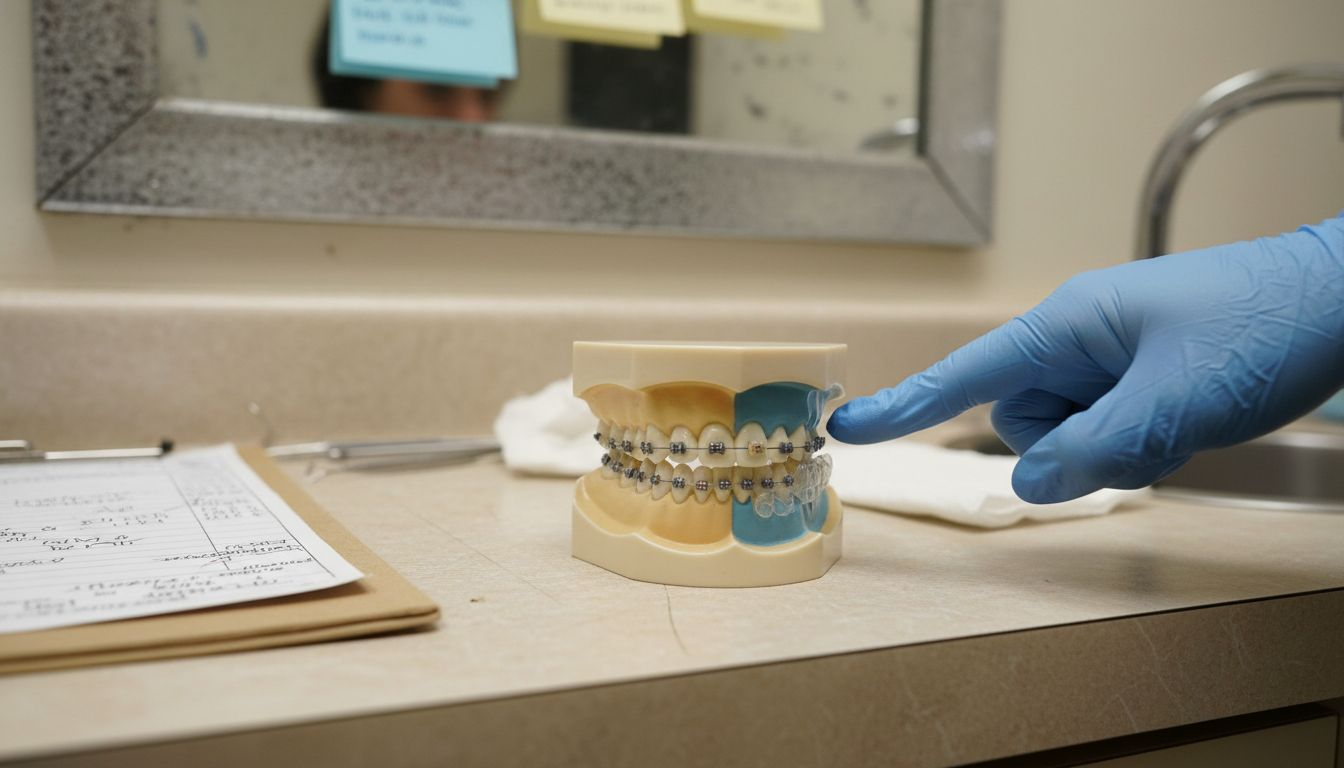
Ceramic braces function identically to metal braces but use tooth-colored or clear brackets that blend with your smile. They cost 20 to 30 percent more, typically CAD 4,000 to 6,500, appealing to teens concerned about appearance. However, ceramic brackets are slightly more fragile and may stain if oral hygiene slips.
Lingual braces attach to the back of teeth, making them virtually invisible from the front. This customization increases cost by 30 to 50 percent, ranging from CAD 5,000 to 8,000. They require more frequent adjustments and cause temporary speech changes as your tongue adapts. Only specialized orthodontists offer this option, limiting availability.
Invisalign uses clear, removable aligners that gradually shift teeth through a series of custom trays. Costs range from CAD 4,500 to 7,500, positioning them at the higher end. They suit mild to moderate cases and offer convenience since you can remove them for eating and cleaning. However, compliance is critical; teens must wear aligners 22 hours daily for results.
| Braces type | Cost range (CAD) | Visibility | Ideal for |
|---|---|---|---|
| Traditional metal | 3,000 to 5,500 | High | Complex cases, all ages |
| Ceramic | 4,000 to 6,500 | Low | Teens wanting discreet option |
| Lingual | 5,000 to 8,000 | None | Adults, image-conscious patients |
| Invisalign | 4,500 to 7,500 | Minimal | Mild to moderate misalignment |
Comparing best braces for kids helps you weigh aesthetics against budget and treatment goals. For families debating clear aligners, reviewing braces or Invisalign options clarifies which method suits your child’s lifestyle and dental needs.
Pro Tip: Don’t choose braces solely on cost or appearance. Your orthodontist’s recommendation considers clinical factors like bite complexity and jaw growth patterns that affect long term success.
Factors influencing braces costs
Treatment duration directly impacts total cost since longer care requires more appointments, adjustments, and monitoring. Simple cases may resolve in 12 to 18 months, while severe misalignment can extend to 36 months or beyond. Each monthly visit adds to your bill through adjustment fees, typically CAD 100 to 150 per appointment.
Dental complexity is the biggest cost driver. Children with mild crowding need less intervention than those with jaw discrepancies requiring surgical planning or additional appliances. Orthodontists assess severity using classification systems that guide treatment intensity and duration, directly affecting your quote.
Adjustment frequency varies by braces type. Traditional braces need tightening every four to six weeks, while Invisalign requires less frequent check-ins. However, clear aligners demand strict compliance; missed wear time can extend treatment and increase costs. Emergency visits for broken brackets or lost aligners add unplanned expenses, averaging CAD 75 to 200 per incident.
Additional costs families often overlook:
- Retainers after braces removal, costing CAD 300 to 600
- Follow up visits during retention phase, typically six to 12 months
- Replacement retainers if lost or damaged
- Advanced imaging or 3D scans for complex cases
- Dental cleanings every three months during treatment
Hidden fees can inflate your final bill by 10 to 15 percent. Request a comprehensive written estimate covering all phases, including retention, before starting treatment. Understanding cost of braces kids Langley resources helps you anticipate these variables and budget accordingly.
Pro Tip: Ask your orthodontist upfront about their policy on emergency visits and replacement appliances. Some clinics include these in the base fee, while others charge per incident.
Insurance, payment plans, and financial assistance options
Most dental insurance plans in BC cover 30 to 50 percent of orthodontic treatment costs, subject to lifetime maximums typically between CAD 1,500 and 3,000. Coverage varies by employer plan, so verify your specific benefits before committing to treatment. Some policies require pre-authorization, meaning your orthodontist must submit a treatment plan for approval before you start.
Orthodontic payment plans spread costs over treatment duration, easing upfront financial pressure. Many Langley clinics offer zero interest financing if you complete payments within 12 to 24 months. Third party financing companies provide longer terms with interest rates around 6 to 10 percent annually, useful if your budget needs more flexibility.
Some practices offer sliding scale fees or in-house discounts for families paying in full upfront, saving 5 to 10 percent off total costs. Health spending accounts (HSAs) and flexible spending accounts (FSAs) let you use pre-tax dollars for orthodontic care, effectively reducing your out-of-pocket expense by your marginal tax rate.
Financial assistance options to explore:
- Provincial dental assistance programs for low income families
- Charitable organizations offering grants for children’s orthodontic care
- Employer benefits coordination if both parents have dental coverage
- Credit union dental loans with competitive rates
Parents should review coverage details carefully, noting waiting periods, exclusions, and maximum benefit limits. Understanding braces insurance coverage guide clarifies what your plan typically covers and where gaps exist. For comprehensive cost and coverage breakdowns, consult braces insurance coverage and costs resources that outline strategies to maximize your benefits.
Awareness of payment and assistance options reduces financial stress during treatment, letting you focus on your child’s dental health outcomes rather than budget concerns.
Common misconceptions about braces costs
Many families assume cheaper braces mean inferior quality or poor outcomes, but price doesn’t always reflect clinical effectiveness. Lower quotes may come from newer practices with lower overhead or orthodontists using efficient treatment protocols. Conversely, premium pricing sometimes covers luxury amenities rather than better dental results.
Another myth is that the quoted price covers everything. Base fees typically exclude retainers, emergency visits, and extended treatment if progress stalls. These extras can add 10 to 20 percent to your final bill. Always request an itemized estimate showing every potential cost, not just the headline number.
Families often believe insurance will cover most expenses, but orthodontic benefits rarely exceed 50 percent and carry lifetime caps. Once you hit your maximum, you’re responsible for all remaining costs. Understanding cost of braces kids Langley realities helps set accurate financial expectations from day one.
Some parents think delaying treatment saves money, but postponing care can worsen dental issues, requiring more complex and expensive intervention later. Early treatment often simplifies corrections and shortens overall duration, reducing total costs.
Key cost misconceptions debunked:
- Higher price guarantees better results (not always; experience and fit matter more)
- All orthodontists charge similarly (quotes vary 30 percent or more locally)
- Payment plans cost more than paying upfront (many offer zero interest options)
- Insurance covers braces fully (most cover 30 to 50 percent with caps)
Value includes your orthodontist’s experience, communication style, and treatment philosophy alongside price. Choosing solely on cost can lead to longer treatment times or suboptimal outcomes that cost more to fix later.
Long term financial benefits vs. upfront costs
Investing in braces now prevents expensive dental problems down the road. Proper orthodontic treatment reduces future costs by up to 30 percent by preventing cavities and gum disease linked to misalignment. Crooked teeth trap plaque in hard to reach areas, increasing decay risk and leading to fillings, root canals, or extractions that each cost hundreds to thousands of dollars.
Straight teeth also reduce wear on tooth enamel and jaw joints, preventing temporomandibular joint (TMJ) disorders that require specialized treatment. TMJ therapy can cost CAD 2,000 to 5,000 annually, far exceeding braces expenses. Correcting bite issues early avoids these chronic conditions and their associated costs.
Beyond physical health, orthodontic care delivers measurable psychological benefits. Studies show children with straight smiles report higher self-esteem and experience less social anxiety. These confidence gains translate into better academic and career outcomes over a lifetime, though harder to quantify financially.
Comparing costs over time:
Spending CAD 5,000 on braces today can prevent CAD 15,000 to 20,000 in dental work over 20 years by maintaining healthier teeth and gums.
Financial decisions should weigh long term savings against current expenses. While braces require significant upfront investment, the return comes through decades of improved oral health and reduced treatment needs. Families who understand economic benefits of orthodontic care recognize that quality treatment pays dividends far beyond the initial price tag.
Viewing braces as preventive care rather than cosmetic expense reframes the value proposition. You’re not just buying straight teeth; you’re investing in lifelong dental health and confidence that compounds over time.
Explore orthodontic care options in Langley with Glow Orthodontics
Understanding braces costs and long term benefits positions you to make informed decisions for your child’s orthodontic journey. Glow Orthodontics offers expert care tailored to children and teens in Langley, combining clinical excellence with personalized treatment plans that fit your family’s needs and budget.

Our team specializes in creating comfortable, effective treatment experiences whether you choose traditional braces, clear aligners, or other options. Explore detailed guides about different braces types and treatment processes on our website, including orthodontic care for teens guide and Invisalign treatment process guide that walk you through what to expect at every stage.
We work with most insurance providers to maximize your benefits and offer flexible payment plans that spread costs comfortably over your treatment timeline. Schedule a consultation at Glow Orthodontics Langley to discuss your child’s specific needs, get accurate cost estimates, and learn how we make quality orthodontic care accessible to families throughout Langley.
Frequently asked questions
What is the average cost of braces in Langley, BC?
Traditional metal braces typically cost between CAD 3,000 and 5,500 in Langley, while ceramic braces range from CAD 4,000 to 6,500. Treatment complexity and duration influence where your quote falls within these ranges.
Does insurance cover braces for children in BC?
Most BC dental insurance plans cover 30 to 50 percent of orthodontic treatment costs, subject to lifetime maximums usually between CAD 1,500 and 3,000. Coverage varies by employer plan, so verify your specific benefits before starting treatment.
How long does orthodontic treatment typically last?
Treatment duration ranges from 18 to 36 months depending on dental complexity and the braces type chosen. Simple alignment cases may resolve in 12 to 18 months, while severe bite issues can extend beyond three years.
Are payment plans available for braces?
Yes, most Langley orthodontic clinics offer payment plans that spread costs over your treatment duration. Many provide zero interest financing for 12 to 24 months, and third party options extend terms longer with interest rates around 6 to 10 percent annually.
What additional costs should I budget for besides braces?
Expect to pay CAD 300 to 600 for retainers after braces removal, plus CAD 100 to 250 for initial consultations and CAD 150 to 300 for diagnostic imaging. Emergency visits for broken brackets or adjustments add CAD 75 to 200 per incident, and regular dental cleanings during treatment cost extra.