Benefits of Drinking Water: Complete Essential Guide
November 9, 2025
Benefits of Drinking Water: Complete Essential Guide
Most people get hydration wrong. Nearly half of adults are chronically under-hydrated, missing out on key health benefits and risking preventable problems. Water does more than quench thirst. It fuels every system in your body, supports brain function, and even strengthens your teeth. Understanding what real hydration means—and why blanket advice often fails—puts you a step ahead in building daily habits that actually support your long-term health.
Table of Contents
- Hydration Basics And Misconceptions Explained
- Key Health Benefits Of Daily Water Intake
- How Much Water You Really Need
- Risks Of Dehydration And Common Pitfalls
- Drinking Water’s Role In Oral Health
Key Takeaways
| Point | Details |
|---|---|
| Personalized Hydration | Hydration needs vary significantly based on individual factors such as body composition, activity level, and health conditions. |
| Health Benefits of Water | Consistent water intake supports weight management, metabolic function, and overall bodily processes, enhancing overall wellness. |
| Dehydration Risks | Mild dehydration can impair cognitive function and lead to serious health complications, making proactive hydration essential. |
| Oral Health Importance | Regular water intake supports oral health by promoting saliva production and neutralizing harmful bacteria, acting as a natural defense against dental issues. |
Hydration Basics and Misconceptions Explained
Water isn’t just a beverage. It’s a fundamental component of human survival and wellness that most people dramatically misunderstand. According to research from PubMed, the “hydration for health” hypothesis reveals complex physiological roles beyond simple liquid consumption.
Contrary to popular belief, hydration needs are deeply personalized. Water intake isn’t a one-size-fits-all recommendation. As Harvard Health highlights, the traditional advice of drinking eight glasses daily is an oversimplification that fails to account for individual variations like body composition, activity level, climate, and overall health.
Key hydration insights include:
- Individual water requirements vary significantly
- Your body signals hydration needs through thirst mechanisms
- Climate and physical activity dramatically impact fluid requirements
- Certain health conditions can alter hydration needs
Effective hydration goes beyond quantity. It’s about understanding your body’s unique signals and responding appropriately. Listening to your thirst, monitoring urine color, and recognizing individual factors are more scientifically sound approaches than rigid, universal water consumption guidelines. Your personal hydration strategy should be as unique as your fingerprint.
Key Health Benefits of Daily Water Intake
Water isn’t just a simple liquid – it’s a powerful health catalyst with profound impacts on our body’s functioning. According to research from Science News, a comprehensive systematic review of 18 clinical trials reveals substantial health advantages associated with consistent water consumption.
The most compelling benefits of daily water intake are multifaceted. Metabolic health receives significant positive impacts, with research indicating potential weight management advantages. PubMed studies suggest that increased water intake can contribute to weight loss and metabolic regulation, making hydration a strategic approach to overall wellness.
Key health benefits of consistent water intake include:
- Natural weight management support
- Reduced risk of kidney stone formation
- Potential mitigation of migraine frequency
- Enhanced metabolic function
- Improved cellular hydration and nutrient transportation
Beyond these measurable benefits, water plays a crucial role in maintaining intricate bodily processes. It acts as a transportation system for nutrients, helps regulate body temperature, lubricates joints, and supports cognitive function. Your daily water intake isn’t just about quenching thirst – it’s about providing your body with a fundamental resource for optimal performance and long-term health.

How Much Water You Really Need
The age-old question of water intake isn’t as straightforward as most people think. According to PubMed research, there’s no universal hydration formula that works for everyone. Water requirements are remarkably complex, varying dramatically based on individual physiological factors.
As Harvard Health explains, personal hydration needs are influenced by multiple dynamic elements. Your ideal water intake depends on critical factors like:
- Body weight and composition
- Physical activity level
- Local climate and temperature
- Overall health status
- Dietary habits
- Age and metabolism
Generally, health experts recommend a baseline approach of monitoring your body’s signals. Hydration indicators include urine color (pale yellow suggests good hydration), frequency of thirst, and overall energy levels. While the classic “eight glasses a day” rule persists in popular culture, scientific research suggests a more nuanced perspective. Your body is an intelligent system that communicates its hydration needs through subtle signals. Paying attention to these cues – rather than rigidly following a predetermined water intake schedule – is the most effective way to maintain optimal hydration.
Risks of Dehydration and Common Pitfalls
Dehydration is far more dangerous than most people realize. According to PubMed research, inadequate hydration can trigger a cascade of serious physiological complications that extend far beyond simple thirst.
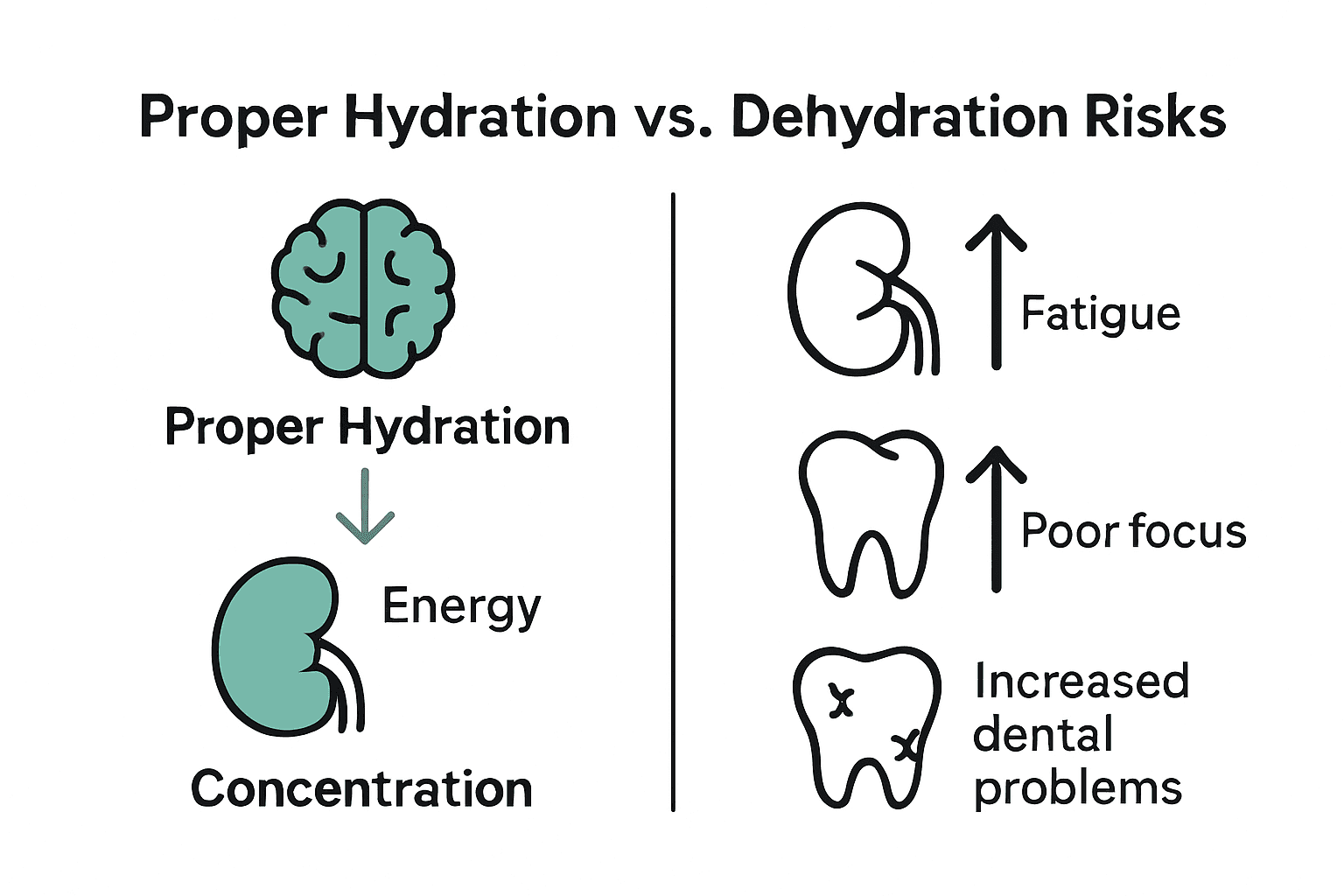
Cognitive function takes an immediate hit when your body lacks sufficient water. Harvard Health highlights that even mild dehydration can significantly impair mental performance, concentration, and overall brain efficiency. The risks aren’t just theoretical – they’re measurable and immediate.
Common dehydration pitfalls include:
- Ignoring early thirst signals
- Replacing water with caffeinated or sugary drinks
- Assuming thirst is the only hydration indicator
- Failing to increase water intake during exercise
- Neglecting hydration in cooler or air-conditioned environments
Understanding dehydration’s nuanced risks is crucial. Your body loses water constantly through breathing, sweating, and metabolic processes. When water loss exceeds intake, your system struggles to maintain optimal function. Cellular communication breaks down, metabolic processes slow, and your body’s natural regulatory mechanisms become compromised. Recognizing these subtle signals and proactively maintaining hydration isn’t just a health recommendation – it’s a fundamental survival strategy.
Drinking Water’s Role in Oral Health
Water is a silent guardian of oral wellness, playing a far more critical role than most people realize. Oral hygiene extends beyond brushing and flossing – hydration is a fundamental component of maintaining a healthy mouth environment.
The mechanisms through which water supports oral health are multifaceted. By consistently rinsing your mouth, water helps dislodge food particles, neutralize harmful bacteria, and maintain a balanced pH level in your oral cavity. Saliva production, which is critically dependent on hydration, serves as a natural defense mechanism against tooth decay and gum disease.
Key oral health benefits of drinking water include:
- Natural mouth cleansing
- Reduction of harmful bacteria
- Stimulation of saliva production
- Prevention of dry mouth syndrome
- Dilution of acidic compounds
Understanding water’s role goes beyond simple hydration. Tap water often contains fluoride, a mineral known to strengthen tooth enamel and prevent cavities. Regular water consumption creates a protective barrier against potential oral health issues, helping maintain a clean, balanced oral microbiome. Think of water as a low-cost, zero-side-effect oral health supplement that works continuously to protect your teeth and gums.
Unlock Your Best Smile through Hydration and Expert Orthodontic Care
Staying properly hydrated is essential for oral health and overall wellness as outlined in the benefits of drinking water. If you want to complement your hydration habits with professional orthodontic care that safeguards your teeth and gums, Glow Orthodontics is here to support you every step of the way. Our personalized treatments, including Invisalign, enhance your smile while maintaining the natural balance of your mouth’s health.

Take control of your oral health and smile confidently by combining smart hydration with expert orthodontic solutions. Visit Glow Orthodontics to learn how our caring team can customize your treatment plan. Don’t wait until dehydration or oral issues affect your smile. Schedule your consultation today and start your journey towards a radiant, healthy smile that lasts.
Frequently Asked Questions
How much water should I drink daily?
Your daily water intake depends on several factors, including body weight, activity level, climate, and overall health. Generally, it’s important to listen to your body’s signals, such as thirst and urine color, rather than adhering strictly to the traditional ‘eight glasses a day’ rule.
What are the health benefits of drinking water?
Drinking water offers numerous health benefits, including natural weight management support, reduced risk of kidney stones, potential mitigation of migraines, enhanced metabolic function, and improved cellular hydration and nutrient transportation.
Can dehydration affect cognitive function?
Yes, dehydration can significantly impair cognitive function. Even mild dehydration can decrease concentration, mental performance, and overall brain efficiency, highlighting the importance of maintaining adequate hydration.
How does water contribute to oral health?
Water plays a vital role in oral health by helping to rinse the mouth, maintaining a balanced pH, stimulating saliva production, and reducing harmful bacteria. Regular consumption also provides fluoride, which protects against cavities.