Helping kids adjust to braces: a parent’s guide
May 8, 2026
Helping kids adjust to braces: a parent’s guide
TL;DR:
- The first days with braces involve predictable discomfort, peaking around days two and three, but typically subsiding within a week. Proper preparation, reassurance, and non-drug comfort strategies significantly ease the adjustment process for children. Maintaining a positive mindset and routine by parents fosters better adaptation and reduces anxiety during orthodontic treatment.
The day your child comes home with braces can feel like a milestone and a challenge rolled into one. Excitement fades quickly when the soreness sets in, usually by that first evening, and suddenly you are fielding questions like “Is this normal?” and “How long will it hurt?” Most parents wonder how severe the discomfort will really be, whether their child can handle it emotionally, and what steps will actually make a difference. The good news is that adjustment is predictable, manageable, and well within reach when you know what to do from day one.
Table of Contents
- What to expect: the first days with braces
- Preparing kids for their new braces
- Practical pain relief and comfort strategies
- Troubleshooting and when to call the orthodontist
- What most parents miss: the power of routine and mindset
- Next steps: find expert support in Langley
- Frequently asked questions
Key Takeaways
| Point | Details |
|---|---|
| Pain fades quickly | Most kids experience the worst discomfort on day one with braces, and it usually fades within a week. |
| Preparation makes a difference | Simple steps like honest talks, soft foods, and pre-treatment exercise can ease your child’s transition. |
| Non-drug relief first | Wax, diet, and cold compresses should be your go-to solutions, reserving medicine for tougher cases. |
| Watch for warning signs | If pain lasts more than seven days or comes with fever, contact your orthodontist promptly. |
What to expect: the first days with braces
Once you know what your child can expect, you can prepare them and your household for an easier transition.
The first 24 to 48 hours after bonding brackets are honestly the hardest part. Pain is strongest on day one post-bonding, with the upper front teeth and molars being the most sensitive areas. By day three, most children are already feeling noticeably better, and the discomfort typically fades entirely within a week. That arc is actually reassuring once you understand it, because the peak does not last long.
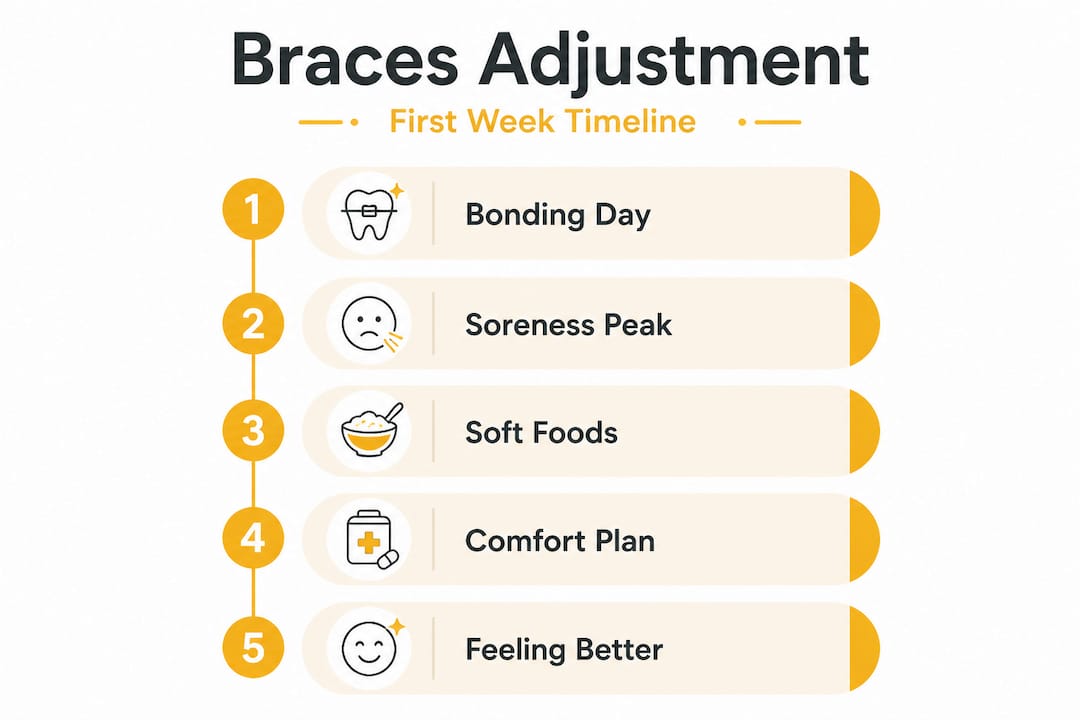
Research also shows that pain pattern preparation aids coping, meaning children who know what to expect beforehand feel less distress when the soreness arrives. Think of it like telling a kid the shot will sting for just a second. Knowing the timeline transforms an unknown threat into a manageable moment.
A few other patterns are worth knowing:
- Upper incisors and molars are the most commonly reported pain sites after bonding
- Girls tend to report slightly higher pain levels than boys during the early adjustment phase
- Self-ligating brackets (brackets that hold the wire without elastic ties) may shorten the duration of peak discomfort compared to conventional brackets
- Emotional responses like frustration, anxiety, or feeling “different” at school are completely normal in the first week
Here is a quick look at what the typical adjustment timeline looks like:
| Day | What your child may feel | What helps most |
|---|---|---|
| Day 1 | Pressure, soreness after bonding | Soft foods, cool water, rest |
| Day 2 to 3 | Peak soreness, sensitive teeth | Wax, cold compresses, distraction |
| Day 4 to 5 | Noticeably improving | Normal soft meals, rinses |
| Day 6 to 7 | Mild residual sensitivity | Returning to most normal foods |
| Week 2 onward | Mostly adjusted | Regular hygiene routine in place |
“Knowing that pain follows a predictable pattern helps children feel less overwhelmed and more in control of their experience.” This is one reason why walking kids through the process before their appointment makes such a measurable difference.
If your child is getting braces soon, reviewing a step-by-step guide for families before bonding day can help everyone feel prepared. You might also find it helpful to look at a virtual vs. in-office consultation comparison if you are still in the early planning phase.
Preparing kids for their new braces
Good preparation puts children at ease and sets the stage for a manageable adjustment.
There is a significant difference between children who walk into their bonding appointment having talked through what to expect and those who go in cold. The preparation phase, even just a few days of conversation and shopping, makes the first week noticeably smoother.
Here is a step-by-step approach to getting ready:
- Have an honest conversation. Tell your child that their teeth and gums will feel sore and that this is normal. Use the day-by-day timeline above so they have a mental roadmap.
- Get moving before the appointment. This sounds surprising, but physical activity before treatment actually improves how well kids handle pain afterward, partly by building their sense of confidence and control. Even a bike ride or swim the day before bonding can help.
- Build a comfort kit. Stock up before the appointment so you are not scrambling at 9 p.m. when a wire is poking.
- Adjust your meal plan. Plan soft foods for the first five to seven days. Cooking a batch of soup or buying yogurt and smoothie ingredients before the appointment removes one layer of stress.
- Talk to the school. Let teachers or the cafeteria know your child just got braces, so there is understanding if they are eating slowly or skipping crunchy items.
Here is a comparison of prepared versus unprepared households in that first week:
| Factor | Prepared household | Unprepared household |
|---|---|---|
| Meal planning | Soft foods ready on day one | Last-minute scrambling, child skips meals |
| Comfort supplies | Wax, rinse, and ice packs on hand | Searching stores with a sore child |
| Emotional readiness | Child knows what to expect | Anxiety spikes with first soreness |
| Parent confidence | Calm and reassuring | Worried and reactive |
Your comfort kit checklist:
- Orthodontic wax (pick up several packs)
- A cold compress or reusable ice pack
- Saltwater rinse supplies or a mild alcohol-free mouthwash
- Children’s acetaminophen or ibuprofen (for severe cases only)
- Soft toothbrush and a floss threader for braces
Pro Tip: Visit your orthodontist’s office for a quick refresher on preparing for braces and ask about any specific products they recommend for the first few days. Many offices give out a starter kit at the bonding appointment, so ask in advance.
Practical pain relief and comfort strategies
Equipped with a comfort plan, families can address common hurdles as they arise.
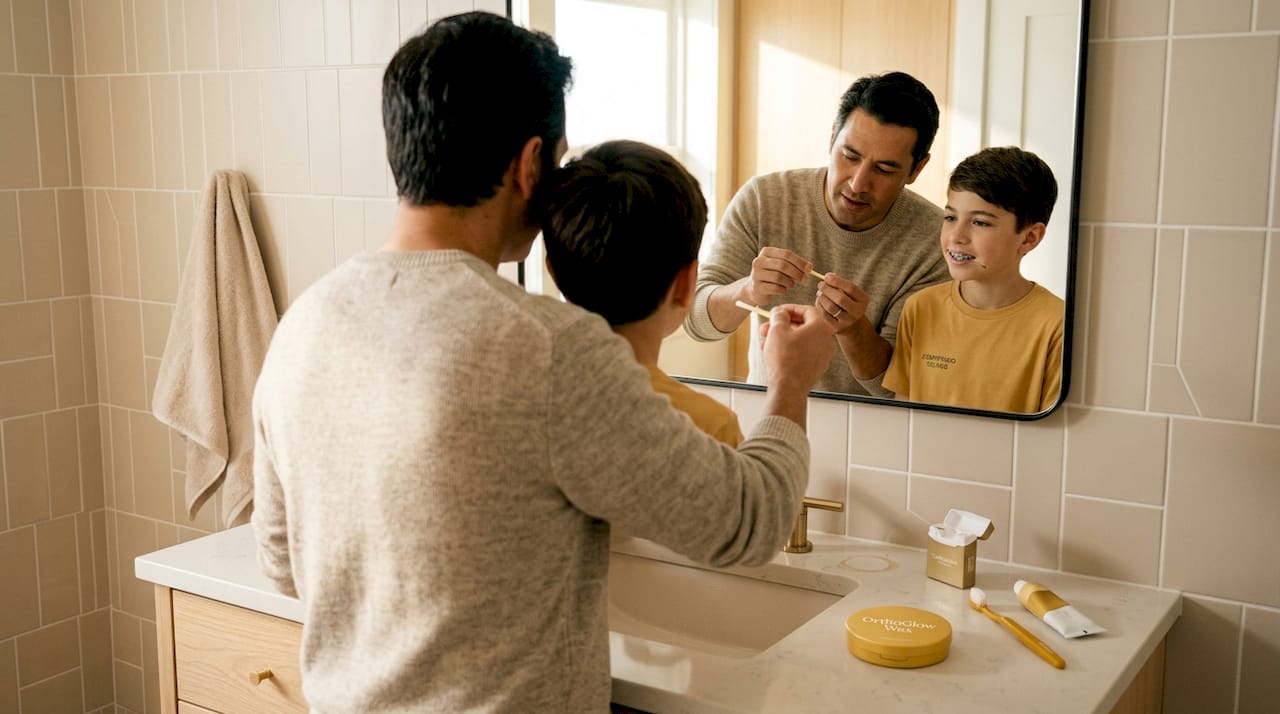
Managing discomfort is not complicated, but you do need to know which tools to reach for first. Research consistently supports starting with non-drug strategies for most children, reserving medication for genuinely severe cases.
Non-drug strategies to try first:
- Orthodontic wax: Roll a small piece into a ball and press it over any bracket or wire causing irritation. This creates a smooth barrier between metal and soft tissue and prevents mouth sores from forming.
- Cold foods and drinks: Cold naturally reduces inflammation and numbs sensitive tissue. Yogurt, smoothies, chilled applesauce, and cold water are all excellent choices.
- Saltwater rinses: Dissolve half a teaspoon of table salt in eight ounces of warm water and have your child rinse for 30 seconds. This reduces gum irritation and keeps the mouth clean.
- Cool compresses: A cold pack held gently against the outside of the cheek can help with soreness in the first couple of days.
- Distraction: Age-appropriate distraction, like a movie marathon or a video game session, genuinely reduces perceived pain in children. The brain’s attention is a powerful tool.
For cases where the discomfort is more intense, mild over-the-counter pain relief is appropriate. A network meta-analysis found that pharmacological options like naproxen and etoricoxib show the strongest results for pain reduction at 24 to 48 hours. However, these are adult formulations, and for most kids aged 7 to 12, children’s acetaminophen or ibuprofen at the recommended dose is the practical choice. Always check with your pharmacist if you are unsure about dosing.
Non-pharmacological methods like low-level laser therapy and vibration devices also show moderate effectiveness in studies, and your orthodontist may offer some of these in-office. However, the simpler home methods above handle the vast majority of cases just fine.
“Prioritize non-drug methods first. For most children, wax, a soft diet, and cold foods are enough to get through the first week comfortably.”
Red flags that warrant a call to the orthodontist rather than home management:
- Pain that persists beyond seven days after bonding or after an adjustment appointment
- Any fever accompanying mouth pain
- Visible swelling of the gums or face
- A wire or bracket that has come loose and is causing injury
Maintaining good oral hygiene also significantly reduces gum irritation. Sore gums combined with plaque buildup make everything worse. Review the basics of dental hygiene with braces to make sure your child’s routine is solid from the start. If something feels wrong rather than just sore, check the guidance on recognizing orthodontic emergencies so you know when to act quickly.
Troubleshooting and when to call the orthodontist
Knowing when to seek guidance brings peace of mind as your child’s adjustment progresses.
Most of what your child feels in the first week falls squarely in the “expected” category. Teeth feel bruised, gums are tender, and chewing feels strange. All of that is normal and resolves on its own. But certain symptoms cross the line from normal adjustment into something that needs professional attention.
Follow these steps when you are unsure whether to call:
- Write down the symptom. When did it start? How would your child rate it on a scale of one to ten? Is it getting better or worse each day?
- Check the timeline. If discomfort began right after bonding or an adjustment and is slowly improving, it is almost certainly normal. If it is staying the same or getting worse after five to six days, that is worth noting.
- Look for additional signs. A sore mouth is one thing. A sore mouth plus a fever is a different situation.
- Call and describe what you documented. Your orthodontist’s team can often triage over the phone and tell you whether to come in or continue managing at home.
If pain lasts more than seven days post-bonding or is accompanied by swelling or fever, contact your orthodontist immediately rather than waiting for a scheduled appointment.
It helps to also read up on what happens to teeth over the full course of treatment. Understanding how teeth shift during orthodontic treatment can answer a lot of questions that come up between appointments. For a broader view of what to expect as treatment wraps up, the post-braces recovery guide is a helpful resource to bookmark for later.
What most parents miss: the power of routine and mindset
Here is a perspective we do not see emphasized enough in typical braces guides: the practical tools matter, but the mental framework you build around those tools matters just as much, if not more.
We work with a lot of families in Langley, and the children who adapt most smoothly almost always have one thing in common. Their parents treat the braces as a normal, exciting part of life rather than a medical ordeal. That framing shapes everything.
Children are perceptive. When a parent hovers anxiously, asking “Does it still hurt?” multiple times a day, the child learns that their discomfort is worth significant alarm. When a parent responds with calm confidence, “Yeah, it can be sore the first few days, you are doing great,” the child internalizes that this is manageable. Those are two very different emotional environments.
Building a simple daily routine for the first two weeks also creates a sense of stability. Morning rinse, careful brushing after meals, a five-minute evening check-in about how teeth are feeling, these small rituals signal to a child that their experience is being acknowledged without being dramatized. Understanding what causes orthodontic relapse later in treatment is partly about habits built right here, at the beginning.
Proactive praise is another underused tool. When your child rinses after a meal without being reminded, say something. When they tolerate a tough day at school without complaining about their teeth, acknowledge the grit that took. Small milestones add up, and children who feel ownership over their treatment tend to cooperate better, take better care of their braces, and come out the other side more confident.
Reframing discomfort as progress is not about dismissing pain. It is about giving it meaning. “Your teeth are moving, that is what that feeling means” is a different message than “Oh no, does it hurt a lot?” One builds resilience. The other amplifies anxiety.
Next steps: find expert support in Langley
Ready for extra support or personalized guidance? Here is where Langley families can turn for help.
The first few weeks with braces go much more smoothly when you have good resources and a team you trust. We have put together detailed guides to help at every stage, including a first week adjustment guide that walks through exactly what to do day by day. If your child is heading into the tween years, the orthodontic care for teens guide covers the unique challenges that come with that stage.

At Glow Orthodontics, we work with families across Langley to make orthodontic treatment as comfortable and confidence-building as possible. Our team specializes in kid-friendly care, and we are here to answer questions between appointments, not just at them. Whether you are just starting to explore options or your child is already in treatment, we are happy to help you navigate every step.
Frequently asked questions
How long will my child’s braces pain last?
For most children, pain is strongest on the first day and fades within a week, following a predictable post-bonding pattern that becomes milder with each passing day.
When should I call the orthodontist about pain?
Contact your orthodontist right away if pain lasts more than seven days or comes with swelling or fever, as prolonged pain with fever is not part of normal adjustment.
Are medicines safe for kids with braces pain?
Mild pain is usually handled with non-drug methods, but children’s acetaminophen or ibuprofen can be used for genuinely severe discomfort, since pharmacological options rank highest for short-term pain relief at 24 to 48 hours.
What foods are best after braces are put on?
Soft, cold foods like yogurt, smoothies, mashed potatoes, and chilled applesauce are ideal for the first week because they soothe tender gums and require almost no chewing pressure.
Can exercise help my child cope with braces?
Yes. Physical activity before treatment has been shown to reduce pain levels and improve children’s sense of confidence and control during the adjustment period.