How to Prevent Cavities: Simple Steps for Healthy Smiles
December 4, 2025
How to Prevent Cavities: Simple Steps for Healthy Smiles
Over half of American adults skip daily flossing, missing a key step in routine dental care. Oral health influences more than just your smile—it is linked to heart health and confidence in everyday life. Discover how strategic habits and small changes can lead to stronger teeth, fresher breath, and a brighter outlook for every American family.
Table of Contents
- Step 1: Establish Consistent Oral Hygiene Habits
- Step 2: Choose Tooth-Friendly Foods and Drinks
- Step 3: Apply Protective Dental Products Safely
- Step 4: Schedule Regular Dental and Orthodontic Visits
- Step 5: Monitor Results and Adjust Practices
Quick Summary
| Key Insight | Explanation |
|---|---|
| 1. Brush twice a day | Ensure to brush your teeth for 2-3 minutes morning and night using proper technique. |
| 2. Floss daily | Incorporate flossing into your routine to remove plaque and food particles between teeth. |
| 3. Choose tooth-friendly foods | Focus on a balanced diet with whole grains, fruits, vegetables, and limit sugary snacks and drinks. |
| 4. Use fluoride toothpaste effectively | Brush with fluoride toothpaste and allow it to remain on teeth without rinsing to maximize benefits. |
| 5. Schedule regular check-ups | Aim for biannual dental visits to detect and address potential dental issues early. |
Step 1: Establish Consistent Oral Hygiene Habits
Creating a reliable oral hygiene routine isn’t just about keeping your teeth clean—it’s about protecting your overall health. By implementing a strategic approach to daily dental care, you can prevent cavities, reduce plaque buildup, and maintain a healthy smile for years to come.
Starting with the basics, brush your teeth twice daily for 2-3 minutes using proper technique. Most people find success by pairing tooth brushing with existing morning and evening habits, like washing your face or preparing for bed. This habit stacking method helps ensure you never skip your oral care routine. Pro tip: Set a timer or use an electric toothbrush with a built-in timer to guarantee you’re brushing long enough.
To make your routine truly effective, complement brushing with daily flossing. Many people overlook flossing, but it’s crucial for removing plaque and food particles between teeth where your toothbrush can’t reach. Choose a specific time each day—perhaps right after brushing—to build this habit consistently. Remember, a few minutes of dedicated oral care can prevent hours of potential dental work down the road.

Step 2: Choose Tooth-Friendly Foods and Drinks
Transforming your diet is a powerful strategy for maintaining exceptional oral health. By making smart food and drink choices, you can significantly reduce your risk of cavities and support strong, resilient teeth.
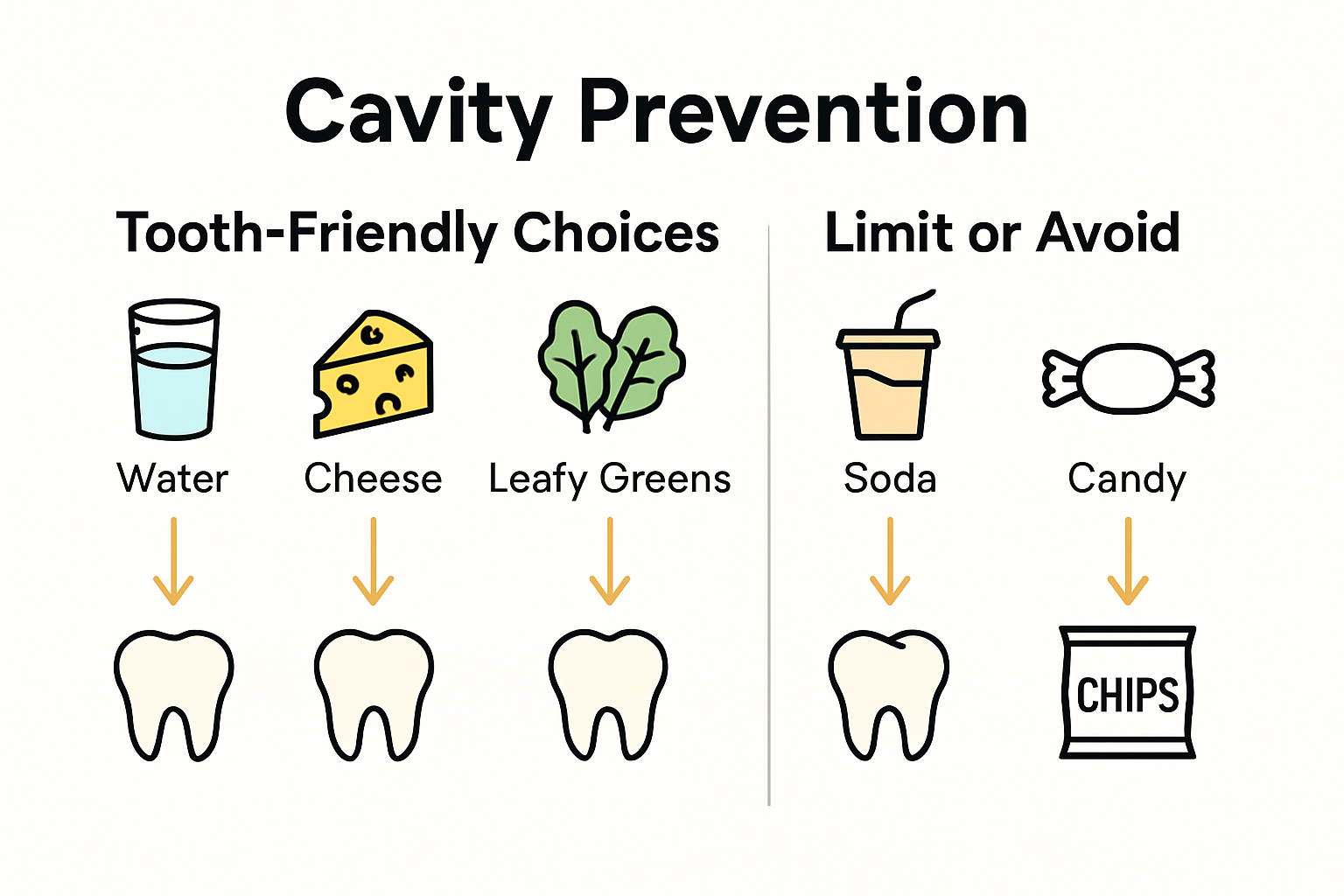
A balanced diet plays a crucial role in dental wellness. Focus on incorporating whole grains, lean proteins, fruits, and vegetables that provide essential nutrients for tooth strength. Choose tooth-friendly snacks like cheese, raw vegetables, and nuts which help clean teeth and stimulate saliva production. When it comes to beverages, water and milk are your best allies. They hydrate without introducing harmful sugars or acids that can erode tooth enamel.
Be strategic about sugar and acidic foods. Limit frequent snacking on sugary or processed items, which can create an environment for bacteria growth. Instead, aim to consume these foods during main meals when increased saliva production helps neutralize acids. If you do indulge, rinse your mouth with water afterward to minimize potential damage. Your teeth will thank you for these mindful choices that support long term oral health.
Step 3: Apply Protective Dental Products Safely
Protecting your teeth goes beyond brushing and flossing—it involves strategically using dental products that strengthen and defend your oral health. Understanding how to apply these products correctly can make a significant difference in preventing tooth decay and maintaining a healthy smile.
Use fluoride toothpaste as your first line of defense by brushing thoroughly for two minutes. The key is not just brushing, but how you finish. After brushing, spit out the toothpaste but avoid rinsing immediately. This allows the fluoride to continue strengthening your tooth enamel. Pro tip: Let the fluoride sit on your teeth for maximum protection.
Chewing sugarless gum for 20 minutes after meals can be another smart protective strategy. This simple habit stimulates saliva production, which naturally helps neutralize harmful acids and wash away food particles. Think of it as a quick oral rinse that works without water. Choose gums with xylitol for an extra protective boost. By incorporating these targeted products into your routine, you create multiple layers of defense for your teeth.
Step 4: Schedule Regular Dental and Orthodontic Visits
Preventive care is your strongest defense against dental problems. Regular professional check-ups allow experts to catch potential issues early and keep your oral health on track.
Dental visits are crucial for comprehensive oral health monitoring, with professionals recommending check-ups at intervals tailored to your specific needs. During these appointments, expect a thorough cleaning that removes plaque buildup and tartar impossible to eliminate through home care alone. Professional dental examinations help detect potential problems before they escalate, giving you a proactive approach to maintaining your smile.
When scheduling your visits, consider creating a dental calendar. Most adults should aim for two check-ups annually, though your specific needs might vary based on your oral health history. For children and individuals with ongoing dental concerns, more frequent visits might be recommended. Pro tip: Schedule your next appointment before leaving the dental office to ensure you stay consistent with your preventive care routine.
Step 5: Monitor Results and Adjust Practices
Maintaining optimal oral health is an ongoing process that requires consistent observation and strategic adjustments. Your mouth changes over time, and so should your dental care approach to ensure long term success.
Pay close attention to subtle changes in your oral health, such as unexpected tooth sensitivity, bleeding gums, or shifts in your mouth’s overall condition. These signals can indicate the need for modifications in your current oral hygiene routine. Regular evaluation of your dental practices helps ensure you’re using the most effective strategies for preventing cavities and maintaining healthy teeth.
Consider keeping a simple oral health journal to track your observations. Note any changes in sensitivity, gum appearance, or oral discomfort. If you notice persistent issues, schedule a professional consultation to get expert guidance. Pro tip: Take photos of your teeth every few months to help you objectively track changes that might be hard to notice day to day. Your proactive approach can make a significant difference in catching and addressing potential dental problems early.
Protect Your Smile With Expert Orthodontic Care
Preventing cavities involves consistent oral hygiene, mindful eating, and protective dental practices. If you want to take your dental health even further, consider how professional orthodontic solutions can enhance your smile while supporting long-term oral wellness. At Glow Orthodontics, we understand the challenges of maintaining a healthy smile and offer personalized treatment options like Invisalign to improve your teeth alignment comfortably and discreetly.

Experience a warm, patient-centered environment focused on achieving your best smile. Visit Glow Orthodontics to learn how our expert team can help you build on your daily oral care habits with personalized orthodontic treatments. Act now to schedule your consultation and take the next step toward a stronger, cavity-resistant smile that lasts a lifetime.
Frequently Asked Questions
How often should I brush my teeth to prevent cavities?
Brushing your teeth twice daily is essential for cavity prevention. Aim to brush for 2-3 minutes each time, ideally incorporating it into your morning and evening routines to ensure consistency.
What diet changes can I make to support cavity prevention?
Transform your diet by focusing on tooth-friendly foods and drinks. Incorporate whole grains, lean proteins, fruits, and vegetables while limiting sugary and acidic snacks to mealtimes to minimize potential damage to your tooth enamel.
Why is flossing important in preventing cavities?
Flossing is crucial because it removes plaque and food particles from areas your toothbrush can’t reach, significantly reducing your risk of cavities. Make it a habit to floss daily, ideally right after brushing, to enhance your oral hygiene routine.
How can I maximize the benefits of fluoride toothpaste?
To maximize fluoride toothpaste benefits, brush your teeth thoroughly, then avoid rinsing immediately to allow fluoride to strengthen tooth enamel. Spit out the toothpaste and let it sit on your teeth for greater protection against decay.
What should I expect during my dental check-up for cavity prevention?
During your dental check-up, you will receive a thorough cleaning to remove plaque and tartar, along with a professional examination for any potential issues. Schedule visits at least twice a year to ensure your oral health remains on track and to catch any problems early.
How can I monitor changes in my oral health at home?
Keep an eye on subtle changes, such as tooth sensitivity or bleeding gums, as these can indicate the need for adjustments in your oral care routine. Tracking your oral health in a journal or taking photos every few months can help you stay proactive in maintaining a healthy smile.