The Essential Guide to Sleep for Teenagers
November 8, 2025
The Essential Guide to Sleep for Teenagers
Most teenagers fall short of the recommended 8 to 10 hours of sleep each night, yet these hours play a vital role in shaping their physical health, brain development, and emotional balance. Sleep isn’t just about recharging for another day—it becomes the backbone of growth and learning during adolescence. Understanding how and why sleep matters for teens gives parents, educators, and students simple tools for real improvement in daily life and long-term well-being.
Table of Contents
- Defining Teenage Sleep and Its Importance
- Recommended Sleep Duration for Adolescents
- Health Impacts of Sleep on Teenagers
- Common Sleep Challenges in Teen Years
- Tips for Improving Teenage Sleep Quality
Key Takeaways
| Point | Details |
|---|---|
| Importance of Sleep | Sleep is crucial for teenagers, supporting physical, emotional, and cognitive development. Quality sleep enhances overall health and facilitates their transition to adulthood. |
| Recommended Duration | Teens should aim for 8 to 10 hours of sleep per night to optimize health and functionality. Consistency in sleep patterns is vital for effective recovery. |
| Impact of Insufficient Sleep | Lack of sleep correlates with increased anxiety, depression, and cognitive impairment among adolescents. Ensuring adequate rest is essential for emotional stability and stress resilience. |
| Strategies for Improvement | Establish tech-free bedtime routines, maintain a consistent sleep schedule, and engage in relaxing activities before bed to enhance sleep quality. Small changes can lead to significant improvements. |
Defining Teenage Sleep and Its Importance
Sleep isn’t just a nightly routine for teenagers—it’s a critical biological process that fuels their entire developmental journey. Adolescent sleep represents far more than simply closing eyes and resting; it’s a powerful mechanism that supports physical growth, mental processing, and emotional regulation during one of life’s most transformative periods.
According to the Sleep Foundation, sleep is absolutely critical during teenage years when adolescents undergo significant physical, social, emotional, and cognitive development. The impact of quality sleep extends far beyond feeling refreshed—it actively supports essential functions like:
- Heart and vascular health
- Learning capabilities
- Memory formation
- Concentration and attention
The American Academy of Sleep Medicine underscores this importance by recommending that teenagers obtain 8 to 10 hours of sleep per night. This specific duration isn’t arbitrary but carefully calculated to promote optimal health and alertness during the complex transition from childhood to adulthood.
Understanding teenage sleep means recognizing it as a sophisticated biological process. Teenagers aren’t just sleeping—they’re rebuilding neural connections, processing emotional experiences, consolidating memories, and preparing their bodies and minds for the challenges of emerging adulthood. Every hour of quality sleep represents an investment in their future physical and mental well-being, making sleep not just a necessity, but a fundamental pillar of adolescent development.
Recommended Sleep Duration for Adolescents
Not all sleep is created equal, especially when it comes to teenagers. Sleep duration represents a critical factor in adolescent health and development, with specific guidelines designed to support their unique physiological needs. While it might seem tempting for teens to skimp on sleep, research reveals the profound importance of consistent, quality rest.
Research from PubMed highlights the official recommendation from the American Academy of Sleep Medicine: teenagers aged 13 to 18 years should consistently aim for 8 to 10 hours of sleep per 24-hour period. This isn’t just a suggestion—it’s a targeted recommendation to promote optimal health during a crucial developmental stage.
Breaking down this sleep recommendation reveals several key insights:
- Minimum Threshold: 8 hours represents the baseline for adequate teenage sleep
- Maximum Healthy Range: 10 hours provides optimal restoration and growth support
- Consistency Matters: Regular sleep patterns are more important than occasional long nights
The recommended sleep duration isn’t arbitrary. Teenagers’ bodies are undergoing massive transformations—physical growth, hormonal changes, brain development, and emotional maturation all demand significant energy and recovery time. When teens consistently get the recommended 8 to 10 hours of sleep, they experience enhanced cognitive performance, better emotional regulation, improved physical health, and increased resilience to daily stressors. Think of sleep as the body’s natural reset button, crucial for navigating the complex landscape of adolescence.

Health Impacts of Sleep on Teenagers
Sleep health is not just about feeling rested—it’s a critical foundation for teenage physical and mental well-being. The consequences of insufficient sleep extend far beyond simple tiredness, impacting nearly every aspect of an adolescent’s life, from emotional regulation to cognitive performance.
Research from PubMed reveals a stark connection between sleep duration and mental health. Short and long nightly sleep durations are directly associated with increased anxiety and depression symptoms among adolescents. Maintaining 8–10 hours of sleep on weeknights emerges as crucial for optimal emotional well-being.
The mental health implications of sleep are profound and multifaceted:
- Emotional Stability: Adequate sleep helps regulate mood and emotional responses
- Stress Resilience: Proper rest reduces vulnerability to psychological challenges
- Cognitive Function: Consistent sleep supports learning, memory, and decision-making
Further insights from Sleep Research underscore the gravity of sleep’s role. Insufficient sleep in teenagers is linked to increased risks of:
- Heightened stress levels
- Feelings of hopelessness
- Potential suicidal ideation
Teenagers are navigating one of the most complex developmental periods of their lives. Their brains are rewiring, hormones are fluctuating, and emotional landscapes are constantly shifting. Quality sleep acts as a critical stabilizing force, providing the neurological and physiological support necessary to weather these intense changes.
Think of sleep as a nightly maintenance system—repairing neural pathways, processing emotional experiences, and preparing the teenage mind and body for the challenges ahead.
Common Sleep Challenges in Teen Years
The teenage years represent a perfect storm of biological changes and external pressures that can dramatically disrupt healthy sleep patterns. Sleep challenges during adolescence are not just inconvenient—they’re a complex intersection of physiological shifts, social dynamics, and environmental factors that can significantly impact overall well-being.
According to JAMA Network, adolescents experience a natural biological shift in their sleep-wake cycles during puberty. This neurological transformation leads to later bedtimes and increased difficulty falling asleep early, which becomes particularly problematic when combined with early school start times. Essentially, teenagers’ internal clocks are fundamentally different from younger children or adults, creating an inherent mismatch with traditional scheduling.
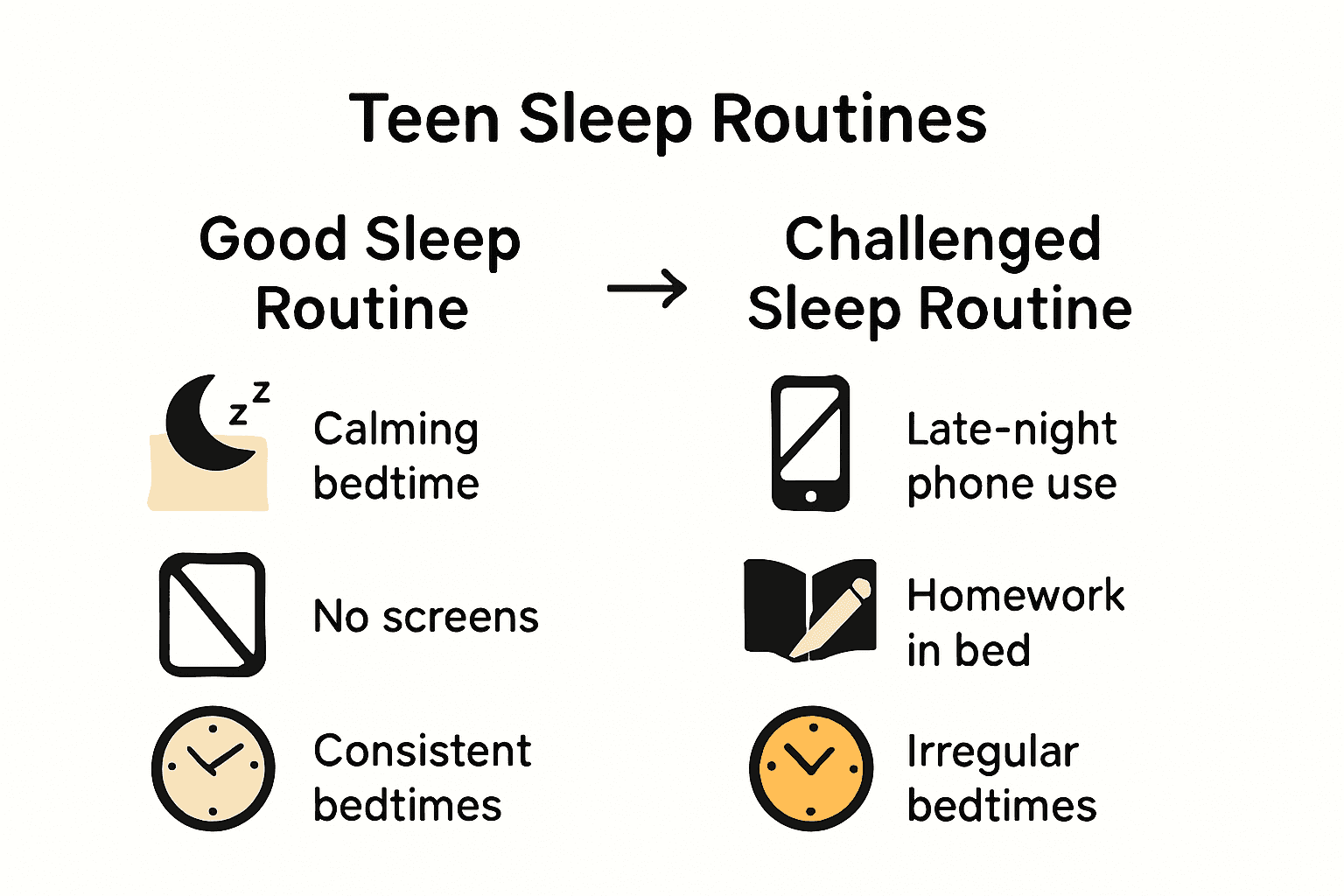
The most prevalent sleep challenges teenagers face include:
- Delayed Sleep Phase: Biological tendency to fall asleep later and wake up later
- Technology Interference: Constant digital stimulation from smartphones and screens
- Academic Stress: Homework, studying, and performance pressures
- Irregular Sleep Schedules: Inconsistent bedtimes and wake times
Research from Time Magazine reveals a stark reality: many teens are chronically sleep-deprived, engaging in risky behaviors and experiencing significant health issues. The perfect storm of early school start times, constant technology use, social obligations, and part-time jobs creates a recipe for persistent sleep disruption. Teenagers are caught in a challenging cycle where their natural biological rhythms conflict with societal expectations and responsibilities, making consistent, quality sleep an ongoing battle.
Tips for Improving Teenage Sleep Quality
Sleep optimization for teenagers isn’t about enforcing strict rules—it’s about creating an environment and routine that naturally supports their unique biological needs. Understanding how to improve sleep quality can transform a teen’s overall health, academic performance, and emotional well-being.
According to Associated Press, experts strongly recommend establishing tech-free bedtime routines. This means removing devices from bedrooms and avoiding screen time at least one hour before bed. The blue light emitted by smartphones, tablets, and computers disrupts natural melatonin production, making it significantly harder for teenagers to fall asleep naturally.
Key strategies for improving teenage sleep quality include:
- Create a Consistent Sleep Schedule: Go to bed and wake up at the same time daily
- Design a Relaxing Bedtime Routine: Read, listen to calm music, or practice gentle stretching
Research from Associated Press suggests additional practical approaches:
- Gradually adjusting bedtimes before the school year begins
- Avoiding heavy meals close to bedtime
- Limiting screen exposure in evening hours
- Engaging in relaxing activities that signal to the body it’s time to wind down
The goal isn’t perfection—it’s progress. Small, consistent changes can dramatically improve a teenager’s sleep quality. By creating a supportive sleep environment and helping teens understand the importance of rest, parents can empower their children to develop healthy, sustainable sleep habits that will serve them throughout their lives.
Support Your Teen’s Sleep and Smile Health for a Confident Future
Teenagers face unique challenges like delayed sleep cycles and technology distractions that disrupt their essential 8 to 10 hours of sleep. Poor sleep not only impacts mood and cognitive function but can also affect their overall well-being during these formative years. At Glow Orthodontics, we understand how vital a healthy lifestyle is to your teen’s confidence and growth. While quality sleep supports brain and emotional health, a beautiful, well-aligned smile can boost self-esteem and make daily challenges easier to face.

Discover how personalized orthodontic treatments and Invisalign options at Glow Orthodontics can enhance your teen’s smile and comfort. Our caring team creates tailored solutions that fit your child’s busy schedule so they can focus on what truly matters including better sleep and mental wellness. Take the next step to empower your teen with a smile that shines as brightly as their potential by booking a consultation today at Glow Orthodontics Online Booking. Your teen deserves a confident smile and the restorative sleep to match.
Frequently Asked Questions
What is the recommended amount of sleep for teenagers?
Teenagers aged 13 to 18 should aim for 8 to 10 hours of sleep per night to support their physical and mental development.
How does sleep affect a teenager’s mental health?
Adequate sleep is crucial for regulating mood and emotional stability in teenagers. Insufficient sleep is linked to increased symptoms of anxiety and depression.
What are common sleep challenges faced by teenagers?
Teenagers often struggle with delayed sleep phase, technology interference, academic stress, and irregular sleep schedules, which can disrupt their sleep patterns.
How can parents help improve their teenager’s sleep quality?
Parents can encourage better sleep by establishing consistent sleep schedules, creating a relaxing bedtime routine, and limiting screen time before bed.