What Is a Deep Bite? Complete Orthodontic Guide
November 6, 2025
What Is a Deep Bite? Complete Orthodontic Guide
More than 20 percent of people experience a deep bite, where the upper teeth cover an excessive portion of their lower teeth. This hidden dental misalignment is more than a cosmetic issue because it can quietly cause tooth wear, jaw pain, and speech challenges. Understanding deep bite, its causes, and how to spot the signs is the first step to protecting long-term oral health and finding effective solutions tailored to your needs.
Table of Contents
- Defining Deep Bite And Core Concepts
- Common Causes And Contributing Factors
- Types Of Deep Bite Malocclusions
- Signs, Symptoms, And Oral Health Effects
- Deep Bite Treatment Options Explained
- Risks Of Untreated Deep Bite Conditions
Key Takeaways
| Point | Details |
|---|---|
| Understanding Deep Bite | A deep bite significantly affects oral health beyond cosmetics, leading to potential jaw pain and uneven tooth pressure. |
| Common Causes | Genetic factors and developmental influences, such as missing teeth and childhood habits, commonly contribute to deep bite formation. |
| Treatment Options | Multiple orthodontic treatments, including braces and surgery, are available, depending on the severity of the deep bite. |
| Risks of Untreated Conditions | Ignoring a deep bite can result in severe dental issues like accelerated tooth wear, TMJ disorders, and compromised gum health. |
Defining Deep Bite and Core Concepts
A deep bite is a dental misalignment with significant implications for oral health and functionality. According to AAO Info, it’s characterized by upper front teeth that significantly overlap the lower front teeth when the jaw is closed. This specific type of malocclusion goes beyond mere cosmetic concerns and can impact how your teeth function and interact.
The technical definition reveals that a deep bite occurs when the vertical overlap of teeth is excessive. Most dental professionals consider a bite “deep” when the upper teeth cover more than 30-50% of the lower teeth’s surface area. Unlike minor overlaps, a deep bite can create substantial challenges in dental alignment, potentially leading to issues like tooth wear, jaw pain, and uneven tooth pressure.
Some key characteristics of a deep bite include:
- Significant vertical overlap of front teeth
- Potential discomfort when biting or chewing
- Increased risk of tooth enamel erosion
- Possible speech impediments
- Potential jaw joint (TMJ) strain
Understanding your specific bite configuration is crucial. While Healthline notes that a deep bite is more than just a cosmetic issue, professional assessment remains the gold standard for accurate diagnosis and personalized treatment planning. Orthodontic professionals can determine the precise degree of your bite misalignment and recommend targeted interventions to restore optimal dental function.
Common Causes and Contributing Factors
A deep bite rarely emerges from a single cause but rather develops through a complex interplay of genetic, developmental, and environmental factors. Healthline highlights several key contributors, including genetics, missing teeth, jaw injuries, and insufficient dental spacing. These underlying elements can significantly influence how your teeth and jaw develop over time.
According to AAO Info, certain developmental factors play a critical role in deep bite formation. Early loss of baby teeth, overdevelopment of supporting bone, and uneven jaw growth can fundamentally alter dental alignment. Children experiencing these conditions are particularly susceptible to developing a deep bite, as their oral structures are still forming and highly responsive to developmental changes.
The most common contributing factors to deep bite development include:
- Genetic predisposition to jaw and tooth structure
- Premature loss of primary (baby) teeth
- Abnormal jaw growth patterns
- Persistent childhood habits like thumb-sucking
- Teeth grinding (bruxism)
- Trauma or injury to the jaw
- Delayed or irregular tooth eruption
Interestingly, some lifestyle and physiological factors can exacerbate deep bite tendencies. Prolonged thumb-sucking, extended pacifier use, and chronic teeth grinding can progressively reshape dental arches and contribute to misalignment. Moreover, conditions like mouth breathing or tongue thrusting can subtly influence jaw development, potentially increasing the likelihood of developing a deep bite over time. Professional orthodontic assessment remains the most reliable method for understanding your specific risk factors and potential intervention strategies.
Types of Deep Bite Malocclusions
Orthodontic professionals recognize deep bite malocclusions as complex conditions with multiple classification systems. PubMed research indicates that deep bite types can be categorized based on both dental and skeletal factors, creating a nuanced understanding of bite misalignments. These classifications help practitioners develop targeted treatment strategies that address the specific underlying causes of an individual’s dental structure.
According to International Journal of Dental Research, deep bite malocclusions can be broadly divided into two primary categories: inherent factors and acquired factors. Inherent factors include genetic predispositions like tooth shape and skeletal pattern, while acquired factors encompass developmental influences such as muscular habits, tooth loss, and environmental impacts on dental development.
The most common types of deep bite malocclusions include:
Here’s a summary of the main types of deep bite malocclusions:
| Type of Deep Bite | Key Characteristics | Underlying Cause |
|---|---|---|
| Skeletal Deep Bite | Jaw bone abnormalities Significant overlap |
Genetic or skeletal factors |
| Dental Deep Bite | Misaligned teeth Normal jaw structure |
Tooth positioning |
| Functional Deep Bite | Results from abnormal jaw movement | Muscle or movement issues |
| Compensated Deep Bite | Teeth compensate for jaw misalignment | Adaptive dental response |
| Uncompensated Deep Bite | Severe misalignment Minimal natural compensation |
Lack of dental adaptation |
- Skeletal Deep Bite: Characterized by underlying jaw structure abnormalities
- Dental Deep Bite: Primarily related to tooth positioning and alignment
- Functional Deep Bite: Resulting from abnormal jaw movements and muscle interactions
- Compensated Deep Bite: Where teeth have adjusted to mask underlying structural issues
- Uncompensated Deep Bite: Severe misalignment with minimal natural compensation
Understanding these classifications is crucial for developing personalized treatment approaches. Each type of deep bite presents unique challenges and requires a tailored orthodontic intervention. The precise diagnosis involves comprehensive assessment of dental anatomy, jaw structure, muscle function, and potential developmental influences. Professional orthodontists can determine the most appropriate treatment strategy by carefully analyzing these intricate factors and their interactions.
Signs, Symptoms, and Oral Health Effects
A deep bite isn’t just a cosmetic concern—it can trigger a cascade of significant oral health challenges. Fehérvári Dental highlights that improper tooth contact can lead to increased tooth wear, chewing difficulties, and persistent jaw pain due to excessive strain on jaw joints. These symptoms often develop gradually, making early detection crucial for preventing long-term dental complications.
AAO Info emphasizes that untreated deep bite can cause extensive damage beyond immediate discomfort. The misalignment creates uneven pressure distribution, potentially resulting in accelerated tooth deterioration, compromised gum health, and progressive jaw joint stress. Patients might experience a range of interconnected symptoms that extend far beyond simple dental misalignment.
Key signs and symptoms of a deep bite include:
- Visible vertical overlap of front teeth
- Increased tooth sensitivity
- Uneven or accelerated tooth wear
- Recurring jaw pain or temporomandibular joint (TMJ) discomfort
- Difficulty chewing or biting evenly
- Speech impediments
- Frequent headaches
- Altered facial muscle tension
The oral health implications of an untreated deep bite can be profound. Persistent misalignment may lead to enamel erosion, increased risk of tooth fractures, and potential long-term changes in facial structure. Professional orthodontic intervention becomes essential not just for aesthetic reasons, but as a critical preventive healthcare strategy to maintain overall oral function and prevent progressive dental deterioration.
Deep Bite Treatment Options Explained
Addressing a deep bite requires a comprehensive and personalized approach to orthodontic care. Healthline outlines several treatment strategies, ranging from traditional methods to advanced interventions that can effectively correct dental misalignment. The goal is not just cosmetic improvement, but restoring optimal dental function and preventing long-term oral health complications.
According to AAO Info, orthodontic treatments for deep bite can vary significantly depending on the severity and specific characteristics of an individual’s dental structure. Mild to moderate cases often respond well to non-invasive approaches, while more complex situations might require surgical intervention to achieve proper jaw alignment and tooth positioning.
Primary treatment options for deep bite correction include:
- Traditional Metal Braces: Gradually repositioning teeth through consistent pressure
- Ceramic Clear Braces: Providing a more aesthetic alternative to metal braces
- Clear Aligners: Offering removable and nearly invisible correction
- Dental Crowns: Rebuilding tooth height and improving bite alignment
- Surgical Orthodontics: Comprehensive correction for severe skeletal discrepancies
- Interceptive Orthodontics: Early intervention for children with developing misalignments
The selection of an appropriate treatment plan depends on multiple factors, including age, dental complexity, overall oral health, and individual patient goals. Professional orthodontists conduct thorough assessments to design customized treatment strategies that not only address the deep bite but also consider the patient’s long-term dental wellness and aesthetic preferences. Each approach carries unique benefits, and a personalized consultation remains the most effective way to determine the most suitable intervention.
Risks of Untreated Deep Bite Conditions
Leaving a deep bite unaddressed can trigger a complex chain of progressive oral health complications. AAO Info warns that untreated deep bite conditions can lead to excessive tooth wear, gum damage, and persistent jaw pain. These risks extend far beyond cosmetic concerns, potentially compromising fundamental dental function and overall oral health.
Fehérvári Dental emphasizes the long-term consequences of ignoring deep bite misalignments. The continuous improper tooth contact creates uneven pressure distribution, which can progressively damage dental structures, impair chewing mechanics, and generate chronic discomfort that impacts daily quality of life. The cumulative effect of these issues can result in more invasive and expensive treatments down the line.
Potential risks of untreated deep bite conditions include:
- Accelerated tooth enamel erosion
- Increased risk of tooth fractures
- Chronic temporomandibular joint (TMJ) disorders
- Compromised gum health and potential periodontal issues
- Persistent headaches and facial muscle tension
- Reduced chewing efficiency
- Speech pronunciation difficulties
- Progressive misalignment of dental arch
The consequences of neglecting deep bite treatment extend beyond immediate dental health.
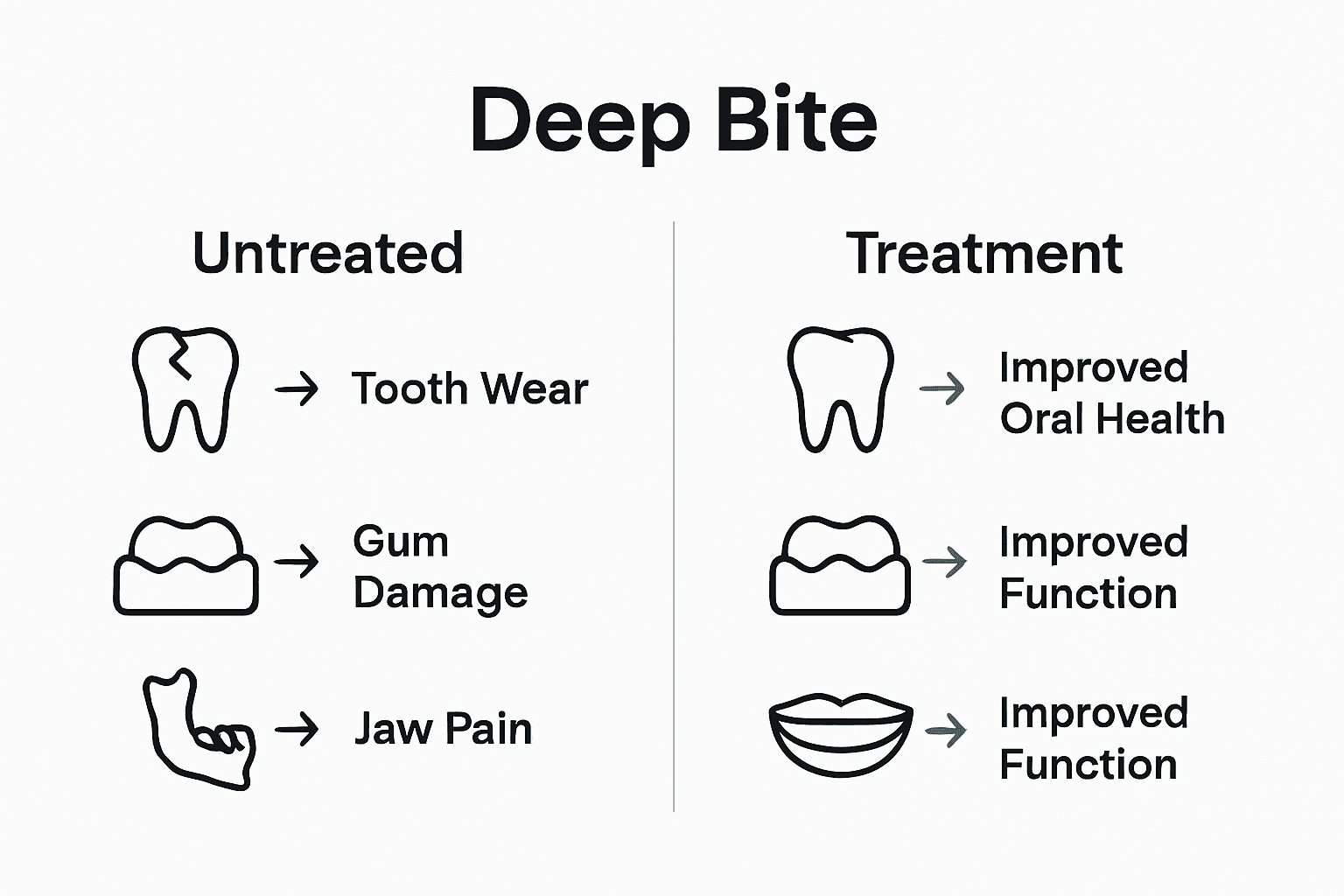 Unresolved misalignments can influence facial muscle development, potentially altering facial structure and symmetry over time. Professional orthodontic assessment provides the most reliable pathway to understanding individual risk factors and implementing timely, targeted interventions that prevent long-term complications.
Take Control of Your Deep Bite for a Healthier Smile
Living with a deep bite can cause more than just discomfort. From jaw pain and uneven tooth wear to speech difficulties and persistent headaches, these challenges impact your daily life and confidence. The complex nature of deep bites means personalized care is essential. At Glow Orthodontics, we understand these concerns and use proven solutions such as braces, clear aligners, and early interventions tailored to your unique dental structure. Our compassionate team in Langley, British Columbia, is ready to guide you through a welcoming process focused on restoring both function and smile aesthetics.

Don’t wait until symptoms worsen. Discover how our expert orthodontic care can effectively address your deep bite issues today. Visit Glow Orthodontics to learn more and schedule your personalized consultation. Taking the first step now means protecting your oral health and achieving a glowing smile for years to come.
Frequently Asked Questions
What is a deep bite?
A deep bite is a dental misalignment characterized by the upper front teeth overlapping the lower front teeth excessively—typically covering more than 30-50% of the lower teeth. This condition can significantly impact oral health and functionality.
What causes a deep bite?
A deep bite often develops due to a combination of genetic factors, missing teeth, jaw injuries, and environmental influences such as habits like thumb-sucking or teeth grinding. These elements affect how teeth and jaws align throughout development.
What are the signs and symptoms of a deep bite?
Common signs of a deep bite include visible vertical overlap of the front teeth, increased tooth sensitivity, uneven tooth wear, recurring jaw pain, difficulty chewing, and even speech issues. Early detection is important to mitigate long-term complications.
What are the treatment options for a deep bite?
Treatment options for a deep bite vary based on severity and may include traditional metal braces, ceramic clear braces, clear aligners, dental crowns, surgical orthodontics, and interceptive orthodontics for children. A professional orthodontist will assess individual cases to recommend the best approach.