What orthodontists do: braces and Invisalign guide 2026
March 11, 2026
What orthodontists do: braces and Invisalign guide 2026
Orthodontists do far more than create beautiful smiles. They solve functional problems affecting how teeth meet, chew food, and support jaw health. For families in Langley seeking treatment for children and teens, understanding orthodontic methods like braces and Invisalign helps you choose confidently. This guide breaks down what orthodontists actually do, revealing how treatments work, what to expect daily, and how each option serves different needs.
Table of Contents
- How Orthodontists Guide Teeth Movement With Braces
- How Invisalign Works: Clear Aligners For Teeth Straightening
- Comparing Braces And Invisalign: What Orthodontists Consider
- Day To Day Orthodontic Care: Keeping Braces And Invisalign On Track
- Explore Orthodontic Treatments For Your Family In Langley
- What Orthodontists Do: Frequently Asked Questions
Key takeaways
| Point | Details |
|---|---|
| Controlled force moves teeth | Orthodontists use braces mechanics involving controlled pressure to shift teeth approximately 1mm monthly. |
| Multiple treatment options exist | Braces and Invisalign serve different cases, with braces handling complex corrections and Invisalign offering removable clear aligners. |
| Bone remodeling enables movement | Teeth shift because bone tissue breaks down and rebuilds in response to orthodontic pressure. |
| Patient compliance determines success | Especially for aligners, wearing devices as prescribed directly affects treatment duration and results. |
| Benefits extend beyond appearance | Orthodontic care improves bite function, reduces wear on teeth, and prevents future dental complications. |
How orthodontists guide teeth movement with braces
Braces remain the gold standard for orthodontic correction because they deliver precise, continuous force over months or years. When orthodontists apply braces mechanics, they’re orchestrating a biological response that gradually repositions teeth.
The system relies on three main components working together:
- Brackets bonded to each tooth serve as anchors for the entire system
- An archwire threaded through brackets provides the primary corrective force
- Elastic bands add supplemental pressure to address specific bite issues
Your orthodontist adjusts the archwire tension during periodic visits, usually every 4 to 8 weeks. These adjustments maintain steady pressure as teeth shift into better positions. The process might sound purely mechanical, but it triggers a remarkable biological response. When pressure is applied to a tooth, bone tissue breaks down and rebuilds around it. This remodeling allows teeth to migrate through the jawbone without permanent damage.
Braces move teeth approximately 1mm per month, though individual factors like age, bone density, and treatment complexity affect this rate. Metal brackets remain most common for children and teens because they’re durable and cost effective. Ceramic brackets offer a less visible alternative for patients concerned about appearance.
The archwire is the real workhorse. Early treatment phases often use flexible wires that apply gentle force. As teeth align, orthodontists switch to stiffer wires that fine tune positioning. Rubber bands, which patients attach between specific brackets, correct bite problems by pulling the upper and lower jaws into proper alignment. Pro Tip: Color coded rubber bands help younger patients track which elastics go where, reducing mistakes and improving compliance.
Orthodontists can address severe overcrowding, significant bite misalignments, and complex rotations with braces. The fixed nature of braces means constant force application, which translates to predictable results. For families exploring options for fixing crooked teeth, braces offer proven effectiveness across nearly all orthodontic conditions.
How Invisalign works: clear aligners for teeth straightening
Invisalign introduced a paradigm shift in orthodontics by replacing visible hardware with transparent plastic trays. These aligners use custom made clear plastic designed from digital scans of your teeth.
Treatment begins with your orthodontist creating a 3D model of your current bite and mapping the path to ideal alignment. Computer software divides this journey into stages, typically requiring 20 to 40 aligner sets depending on complexity. Each aligner shifts teeth slightly before you move to the next set, usually every one to two weeks.
The mechanics differ from braces in important ways:
- Aligners apply force across entire tooth surfaces rather than from fixed points
- Pressure is more distributed, often feeling gentler than bracket adjustments
- Movement relies on the aligner’s shape gradually conforming teeth to its contours
- Attachments, small tooth colored bumps bonded to teeth, help aligners grip better for certain movements
The removable design brings real advantages. You can eat without restrictions and maintain normal brushing and flossing routines. Many teens appreciate the nearly invisible appearance during school and social activities. However, compliance with wearing aligners determines whether treatment succeeds. Orthodontists require 20 to 22 hours of daily wear. Skipping this commitment extends treatment time or compromises final results.

Invisalign handles many common orthodontic issues effectively. Mild to moderate crowding, spacing problems, and certain bite corrections respond well to aligner therapy. Complex cases involving severe rotations or significant jaw discrepancies may still require traditional braces. Your orthodontist evaluates your specific situation during consultation.
Pro Tip: Set phone reminders to put aligners back in after meals. It’s surprisingly easy to forget, and missed hours accumulate quickly. Families considering this option benefit from reviewing the complete Invisalign treatment process and exploring practical tips for life with Invisalign to prepare for daily realities.
Comparing braces and Invisalign: what orthodontists consider
Choosing between braces and Invisalign depends on multiple factors beyond personal preference. Orthodontists evaluate dental complexity, patient age, lifestyle considerations, and compliance likelihood before recommending treatment.
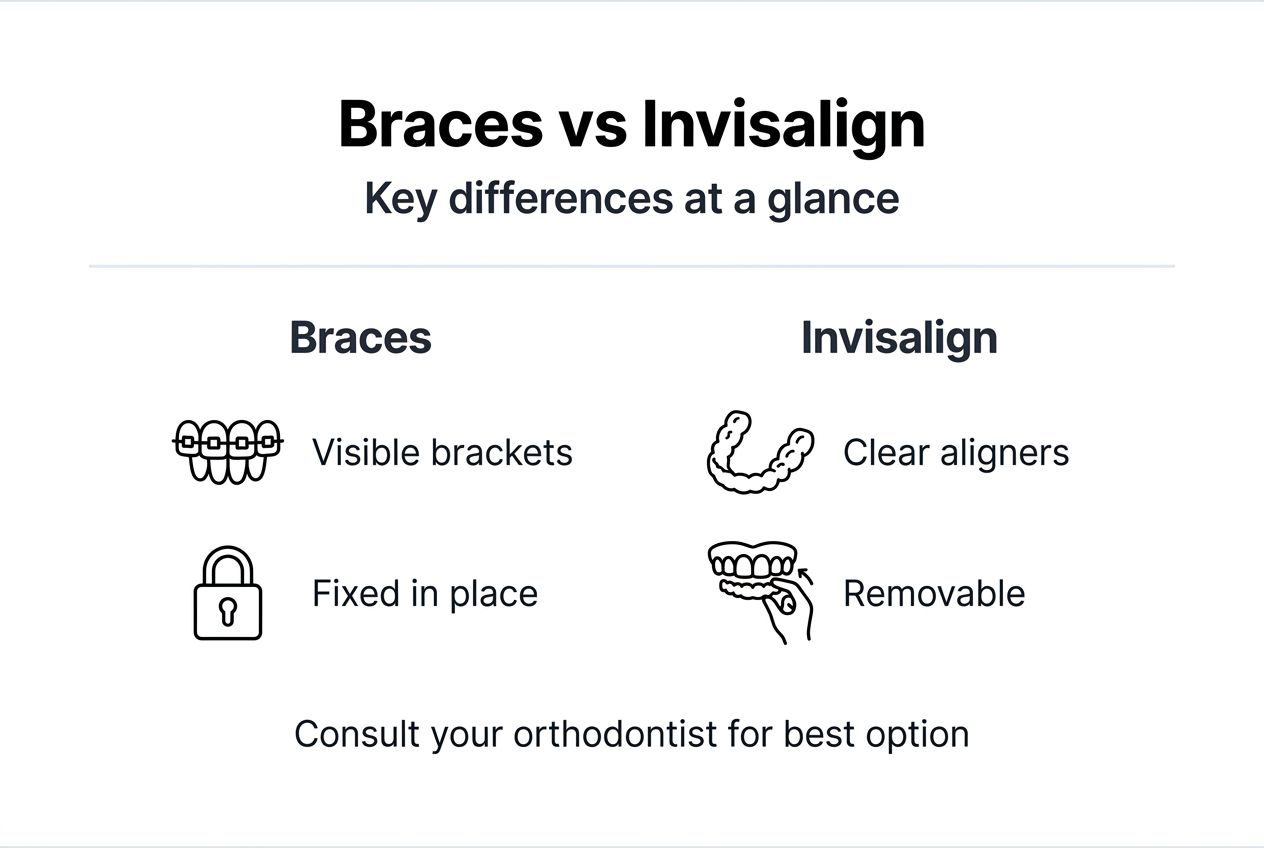
| Factor | Braces | Invisalign |
|---|---|---|
| Visibility | Metal or ceramic brackets visible on teeth | Clear plastic trays nearly invisible |
| Removability | Fixed, cannot be removed by patient | Removable for eating and cleaning |
| Treatment scope | Handles severe corrections, complex movements | Best for mild to moderate issues |
| Oral hygiene | Requires specialized cleaning around brackets | Normal brushing and flossing routines |
| Dietary restrictions | Avoid hard, sticky foods | No food restrictions when aligners removed |
| Patient responsibility | Lower, device always working | Higher, must wear 20 to 22 hours daily |
Effectiveness compares favorably between both options for many orthodontic cases. The distinction emerges in treatment boundaries. Braces can rotate severely twisted teeth, close large extraction spaces, and correct significant overbites or underbites. Invisalign excels with spacing issues, mild crowding, and minor bite adjustments.
Orthodontists also weigh patient maturity. Younger children often lack the discipline for consistent aligner wear, making braces more practical. Teenagers mature enough to manage aligners responsibly may prefer Invisalign’s aesthetic and lifestyle benefits. Adults typically adapt well to either system.
Cost considerations vary by location and treatment length, with both options falling in similar ranges for comparable cases. Insurance coverage often treats them equally when addressing medical necessity rather than purely cosmetic concerns.
The detailed breakdown of differences between clear braces and Invisalign helps families understand nuances. Parents specifically researching youth treatments find valuable insights comparing Invisalign versus braces for kids.
Ultimately, orthodontists customize recommendations to individual circumstances. What works brilliantly for one patient may not suit another with seemingly similar teeth. Consultation allows professionals to assess your specific anatomy and goals.
Day to day orthodontic care: keeping braces and Invisalign on track
Successful orthodontic treatment requires consistent daily maintenance. Whether your child wears braces or Invisalign, establishing solid habits prevents complications and keeps treatment progressing smoothly.
For braces wearers, oral hygiene becomes more demanding but absolutely critical:
- Brush after every meal to remove food particles trapped around brackets
- Use a floss threader or water flosser to clean between teeth and under wires
- Apply orthodontic wax to brackets causing irritation until tissues toughen
- Avoid hard foods like ice, nuts, and hard candy that can break brackets
- Skip sticky foods like caramel and gum that lodge in braces
- Attend all scheduled adjustment appointments to maintain treatment momentum
- Wear prescribed rubber bands exactly as instructed for proper bite correction
Dedicated tools make the process easier. Interdental brushes reach tight spaces around brackets. Electric toothbrushes with orthodontic heads provide thorough cleaning. Families benefit from learning proper techniques through resources like how to brush with braces.
Invisalign care centers on discipline and cleanliness:
- Remove aligners only for eating, drinking anything except water, and oral hygiene
- Rinse aligners with cool water each time you take them out
- Brush and floss teeth before replacing aligners to prevent trapping food and bacteria
- Clean aligners daily with gentle soap or specialized cleaning crystals
- Store aligners in their case when removed to prevent loss or damage
- Track wear time honestly, as inconsistent wear prolongs treatment
- Switch to new aligners on schedule as directed by your orthodontist
Pro Tip: Keep a small hygiene kit with a toothbrush, floss, and aligner case in your backpack or car. This removes excuses for skipping care when away from home. Parents supporting teens through treatment find comprehensive guidance in practical tips for life with Invisalign and getting used to braces family guide.
Regular orthodontic visits serve multiple purposes beyond adjustments. Your orthodontist monitors tooth movement, addresses any discomfort, and confirms you’re following care instructions properly. These appointments catch small issues before they become treatment delays.
Explore orthodontic treatments for your family in Langley
Understanding how orthodontists straighten teeth helps families make informed decisions, but personalized guidance from experienced professionals brings that knowledge to life for your specific situation.

Glow Orthodontics specializes in orthodontic care for children and teenagers throughout Langley, offering both traditional braces and Invisalign treatment options. Their team evaluates each patient’s unique dental structure, lifestyle, and goals to recommend the most effective approach. Families appreciate the welcoming environment and clear communication throughout treatment.
Whether you’re exploring early intervention for younger children or considering options for teens, accessing expert resources helps you prepare. The comprehensive orthodontic care for teens guide addresses common questions specific to adolescent treatment. For families interested in clear aligners, the detailed Invisalign treatment process walks through every stage from consultation to final results. Scheduling a consultation at Glow Orthodontics provides personalized recommendations tailored to your family’s needs.
What orthodontists do: frequently asked questions
How long does orthodontic treatment typically take?
Treatment duration varies significantly based on correction complexity and chosen method. Braces typically require 18 to 36 months for comprehensive cases, while Invisalign often completes similar corrections in 12 to 24 months. Your orthodontist provides specific timelines after evaluating your situation.
Do orthodontists customize treatment plans for each patient?
Absolutely. Every patient receives individualized treatment based on their unique dental anatomy, jaw structure, age, and orthodontic goals. Orthodontists use diagnostic tools including X-rays, photos, and digital scans to design precise correction strategies. This customization ensures optimal results while minimizing treatment time.
At what age should children start seeing an orthodontist?
The American Association of Orthodontists recommends initial evaluation by age 7. Early assessment identifies developing problems while some primary teeth remain, allowing orthodontists to guide jaw growth if needed. Most comprehensive treatments begin between ages 9 and 14 when permanent teeth have erupted but growth continues.
How much discomfort should patients expect during treatment?
Discomfort varies by individual sensitivity and treatment type. Braces cause soreness for 3 to 5 days after adjustments as teeth begin moving. Invisalign typically produces milder discomfort when switching to new aligners. Over the counter pain relievers and soft foods help during adjustment periods. Most patients adapt within weeks as tissues toughen.
Why are follow up appointments important after braces or Invisalign?
Retention prevents teeth from drifting back to original positions after active treatment ends. Orthodontists provide retainers and monitor stability during follow up visits. Consistent retainer wear, especially during the first year post treatment, protects your investment by maintaining your new smile long term.
Recommended
- 7 Key Differences Between Clear Braces Versus Invisalign – RG API
- Invisalign Treatment Process: Step-by-Step Guide to a Straighter Smile – RG API
- Can I Eat with My Invisalign In? Clear Steps for Success – RG API
- Invisalign vs Traditional Braces – Expert Comparison 2025 – RG API
- Articole Implantologie – Implanturi Dentare București | Clinica de Implantologie Dr. Lorelei Nassar